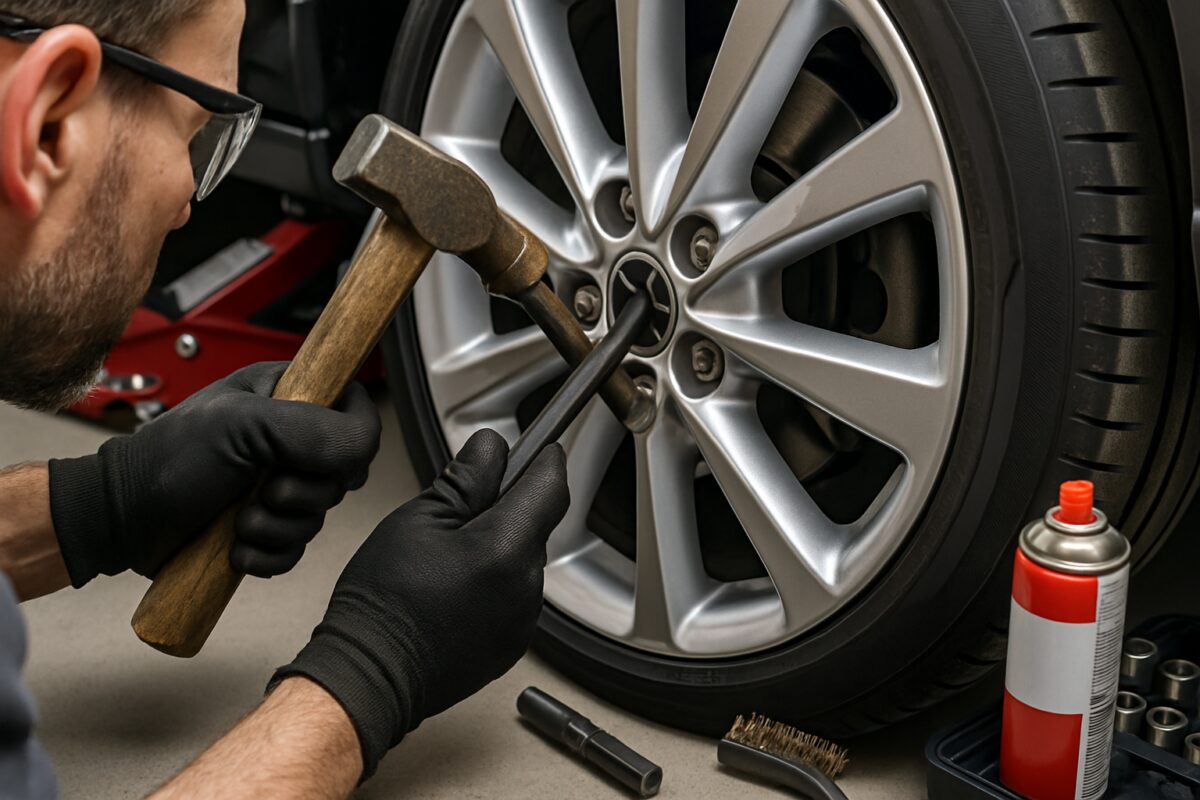
Removing a locking wheel nut without the key requires careful technique and the right tools. You’ll need a hammer, cold chisel, penetrating oil, and a socket set. Start by applying penetrating oil, then use the chisel to create grip points on the nut’s surface. With patience and proper technique, you can safely remove the stubborn nut without damaging your wheel.
Tools and parts required
Before attempting to remove a locking wheel nut without its key, gathering the proper equipment is essential for both safety and success.
Parts needed:
- Replacement wheel bolts (if damaged during removal)
- New locking wheel nuts with key (recommended)
- Thread locker compound
Tools required:
- Socket set with universal joint
- Cold chisel (6-8mm width)
- Ball-pein hammer (16oz minimum)
- Penetrating oil spray
- Wire brush
- Centre punch
- Angle grinder (as last resort)
- Safety glasses and gloves
- Wheel chocks
Safety precautions
Working on wheel nuts requires careful attention to safety protocols. Always ensure your vehicle is on level ground with the handbrake engaged and battery disconnected if using power tools.
Wear safety glasses to protect against metal fragments, and use heavy-duty gloves when handling tools. Never attempt this procedure whilst the wheel is supporting the vehicle’s weight – always use proper jack stands.
Step-by-step instructions
Step 1: Prepare the wheel and nut
Position your vehicle on level ground and engage the handbrake firmly. Loosen the other wheel nuts slightly whilst the wheel remains on the ground for stability.
Clean around the locking nut thoroughly with a wire brush to remove dirt and corrosion. Apply penetrating oil generously to the nut and surrounding area. Allow 15-20 minutes for the oil to penetrate the threads.
Step 2: Create chisel points
Using a centre punch, mark two points opposite each other on the nut’s outer edge. Position your cold chisel at a 45-degree angle against one marked point.
Strike the chisel firmly with the hammer to create a small notch. Repeat on the opposite side. These notches will provide grip points for your socket.
Step 3: Use the chisel and hammer method
Position the chisel tangentially against the nut’s edge, angled in the loosening direction. Strike with controlled, firm blows whilst maintaining steady pressure.
Work systematically around the nut, creating multiple grip points. Apply more penetrating oil if the nut shows signs of movement but remains stuck.
Step 4: Socket extraction method
Select a socket that’s slightly smaller than the nut’s outer diameter. Using a hammer, carefully drive the socket over the damaged nut until it grips firmly.
Attach your ratchet handle and attempt to turn anti-clockwise. If the socket slips, remove it and deepen the chisel notches before trying again.
Step 5: Final removal and inspection
Once the nut begins turning, continue steadily until completely removed. Inspect the wheel stud threads for damage and clean thoroughly with a wire brush.
Check the wheel mounting face for any damage caused during the removal process. Replace any damaged components before refitting the wheel.
Common mistakes to avoid
Many enthusiasts make critical errors when attempting locking nut removal that can result in expensive wheel or hub damage.
Using excessive force initially: Starting with aggressive techniques often damages the wheel or stud threads unnecessarily. Always begin with penetrating oil and gentle persuasion.
Wrong socket size: Using a socket that’s too large won’t provide adequate grip, whilst one that’s too small may crack under pressure. Measure carefully before proceeding.
Ignoring thread direction: Some vehicles use reverse-threaded nuts on certain wheels. Check your owner’s manual before applying force in the wrong direction.
Skipping penetrating oil: Rushing the process without proper lubrication makes removal significantly harder and increases damage risk. Allow sufficient time for the oil to work.
Professional tip from AutoPartsPro mechanics: “Heat from a hair dryer can help penetrating oil work more effectively, but never use an open flame near wheels as rubber components and brake fluid are highly flammable.”
When should you seek professional help?
Certain situations require professional intervention rather than DIY attempts that could worsen the problem.
Alloy wheel damage risk: Premium alloy wheels can crack or suffer irreversible damage from aggressive removal techniques. Professional locksmiths have specialised tools that minimise this risk.
Stud thread damage: If the wheel stud shows signs of cross-threading or damage, continuing DIY attempts may require complete hub replacement rather than simple stud replacement.
Multiple stuck nuts: When several locking nuts are seized, the underlying cause may be corrosion or improper installation requiring professional assessment.
Time constraints: Emergency situations where immediate wheel removal is necessary (roadside puncture) may require calling breakdown services rather than attempting field repairs.
AutoPartsPro specialist insight: “We see many customers who’ve attempted DIY removal and caused £200-500 worth of additional damage. Sometimes the £50 locksmith fee is the most economical option.”
Related maintenance you can do at the same time
With the wheel removed, several maintenance tasks become easily accessible and cost-effective to perform simultaneously.
Brake inspection: Check your brake pads for wear and examine brake disc condition. Look for scoring, warping, or excessive lip formation on the disc edges.
Suspension components: Inspect shock absorbers for oil leaks and check suspension arm bushings for perishing or separation.
Wheel bearing assessment: With the wheel off, spin the hub by hand to check for roughness or excessive play that might indicate bearing wear.
Cleaning and protection: Clean the wheel thoroughly, apply protective coating to prevent future corrosion, and inspect tyre condition comprehensively.
Hardware replacement: Replace all wheel nuts with standard versions rather than locking types, or invest in a quality set with multiple keys to prevent future problems.
Frequently asked questions
Can I drive with one missing wheel nut temporarily?
Never drive with missing wheel nuts as this creates dangerous stress on remaining fasteners and could cause wheel detachment. Replace immediately or call breakdown services.
Will removing without the key damage my alloy wheels?
Careful technique minimises damage risk, but some marking is inevitable. Use the gentlest method first and consider professional removal for expensive wheels.
How much does professional locking nut removal cost?
Mobile locksmiths typically charge £40-80 per wheel, whilst garage services range from £25-50. Compare this against potential wheel replacement costs.
Can I prevent this problem in future?
Store spare keys safely, use copper grease on threads, and consider switching to standard nuts if theft isn’t a major concern in your area.
What if the wheel stud threads are damaged during removal?
Damaged studs require replacement, typically costing £15-30 each plus labour. Severe damage might necessitate hub replacement, significantly increasing costs.
Successfully removing locking wheel nuts without keys requires patience, proper technique, and quality tools. The methods outlined here work effectively when applied systematically, though professional help remains the safest option for expensive wheels. Investing in spare keys and proper maintenance prevents most locking nut problems, making this knowledge hopefully unnecessary for future wheel changes. Quality wheel bolts and regular maintenance ensure your wheels remain securely attached whilst allowing easy removal when needed.

 Loading...