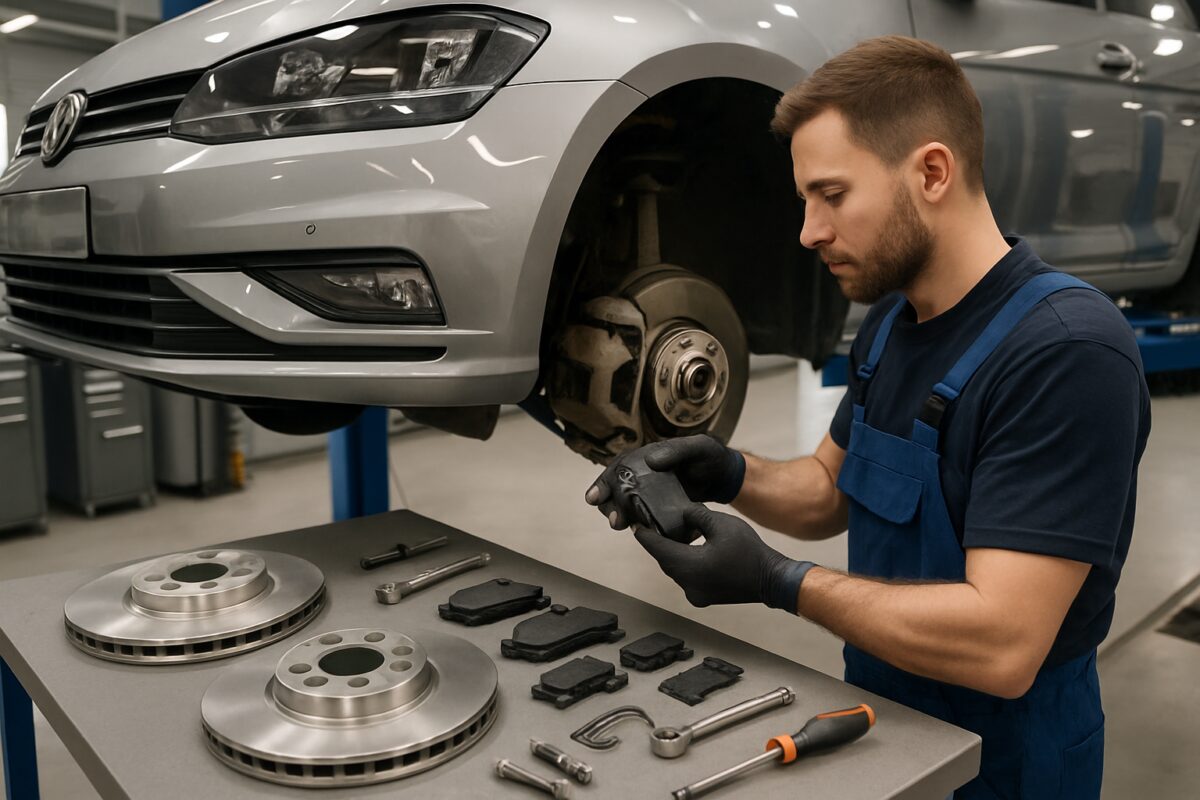
VW brake pads and discs replacement costs in the UK typically range from £150-£400 for pads and £200-£600 for discs, depending on your specific Volkswagen model and chosen component quality. Understanding these costs helps you make informed decisions about maintaining your vehicle’s safety systems whilst managing your budget effectively.
Understanding VW braking system components
Your Volkswagen’s braking system relies on several critical components working together. The brake pads create friction against the brake discs to stop your vehicle, whilst the discs themselves provide the surface area needed for effective deceleration.
Our specialists at AutoPartsPro frequently see VW owners neglecting routine brake maintenance until warning signs become severe. This approach often leads to more expensive repairs and compromised safety. Regular inspection every 10,000-15,000 miles prevents costly damage to other braking components.
Critical brake components in VW vehicles
Volkswagen vehicles typically feature ventilated front discs and solid rear discs, though some performance models use ventilated units all round. The brake rotors work alongside callipers, brake fluid, and various sensors to provide reliable stopping power.
Signs your VW needs brake replacement
Recognising brake wear symptoms early saves money and ensures safety. Our technicians recommend monitoring these indicators closely, as VW braking systems provide clear warnings before complete failure.
Visual inspection indicators
- Brake pad thickness less than 3mm remaining
- Scoring or deep grooves on disc surfaces
- Rust buildup around brake components
- Uneven wear patterns across the disc face
- Cracked or damaged brake lines
Performance warning signs
- Squealing or grinding noises during braking
- Vibration through the steering wheel
- Vehicle pulling to one side under braking
- Soft or spongy brake pedal feel
- Extended stopping distances
VW brake replacement costs breakdown
Brake replacement costs vary significantly across VW models and component quality levels. Understanding these price ranges helps you budget appropriately for maintenance.
| Component | Budget Range | Mid-Range | Premium |
|---|---|---|---|
| Front Brake Pads | £25-£40 | £40-£80 | £80-£150 |
| Rear Brake Pads | £20-£35 | £35-£60 | £60-£120 |
| Front Brake Discs | £30-£60 | £60-£120 | £120-£300 |
| Rear Brake Discs | £25-£45 | £45-£90 | £90-£200 |
Labour costs across the UK
Installation costs depend heavily on your location and chosen service provider. London and Southeast England typically command higher labour rates than northern regions. Most brake pad replacements require 1-2 hours labour, whilst disc replacement adds another hour per axle.
| Region | Hourly Rate | Pad Replacement | Disc Replacement |
|---|---|---|---|
| London/Southeast | £80-£120 | £80-£240 | £160-£360 |
| North/Midlands | £60-£90 | £60-£180 | £120-£270 |
| Scotland/Wales | £55-£85 | £55-£170 | £110-£255 |
| Independent Garage | £45-£70 | £45-£140 | £90-£210 |
Choosing the right brake components
Selecting appropriate brake components requires balancing performance, longevity, and budget considerations. Our experience shows that matching components to your driving style produces the best results.
Brake pad material types
Different pad compounds suit various driving conditions and preferences. Understanding these differences helps you choose components that match your needs perfectly.
- Organic pads: Quieter operation, gentler on discs, suitable for normal driving
- Semi-metallic pads: Better heat dissipation, longer lasting, slight noise increase
- Ceramic pads: Excellent performance, minimal dust, premium pricing
- Low-metallic pads: Good stopping power, moderate noise, cost-effective
- Performance pads: Track-ready compounds, aggressive bite, specialist application
Brake disc variations
Disc selection affects both performance and aesthetics. Our specialists recommend considering your driving requirements when choosing between standard, drilled, or slotted options.
- Standard solid discs: Cost-effective, reliable, suitable for most applications
- Ventilated discs: Better heat dissipation, standard on front axles
- Drilled discs: Improved wet weather performance, weight reduction
- Slotted discs: Enhanced pad cleaning action, reduced fade
- Drilled and slotted: Maximum performance, premium aesthetics
Professional tip: Always replace brake components in axle pairs to maintain balanced braking performance. Mixing old and new components creates uneven stopping forces that can compromise vehicle control during emergency braking situations.
VW model-specific considerations
Different Volkswagen models present unique challenges and opportunities for brake upgrades. Understanding these specifics helps you make informed decisions about component selection.
Popular VW models and brake specifications
Golf models typically use 280mm front discs with single-piston callipers, whilst performance variants like GTI feature larger 312mm units. Passat models often specify 288mm or 294mm front discs depending on engine size. Tiguan and other SUV models use larger brake systems to handle increased vehicle weight.
Our technical team frequently works on various VW platforms and notes that newer models often feature electronic parking brake systems. These require specialist diagnostic equipment for proper servicing, affecting labour costs and garage selection.
DIY vs professional installation
Brake replacement represents a critical safety procedure requiring proper tools and expertise. Whilst experienced DIY mechanics can handle basic pad changes, disc replacement often requires professional equipment.
Required tools for brake work
Basic pad replacement needs quality jacks, axle stands, brake fluid, and appropriate spanners. Disc replacement additionally requires disc removal tools and torque wrenches for proper reassembly. Many modern VW models also need electronic parking brake retraction tools.
Professional workshops benefit from hydraulic lifts, brake disc lathes, and diagnostic computers. These tools enable faster, more accurate work whilst ensuring proper system bleeding and electronic integration. Our detailed brake replacement guide provides comprehensive DIY instructions for confident home mechanics.
Genuine vs aftermarket brake parts
The choice between genuine VW parts and quality aftermarket alternatives significantly impacts both cost and performance. Understanding these trade-offs helps you make informed purchasing decisions.
Genuine VW brake advantages
Genuine components guarantee perfect fitment and maintain manufacturer warranties. These parts undergo extensive testing to meet VW’s specific performance standards. However, genuine parts typically cost 30-50% more than quality aftermarket alternatives.
Quality aftermarket options
Reputable aftermarket brands like Brembo, ATE, and Zimmermann often supply original equipment to Volkswagen. These manufacturers offer identical or superior performance at reduced costs. Our experience shows that quality aftermarket components frequently outlast genuine parts whilst offering better value.
Understanding OEM specifications helps identify components that meet or exceed original equipment standards without premium pricing.
Brake maintenance and longevity
Proper maintenance extends brake component life and maintains optimal performance. Simple preventive measures significantly reduce replacement frequency and associated costs.
Extending brake life
Gentle driving habits preserve brake components longer than aggressive use. Avoiding hard braking, using engine compression for deceleration, and maintaining proper brake fluid levels all contribute to extended component life.
Regular cleaning removes brake dust and corrosive deposits that accelerate wear. Monthly wheel removal for thorough inspection identifies problems before they become expensive failures. Our comprehensive maintenance guide covers essential brake care procedures.
When to seek professional help
Certain brake issues require immediate professional attention regardless of DIY capabilities. Recognising these situations prevents accidents and further damage to your Volkswagen’s braking system.
Complete brake failure, severe vibration, or unusual noises warrant immediate professional inspection. Electronic parking brake faults, ABS warning lights, or brake fluid leaks also need expert diagnosis. Modern VW vehicles integrate braking systems with stability control and other safety features requiring specialist knowledge.
Shopping for VW brake components
Finding quality brake parts at competitive prices requires understanding where to look and what to avoid. Reputable suppliers offer genuine and aftermarket options with appropriate warranties and technical support.
Online retailers often provide significant savings compared to main dealers, especially for aftermarket components. However, ensuring compatibility requires careful part number verification. Our technical team at AutoPartsPro assists customers with component selection using VIN numbers and detailed vehicle specifications.
Local motor factors offer immediate availability and personal service, though pricing may exceed online alternatives. Main dealers guarantee compatibility but typically charge premium prices for both parts and labour.
Quality brake components represent essential safety investments for your Volkswagen. Understanding costs, options, and installation requirements enables informed decisions that protect both your safety and budget. Whether choosing budget-friendly aftermarket parts or premium genuine components, prioritising quality over absolute lowest price ensures reliable braking performance. Regular maintenance and timely replacement keep your VW’s braking system operating safely whilst minimising long-term costs through preventive care.
Frequently Asked Questions (FAQ)
How often should I replace brake pads on my VW?
Brake pads typically last 25,000-40,000 miles depending on driving style and conditions. City driving and frequent stopping reduce pad life significantly.
Can I replace just brake pads without changing discs?
Yes, if discs remain within thickness tolerances and show no scoring damage. Always measure disc thickness before pad-only replacement.
Do I need to bleed brakes after pad replacement?
Brake bleeding isn’t required for simple pad changes. However, if brake fluid appears contaminated or dark, complete system bleeding improves performance.
How much can I save buying brake parts online?
Online purchases typically save 20-40% compared to main dealers. However, ensure correct part compatibility before ordering to avoid return costs.
Should I replace all four brake discs simultaneously?
Replace discs in axle pairs minimum. Full four-wheel replacement ensures balanced braking but isn’t always necessary if rear discs remain serviceable.

 Loading...