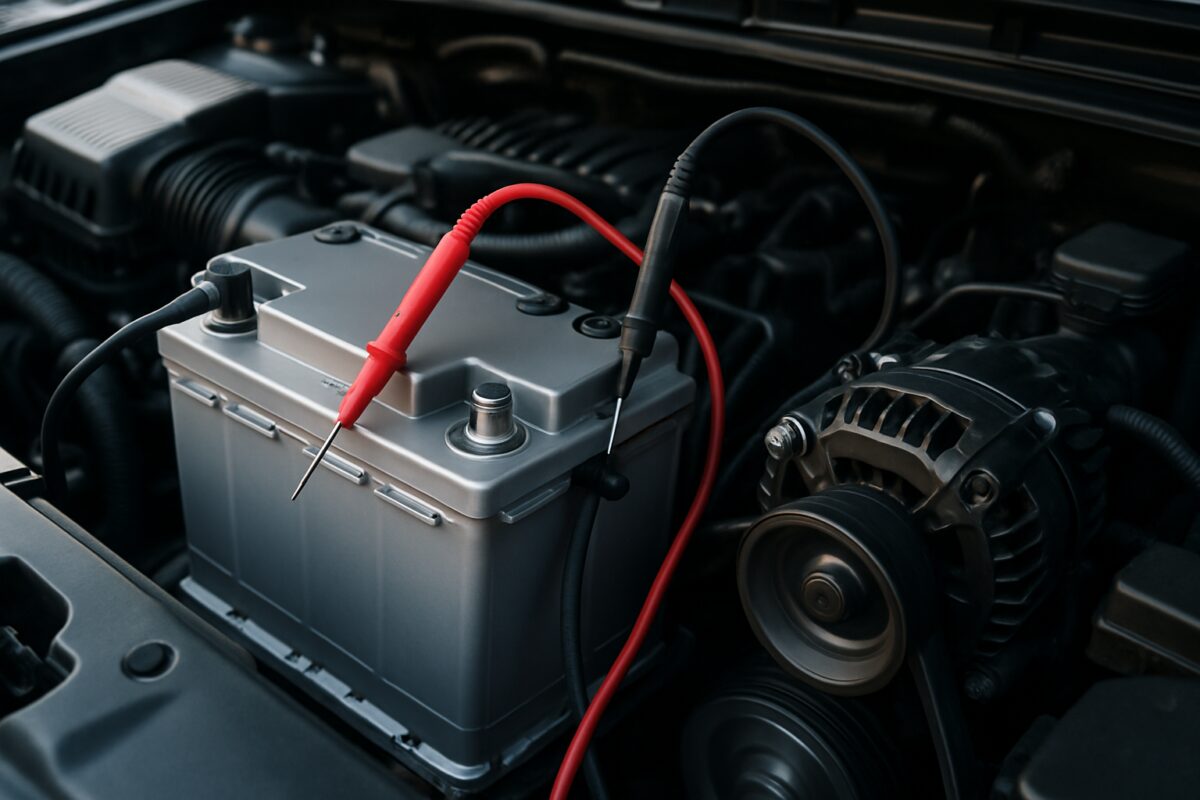
Yes, your car battery will charge at idle, but the process is slower compared to driving at highway speeds. When your engine runs at idle, the alternator still generates electrical power to charge the battery, though at a reduced rate due to lower RPMs. According to our Autopartspro mechanics, most modern alternators produce sufficient charge at idle to maintain battery power and run essential systems, but it may take 30-60 minutes to provide meaningful charge to a depleted battery.
How car charging works at idle
Your vehicle’s charging system operates through a simple yet effective mechanism. The alternator regulator controls the electrical output as the engine runs. At idle speeds (typically 600-800 RPM), the alternator rotates more slowly than at higher engine speeds, producing less electrical current.
The charging rate depends on several factors including engine RPM, alternator condition, and electrical load from accessories. Most alternators produce between 13.8-14.4 volts when functioning properly, regardless of engine speed, but the amperage output varies significantly.
Factors affecting charging efficiency at idle
Several variables influence how effectively your battery charges during idle periods:
Engine RPM and alternator output
Higher RPMs increase alternator output substantially. At idle, most alternators produce 40-60% of their maximum output capacity. This means a 100-amp alternator might only generate 40-60 amps at idle speeds.
Modern vehicles often include idle speed control systems that maintain consistent RPM, ensuring steady charging rates. However, older vehicles may experience fluctuating idle speeds, affecting charging consistency.
Electrical load from accessories
Your car’s electrical demands significantly impact charging effectiveness. High-draw components reduce available power for battery charging:
- Air conditioning compressors (5-15 amps)
- Headlights and interior lighting (10-20 amps)
- Radio and entertainment systems (5-10 amps)
- Heated seats and mirrors (5-15 amps)
- Electric fans and blower motors (10-25 amps)
When total electrical load exceeds alternator output at idle, the battery actually discharges to supplement power demand. This commonly occurs during winter months with heating systems running.
Battery condition and charging capacity
Your battery’s age and condition directly affect charging efficiency. Newer batteries accept charge more readily than aged units with internal resistance buildup.
| Battery Age | Charging Efficiency | Typical Capacity |
|---|---|---|
| 0-2 years | 95-100% | Full rated capacity |
| 3-4 years | 80-90% | Slight reduction |
| 5+ years | 60-75% | Noticeably reduced |
Temperature also plays a crucial role in charging effectiveness. Cold weather reduces battery capacity and increases internal resistance, making charging more difficult at idle speeds.
Time requirements for effective charging
Charging times vary considerably based on battery depletion level and alternator output. Our technical specialists have compiled typical charging scenarios:
Minimal discharge (engine start only)
After a normal engine start, most batteries require 10-15 minutes of idle time to restore charge. This assumes minimal electrical load and properly functioning alternator.
Moderate discharge (lights left on)
Batteries with moderate discharge need 30-45 minutes of idle time for adequate charging. However, driving provides faster charge restoration due to increased alternator output.
Deep discharge conditions
Severely discharged batteries may require hours of idle charging, making this method impractical. Professional charging or battery replacement often becomes necessary.
Professional tip: If your battery requires frequent charging at idle, have the charging system tested. Weak alternators or failing batteries need replacement before leaving you stranded.
Comparing idle charging vs driving
Driving provides significantly faster battery charging than idling. Highway speeds typically increase alternator output by 40-60% compared to idle conditions.
| Condition | Typical Alternator Output | Charging Rate |
|---|---|---|
| Idle (800 RPM) | 40-60 amps | Slow |
| City driving (1500 RPM) | 70-85 amps | Moderate |
| Highway driving (2500+ RPM) | 90-100 amps | Fast |
The increased RPM during driving engages the alternator’s full capacity, providing optimal charging conditions. Additionally, driving helps circulate battery electrolyte, improving chemical reactions necessary for charge acceptance.
Signs your charging system needs attention
Several symptoms indicate charging system problems that affect idle charging effectiveness:
Warning indicators
Dashboard warning lights provide early indication of charging problems. The battery or alternator warning light illuminates when system voltage drops below acceptable levels.
Dimming lights during idle suggest insufficient alternator output. This commonly occurs with failing alternators or excessive electrical load.
Performance symptoms
Slow engine cranking indicates battery weakness or charging system failure. Healthy batteries maintain strong cranking power even after extended idle periods.
Electrical accessories operating slowly or intermittently suggest voltage issues. Modern vehicles rely heavily on stable electrical supply for proper operation.
- Test alternator output with multimeter (should read 13.8-14.4 volts at idle)
- Check battery voltage with engine off (should read 12.6+ volts when fully charged)
- Inspect alternator belt tension and condition
- Examine battery terminals for corrosion or looseness
- Verify proper engine oil level for optimal alternator operation
Optimising idle charging performance
Several strategies improve battery charging effectiveness during idle periods:
Reduce electrical load
Minimising accessory use during idle charging maximises available power for battery restoration. Turn off unnecessary lights, air conditioning, and entertainment systems.
Consider the cumulative effect of multiple electrical accessories. Even small loads add up to significant power drain that impedes charging progress.
Maintain optimal idle speed
Slightly increasing idle speed (within manufacturer specifications) can improve alternator output. However, avoid excessive RPM that wastes fuel without proportional charging benefits.
Regular maintenance of air filters and fuel systems ensures smooth idle operation, supporting consistent alternator performance.
When idle charging isn’t sufficient
Certain situations require alternative charging methods beyond simple idling:
- Batteries discharged below 10.5 volts need professional charging
- Extremely cold weather reduces charging efficiency significantly
- Vehicles with high electrical demands may discharge even while idling
- Older alternators may lack capacity for effective idle charging
External battery chargers provide controlled charging rates optimal for battery health. These devices offer various charging modes suitable for different battery conditions and time constraints.
Environmental and fuel considerations
Extended idling for battery charging raises environmental and economic concerns. Modern engines consume 0.2-0.5 litres per hour while idling, making this charging method expensive for regular use.
Environmental regulations in many UK areas restrict unnecessary idling. Consider local restrictions before using extended idle charging regularly.
Alternative charging methods like external chargers or solar panels offer environmentally friendly options for maintaining battery charge without engine operation.
Professional maintenance recommendations
Our experienced technicians recommend regular charging system inspections as part of routine maintenance. Annual testing identifies potential problems before they cause roadside breakdowns.
Professional testing equipment provides accurate alternator output measurements across various RPM ranges. This data reveals charging system capacity and helps predict component lifespan.
Battery load testing determines actual capacity versus rated specifications. This information guides replacement decisions and prevents unexpected failures.
Understanding your vehicle’s charging capabilities empowers informed decisions about battery maintenance and replacement timing. While idle charging works for minor discharge situations, driving remains the most effective method for battery restoration. Regular maintenance of charging system components ensures reliable performance and extends battery life, keeping you mobile and confident on UK roads. For optimal results, combine proper charging techniques with quality replacement parts when maintenance becomes necessary.
Will my car battery charge if I just let it idle?
Yes, but slowly. Idle charging works for minor discharge but takes 30-60 minutes for meaningful restoration.
How long should I idle my car to charge the battery?
For normal starts, 10-15 minutes suffices. Moderate discharge requires 30-45 minutes of idle time minimum.
Is it better to drive or idle to charge battery?
Driving is significantly better, providing 40-60% more alternator output than idling for faster charging.
Can I damage my battery by charging at idle?
No, idle charging won’t damage your battery. However, extended idling wastes fuel and may not fully charge deeply discharged batteries.
What affects how well my battery charges at idle?
Alternator condition, electrical load from accessories, battery age, and ambient temperature all influence idle charging effectiveness significantly.

 Loading...