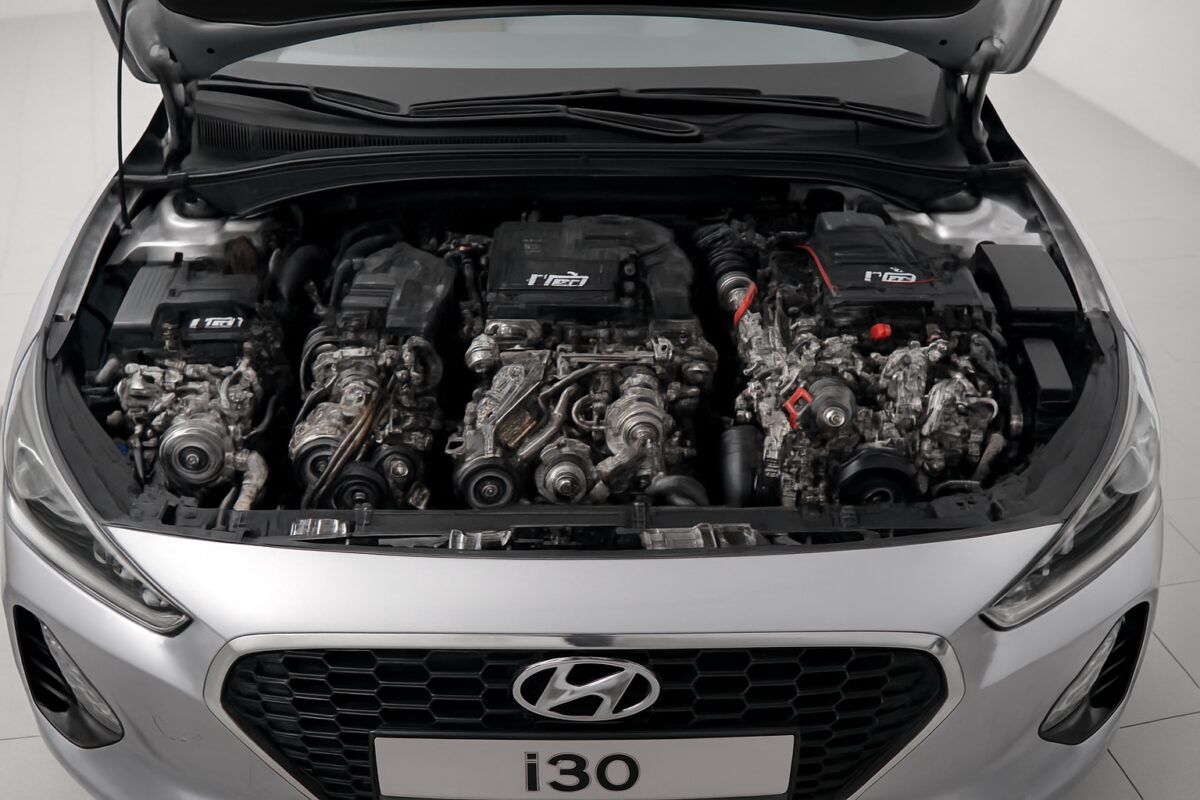
The Hyundai i30 stands as a reliable compact hatchback in the competitive European market, offering drivers a balanced blend of practicality and performance. The heart of any vehicle lies in its powerplant, and the i30’s engine lineup plays a crucial role in determining fuel efficiency, driving dynamics, and overall ownership experience. From efficient naturally aspirated petrol units to turbocharged variants and diesel options, the i30 presents compelling choices for UK motorists seeking dependable transportation with varying performance characteristics.
Comparison table of all engines
| Engine | Power output | Torque | Fuel consumption | Reliability |
|---|---|---|---|---|
| 1.4 MPI | 100 PS | 133 Nm | 44-47 mpg | Excellent |
| 1.0 T-GDI | 120 PS | 172 Nm | 47-50 mpg | Very Good |
| 1.4 T-GDI | 140 PS | 242 Nm | 42-45 mpg | Good |
| 2.0 T-GDI | 275 PS | 353 Nm | 32-35 mpg | Good |
| 1.6 CRDi | 115-136 PS | 280-320 Nm | 55-62 mpg | Very Good |
Engine 1.4 MPI Overview
The 1.4-litre naturally aspirated petrol engine serves as the entry-level powerplant in the i30 range. This inline-four unit features multi-point fuel injection technology and operates without forced induction, delivering power through a straightforward design philosophy. The engine produces 100 PS and 133 Nm of torque, making it suitable for urban commuting and light motorway duties. Its naturally aspirated configuration ensures predictable power delivery and reduced complexity compared to turbocharged alternatives.
Pros
- Simple, reliable design with fewer components to fail
- Lower maintenance costs due to absence of turbocharger
- Smooth power delivery throughout the rev range
- Adequate performance for daily driving needs
- Good fuel economy in mixed driving conditions
Cons
- Limited power output for overtaking manoeuvres
- Lacks torque at lower engine speeds
- May feel underpowered on steep inclines
- Not suitable for spirited driving enthusiasts
- Higher emissions compared to modern turbocharged units
Engine 1.0 T-GDI Overview
Hyundai’s 1.0-litre turbocharged petrol engine represents modern downsizing technology at its finest. This three-cylinder unit employs direct injection and turbocharging to extract impressive performance from its compact displacement. The T-GDI powerplant generates 120 PS and 172 Nm of torque, providing a compelling balance between efficiency and drivability. This engine showcases how manufacturers can maintain performance whilst reducing environmental impact through clever engineering solutions.
Pros
- Excellent fuel economy figures across various driving conditions
- Strong low-end torque delivery thanks to turbocharging
- Reduced CO2 emissions benefit company car drivers
- Compact size allows for better weight distribution
- Modern technology ensures refined operation
Cons
- Three-cylinder vibration characteristics may be noticeable
- Turbo lag can be present at very low engine speeds
- Higher complexity increases potential repair costs
- May require premium fuel for optimal performance
- Turbocharger components need regular maintenance attention
Engine 1.4 T-GDI Overview
The 1.4-litre turbocharged petrol engine strikes an appealing middle ground in the i30’s engine lineup. This four-cylinder unit combines direct injection technology with turbocharging to deliver 140 PS and an impressive 242 Nm of torque. The engine’s broader powerband makes it particularly well-suited to varied driving conditions, from city traffic to motorway cruising. Professional mechanics at AutopartsPro often recommend this engine for drivers seeking versatility without compromising efficiency.
Pros
- Strong torque output provides excellent drivability
- Four-cylinder configuration offers smooth operation
- Good balance between performance and fuel economy
- Suitable for both urban and motorway driving
- Proven reliability in various Hyundai models
Cons
- Higher initial purchase price compared to naturally aspirated options
- Turbocharger maintenance adds to long-term costs
- May require higher octane fuel for optimal performance
- More complex engine management systems
- Potential for carbon build-up in direct injection systems
Engine 2.0 T-GDI (N Performance) Overview
The high-performance 2.0-litre turbocharged engine powers the i30 N variants, representing Hyundai’s serious commitment to performance motoring. This inline-four powerplant delivers an impressive 275 PS and 353 Nm of torque through sophisticated engineering including a larger turbocharger, upgraded internals, and performance-oriented tuning. The engine features advanced thermal management and robust construction to handle sustained high-performance driving whilst maintaining reliability standards expected from modern powertrains.
Pros
- Exceptional power output for spirited driving
- Strong torque delivery across wide rev range
- Performance-focused engineering ensures durability
- Exciting exhaust note enhances driving experience
- Competitive performance figures against rivals
Cons
- Significantly higher fuel consumption than other variants
- Premium fuel requirements increase running costs
- Performance-oriented components command higher prices
- May require more frequent servicing intervals
- Higher insurance premiums due to performance classification
Engine 1.6 CRDi Overview
The 1.6-litre diesel engine serves drivers prioritising fuel efficiency and long-distance comfort. This four-cylinder turbocharged unit utilises common rail direct injection technology to deliver between 115-136 PS depending on the specific variant, whilst generating substantial torque figures of 280-320 Nm. The CRDi powerplant excels in motorway cruising scenarios and represents an excellent choice for high-mileage drivers seeking maximum efficiency. Our AutopartsPro specialists frequently recommend quality fuel filters for optimal diesel engine performance.
Pros
- Outstanding fuel economy figures ideal for long-distance driving
- High torque output provides excellent pulling power
- Lower CO2 emissions benefit environmentally conscious drivers
- Proven reliability across multiple Hyundai applications
- Strong resale values in the used car market
Cons
- Diesel particulate filter may require periodic regeneration
- Higher initial purchase price compared to petrol variants
- Not suitable for short urban journeys due to DPF concerns
- Diesel fuel prices can be volatile
- May face future restrictions in low emission zones
Maintenance cost
| Engine | Recommended Interval | Estimated Cost | Cost per 10000 miles |
|---|---|---|---|
| 1.4 MPI | 10,000 miles | £120-150 | £120-150 |
| 1.0 T-GDI | 10,000 miles | £140-180 | £140-180 |
| 1.4 T-GDI | 10,000 miles | £150-190 | £150-190 |
| 2.0 T-GDI | 7,500 miles | £200-250 | £267-333 |
| 1.6 CRDi | 10,000 miles | £160-200 | £160-200 |
Engine Sound and Character
Each i30 engine variant presents distinct acoustic and performance characteristics that contribute significantly to the driving experience. The 1.4 MPI provides a traditional four-cylinder soundtrack with smooth, predictable power delivery that many drivers find reassuring. Its naturally aspirated nature ensures consistent throttle response without the complexity of forced induction systems.
The 1.0 T-GDI exhibits typical three-cylinder characteristics with a distinctive thrum at idle that transforms into an eager, responsive note under acceleration. The turbocharger adds a subtle whistle during spirited driving, whilst the engine’s compact nature contributes to surprisingly engaging performance dynamics.
Moving up to the 1.4 T-GDI brings a more refined four-cylinder character with excellent mid-range punch. This engine strikes an ideal balance between efficiency and performance, delivering smooth power without excessive noise intrusion into the cabin. The turbocharger integration feels seamless, providing strong torque delivery from low engine speeds.
Professional tip: Regular air filter replacement ensures optimal engine breathing and maintains performance characteristics across all i30 engine variants.
The 2.0 T-GDI N Performance engine delivers an altogether different experience with its purposeful, aggressive note that reflects its performance intentions. The larger displacement and performance tuning create a more dramatic soundtrack, particularly with the optional performance exhaust system engaged.
Finally, the 1.6 CRDi diesel presents modern refinement with minimal noise intrusion at cruising speeds. The engine’s strong low-end torque delivery creates confidence-inspiring acceleration whilst maintaining impressive efficiency figures during extended motorway journeys.
Who each Engine Is Best For
| Engine | Best For | Driving Profile | Key Benefits |
|---|---|---|---|
| 1.4 MPI | Budget-conscious owners | City commuting, light duties | Low running costs, reliability |
| 1.0 T-GDI | Efficiency enthusiasts | Mixed urban/motorway driving | Excellent fuel economy, modern tech |
| 1.4 T-GDI | Daily commuters | Varied driving conditions | Versatility, good performance |
| 2.0 T-GDI | Performance enthusiasts | Spirited driving, track days | High power output, excitement |
| 1.6 CRDi | Long-distance drivers | Motorway cruising, high mileage | Superior fuel economy, torque |
Maintenance tip: Quality oil filters and regular servicing intervals are crucial for maintaining optimal performance and longevity across all i30 engine variants.
Understanding your driving patterns and requirements helps determine the most suitable engine choice. Urban drivers benefit from the simplicity of the 1.4 MPI or the efficiency of the 1.0 T-GDI, whilst those covering significant annual mileage should consider the diesel option. Performance-oriented drivers will naturally gravitate towards the N Performance variant despite its higher running costs.
Frequently Asked Questions (FAQ)
Which Hyundai i30 engine offers the best fuel economy?
The 1.6 CRDi diesel engine delivers the best fuel economy, achieving up to 62 mpg in ideal conditions, making it perfect for high-mileage drivers.
Is the 1.0 T-GDI engine reliable for long-term ownership?
Yes, the 1.0 T-GDI has proven reliable with proper maintenance. Regular servicing and quality components ensure longevity despite its compact three-cylinder design.
What maintenance does the 2.0 T-GDI N Performance engine require?
The N Performance engine requires more frequent oil changes every 7,500 miles and benefits from premium fuel and quality spark plugs for optimal performance.
Can the 1.4 MPI engine handle motorway driving effectively?
While capable of motorway speeds, the 1.4 MPI lacks power for confident overtaking. It’s better suited to urban driving and light motorway duties.
Do turbocharged i30 engines require special maintenance considerations?
Turbocharged engines benefit from quality oil, regular filter changes, and allowing cool-down periods after spirited driving to ensure turbocharger longevity and optimal performance.

 Loading...