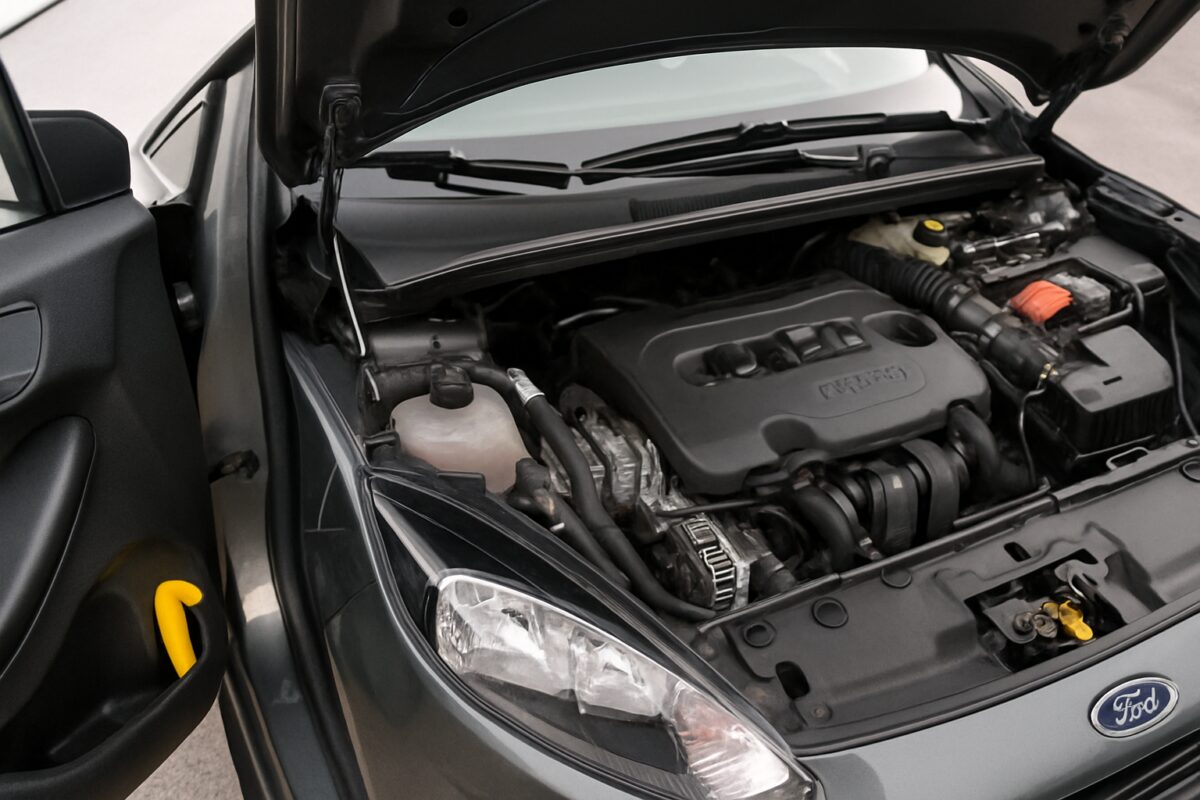
To find and operate the Ford Fiesta bonnet latch, locate the hood release lever inside the cabin on the left side near the driver’s footwell, pull it to release the primary catch, then use the safety latch under the bonnet’s centre to fully open the hood. The process involves releasing two security mechanisms and following proper safety procedures to prevent damage or injury.
Tools & parts required
Opening your Ford Fiesta’s bonnet requires minimal equipment, making it an accessible task for any driver. The built-in mechanisms are designed for regular use without additional tools.
Parts needed:
- No replacement parts required for normal operation
- Bonnet gas struts (if replacement needed)
- Bonnet release cable (for repairs only)
- Safety latch mechanism (if faulty)
Tools required:
- No tools needed for standard operation
- Torch or mobile phone light (for poor visibility)
- Safety gloves (optional for protection)
- Long-nose pliers (emergency cable release)
Always ensure the engine is switched off and cooled before opening the bonnet to prevent burns from hot components.
Safety precautions
Before attempting to open your Ford Fiesta’s bonnet, several safety measures must be observed to prevent injury and vehicle damage.
Park on level ground with the handbrake engaged and engine switched off. Allow the engine to cool for at least 30 minutes after driving to avoid contact with hot surfaces. Ensure the vehicle is secure and won’t roll during the procedure.
Keep fingers clear of moving parts and be aware that the bonnet may spring open quickly once the safety latch is released. Wear appropriate clothing without loose sleeves that could catch on components.
Step-by-step instructions
Opening the Ford Fiesta bonnet follows a straightforward two-stage process designed to prevent accidental opening whilst driving.
Step 1: Locate the interior bonnet release
Inside your Ford Fiesta, find the bonnet release lever positioned on the lower left side of the dashboard, near the driver’s left knee. The lever typically features a bonnet symbol and may be yellow or have a contrasting colour for easy identification.
Pull the lever towards you with a firm, steady motion. You’ll hear a distinct ‘pop’ sound indicating the primary latch has released. The bonnet will lift slightly but remain secured by the safety catch.
Step 2: Release the safety latch
Exit the vehicle and approach the front of your Fiesta. Lift the bonnet slightly with one hand whilst feeling underneath the centre of the bonnet for the safety latch mechanism.
The safety latch is typically a small lever or handle located centrally under the bonnet’s leading edge. Push or pull this mechanism (depending on your Fiesta’s year) whilst simultaneously lifting the bonnet with your other hand.
Step 3: Open the bonnet fully
Once both latches are released, lift the bonnet upwards using both hands for control. The gas struts will assist the opening motion and hold the bonnet in the raised position automatically.
Ensure the bonnet is fully secure in the open position before beginning any maintenance work. The gas struts should hold it firmly without additional support.
Step 4: Closing the bonnet
To close the bonnet, lift it slightly to release pressure from the gas struts, then lower it to approximately 30cm above the closed position. Release your grip and allow the bonnet’s weight to engage the primary latch mechanism.
Press down firmly on the bonnet’s centre to ensure both latches are properly engaged. You should hear a secure clicking sound confirming proper closure.
Never force the bonnet closed by slamming it down, as this can damage the latching mechanism or bend the bonnet itself.
Common mistakes to avoid
Many Ford Fiesta owners encounter difficulties when first learning to operate the bonnet latch system. Understanding these common errors helps ensure smooth operation and prevents damage.
Avoid pulling the interior release lever multiple times if the bonnet doesn’t open immediately. One firm pull is sufficient, and repeated attempts may damage the cable mechanism. If the bonnet won’t open, check that you’re operating the correct lever and that the battery isn’t preventing access in models with electronic releases.
Don’t attempt to force the safety latch if it feels stuck. Corrosion or debris can affect its operation, requiring gentle cleaning rather than excessive force. Similarly, never bypass safety mechanisms or attempt to hold the bonnet open manually without proper gas strut support.
When closing, resist the temptation to slam the bonnet shut from a high position. This practice often results in incomplete latching, leaving the bonnet partially secured and potentially dangerous whilst driving.
When should you access the engine bay?
Regular engine bay access forms part of essential vehicle maintenance, helping identify potential issues before they become costly repairs.
Monthly checks should include inspecting fluid levels, examining belts for wear, and checking the condition of visible hoses and connections. These simple observations can prevent breakdowns and extend your Fiesta’s lifespan significantly.
Open the bonnet immediately if warning lights illuminate on your dashboard, particularly oil pressure, temperature, or brake fluid indicators. Quick visual inspection often reveals obvious problems like leaks or disconnected components.
Seasonal maintenance also requires bonnet access for tasks like checking antifreeze levels before winter or inspecting the air filter during spring cleaning schedules.
Related maintenance you can do at the same time
Once you have the bonnet open, several routine maintenance tasks become accessible, maximising the efficiency of your inspection time.
Check all fluid levels including engine oil, coolant, brake fluid, and power steering fluid. Top up as necessary using manufacturer-approved products to maintain optimal performance and warranty coverage.
Examine the engine radiator and cooling system for leaks, corrosion, or debris accumulation. Clean any leaves or dirt from the radiator fins to maintain proper airflow and prevent overheating.
Inspect drive belts for cracks, fraying, or glazing that indicates replacement needs. Similarly, check hose clamps for tightness and hoses for splits or soft spots that suggest deterioration.
Consider these complementary tasks detailed in our guides on DIY oil filter replacement and replacing the air filter for comprehensive maintenance routines.
Frequently asked questions
Why won’t my Ford Fiesta bonnet open after pulling the release?
The safety latch under the bonnet likely needs manual operation. Feel for the central release mechanism and operate it whilst lifting the bonnet simultaneously.
Can I open the bonnet if the cable breaks?
Yes, emergency access involves removing the front grille panel and manually operating the latch mechanism with long-nose pliers or similar tools from underneath.
How often should I lubricate the bonnet latches?
Annual lubrication with light machine oil prevents corrosion and ensures smooth operation. Apply sparingly to pivot points and moving mechanisms only.
What if the gas struts won’t hold the bonnet open?
Failed gas struts require immediate replacement for safety. Never attempt engine bay work without proper bonnet support using the designated prop rod.
Is it normal for the bonnet to feel heavy when opening?
Some resistance is normal, but excessive force suggests gas strut failure or seized hinges requiring inspection and possible replacement for safe operation.
Mastering your Ford Fiesta’s bonnet operation enables confident vehicle maintenance and troubleshooting. Regular practice builds familiarity with the mechanisms whilst proper technique prevents damage and ensures safety. For additional maintenance guidance, explore our comprehensive articles on common Ford Fiesta problems and general car maintenance to keep your vehicle running smoothly.

 Loading...