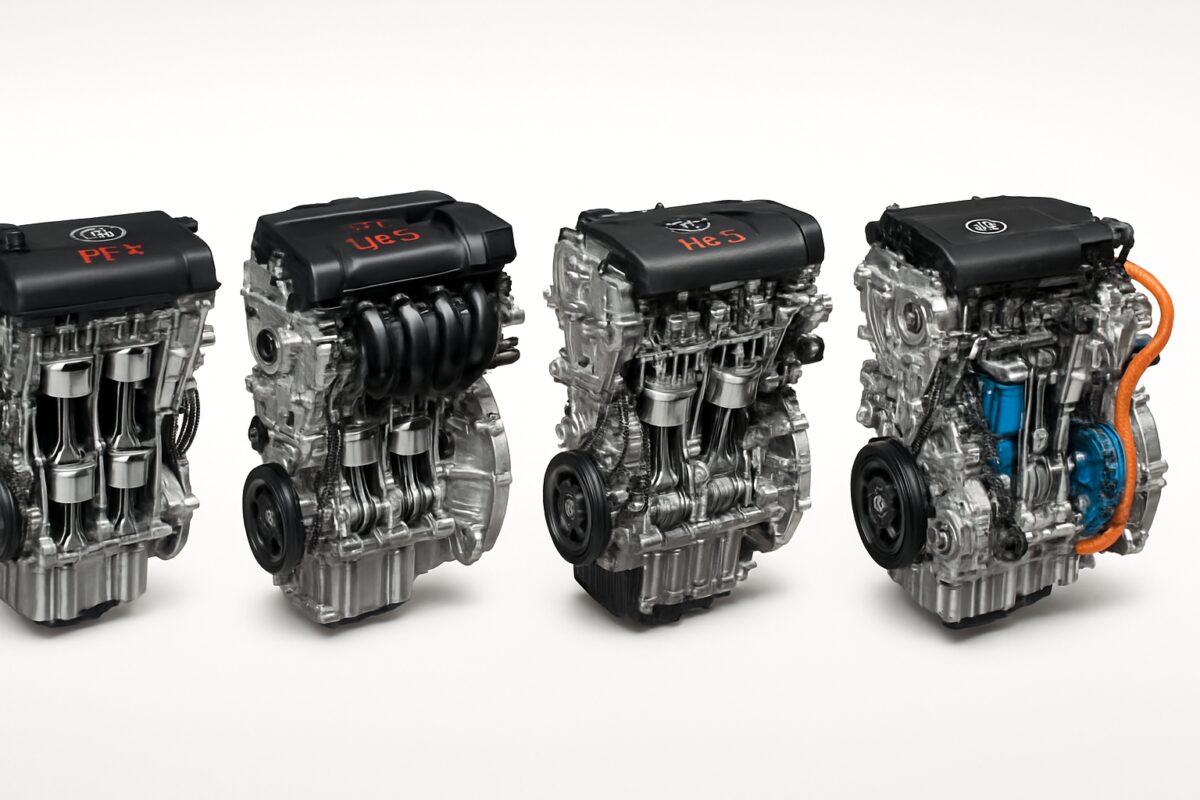
The Toyota Yaris stands as one of Britain’s most popular superminis, renowned for its reliability and economical operation. At the heart of this compact marvel lies a carefully engineered range of powerplants that have evolved significantly over the years. Understanding these engines is crucial for potential buyers, as they directly influence fuel economy, performance characteristics, and long-term ownership costs. From naturally aspirated petrol units delivering 69 to 120 horsepower, to advanced hybrid systems producing up to 116 horsepower, the Yaris offers something for every driving requirement.
Comparison table of all engines
| Engine | Power output | Torque | Fuel consumption | Reliability |
|---|---|---|---|---|
| 1.0 VVT-i | 69 hp | 95 Nm | 52.3 mpg | Excellent |
| 1.3 VVT-i | 86 hp | 121 Nm | 48.7 mpg | Excellent |
| 1.33 Dual VVT-i | 99 hp | 132 Nm | 47.9 mpg | Very good |
| 1.5 VVT-i | 106 hp | 140 Nm | 44.8 mpg | Very good |
| 1.8 Hybrid | 116 hp (combined) | 142 Nm | 68.9 mpg | Excellent |
1.0 VVT-i overview
The 1.0-litre VVT-i represents Toyota’s entry-level offering in the Yaris lineup. This naturally aspirated, three-cylinder petrol engine features a single overhead camshaft configuration with 12 valves. The unit employs Toyota’s Variable Valve Timing-intelligent technology, which optimises valve timing across different engine speeds to enhance both performance and fuel efficiency.
This compact powerplant uses multi-point fuel injection and runs on regular unleaded petrol. The engine’s lightweight construction contributes significantly to the Yaris’s overall kerb weight reduction, making it an ideal choice for urban environments where nimble handling matters most.
Pros
- Exceptional fuel economy for city driving
- Low insurance group rating
- Minimal maintenance requirements
- Affordable replacement parts availability
- Lightweight construction enhances handling
Cons
- Limited power for motorway overtaking
- Three-cylinder vibration at idle
- Struggles with full passenger loads
- Noisy under hard acceleration
1.3 VVT-i overview
Toyota’s 1.3-litre VVT-i engine strikes an excellent balance between performance and efficiency. This four-cylinder, naturally aspirated unit features dual overhead camshafts with 16 valves, providing smoother operation compared to its three-cylinder sibling. The engine incorporates Toyota’s proven VVT-i system for optimal valve timing control.
Built with an aluminium cylinder head and cast-iron block, this powerplant delivers reliable performance whilst maintaining excellent fuel economy. The multi-point fuel injection system ensures precise fuel delivery across all operating conditions, contributing to the engine’s reputation for longevity.
Pros
- Smooth four-cylinder operation
- Good balance of power and economy
- Proven reliability record
- Suitable for mixed driving conditions
- Reasonable performance for overtaking
Cons
- Higher fuel consumption than 1.0-litre
- Slightly higher insurance costs
- Less responsive than modern turbocharged alternatives
- Can feel underpowered with four adults aboard
1.33 Dual VVT-i overview
The 1.33-litre Dual VVT-i represents Toyota’s modern approach to naturally aspirated engine design. This four-cylinder unit features variable valve timing on both intake and exhaust camshafts, hence the ‘Dual’ designation. The engine employs a 16-valve DOHC configuration with an aluminium construction throughout for weight reduction.
This powerplant utilises Toyota’s advanced fuel injection technology and runs efficiently on regular unleaded petrol. The Dual VVT-i system allows for precise control over valve timing, optimising combustion efficiency across the entire rev range whilst maintaining excellent emissions performance.
Pros
- Advanced dual VVT-i technology
- Good power output for displacement
- Lightweight aluminium construction
- Responsive throttle characteristics
- Low emissions output
Cons
- More complex valve timing system
- Higher maintenance costs than simpler engines
- Requires premium servicing knowledge
- Potential VVT-i actuator issues with age
1.5 VVT-i overview
Toyota’s 1.5-litre VVT-i engine delivers the strongest naturally aspirated performance in the Yaris range. This four-cylinder unit features a robust cast-iron block with aluminium cylinder head, providing excellent durability for high-mileage applications. The engine incorporates a 16-valve DOHC design with Toyota’s proven VVT-i technology.
The larger displacement provides adequate torque for comfortable motorway cruising and confident overtaking manoeuvres. Multi-point fuel injection ensures efficient combustion, whilst the engine’s strong low-end torque delivery makes it particularly suitable for drivers who frequently carry passengers or luggage.
Pros
- Strong torque delivery across rev range
- Confident motorway performance
- Robust construction for longevity
- Suitable for towing light trailers
- Good acceleration from standstill
Cons
- Higher fuel consumption in urban driving
- Increased road tax due to higher emissions
- More expensive servicing costs
- Higher insurance group rating
1.8 Hybrid overview
The Toyota Yaris Hybrid combines a 1.8-litre naturally aspirated petrol engine with an electric motor system, creating Toyota’s most efficient Yaris powertrain. The petrol engine features Toyota’s proven Dual VVT-i technology, whilst the electric motor provides instant torque assistance and enables pure electric driving at low speeds.
This sophisticated hybrid system uses a continuously variable transmission (CVT) to seamlessly blend power from both the petrol engine and electric motor. The system automatically switches between electric-only, petrol-only, and combined power modes depending on driving conditions and battery charge levels.
Pros
- Exceptional fuel economy figures
- Ultra-low emissions for city driving
- Instant electric motor torque
- Quiet operation in electric mode
- Advanced hybrid technology
- Excellent reliability record
Cons
- Higher initial purchase price
- CVT transmission can feel sluggish
- Limited electric-only range
- Complex system requires specialist servicing
- Battery replacement costs after warranty
Maintenance cost
| Engine | Recommended Interval | Estimated Cost | Cost per 10,000 miles |
|---|---|---|---|
| 1.0 VVT-i | 10,000 miles / 12 months | £180-220 | £180-220 |
| 1.3 VVT-i | 10,000 miles / 12 months | £200-250 | £200-250 |
| 1.33 Dual VVT-i | 10,000 miles / 12 months | £220-270 | £220-270 |
| 1.5 VVT-i | 10,000 miles / 12 months | £240-290 | £240-290 |
| 1.8 Hybrid | 10,000 miles / 12 months | £280-350 | £280-350 |
Engine sound and character
The Toyota Yaris engine lineup offers distinctly different auditory experiences. The 1.0 VVT-i produces a characteristic three-cylinder thrum that becomes more pronounced under acceleration, though it remains acceptably refined for city driving. Our mechanics at AutopartsPro note that this engine’s sound signature is typical of modern three-cylinder units, with a slight vibration felt through the steering wheel at idle.
The four-cylinder engines (1.3, 1.33, and 1.5 VVT-i) deliver smoother operation with a more conventional petrol engine note. The 1.3-litre provides a pleasant, subdued character that suits the Yaris’s refined nature, whilst the 1.5-litre offers a slightly more purposeful sound under acceleration.
The hybrid system creates a unique driving experience, with virtually silent operation in electric mode giving way to the petrol engine’s smooth four-cylinder note when required. The CVT transmission contributes to a continuously variable engine note that some drivers find less engaging than traditional automatics.
Professional tip: Regular air filter replacement every 12,000 miles significantly improves engine sound quality and throttle response across all Yaris engines.
Who each engine is best for
| Engine | Best for |
|---|---|
| 1.0 VVT-i | Daily city commuters, new drivers, ultra-low running costs |
| 1.3 VVT-i | Mixed driving conditions, first-time buyers, balanced performance |
| 1.33 Dual VVT-i | Modern technology enthusiasts, efficiency-focused drivers |
| 1.5 VVT-i | Motorway driving, family use, light commercial applications |
| 1.8 Hybrid | Eco-conscious drivers, high-mileage users, urban taxi operators |
According to AutopartsPro’s extensive experience servicing Yaris models, the 1.3 VVT-i represents the sweet spot for most UK drivers. It provides sufficient power for overtaking whilst maintaining Toyota’s renowned reliability. For those prioritising environmental considerations, the hybrid system offers unmatched efficiency, particularly beneficial for drivers covering high annual mileages or operating in congested urban areas.
Budget-conscious buyers will find the 1.0 VVT-i adequate for city driving, though motorway performance requires patience. The 1.5-litre suits drivers requiring additional load-carrying capability or those who frequently tackle challenging terrain.
Expert recommendation: Consider your typical journey patterns carefully. Urban drivers benefit most from the hybrid system, whilst mixed-use drivers should opt for the proven 1.3 VVT-i for optimal balance of performance and economy.
Regular maintenance using quality components significantly extends engine life across all variants. Our specialists recommend using genuine oil filters and Toyota-approved lubricants for optimal protection. The spark plugs typically require replacement every 30,000 miles, whilst timing chain maintenance becomes crucial after 80,000 miles on higher-mileage examples.
For those considering DIY maintenance, the Yaris engines are generally accessible, though hybrid variants require specialist knowledge for safety reasons. Understanding proper oil specifications ensures optimal engine protection across all variants.
What makes the 1.0 VVT-i engine particularly economical?
The three-cylinder configuration reduces internal friction whilst VVT-i technology optimises valve timing for maximum efficiency. Combined with the Yaris’s lightweight construction, this creates exceptional fuel economy figures.
How reliable is the Yaris hybrid system over high mileages?
Toyota’s hybrid technology demonstrates excellent long-term reliability, with many examples exceeding 200,000 miles. Battery degradation occurs gradually, typically maintaining 80% capacity after 10 years of use.
Which Yaris engine offers the best performance for motorway driving?
The 1.5 VVT-i provides the strongest motorway performance with adequate torque for confident overtaking. The hybrid system offers good efficiency but requires patience for rapid acceleration manoeuvres.
Are there any common issues with the 1.33 Dual VVT-i engine?
The dual VVT-i system occasionally experiences actuator problems after high mileages, typically manifesting as rough idling. Regular engine cleaning helps prevent these issues.
What servicing schedule should I follow for Yaris engines?
Toyota recommends 10,000-mile service intervals for all Yaris engines. However, severe operating conditions such as frequent short journeys may require more frequent attention to maintain optimal performance and reliability.

 Loading...