Power steering fluid is a specialised hydraulic fluid that enables smooth steering operation in vehicles equipped with power steering systems. To maintain optimal performance, use manufacturer-specified fluid type (ATF Dexron, PSF, or CHF variants), check levels monthly when engine is cold, and replace fluid every 40,000-60,000 miles or according to service schedule to prevent system damage.
Types of power steering fluid and how to choose the right one
Modern vehicles use several types of power steering fluid, each designed for specific system requirements. Understanding these differences prevents costly damage and ensures proper operation.
Automatic transmission fluid (ATF) Dexron variants are commonly used in many vehicles. This multi-purpose fluid provides excellent hydraulic properties and is compatible with most power steering systems. However, some manufacturers specify dedicated power steering fluid (PSF) for optimal performance.
Central hydraulic fluid (CHF) is used in advanced systems that integrate power steering with other hydraulic functions. German manufacturers often specify CHF 11S or CHF 202 for their vehicles. Never mix different fluid types, as this can cause seal damage and system failure.
Always consult your vehicle’s handbook or service documentation to identify the correct specification. Using incorrect fluid voids warranty coverage and may require expensive system flushing.
Tools and parts required
Parts needed:
- Manufacturer-specified hydraulic oil (check capacity requirements)
- New reservoir cap seal (if replacing)
- Disposable funnel with fine mesh
Tools required:
- Jack and axle stands for safe vehicle lifting
- Socket set for reservoir access
- Fluid extraction pump or turkey baster
- Clean cloth rags
- Protective gloves and safety glasses
- Catch pan for old fluid disposal
Always verify fluid compatibility with your vehicle’s system before purchase. Using incorrect specifications can cause irreversible damage to expensive components like the power steering pump.
Safety precautions
Work in a well-ventilated area to avoid inhaling fluid vapours. Power steering fluid is flammable and toxic, requiring careful handling throughout the procedure.
Disconnect the battery negative terminal to prevent accidental engine starting during work. Ensure the engine is completely cold before beginning, as hot components can cause severe burns.
Wear protective gloves and safety glasses throughout the process. Keep a fire extinguisher nearby when working with hydraulic fluids.
Use proper lifting equipment and never work under a vehicle supported only by a jack.
Step-by-step fluid change instructions
Step 1: Locate and access the reservoir
The power steering fluid reservoir is typically mounted near the engine bay’s firewall or alongside the brake master cylinder. Remove the engine cover if necessary to access the reservoir cap.
Clean around the reservoir cap thoroughly to prevent contamination entering the system during servicing.
Step 2: Check current fluid condition
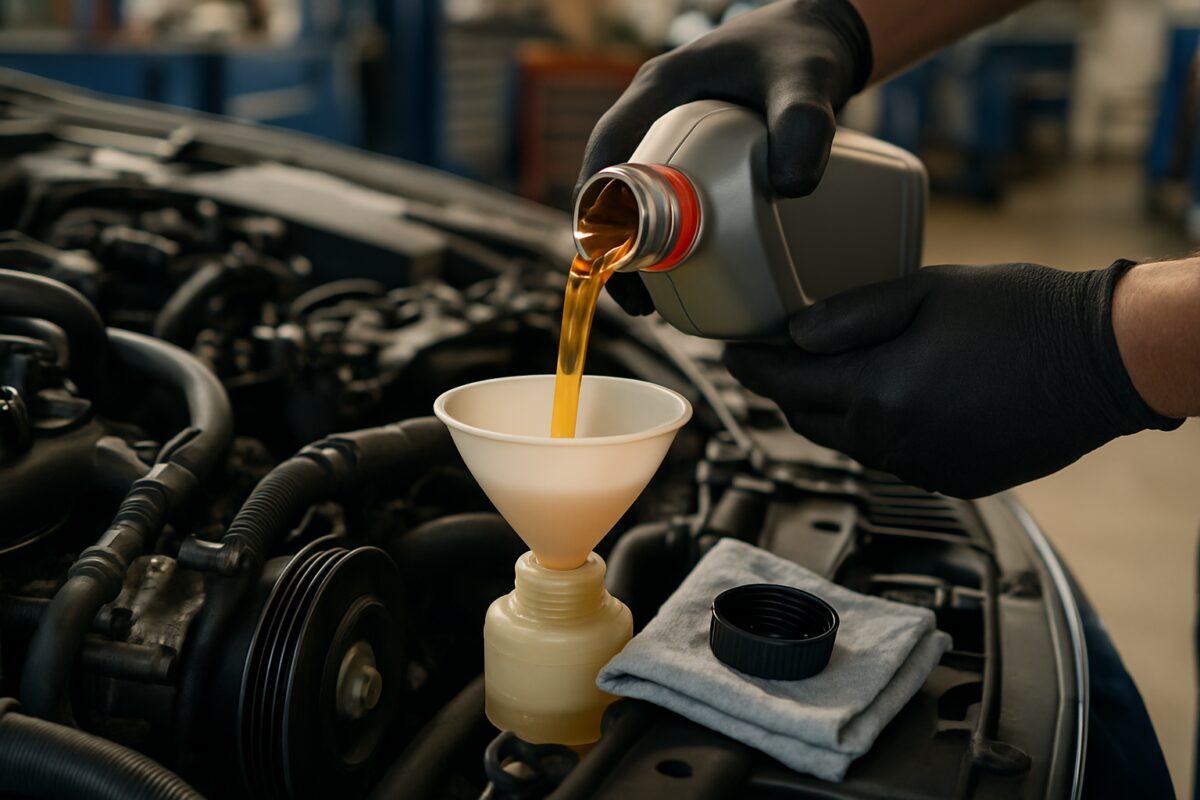
Remove the reservoir cap and inspect the fluid colour and consistency. Fresh fluid appears clear or light amber, whilst contaminated fluid becomes dark brown or black with visible particles.
Check for metal particles or foam, which indicate internal system wear requiring professional attention.
Step 3: Extract old fluid
Use a fluid extraction pump to remove old fluid from the reservoir. Avoid tilting or inverting the reservoir, which can introduce air bubbles into the system.
For complete system flushing, disconnect the return line and allow the system to drain whilst running the engine briefly. This method requires two people for safety.
Step 4: Refill with new fluid
Add new fluid gradually using a clean funnel. Fill to the maximum mark indicated on the reservoir or dipstick. Overfilling causes fluid overflow and potential damage to surrounding components.
Replace the reservoir cap and ensure it’s properly sealed to maintain system pressure.
Step 5: Bleed air from the system
Start the engine and turn the steering wheel from lock to lock several times. This circulates new fluid and removes air bubbles from the system.
Check the fluid level again after bleeding, as it may drop slightly. Top up if necessary but avoid overfilling.
Monitor the system for the next few days, checking for leaks or unusual noises during operation.
Common mistakes to avoid
Using incorrect fluid specifications is the most costly error. Always verify compatibility before purchase, as some systems require specific viscosity ratings or additive packages.
Overfilling the reservoir causes excessive pressure, leading to seal failure and fluid leakage. Stick to manufacturer-specified levels marked on the reservoir or dipstick.
Introducing air into the system during servicing creates steering noise and reduced assistance. Take care when removing and replacing fluid to minimise air entry.
Mixing different fluid types, even from the same manufacturer, can cause chemical reactions that damage seals and internal components.
Never attempt to flush the system by adding new fluid to contaminated old fluid. This dilutes contaminants but doesn’t remove them, reducing the effectiveness of the service.
When should you replace power steering fluid?
Most manufacturers recommend power steering fluid changes every 40,000-60,000 miles or every 4-5 years, whichever comes first. However, severe driving conditions may require more frequent service.
Replace fluid immediately if you notice dark discolouration, burnt odour, or visible particles. These symptoms indicate thermal breakdown or contamination that can damage expensive system components.
Heavy steering, noise during turning, or erratic assistance levels suggest fluid degradation requiring immediate attention. Don’t delay replacement when these symptoms appear, as continued operation may cause permanent damage.
Check our comprehensive guide on power steering maintenance for additional servicing tips and troubleshooting advice.
Related maintenance you can do at the same time
Consider replacing the air filter whilst accessing the engine bay for power steering service. Both components require similar access and timing intervals.
Inspect drive belts for wear or damage, particularly the belt driving the power steering pump. Worn belts cause erratic assistance and noise during operation.
Check brake fluid levels and condition, as both systems use similar hydraulic principles and may share service intervals in your maintenance schedule.
Our mechanics at Autopartspro recommend combining power steering service with engine oil changes for efficiency.
Consider professional wheel alignment if you’ve experienced steering problems, as misalignment can accelerate power steering system wear.
How often should I check power steering fluid levels?
Check levels monthly when the engine is cold for accurate readings and early problem detection.
Can I use automatic transmission fluid in my power steering system?
Only if specifically recommended by the manufacturer, as some systems require dedicated power steering fluid.
What causes power steering fluid to turn black?
Heat breakdown, contamination, or internal component wear typically cause fluid discolouration requiring immediate replacement.
How much does power steering fluid replacement cost?
DIY replacement costs £15-30 for fluid, whilst professional service ranges from £80-150 including labour.
Why does my steering make noise after fluid change?
Air bubbles in the system cause noise; continue bleeding by turning steering lock-to-lock until quiet.
Regular power steering fluid maintenance ensures reliable operation and prevents expensive repairs. Using quality components from trusted suppliers and following manufacturer specifications maintains your vehicle’s steering precision for years to come. Take time to understand your system’s requirements, and you’ll enjoy smooth, effortless steering throughout your vehicle’s service life.

 Loading...