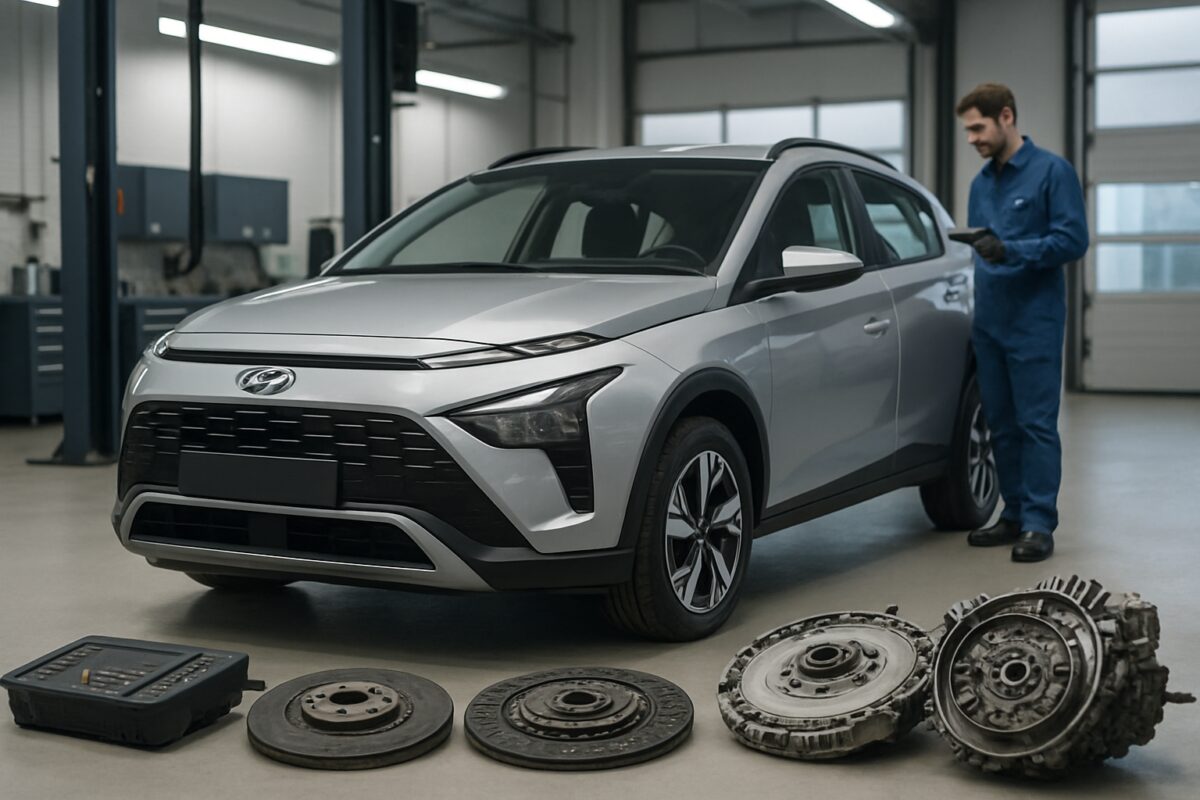
The Hyundai Bayon has gained popularity amongst UK drivers since its launch, offering a compact crossover solution for urban driving. However, like any vehicle, this Korean SUV has developed a reputation for specific issues that owners should be aware of. Understanding these common problems can help you make informed decisions about maintenance and repairs.
Problem #1: Dual clutch transmission issues
The seven-speed dual clutch transmission (DCT) fitted to many Bayon models has shown concerning reliability patterns. Owners report jerky gear changes, particularly when pulling away from traffic lights or during low-speed manoeuvring in car parks. The transmission often hesitates before engaging, creating an unnerving driving experience.
This issue typically manifests between 15,000 and 30,000 miles, with some vehicles experiencing complete transmission failure requiring replacement. The problem stems from clutch pack wear and software calibration issues within the transmission control unit. Cold weather conditions often exacerbate these symptoms, making morning starts particularly problematic.
According to AutoPartsPro specialists: “DCT systems require specific maintenance intervals and high-quality transmission fluid to operate correctly. Many failures occur due to inadequate servicing schedules.”
Replacement costs can reach £4,500-£6,000 for a complete unit, making this one of the most expensive potential repairs. Some owners have successfully resolved minor issues through software updates at Hyundai dealerships, but severe cases require mechanical intervention.
Problem #2: Turbocharger premature failure
The 1.0-litre T-GDI turbocharged engine, whilst efficient, has demonstrated concerning turbocharger reliability issues. Owners frequently report loss of power, blue smoke from the exhaust, and whistling noises during acceleration. These symptoms typically appear around 40,000-60,000 miles, earlier than expected for modern turbocharger technology.
The root cause often traces back to inadequate oil change intervals and poor-quality engine oil. The small displacement, high-pressure turbocharger operates at extreme temperatures, making it sensitive to oil degradation. Carbon build-up on the turbine blades and bearing wear are common failure modes.
Replacement costs vary significantly depending on whether you choose OEM or aftermarket components. Genuine Hyundai turbochargers cost £1,800-£2,500 including labour, whilst quality aftermarket alternatives can reduce costs to £1,200-£1,600. Prevention through regular oil changes using the correct specification is crucial for longevity.
Problem #3: Electronic parking brake malfunction
The electronic parking brake system has proven problematic across multiple Bayon model years. Common symptoms include the brake refusing to release, engaging unexpectedly whilst driving, or complete system failure with warning lights illuminating the dashboard. This safety-critical system requires immediate attention when faults occur.
The issue typically stems from faulty actuator motors within the rear brake calipers or corrupted software in the electronic control module. Moisture ingress and corrosion can also affect the electrical connections, particularly in coastal areas or during harsh winter conditions.
AutoPartsPro mechanics recommend: “Never ignore electronic parking brake warning lights. The system can fail completely without warning, creating dangerous driving conditions.”
Repair costs range from £300-£800 for actuator replacement to £1,500+ if both rear calipers require renewal. Some cases can be resolved through software recalibration, but mechanical failures necessitate component replacement.
Problem #4: Infotainment system freezing and connectivity issues
The touchscreen infotainment system frequently experiences software glitches, including complete system freezes, Bluetooth connectivity problems, and Android Auto/Apple CarPlay malfunctions. These issues affect daily usability and can compromise hands-free phone operation whilst driving.
The problems typically stem from outdated software versions or corrupted system files. Some owners report that the system randomly reboots during journeys, losing navigation data and audio settings. USB charging ports may also stop functioning correctly, affecting smartphone integration.
Software updates from Hyundai dealers can resolve many issues, though some cases require complete system replacement costing £800-£1,200. Regular system updates and avoiding aftermarket modifications help prevent many connectivity problems.
Problem #5: Premature brake disc corrosion
Front brake discs show excessive corrosion and pitting, particularly on vehicles used primarily for short urban journeys. The issue affects braking performance and creates unsightly rust staining on alloy wheels. Many owners notice the problem within 18-24 months of purchase.
The root cause relates to the disc material specification and inadequate protective coatings. Short journeys prevent the brakes from reaching optimal operating temperatures, allowing moisture to remain on the disc surfaces and accelerate corrosion.
Replacement brake discs and pads typically cost £200-£350 per axle including labour. Upgrading to coated discs can improve longevity, though regular hard braking to clean the surfaces helps prevent premature corrosion.
Warning signs your car has a problem
Recognising early warning signs can prevent minor issues from becoming expensive repairs. Monitor your Bayon for these key indicators:
- Jerky or hesitant gear changes from the DCT transmission
- Blue smoke from the exhaust or turbocharger whistling noises
- Electronic parking brake warning lights or unusual engagement behaviour
- Infotainment system freezes or connectivity failures
- Squealing brakes or excessive wheel corrosion
- Unusual vibrations through the steering wheel during braking
- Engine management lights or reduced power warnings
- Excessive oil consumption between service intervals
- Grinding noises from the rear wheels when parking
How to fix the problems
| Problem | DIY Solution | Professional Repair Cost | Prevention Method |
|---|---|---|---|
| DCT Transmission | Software reset attempt | £4,500-£6,000 | Regular fluid changes |
| Turbocharger Failure | Check oil level/quality | £1,200-£2,500 | Quality oil, regular changes |
| Electronic Parking Brake | System recalibration | £300-£1,500 | Keep connections clean |
| Infotainment Issues | System reset/update | £800-£1,200 | Regular software updates |
| Brake Corrosion | Regular hard braking | £200-£350 | Avoid short journeys only |
Many problems can be prevented through proper maintenance schedules. Regular oil changes are particularly crucial for turbocharged engines, whilst transmission services help prevent DCT issues.
| Maintenance Item | Interval | Typical Cost | Critical Components |
|---|---|---|---|
| Engine Oil Change | Every 10,000 miles | £80-£120 | Turbocharger protection |
| DCT Service | Every 40,000 miles | £200-£300 | Clutch pack longevity |
| Brake Inspection | Every 12,000 miles | £50-£80 | Disc and pad condition |
| Software Updates | Annually | £0-£100 | Electronic systems |
When to see a mechanic
Certain symptoms require immediate professional attention to prevent safety risks or catastrophic damage. Book a diagnostic appointment if you experience transmission slipping, complete brake system failure, or engine management warning lights.
The electronic parking brake system particularly requires specialist diagnostic equipment to identify fault codes and calibrate replacement components. Attempting DIY repairs on safety-critical systems can create dangerous driving conditions.
Turbocharger issues should be addressed promptly, as continued driving with a failing unit can cause extensive engine damage. Oil contamination from turbo failure can destroy bearings and require complete engine rebuilds costing thousands of pounds.
For complex diagnostics, choose workshops with Hyundai-specific diagnostic equipment. Generic code readers may not access all control modules or provide accurate fault identification for newer electronic systems.
Frequently asked questions (FAQ)
Is the Hyundai Bayon DCT transmission reliable long-term?
The DCT shows mixed reliability with proper maintenance extending lifespan, but early failures remain common across multiple model years.
What causes turbocharger failure in the 1.0 T-GDI engine?
Poor oil quality, extended service intervals, and carbon build-up are primary causes of premature turbocharger failure in these engines.
Can electronic parking brake issues be fixed with software updates?
Minor calibration problems respond to software updates, but mechanical actuator failures require component replacement and professional diagnosis.
How often should I service the DCT transmission?
Hyundai recommends 40,000-mile intervals, though severe driving conditions may require more frequent transmission fluid changes for optimal performance.
Are brake disc corrosion problems covered under warranty?
Surface corrosion is typically considered normal wear, though excessive pitting within warranty periods may qualify for manufacturer coverage.
Final recommendation
Despite these known issues, the Hyundai Bayon remains a competent small crossover when properly maintained. The key to ownership success lies in understanding these potential problems and implementing preventive maintenance strategies. Regular servicing using quality components from reputable suppliers significantly reduces the likelihood of expensive failures.
Consider extended warranty coverage for high-risk components like the DCT transmission and turbocharger. Budget for potential repairs by setting aside £500-£800 annually for unexpected maintenance costs. Most importantly, address warning signs immediately rather than delaying repairs, as early intervention typically costs far less than complete component replacement.
For owners experiencing these issues, proper maintenance and quality replacement parts can restore reliability and extend vehicle lifespan. The Bayon’s warranty support and parts availability make most repairs manageable, provided you choose experienced technicians familiar with these common problems.

 Loading...