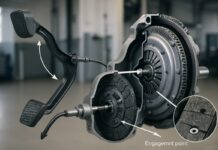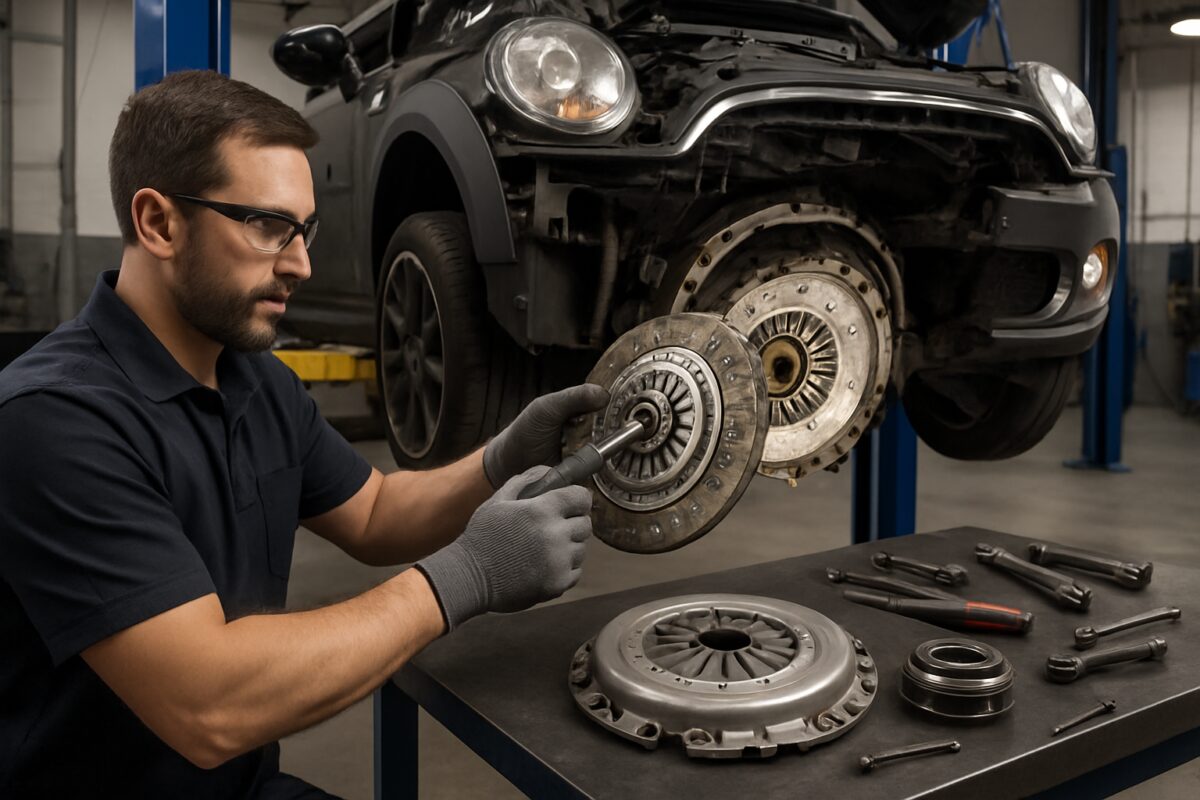
A Mini clutch replacement involves fitting a new clutch kit which typically includes the clutch disc, pressure plate, and release bearing. Prices range from £150-400 for parts depending on your Mini model, with labour costs adding £300-600. The complete job requires specialist tools and expertise, making it essential to choose quality components matched to your vehicle’s exact specifications.
Tools and parts required
Before starting your Mini clutch replacement, you’ll need specific parts and professional-grade tools. Getting the right components is crucial for proper function and longevity.
Parts needed
- Complete clutch kit – Must match your Mini’s engine code and year
- Clutch release bearing – Often included in quality kits
- New clutch plate – Vehicle-specific friction material
- Clutch pressure plate – Ensures proper clamping force
- Pilot bearing – Supports gearbox input shaft
- New bolts – Replace stretched fasteners
Always verify part compatibility using your Mini’s VIN number and engine code. Incorrect parts can cause premature failure or poor performance.
Tools required
- Transmission jack – Essential for safe gearbox removal
- Engine support beam – Holds engine whilst gearbox is out
- Clutch alignment tool – Centres new disc properly
- Socket set – Various sizes for different bolts
- Torque wrench – Critical for correct bolt tensions
- Vehicle lift or ramps – Provides safe working access
Safety precautions
Clutch replacement involves heavy components and working under the vehicle. Always use proper lifting equipment and axle stands rather than relying solely on a jack.
Disconnect the battery negative terminal before starting work. Wear safety glasses and gloves when handling clutch components, as friction material dust can be harmful. Ensure adequate ventilation in your workspace.
Never work under a vehicle supported only by a jack. Always use rated axle stands and check they’re properly positioned on reinforced jacking points.
Step-by-step instructions
This process requires mechanical expertise and proper equipment. Many DIY enthusiasts find it worthwhile to have professionals handle this complex job.
Step 1: Prepare the vehicle
Remove the air filter housing and disconnect electrical connections to the gearbox. Support the engine using a beam across the engine bay. This prevents the engine dropping when the gearbox is removed.
Drain the gearbox oil and remove the drive shafts. You’ll need to disconnect the CV joints carefully to avoid damaging the seals.
Step 2: Remove the gearbox
Unbolt the gearbox from the engine, working methodically around the bell housing. The transmission jack is essential here – gearboxes are heavy and awkward to handle safely.
Carefully lower the gearbox away from the engine, ensuring no wiring or pipes are trapped. The clutch assembly will now be visible on the flywheel.
Step 3: Remove the old clutch
Mark the pressure plate position on the flywheel before removal. Gradually loosen the pressure plate bolts in a star pattern to prevent warping. The clutch release bearing slides off the input shaft housing.
Inspect the flywheel surface for scoring or heat damage. Minor imperfections can be machined out, but severe damage requires flywheel replacement.
Step 4: Install the new clutch
Clean the flywheel surface thoroughly before fitting the new clutch disc. Use the clutch alignment tool to centre the disc correctly – this is crucial for smooth gearbox installation.
Fit the new pressure plate and tighten bolts gradually in a star pattern to specification. Install the new release bearing, ensuring it moves freely on its guide.
Step 5: Reassemble and test
Reverse the removal procedure, taking care with alignment during gearbox installation. Refill with the correct grade of gear oil and reconnect all components.
Test the clutch operation before driving. The pedal should feel firm with a clear biting point. Initial bedding-in requires gentle driving for the first 500 miles.
Common mistakes to avoid
Many clutch failures stem from installation errors rather than part quality. Here are the most frequent problems our mechanics encounter.
Contaminating the friction surfaces with oil or grease dramatically reduces clutch life. Always handle new parts with clean hands and check for engine or gearbox oil leaks before installation.
Incorrect disc alignment makes gearbox installation difficult and can damage the splined input shaft. Always use the proper alignment tool rather than trying to fit by eye.
Reusing old bolts is false economy. Stretch bolts lose their clamping ability and can fail catastrophically. New fasteners cost little compared to potential damage.
Ignoring flywheel condition causes premature clutch wear. Surface irregularities create hot spots that glazing the friction material. Professional machining restores the proper surface finish.
Our specialists always recommend checking the rear crankshaft seal during clutch replacement. Oil contamination is the leading cause of premature clutch failure.
When should you replace it?
Most Mini clutches last 60,000-100,000 miles depending on driving style and conditions. City driving with frequent stops significantly reduces clutch life compared to motorway use.
Key symptoms include clutch slip under acceleration, difficulty selecting gears, or a spongy pedal feel. Strange noises when pressing the pedal often indicate release bearing failure.
Don’t delay replacement once symptoms appear. A failing clutch can damage the flywheel or gearbox, significantly increasing repair costs. Early intervention saves money and prevents roadside breakdowns.
Heavy traffic, hill starts, and aggressive driving accelerate wear. Regular servicing helps identify problems before they become expensive failures.
Related maintenance you can do at the same time
With the gearbox removed, several other maintenance tasks become accessible. This saves labour costs on future repairs.
Replace the rear engine mount if it shows signs of deterioration. Worn mounts cause excessive vibration and can damage the clutch linkage.
Check the CV axles for wear while they’re disconnected. Worn joints create vibration that affects clutch pedal feel and can cause premature release bearing failure.
Inspect the gearbox input shaft seal and replace if necessary. Oil contamination destroys clutch friction materials within thousands of miles.
Consider upgrading to a performance clutch if you’ve modified your Mini’s engine. Standard clutches may not handle increased torque reliably.
Frequently asked questions
How much does a Mini clutch replacement cost?
Total costs range from £450-1000 including parts and labour. Premium brands cost more but offer better durability and performance characteristics.
Can I drive with a slipping clutch?
Continued driving risks flywheel damage and potential clutch disc disintegration. Stop driving immediately and arrange professional diagnosis to prevent costlier repairs.
How long does clutch replacement take?
Professional workshops typically need 4-6 hours depending on your Mini model. Additional time may be required if flywheel machining is necessary.
Should I replace just the clutch disc?
Always replace the complete kit including pressure plate and release bearing. Mixing old and new components causes uneven wear and reduces service life.
What causes premature clutch failure?
Oil contamination, incorrect installation, aggressive driving, and worn engine mounts are the most common causes. Regular maintenance prevents most premature failures.
Choosing the right clutch components for your Mini ensures reliable performance and longevity. Quality clutch kits matched to your vehicle’s specifications provide the best value through extended service life and superior performance characteristics.

 Loading...