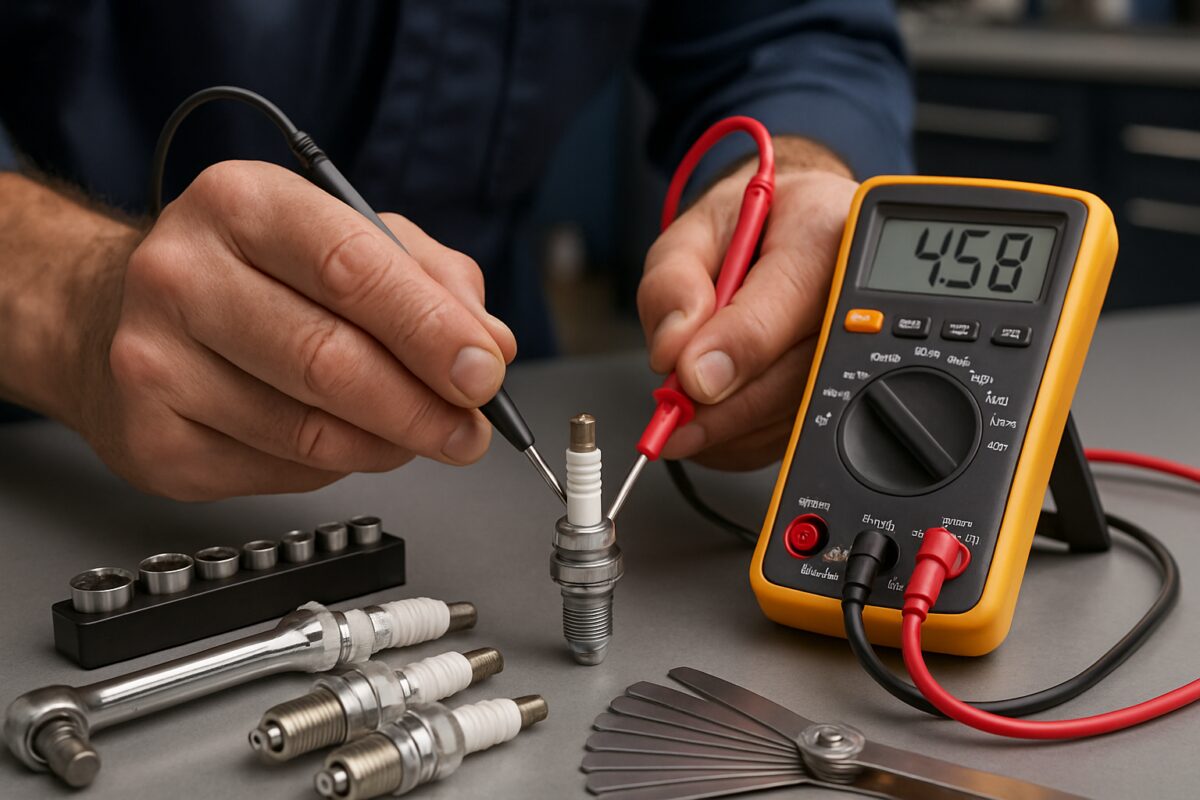
Testing a spark plug requires either a multimeter for resistance measurement or visual inspection methods for basic diagnostics. Both approaches help determine if your spark plug needs replacement. A multimeter provides precise resistance readings, whilst visual checks reveal physical damage, carbon buildup, and electrode wear patterns.
Tools and parts required
The right equipment makes spark plug testing straightforward and accurate. Having proper tools ensures reliable results and prevents damage to delicate components.
Parts needed:
- Replacement spark plugs (vehicle specific)
- Spark plug socket
- Feeler gauge set
- Wire brush or emery cloth
Tools required:
- Digital multimeter
- Socket wrench set
- Torque wrench
- Spark plug gap tool
- Safety gloves
- Magnifying glass (optional)
Always ensure spark plugs match your engine’s heat range and thread specifications before installation.
Safety precautions
Proper safety measures prevent injury and component damage during testing procedures.
Remove the battery negative terminal before starting work. Wait for the engine to cool completely, as spark plugs reach extremely high temperatures during operation. Wear safety glasses and gloves to protect against sharp electrodes and cleaning debris.
Work in a well-ventilated area and keep a fire extinguisher nearby when working with fuel system components.
Step-by-step instructions for multimeter testing
Multimeter testing provides precise resistance measurements that indicate spark plug condition accurately.
Step 1: Remove the spark plug
Disconnect the ignition coil or spark plug wire from the plug. Use a spark plug socket with your socket wrench to carefully unscrew the plug. Turn anticlockwise and avoid dropping debris into the cylinder.
Step 2: Clean the spark plug
Remove carbon deposits and oil residue using a wire brush or emery cloth. Clean electrodes thoroughly to ensure accurate readings. Inspect threads for damage whilst cleaning.
Step 3: Set up your multimeter
Switch your multimeter to resistance (ohms) mode. Most spark plugs should read between 5,000 to 10,000 ohms. Check your vehicle’s service manual for specific resistance values.
Step 4: Test the resistance
Place one probe on the spark plug terminal and the other on the threaded base. A reading within specification indicates good internal resistance. Infinite resistance suggests an open circuit, whilst very low resistance indicates a short circuit.
Step 5: Check electrode gap
Use a feeler gauge to measure the gap between centre and ground electrodes. Typical gaps range from 0.6mm to 1.3mm, depending on your engine type.
Visual testing methods without multimeter
Visual inspection reveals many spark plug problems without specialised equipment. This method works well for basic diagnostics and quick assessments.
Electrode condition assessment
Examine the centre electrode for wear, erosion, or burning. A healthy electrode appears square-edged with minimal wear. Rounded or severely worn electrodes indicate replacement time.
Check the ground electrode for similar wear patterns. Both electrodes should maintain proper shape and adequate material thickness.
Carbon deposit analysis
Black, sooty deposits suggest rich fuel mixture or incomplete combustion. White or light grey deposits indicate lean running conditions or overheating. Normal deposits appear light brown to grey.
Insulator inspection
The ceramic insulator should appear clean without cracks or chips. Damaged insulators cause misfires and require immediate replacement. Oil fouling appears as wet, black deposits on the insulator.
Interpreting test results
Understanding test results helps determine the next course of action for your engine’s performance.
Resistance readings within manufacturer specifications indicate good spark plug condition. Readings outside the range suggest internal damage or wear. Visual signs like electrode erosion, excessive deposits, or insulator damage confirm replacement needs.
Our AutopartsPro mechanics recommend replacing spark plugs in complete sets to maintain consistent engine performance across all cylinders.
Common mistakes to avoid
Several errors can lead to inaccurate test results or component damage during testing procedures.
Never test spark plugs whilst hot, as this affects resistance readings and risks burns. Avoid using excessive force when removing plugs, which can damage threads or break ceramic insulators.
Don’t clean spark plugs with harsh chemicals or pressure washers. These methods can damage electrodes or contaminate the insulator. Always use the correct torque specification when reinstalling plugs to prevent thread damage.
Testing contaminated plugs without proper cleaning gives false results. Remove all deposits before conducting resistance measurements.
When should you replace spark plugs?
Regular replacement intervals and performance symptoms indicate when spark plug changes become necessary.
Most modern vehicles require spark plug replacement every 30,000 to 100,000 miles, depending on plug type and driving conditions. Platinum and iridium plugs last longer than conventional copper plugs.
Replace spark plugs when experiencing rough idle, poor acceleration, increased fuel consumption, or difficulty starting. Misfires detected by your engine management system often point to worn spark plugs.
If resistance readings fall outside specification or visual inspection reveals significant wear, replacement ensures optimal engine performance.
Related maintenance you can do at the same time
Combining spark plug replacement with related maintenance saves time and ensures comprehensive engine care.
Replace the air filter during spark plug service to maintain proper air-fuel mixture. Clean or replace the mass air flow sensor if contaminated.
Check ignition leads for cracks or corrosion. Inspect the distributor cap and rotor on older vehicles.
Consider replacing the fuel filter to ensure clean fuel delivery. Check injectors for proper spray patterns during this service interval.
Frequently asked questions
How often should I test my spark plugs?
Test spark plugs every 15,000 miles or when experiencing performance issues like rough idling or misfires.
Can I test spark plugs whilst they’re still installed?
No, spark plugs must be removed for accurate resistance testing and proper visual inspection of all components.
What resistance reading indicates a faulty spark plug?
Readings outside 5,000-10,000 ohms typically indicate problems, though specifications vary by manufacturer and plug type.
Is visual inspection as reliable as multimeter testing?
Visual inspection reveals obvious problems but multimeter testing provides precise measurements for accurate diagnosis and preventive maintenance.
Can I clean and reuse old spark plugs?
Cleaning extends plug life temporarily, but worn electrodes and aged insulators compromise performance compared to new replacements.
Regular spark plug testing maintains engine performance and prevents unexpected breakdowns. Whether using a multimeter for precise measurements or visual inspection for quick assessment, both methods help identify problems before they affect your vehicle’s reliability. Combining these testing techniques with quality replacement spark plugs ensures optimal engine operation for thousands of miles ahead.

 Loading...