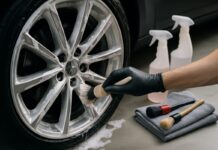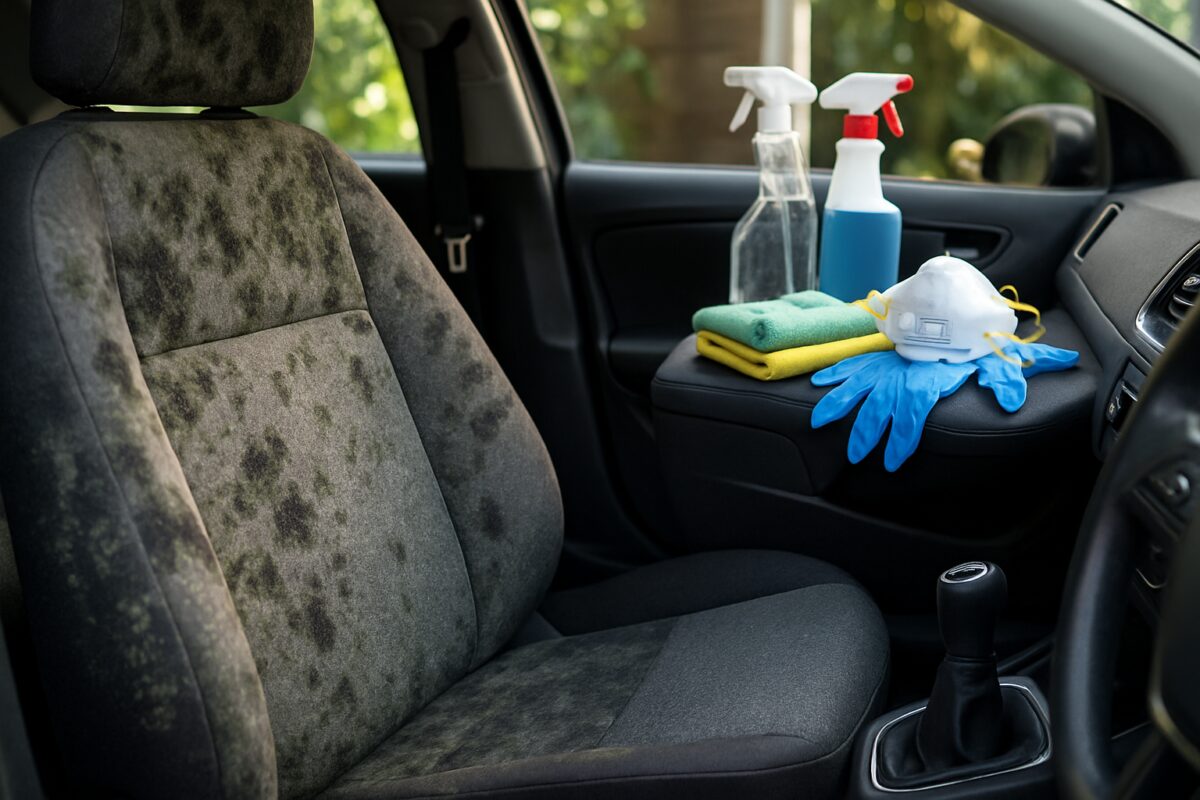
To effectively get rid of mould in your car, you’ll need specialised cleaning products, protective equipment, and proper ventilation. The process involves identifying affected areas, applying antifungal treatments, deep cleaning all surfaces, and implementing moisture control measures to prevent recurrence.
Tools and parts required
Successfully removing mould from your vehicle requires the right combination of cleaning supplies and safety equipment. Having everything prepared beforehand makes the job more efficient and thorough.
Parts needed:
- Antifungal spray cleaner
- White vinegar (natural alternative)
- Baking soda
- Replacement cabin filter
- Moisture absorber packets
- New rubber seals (if damaged)
Tools required:
- Vacuum cleaner with HEPA filter
- Steam cleaner
- Microfibre cloths
- Soft-bristled brush
- Spray bottles
- Safety gloves
- N95 face mask
- Protective eyewear
Always ensure your cleaning products are suitable for automotive interiors and won’t damage leather, plastic, or fabric surfaces.
Safety precautions
Mould removal requires proper safety measures to protect your health during the cleaning process.
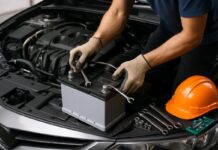
Work in a well-ventilated area with all doors and windows open. Disconnect the battery before using electrical equipment or cleaning around electronic components. Always wear protective gloves, an N95 mask, and safety glasses to prevent inhaling spores or getting cleaning chemicals on your skin.
Never mix different cleaning products, as this can create dangerous chemical reactions. If you have respiratory conditions or severe allergies, consider hiring a professional cleaning service instead.
Step-by-step instructions
Step 1: Identify and assess the damage
Start by thoroughly inspecting your vehicle’s interior for visible mould growth. Check seats, carpets, door panels, dashboard, and especially areas around the air conditioning system. Take photos to document the extent of contamination.
Remove all personal items from the car and dispose of any severely contaminated materials that cannot be effectively cleaned. This includes badly affected fabric items or papers.
Step 2: Vacuum thoroughly
Using a vacuum with HEPA filtration, carefully vacuum all affected areas. Pay special attention to crevices, seams, and areas where moisture typically accumulates. This removes loose spores and debris before wet cleaning begins.
Dispose of the vacuum bag immediately after use in a sealed plastic bag to prevent spreading spores.
Step 3: Apply antifungal treatment
Spray the antifungal cleaner generously on all affected surfaces. For natural treatment, mix equal parts white vinegar and water in a spray bottle. Allow the solution to sit for 10-15 minutes to kill mould spores effectively.
For stubborn areas, create a paste using baking soda and water, apply it to the affected area, and let it work for 30 minutes before scrubbing gently with a soft brush.
Step 4: Deep clean all surfaces
Using microfibre cloths and the cleaning solution, wipe down all interior surfaces systematically. Start from the top and work downwards to prevent recontamination. Pay particular attention to the dashboard, door panels, and seat surfaces.
For fabric seats and carpets, use a steam cleaner if available, as high temperatures effectively kill remaining spores. Ensure you extract as much moisture as possible during this process.
Step 5: Address the air conditioning system
Replace the cabin filter, as this component often harbours mould spores. Clean the air conditioning vents using a small brush and antifungal solution. Run the air conditioning system with a specialised AC cleaner to eliminate spores within the ductwork.
This step is crucial because contaminated air filtration systems can reintroduce mould throughout your vehicle.
Step 6: Dry completely and ventilate
Leave all doors and windows open for several hours to ensure complete drying. Use fans or a dehumidifier if necessary. Any remaining moisture will allow mould to return quickly.
Place moisture absorber packets in various locations throughout the car to maintain low humidity levels during the drying process.
Common mistakes to avoid
Many car owners make critical errors during mould removal that can worsen the problem or cause health issues.
Never use bleach on car interiors, as it can damage materials and create toxic fumes in enclosed spaces. Avoid rushing the drying process – insufficient drying is the leading cause of mould return.
Don’t ignore the source of moisture that caused the initial mould growth. Check for leaking washer reservoirs, damaged seals, or blocked drainage channels.
Failing to wear proper protective equipment can expose you to harmful spores and cleaning chemicals. Always prioritise safety over speed.
When should you seek professional help?
Professional mould remediation becomes necessary when contamination covers more than 10 square feet of your vehicle’s interior. Extensive growth often indicates deeper penetration into foam padding or structural materials that require specialised equipment to address properly.
If you experience persistent respiratory symptoms, allergic reactions, or the distinctive musty odour returns within days of cleaning, professional intervention is recommended. Some mould species require specific treatments that aren’t available to consumers.
Consider professional services for luxury vehicles with delicate materials or when mould has affected electronic components that could be damaged by moisture.
Related maintenance you can do at the same time
While addressing mould issues, consider performing related maintenance tasks that improve your vehicle’s overall health and prevent future problems.
Replace worn rubber seals around doors and windows that might allow moisture infiltration. Check and clean drainage channels under doors and around the sunroof if fitted.
Inspect the cooling system for leaks that might contribute to interior humidity. Replace any damaged coolant hoses or components that could leak into the cabin.
Clean and treat leather surfaces with appropriate conditioners to maintain their resistance to moisture and mould growth.
Regular maintenance of your vehicle’s ventilation system and prompt attention to water leaks significantly reduces the likelihood of mould development.
Frequently asked questions
Can I use household bleach to kill car mould?
No, household bleach can damage automotive materials and create dangerous fumes in enclosed spaces. Use automotive-specific antifungal cleaners instead.
How long does it take to completely remove mould from a car?
Complete mould removal typically takes 4-8 hours of active cleaning, plus 24-48 hours of drying time depending on conditions.
Will mould damage my car’s resale value?
Yes, visible mould or persistent odours can significantly reduce resale value. Prompt, thorough treatment minimises long-term impact on value.
Can mould grow back after professional treatment?
Mould can return if moisture sources aren’t eliminated and proper ventilation isn’t maintained. Address underlying causes for permanent results.
Is car mould dangerous to my health?
Car mould can trigger allergies, respiratory problems, and other health issues, especially for sensitive individuals. Always wear protection during removal.
Eliminating mould from your vehicle requires systematic cleaning, proper safety measures, and attention to underlying moisture sources. Success depends on using appropriate cleaning products, ensuring complete drying, and maintaining good ventilation. With the right approach and quality cleaning supplies, you can restore your car’s interior to a healthy, pleasant environment while preventing future mould growth through regular maintenance of seals and ventilation systems.

 Loading...