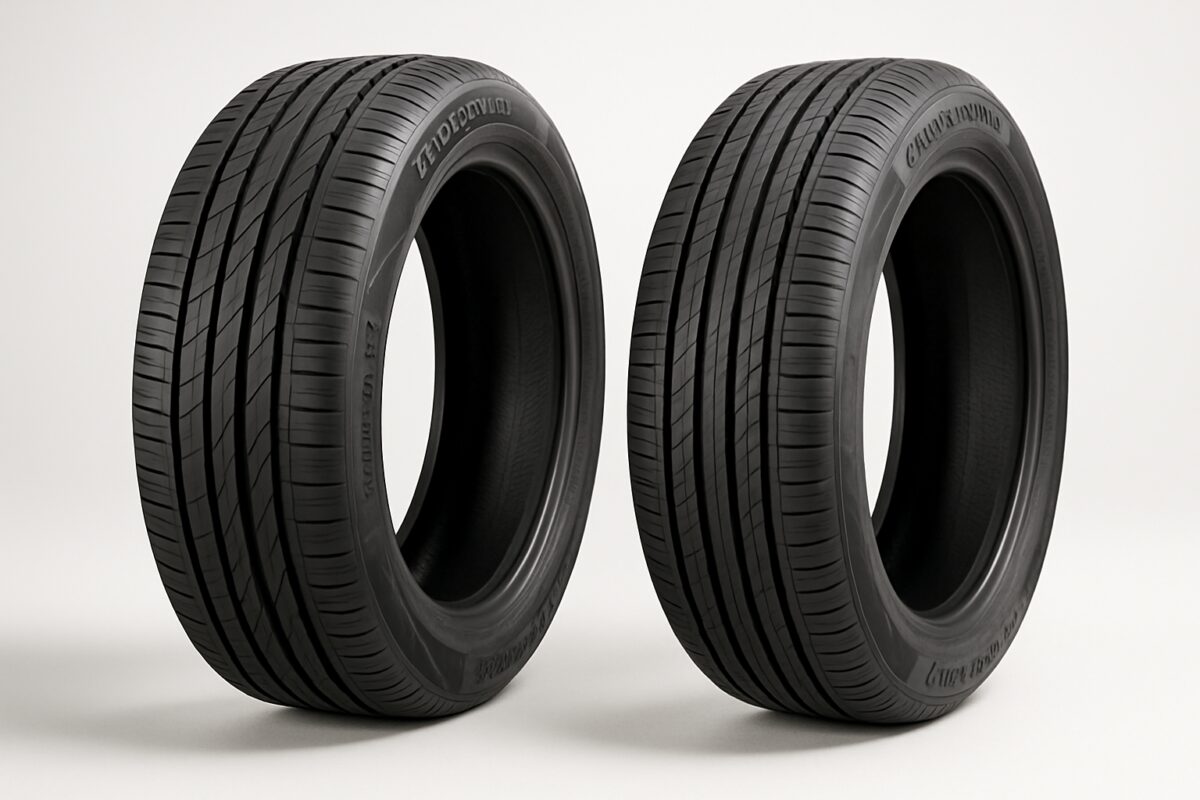
Continental UltraContact and PremiumContact differ significantly in their design philosophy and target applications. The UltraContact features advanced silica compounds and optimised tread patterns for enhanced fuel economy and reduced road noise, whilst the PremiumContact prioritises grip performance and durability with reinforced sidewalls. UltraContact typically costs £10-20 more per tyre but offers superior wet weather handling and lower rolling resistance, making it ideal for everyday driving. PremiumContact provides excellent value for budget-conscious drivers who need reliable performance without premium features.
Quick comparison table
Here’s a comprehensive overview of both Continental tyre ranges to help you make an informed decision:
| Feature | UltraContact | PremiumContact |
|---|---|---|
| Price Range | £80-150 per tyre | £60-120 per tyre |
| Durability | 50,000-60,000 miles | 40,000-50,000 miles |
| Wet Performance | A-grade rating | B-grade rating |
| Noise Level | 68-70 dB | 70-72 dB |
| Rolling Resistance | A-B rating | B-C rating |
| Best Use Case | Daily commuting, efficiency | Budget-conscious drivers |
Both tyre series deliver Continental’s renowned German engineering quality, though they target different market segments and driving requirements.
Continental UltraContact overview
The UltraContact represents Continental’s modern approach to sustainable tyre technology. This range incorporates innovative silica compounds that reduce rolling resistance whilst maintaining excellent grip characteristics. The tread pattern features asymmetric designs with optimised sipe distribution for enhanced water evacuation.
These tyres utilise Continental’s Green Chili compound technology, which balances fuel efficiency with performance. The sidewall construction features reinforced polyester cords that improve handling precision without compromising ride comfort. Advanced manufacturing processes ensure consistent quality across different sizes and load ratings.
Typical pricing for UltraContact ranges from £80 to £150 per tyre, depending on size and specific model variant. The investment reflects the advanced materials and manufacturing processes involved in production.
Advantages:
- Superior fuel economy with up to 5% reduction in consumption
- Excellent wet weather performance with shorter braking distances
- Reduced road noise for quieter cabin environment
- Extended tread life through even wear patterns
- Enhanced cornering stability at higher speeds
Disadvantages:
- Higher initial purchase cost compared to budget alternatives
- Performance advantages may not justify cost for low-mileage drivers
- Limited availability in older or uncommon vehicle sizes
- Softer compound may wear faster in aggressive driving conditions
UltraContact suits drivers who prioritise fuel efficiency, comfort, and advanced safety features. Company car users, high-mileage commuters, and environmentally conscious motorists benefit most from this technology. The tyres perform exceptionally well on modern vehicles with electronic stability systems and ABS sensors.
Continental PremiumContact overview
PremiumContact delivers reliable performance through proven tyre technology at accessible pricing. This range focuses on fundamental tyre characteristics: grip, durability, and predictable handling. The tread compounds use traditional silica formulations that provide good wet and dry performance without premium manufacturing costs.
The construction features conventional steel belt layers with polyester casing that offers balanced performance across various driving conditions. Tread patterns typically use symmetric designs that promote even wear and simplified rotation patterns. Manufacturing processes emphasise consistency and quality control whilst maintaining cost efficiency.
Pricing for PremiumContact starts around £60 and extends to £120 per tyre, making it attractive for budget-conscious buyers who refuse to compromise on Continental quality. This positioning makes replacement sets more affordable for families and fleet operators.
Advantages:
- Competitive pricing with excellent value proposition
- Reliable performance in varied weather conditions
- Proven durability with predictable wear characteristics
- Wide size availability for most vehicle applications
- Lower replacement costs for complete tyre sets
Disadvantages:
- Higher rolling resistance affects fuel consumption
- Increased road noise compared to premium alternatives
- Less advanced wet weather performance
- Shorter overall tread life in high-mileage applications
- Limited performance enhancements for modern vehicle systems
PremiumContact appeals to practical drivers who need dependable tyres without premium pricing. Second-hand car owners, occasional drivers, and those operating older vehicles find excellent value in this range. The tyres work well with traditional brake pads and standard suspension systems.
Compatibility considerations
Both Continental ranges offer extensive compatibility with UK vehicle markets, though specific fitment requirements vary significantly between models and years.
Vehicle compatibility spans most European manufacturers including BMW, Mercedes-Benz, Audi, Volkswagen, Ford, and Vauxhall. Size availability covers everything from compact cars (175/65R14) to performance vehicles (245/40R18). Load ratings typically range from 82 to 102, accommodating most passenger vehicle requirements.
Model year considerations affect tyre selection, particularly for vehicles manufactured after 2012 when EU tyre labelling became mandatory. Newer vehicles benefit more from UltraContact technology due to electronic systems that optimise performance characteristics. Older vehicles may not fully utilise advanced compound benefits.
OEM specifications matter significantly for warranty compliance and optimal performance. Many Continental tyres carry original equipment approval from major manufacturers, ensuring compatibility with specific vehicle dynamics. Check your vehicle handbook for recommended tyre specifications before purchasing.
Always verify load index and speed ratings match your vehicle requirements. Incorrect specifications can affect suspension springs and overall handling characteristics.
Installation notes include proper inflation pressures, wheel alignment verification, and wheel bolt torque specifications. Professional fitting ensures optimal performance and safety compliance. Consider replacing brake rotors simultaneously if they show wear signs.
Performance in different conditions
Both tyre ranges demonstrate distinct performance characteristics across various British weather conditions and driving scenarios.
Wet weather performance shows the clearest distinction between ranges. UltraContact achieves superior water dispersal through advanced tread design and compound technology. Braking distances on wet surfaces average 2-3 metres shorter compared to PremiumContact. The enhanced sipe network provides better grip during cornering and acceleration in rainy conditions.
Dry performance remains competitive in both ranges, though UltraContact offers more precise steering response and improved high-speed stability. PremiumContact delivers adequate dry grip for normal driving conditions but may feel less responsive during spirited driving or emergency manoeuvres.
Winter performance varies significantly between models. Neither range replaces dedicated winter tyres, but UltraContact maintains better flexibility in cold temperatures. The advanced compounds remain more pliable when temperatures drop below 7°C, providing superior grip compared to PremiumContact’s conventional formulations.
Fuel efficiency differences become apparent over extended driving periods. UltraContact typically improves fuel economy by 3-5% compared to PremiumContact, representing meaningful savings for high-mileage drivers. The reduced rolling resistance particularly benefits motorway driving and urban commuting patterns common in UK traffic conditions.
Monitor tyre pressures regularly as under-inflation affects both ranges differently. UltraContact shows more pronounced performance degradation with incorrect pressures, whilst PremiumContact maintains more consistent behaviour.
Maintenance and longevity
Proper maintenance significantly impacts both tyre ranges’ lifespan and performance retention throughout their service life.
UltraContact requires more attention to inflation pressures due to advanced compound sensitivity. Check pressures monthly and maintain manufacturer specifications precisely. The softer compounds benefit from regular rotation every 5,000 miles to ensure even wear patterns. Wheel alignment becomes crucial as these tyres reveal suspension irregularities more readily.
PremiumContact proves more forgiving of maintenance lapses whilst still benefiting from regular care. Standard rotation intervals of 6,000-8,000 miles suffice for most driving patterns. The conventional compounds tolerate moderate pressure variations better, though optimal performance still requires proper inflation.
Expected lifespan varies considerably based on driving habits and maintenance quality. UltraContact typically delivers 50,000-60,000 miles under normal conditions, whilst PremiumContact averages 40,000-50,000 miles. Aggressive driving, poor alignment, or inadequate maintenance significantly reduces both ranges’ longevity.
Storage considerations apply when keeping spare tyres or seasonal sets. Both ranges require cool, dry storage away from direct sunlight and ozone sources. UltraContact’s advanced compounds show greater sensitivity to storage conditions and may degrade faster if improperly stored.
Regular inspections should include tread depth measurements, sidewall damage assessment, and irregular wear pattern identification. Early detection of issues prevents premature replacement and maintains optimal safety performance. Consider professional inspections when installing new shock absorber components.
Final verdict and buying recommendation
Choose Continental UltraContact for daily commuting, high-mileage driving, or when fuel efficiency matters most. The advanced technology justifies higher costs through improved safety, comfort, and long-term value. These tyres suit modern vehicles with electronic stability systems and appeal to environmentally conscious drivers.
Select PremiumContact for budget-conscious purchases, occasional driving, or older vehicles where advanced features provide limited benefit. The proven technology delivers reliable performance at accessible pricing, making complete set replacement more affordable.
Consider your annual mileage when deciding between ranges. High-mileage drivers (over 15,000 miles annually) benefit from UltraContact’s efficiency gains and extended life. Low-mileage motorists may find PremiumContact’s lower initial cost more attractive despite reduced efficiency.
Vehicle age influences optimal choice significantly. Cars manufactured after 2015 typically maximise UltraContact benefits through advanced electronic systems. Older vehicles may not fully utilise premium features, making PremiumContact more practical.
Weather patterns in your area affect tyre selection. Frequent wet conditions favour UltraContact’s superior rain performance, whilst predominantly dry climates reduce the advantage gap between ranges.
Frequently asked questions
Which Continental tyre offers better fuel economy?
UltraContact delivers superior fuel efficiency with approximately 5% better consumption compared to PremiumContact through advanced low rolling resistance compounds and optimised tread design.
How long do Continental PremiumContact tyres typically last?
PremiumContact tyres average 40,000-50,000 miles under normal driving conditions, though longevity depends on maintenance quality, driving habits, and vehicle alignment specifications.
Are UltraContact tyres worth the extra cost?
For high-mileage drivers and modern vehicles, UltraContact justifies higher pricing through improved fuel economy, enhanced safety performance, and extended tread life over time.
Which range performs better in wet weather conditions?
UltraContact significantly outperforms PremiumContact in wet conditions, achieving A-grade EU label ratings and providing 2-3 metres shorter braking distances on wet surfaces.
Do both tyre ranges fit most UK vehicles?
Both ranges offer extensive size coverage for UK vehicles, spanning compact cars to performance models with load ratings from 82-102 and various speed ratings.

 Loading...