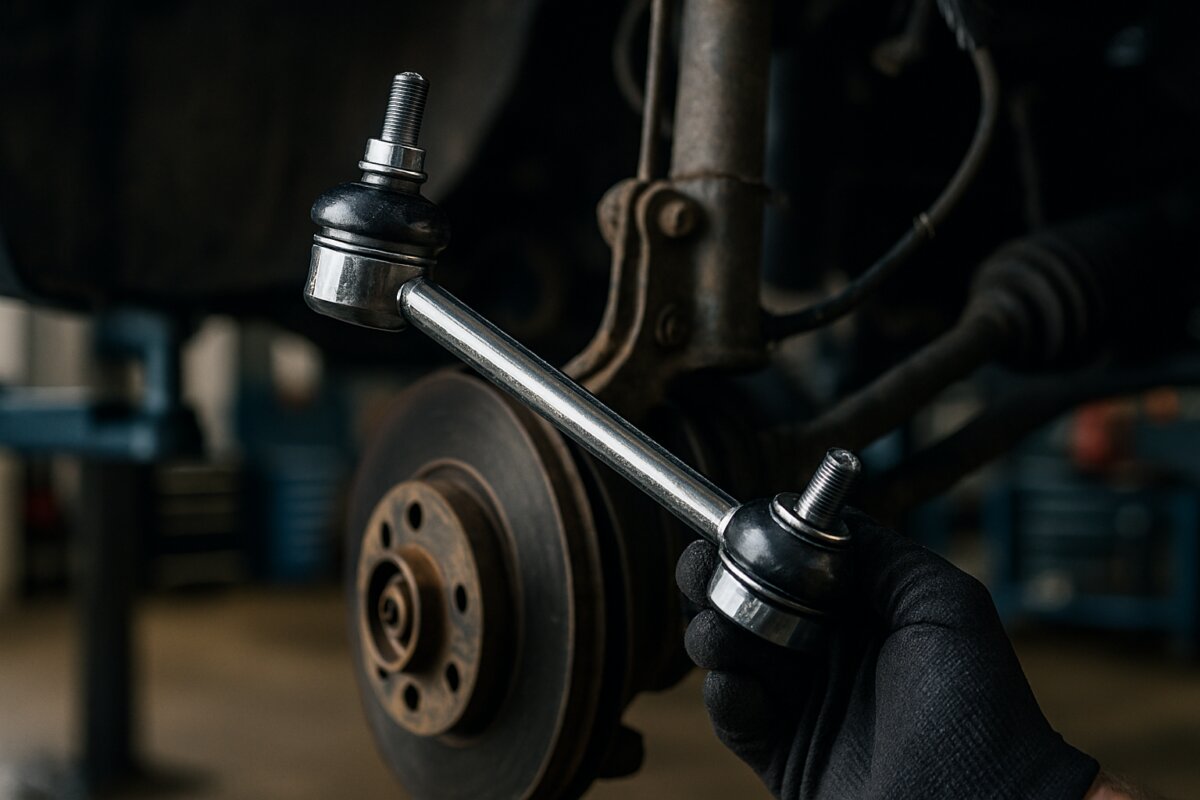
The anti-roll bar link, also known as a drop link or stabiliser link, is a small but critical suspension component that connects the anti-roll bar (sway bar) to the suspension strut or control arm. When functioning properly, it helps reduce body roll during cornering and maintains vehicle stability. Common failure symptoms include clunking noises over bumps, rattling sounds when turning, excessive body lean in corners, and uneven tyre wear. Replacement costs typically range from £50 to £150 per side, including parts and labour, though premium vehicles may cost more.
What does an anti-roll bar link actually do
The anti-roll bar link serves as a connecting rod between your vehicle’s anti-roll bar and the suspension arm or strut assembly. This small component plays a massive role in how your car handles, particularly during cornering and over uneven surfaces.
When you drive around a bend, the vehicle’s weight transfers to the outer wheels. Without a functioning anti-roll bar system, your car would lean excessively, making it feel unstable and potentially dangerous. The stabiliser link transmits the twisting force from the suspension to the anti-roll bar, which then distributes it across both wheels on the same axle.
According to Autopartspro’s suspension specialists, the drop link essentially acts as a mechanical messenger. It tells the anti-roll bar when one side of the car is experiencing different forces than the other, allowing the system to compensate and keep the vehicle level.
Most modern vehicles use ball-and-socket joints at each end of the link, allowing for the necessary movement whilst maintaining a solid connection. These joints contain rubber or polyurethane bushings that absorb vibrations and allow for articulation as the suspension moves.
Key components of the stabiliser link system
Understanding the parts that make up this system helps you grasp why failures occur and what you’re actually replacing when problems arise.
Ball joints and socket housing
The ball joint mechanism at each end allows for multi-directional movement whilst maintaining structural integrity. These precision-engineered components must withstand constant flexing, twisting, and impact forces. Over time, the grease inside these joints breaks down, and the protective rubber boot can crack or tear.
Connecting rod and bushings
The central rod connects the two ball joints and must be strong enough to resist bending under load. Some designs incorporate rubber or polyurethane bushings instead of ball joints, particularly on older vehicles. These bushings provide cushioning but are more prone to perishing with age.
Recognising the symptoms of a failing drop link
Early detection of stabiliser link problems can prevent more serious suspension damage and keep you safe on the road. Our mechanics at Autopartspro have identified these telltale warning signs through years of diagnostic experience.
Audible warning signs
- Clunking or knocking sounds: The most common symptom, typically heard when driving over speed bumps, potholes, or uneven road surfaces
- Rattling during turns: A loose link produces a distinctive rattle as the vehicle leans into corners
- Creaking noises: Worn bushings often create squeaking or creaking sounds, especially noticeable at low speeds
- Clicking when braking: The forward weight transfer during braking can cause damaged links to click or clunk
Handling and performance changes
- Excessive body roll: The car leans more than usual when cornering, feeling less planted and stable
- Reduced steering precision: A vague or disconnected feeling through the steering wheel, particularly during direction changes
- Wandering at motorway speeds: The vehicle may feel less stable and require constant steering corrections
- Uneven tyre wear patterns: Failed links affect suspension geometry, leading to premature tyre degradation
Our technicians emphasise that these symptoms often develop gradually, making them easy to dismiss initially. However, ignoring worn sway bar links can accelerate wear on other suspension components like shock absorbers and strut bearings.
How to diagnose a faulty anti-roll bar link
Proper diagnosis ensures you’re replacing the right component and not wasting money on unnecessary repairs. Here’s how professionals approach the inspection process.
Visual inspection procedure
- Check the rubber boots: Look for splits, tears, or missing dust covers on the ball joints, which indicate contamination and imminent failure
- Examine for physical damage: Bent or deformed links suggest impact damage from hitting kerbs or road debris
- Look for corrosion: Rust on the threads or body of the link weakens the component and can cause seizure
- Inspect mounting points: Check where the link attaches to both the anti-roll bar and suspension for wear or movement
Physical testing methods
- Jack up the vehicle: With the wheel off the ground, support it safely on axle stands
- Grab and shake: Firmly grasp the link and attempt to move it in all directions—any play indicates wear
- Listen for noise: Have someone bounce the suspension whilst you listen for knocking from the link area
- Check for grease leakage: Fresh grease around the ball joints suggests the seal has failed
Professional tip: Always inspect both sides simultaneously. If one link has failed, the opposite side often isn’t far behind due to similar wear patterns. Replacing both sides together saves labour costs and ensures balanced handling.
Common causes of stabiliser link failure
Understanding why these components fail helps you prevent premature replacement and make informed maintenance decisions.
| Cause | Description | Prevention |
|---|---|---|
| Road conditions | Potholes, speed bumps, and rough surfaces create repeated impact loads | Drive carefully over obstacles; avoid hitting kerbs |
| Corrosion | Salt and moisture cause rust, weakening metal components and seizing joints | Regular washing, particularly undercarriage in winter |
| Age and mileage | Rubber deteriorates over time regardless of use; grease dries out | Replace preventively at 60,000-80,000 miles |
| Manufacturing defects | Poor-quality aftermarket parts or faulty original equipment | Purchase from reputable suppliers like Autopartspro |
Autopartspro’s experienced mechanics note that UK driving conditions—particularly the combination of poor road surfaces and heavy salt use during winter—create a perfect storm for accelerated wear. Vehicles driven predominantly in urban environments with frequent speed bumps often experience shorter link lifespan.
Replacement cost breakdown and labour considerations
Knowing what to expect financially helps you budget for this essential repair and avoid being caught off guard.
Parts pricing
Individual stabiliser links typically cost between £15 and £50 each, depending on your vehicle make and model. Premium or performance vehicles may require specialised links costing £60-£100 per side. Quality matters significantly—budget links might save £10 but fail within 12 months.
OEM (original equipment manufacturer) parts generally offer the best longevity but command higher prices. Quality aftermarket alternatives from established brands provide excellent value whilst maintaining reliability standards.
Labour charges
Most independent garages charge between £40 and £80 for labour to replace both front links. The job typically takes 30-60 minutes for experienced technicians. Main dealers may charge £100-£150 for the same work due to higher hourly rates.
Accessibility plays a crucial role in labour time. Some vehicles require removing wheel arch covers or working around other components, extending the job duration.
| Vehicle Type | Parts Cost (both sides) | Labour Cost | Total Estimate |
|---|---|---|---|
| Small hatchback | £30-£60 | £40-£60 | £70-£120 |
| Family saloon/estate | £40-£80 | £50-£70 | £90-£150 |
| SUV/4×4 | £60-£120 | £60-£90 | £120-£210 |
| Performance/luxury | £100-£200 | £80-£150 | £180-£350 |
DIY replacement versus professional installation
Competent home mechanics can tackle this job with basic tools, potentially saving significant money. However, several factors determine whether DIY is appropriate for your situation.
Tools and equipment needed
You’ll require a jack and axle stands, wheel brace, 13-19mm spanners or sockets (sizes vary by vehicle), penetrating oil, torque wrench, and possibly a ball joint separator tool. The total tool investment runs £50-£150 if purchasing new equipment.
Seized or corroded fixings represent the biggest challenge. In the UK’s salty climate, bolts frequently corrode to the point where they shear off during removal, complicating what should be a straightforward job.
Professional advantages
Trained technicians complete the work quickly with proper equipment, including pneumatic tools that make short work of stubborn fixings. They also inspect associated components like sway bar bushings and ball joints during the process.
Professional replacement includes proper torque specifications and often comes with a warranty on both parts and labour. If complications arise—such as damaged threads or seized components—professionals have the expertise and tools to resolve them without additional cost to you.
Preventing premature wear and extending lifespan
Whilst stabiliser links are wear items that eventually need replacement, you can maximise their service life through sensible driving habits and maintenance practices.
Avoid aggressive driving over speed bumps and potholes. Whilst it’s not always possible to dodge every road imperfection, reducing speed significantly decreases impact forces. Hitting a pothole at 30mph creates exponentially more stress than the same impact at 15mph.
Regular washing, particularly of the undercarriage during winter months, removes corrosive salt deposits. Many car washes offer underbody spray options specifically for this purpose. This simple maintenance step extends the life of all suspension components, not just drop links.
Annual suspension inspections catch problems early, before minor wear becomes catastrophic failure. During routine services, request that technicians specifically check stabiliser links and associated components. Early detection allows planned replacement rather than emergency repairs.
When replacing links, consider upgrading to polyurethane bushings if available for your vehicle. Whilst more expensive initially, these enhanced components resist deterioration better than standard rubber and can outlast multiple sets of conventional links.
The relationship between anti-roll bar links and other suspension parts
The stabiliser link doesn’t work in isolation—it’s part of an integrated system where each component affects the others. Our suspension specialists at Autopartspro frequently see cascading failures when worn links aren’t replaced promptly.
Failed drop links increase stress on suspension springs and shock absorbers. When the anti-roll bar can’t function properly, these components must work harder to control body movement, accelerating their wear rate. The additional stress can shorten shock absorber life by 30-40%.
Worn links also affect steering rack bushings and tie rod ends. The increased suspension movement caused by non-functioning anti-roll bars creates additional loads on steering components, potentially leading to premature wear and costly repairs.
The connection to hub bearings might seem indirect, but excessive body roll affects wheel alignment and load distribution. This uneven loading pattern can reduce bearing life and create unusual wear patterns that lead to premature failure.
Selecting quality replacement parts for longevity
Not all stabiliser links offer the same quality or durability. Making an informed choice prevents repeat failures and ensures optimal vehicle handling.
OEM parts guarantee exact fitment and proven durability, having been designed specifically for your vehicle. Whilst pricier than alternatives, they represent the safest choice for critical suspension components. Main dealers stock these parts, though online retailers like Autopartspro often offer significant savings on genuine components.
Premium aftermarket brands like Lemförder, Meyle HD, and TRW produce excellent alternatives that match or exceed OEM specifications. These manufacturers supply many car makers directly, then offer the same components through the aftermarket at lower prices. Look for products carrying quality certifications and extended warranties.
Budget unbranded links might seem tempting but rarely prove economical long-term. Poor metallurgy, inferior rubber compounds, and inadequate quality control mean these parts often fail within 6-18 months. The labour cost of replacement far exceeds any initial saving on parts.
Pay attention to whether links come with new fixings. Quality manufacturers include fresh nuts and bolts because these items shouldn’t be reused. Missing hardware suggests cost-cutting that likely extends to the link itself.
Regional MOT implications and legal requirements
Failed anti-roll bar links constitute an MOT failure in the UK under the current testing standards. Testers specifically check for excessive movement, damaged joints, and missing components during the suspension examination.
The Vehicle Safety (Consulting the Public) Regulations classify worn stabiliser links as a ‘major’ defect, meaning the vehicle is immediately deemed unfit for road use. You cannot legally drive a car that’s failed its MOT due to suspension issues, except directly to a pre-booked repair appointment.
Beyond legal compliance, there’s the safety consideration. Failed links significantly compromise vehicle stability, particularly during emergency manoeuvres. Our mechanics have seen accidents caused by excessive body roll when drivers needed to swerve suddenly to avoid hazards.
Insurance implications also exist. If you’re involved in an accident and subsequent inspection reveals failed suspension components, insurers may dispute liability or reduce settlement amounts. Maintaining your vehicle properly protects both your safety and your financial interests.
Frequently Asked Questions (FAQ)
How long do anti-roll bar links typically last?
Quality links usually last 60,000-100,000 miles under normal conditions. UK roads and winter salt often reduce this to 40,000-60,000 miles. Driving style and road conditions significantly impact lifespan.
Can I drive with a broken stabiliser link?
Technically yes, but it’s unsafe and illegal if the vehicle has failed MOT. Handling is compromised, particularly during emergency manoeuvres. Drive only to a repair facility at reduced speed.
Should I replace both sides at once?
Yes, absolutely. If one side has failed, the other has experienced identical wear. Replacing both ensures balanced handling and saves labour costs compared to two separate jobs.
Why do anti-roll bar links fail so frequently?
UK road conditions—potholes, speed bumps, and winter salt—create harsh operating environments. The small ball joints experience enormous forces relative to their size, accelerating wear significantly.
Will new links stop my car from making clunking noises?
If links are the cause, yes. However, similar noises come from worn suspension bushings, shock absorbers, or other components. Proper diagnosis prevents unnecessary replacement.
Do anti-roll bar links affect tyre wear?
Indirectly, yes. Failed links allow excessive body movement, affecting suspension geometry and creating uneven tyre contact with the road. This accelerates wear, particularly on outer tyre edges.
Are polyurethane links better than rubber ones?
Polyurethane offers superior durability and resists deterioration better than rubber. However, they may transmit slightly more noise and vibration. They’re excellent for vehicles kept long-term.
Can I replace just one link to save money?
Whilst possible, it’s false economy. Labour represents most of the cost, and replacing one side now means paying full labour again soon when the other fails.
How tight should stabiliser link nuts be?
Manufacturer specifications vary between 35-60 Nm typically. Over-tightening damages the ball joint; under-tightening allows movement and accelerated wear. Always use a torque wrench for correct tension.
What’s the difference between front and rear links?
Design principle is identical, though dimensions differ. Many vehicles only have front anti-roll bars. Those with rear systems use similar links, often with different part numbers.

 Loading...