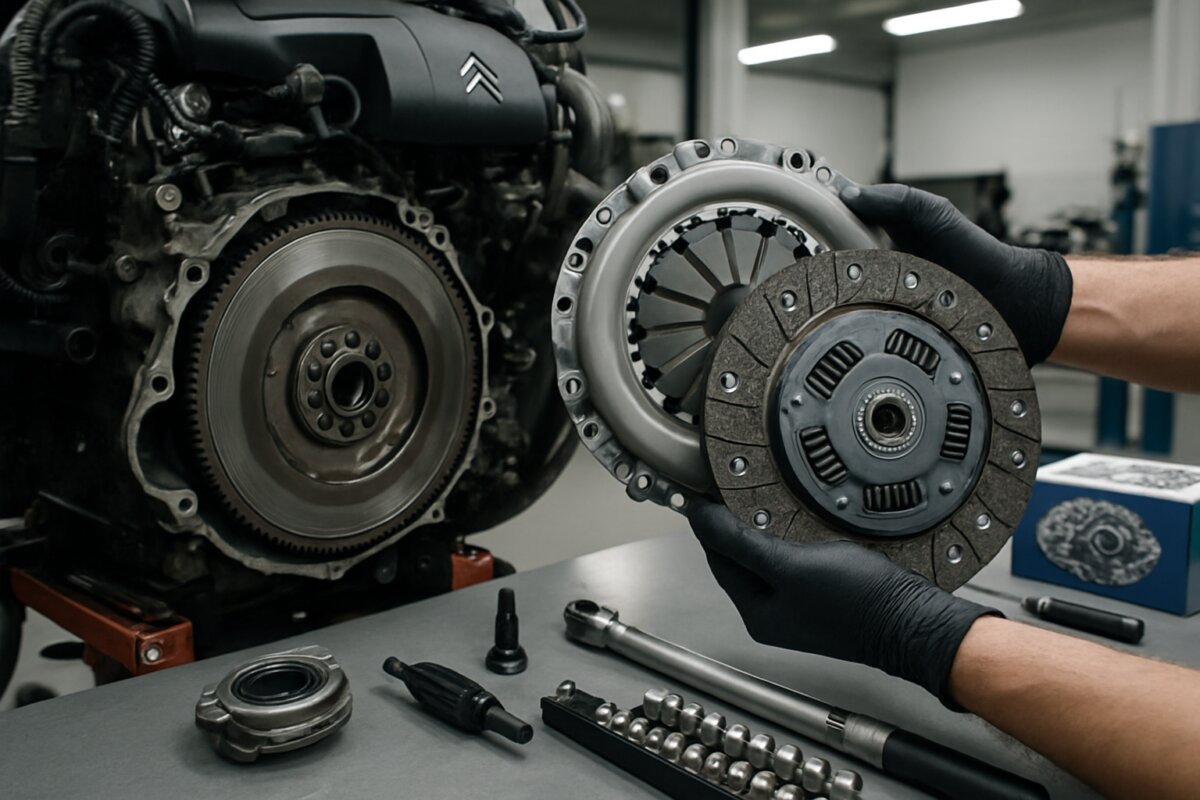
Citroën clutch replacement typically costs £300-800 for parts, with labour adding £400-600. You’ll need a clutch kit including pressure plate, clutch disc, and release bearing. Essential tools include a transmission jack, socket set, torque wrench, and clutch alignment tool. The process involves removing the gearbox, replacing worn components, and proper alignment during reassembly.
Tools and parts required
A successful Citroën clutch replacement demands specific components and professional-grade tools to ensure proper installation and longevity.
Parts needed
- Clutch kit – Complete assembly with pressure plate, friction disc, and release bearing
- Clutch release bearing – Often included in kit but verify compatibility
- Clutch pressure plate – Model-specific component requiring exact match
- Clutch plate – Friction disc must match engine specifications
- Transmission fluid – Replace during reassembly process
- Flywheel bolts – Single-use bolts requiring replacement
Tools required
- Transmission jack – Essential for safe gearbox removal
- Socket set – Comprehensive range including deep sockets
- Torque wrench – Critical for proper bolt specifications
- Clutch alignment tool – Ensures precise disc positioning
- Engine support beam – Maintains engine position during work
- Axle stands – Never rely solely on jacks for safety
Professional tip: Always verify clutch kit compatibility using your Citroën’s chassis number and engine code. Generic parts may cause premature failure or poor engagement.
Safety precautions
Working beneath vehicles demands strict adherence to safety protocols to prevent serious injury or death.
Ensure your workspace provides adequate ventilation and level ground. Disconnect the battery negative terminal before starting work to prevent electrical accidents. Use proper axle stands rated for your vehicle’s weight – never trust hydraulic jacks alone.
Wear safety glasses and mechanic’s gloves throughout the procedure. Transmission fluid and clutch dust contain harmful particles requiring respiratory protection. Keep a fire extinguisher nearby when working with automotive fluids.
Mark all electrical connections before disconnection to ensure correct reassembly. Support the engine properly using appropriate lifting equipment before removing transmission mounts.
Step-by-step instructions
Professional clutch replacement follows a systematic approach ensuring component longevity and proper operation.
Step 1: Prepare the vehicle
Warm the engine to operating temperature, then switch off and allow cooling for 30 minutes. This helps drain transmission oil more completely. Raise the vehicle using proper lifting points and secure with axle stands.
Remove the battery and disconnect all electrical connections to the starter motor and transmission sensors. Mark each connection with masking tape for identification during reassembly.
Step 2: Remove transmission components
Drain the transmission fluid completely using a suitable container. Remove the clutch slave cylinder without disconnecting hydraulic lines – secure it safely away from the work area.
Disconnect the propshaft at the transmission end and secure it to prevent damage. Remove the gear linkage connections and speedometer cable if fitted to older models.
Step 3: Support and remove gearbox
Position the transmission jack beneath the gearbox and adjust to take the weight. Remove the transmission crossmember bolts while supporting the unit securely.
Remove the bell housing bolts systematically, working from bottom to top. The transmission is heavy – ensure your jack can handle the weight safely. Slide the gearbox straight back to avoid damaging the clutch disc splines.
Step 4: Remove old clutch components
Mark the flywheel and pressure plate relationship before removal to maintain balance. Remove the pressure plate bolts gradually in a cross pattern to prevent warping.
Inspect the flywheel surface for scoring, cracks, or excessive wear. Minor imperfections can be machined, but severe damage requires replacement. Clean all mating surfaces thoroughly.
Step 5: Install new components
Install the new clutch disc using the alignment tool to centre it precisely on the flywheel. The disc must face the correct direction – most have “flywheel side” markings.
Fit the new pressure plate, ensuring alignment marks match the flywheel. Tighten the bolts gradually in a cross pattern to the manufacturer’s torque specification using your torque wrench.
Step 6: Reassemble transmission
Apply a thin layer of high-temperature grease to the transmission input shaft splines. Ensure the release bearing moves freely on its guide sleeve.
Carefully align the transmission with the engine, ensuring the input shaft engages the clutch disc splines without force. Tighten all bell housing bolts to specification.
Common mistakes to avoid
Professional experience reveals recurring errors that cause premature clutch failure or expensive damage.
Never use excessive force when installing the gearbox – this indicates misalignment and can damage clutch disc splines irreparably. Always use the clutch alignment tool rather than attempting to centre the disc by eye.
Avoid contaminating new clutch surfaces with oil or grease from your hands. Even small amounts of contamination cause slipping and glazing. Replace flywheel bolts with new ones – these stretch during tightening and lose clamping force when reused.
Don’t skip the flywheel inspection stage. A damaged flywheel will destroy your new clutch within thousands of miles. Surface grinding may be required even if wear appears minimal.
Expert insight: Our Autopartspro mechanics consistently see clutch failures caused by contaminated friction surfaces. Clean hands and tools are essential for professional results.
When should you replace it?
Recognising clutch wear symptoms prevents expensive secondary damage to your Citroën’s transmission system.
Replace your clutch when pedal travel increases noticeably or the bite point moves significantly higher. Slipping under acceleration, especially up hills or when heavily loaded, indicates friction material depletion.
Juddering during engagement suggests contaminated surfaces or worn pressure plate springs. Strange noises when depressing the clutch pedal often indicate release bearing failure.
Difficulty selecting gears, particularly first or reverse, may indicate hydraulic system problems or clutch drag. Address these symptoms promptly to avoid transmission damage requiring expensive repairs.
Most Citroën clutches last 60,000-100,000 miles depending on driving conditions and style. City driving with frequent stop-start traffic reduces clutch life significantly compared to motorway usage.
Related maintenance you can do at the same time
Clutch replacement provides access to components normally requiring separate labour charges.
Inspect and replace the clutch master cylinder if showing signs of leakage or internal wear. The hydraulic system benefits from complete fluid replacement during clutch work.
Check engine and gearbox mounts for deterioration – these are easily accessible with the transmission removed. Replace worn engine mounts to prevent excessive vibration affecting clutch operation.
Consider replacing the CV joints if they show wear, as accessing them later requires similar dismantling. Inspect the propshaft universal joints and centre bearing for play or roughness.
Replace transmission and engine oils using this opportunity. Fresh fluids protect internal components and improve shifting quality. Check the radiator hoses for deterioration while the engine bay is accessible.
Frequently asked questions
How long does Citroën clutch replacement take?
Professional mechanics typically complete clutch replacement in 6-8 hours, depending on model complexity and access difficulties. Home mechanics should allow additional time for unfamiliar procedures.
Can I drive with a slipping clutch?
Limited driving is possible but risks expensive flywheel damage from overheating. Avoid heavy acceleration and hills until repairs are completed to prevent secondary component failure.
What causes premature clutch failure?
Common causes include oil contamination from leaking seals, aggressive driving habits, and riding the clutch pedal. Proper maintenance and driving technique significantly extend clutch life.
Should I replace the flywheel with the clutch?
Inspect the flywheel surface carefully – minor scoring can be machined, but deep grooves or cracks require replacement. Professional assessment prevents repeat failures from damaged surfaces.
How much does Citroën clutch replacement cost?
Parts typically range £300-800 depending on model and kit quality. Labour costs add £400-600, making total replacement cost £700-1400 for professional installation including components.
Proper clutch replacement using quality components and correct procedures ensures reliable operation for years. Investing in genuine or OEM-equivalent parts from reputable suppliers like Autopartspro delivers superior longevity compared to budget alternatives. Quality clutch components matched precisely to your Citroën’s specifications provide the foundation for trouble-free motoring.

 Loading...