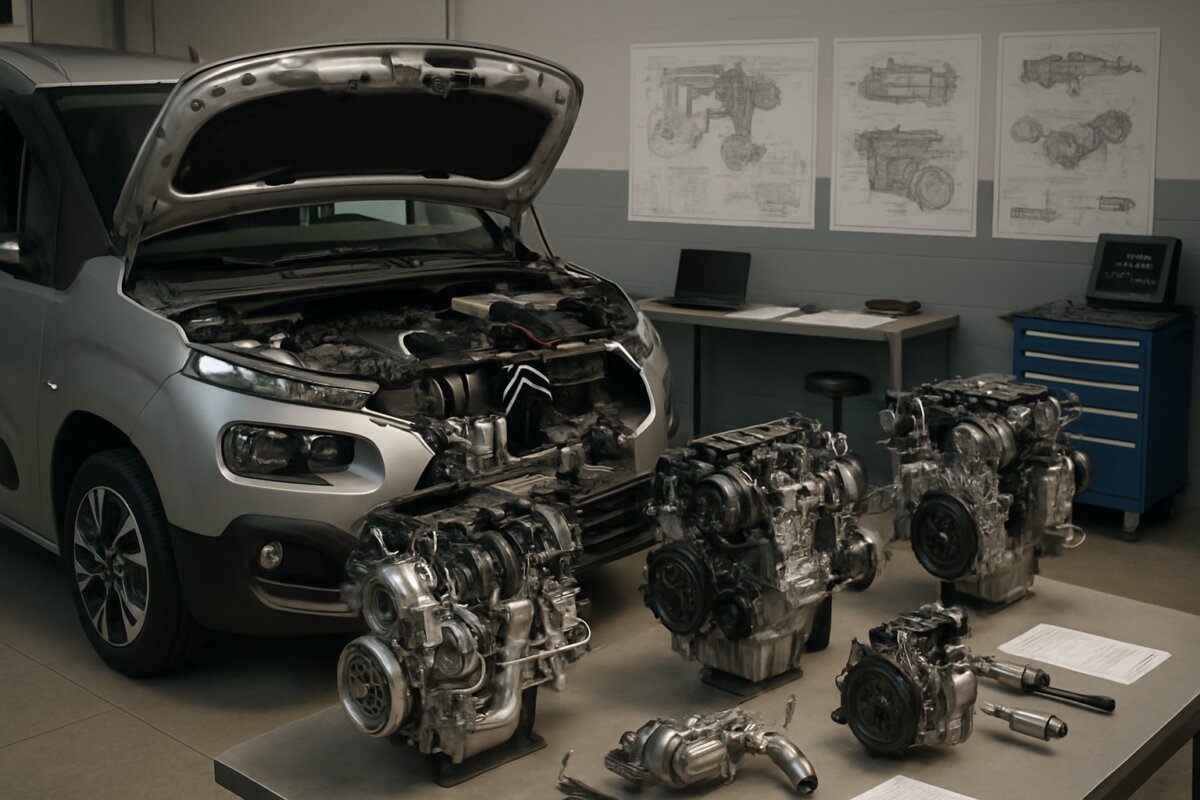
The Citroën Berlingo has established itself as a dependable workhorse in the compact van and MPV segment across Britain. Its engine lineup forms the backbone of this versatile vehicle’s appeal, offering everything from economical diesel units to peppy petrol powerplants. With power outputs ranging from 75bhp to 130bhp and torque figures reaching 300Nm, these engines deliver the perfect blend of efficiency and capability that British families and tradespeople demand.
Comparison table of all engines
Understanding the specifications across the Berlingo’s engine range helps buyers make informed decisions based on their specific requirements and driving patterns.
| Engine | Power Output | Torque | Fuel Consumption | Reliability |
|---|---|---|---|---|
| 1.2 PureTech 110 | 110bhp | 205Nm | 50mpg | Good |
| 1.2 PureTech 130 | 130bhp | 230Nm | 48mpg | Good |
| 1.5 BlueHDi 75 | 75bhp | 230Nm | 65mpg | Excellent |
| 1.5 BlueHDi 100 | 100bhp | 250Nm | 62mpg | Excellent |
| 1.5 BlueHDi 130 | 130bhp | 300Nm | 58mpg | Very Good |
1.2 PureTech 110 petrol overview
This three-cylinder turbocharged petrol engine represents Citroën’s modern approach to efficient motoring. The 1.2-litre PureTech features direct injection technology and a lightweight aluminium construction. Its turbocharger provides excellent low-end torque delivery, making it surprisingly responsive around town despite its modest displacement.
Pros
- Smooth and refined operation with minimal vibration
- Strong fuel economy for a petrol engine
- Quick warm-up times ideal for short journeys
- Lower purchase price compared to diesel variants
- Responsive throttle and adequate power delivery
Cons
- Less torque than diesel alternatives
- Higher CO2 emissions affect company car taxation
- Timing belt requires regular maintenance attention
- Performance drops noticeably when fully loaded
1.2 PureTech 130 petrol overview
The more powerful variant of the PureTech family delivers additional performance whilst maintaining the same basic architecture. This turbocharged three-cylinder unit provides enhanced pulling power and better overtaking capability. The turbocharger technology ensures responsive performance across the rev range.
Pros
- Notable performance improvement over the 110bhp version
- Still delivers respectable fuel economy figures
- Excellent refinement levels throughout the rev range
- Strong mid-range torque for confident overtaking
- Relatively low maintenance requirements
Cons
- Higher initial purchase cost
- Increased insurance premiums due to higher power output
- Slightly higher fuel consumption under heavy acceleration
- Three-cylinder engine note may not appeal to all drivers
1.5 BlueHDi 75 diesel overview
The entry-level diesel option provides exceptional fuel economy whilst delivering adequate performance for most driving scenarios. This naturally aspirated four-cylinder diesel emphasises efficiency over outright power. Regular maintenance of components like the fuel filter ensures optimal performance from this frugal powerplant.
Pros
- Outstanding fuel economy reaching 65mpg in real-world conditions
- Low CO2 emissions benefit company car drivers
- Simple, robust construction with fewer complex components
- Excellent long-distance cruising capability
- Strong resale values in the used car market
Cons
- Limited power for steep gradients or heavy loads
- Slower acceleration compared to turbocharged variants
- Engine noise more noticeable at idle and low speeds
- Requires longer warm-up periods in cold weather
1.5 BlueHDi 100 diesel overview
This turbocharged diesel represents the sweet spot in the Berlingo range, offering strong torque delivery with excellent fuel efficiency. The four-cylinder configuration provides smooth operation whilst the turbocharger ensures adequate performance across various driving conditions. Proper maintenance of the oil filter system keeps this engine running smoothly.
Pros
- Excellent balance between performance and economy
- Strong torque delivery ideal for towing and carrying loads
- Refined operation with minimal diesel clatter
- Proven reliability record across multiple vehicle platforms
- Good availability of replacement parts and service expertise
Cons
- DPF regeneration cycles require occasional longer journeys
- Higher maintenance costs compared to naturally aspirated diesel
- Potential turbo-related issues in high-mileage examples
- AdBlue system adds complexity and running costs
1.5 BlueHDi 130 diesel overview
The flagship diesel engine delivers impressive performance figures whilst maintaining respectable fuel economy. This turbocharged four-cylinder unit features advanced emission control technology including particulate filters and selective catalytic reduction. Regular servicing of components like the air filter ensures peak performance.
Pros
- Powerful torque delivery excellent for heavy-duty applications
- Smooth and refined operation throughout the rev range
- Good fuel economy despite higher power output
- Strong overtaking performance on A-roads and motorways
- Advanced emission control meets latest environmental standards
Cons
- Highest purchase price in the engine range
- Complex emission systems require specialist maintenance
- AdBlue consumption adds to running costs
- Potential expensive repairs if emission systems fail
Maintenance cost
Understanding maintenance schedules and associated costs helps owners budget effectively for their Berlingo’s upkeep. These figures reflect typical UK service costs from independent specialists.
| Engine | Recommended Interval | Estimated Cost | Cost per 10,000 miles |
|---|---|---|---|
| 1.2 PureTech 110 | 12,500 miles | £280 | £224 |
| 1.2 PureTech 130 | 12,500 miles | £290 | £232 |
| 1.5 BlueHDi 75 | 15,000 miles | £320 | £213 |
| 1.5 BlueHDi 100 | 15,000 miles | £350 | £233 |
| 1.5 BlueHDi 130 | 15,000 miles | £380 | £253 |
AutoPartsPro mechanics recommend checking engine oil levels monthly, particularly on turbocharged variants which operate under higher stress levels.
Engine sound and character
Each powerplant in the Berlingo lineup delivers a distinctive driving experience that reflects its engineering priorities. The petrol PureTech units produce a characteristically modern three-cylinder thrum, particularly noticeable during cold starts but smoothing out once warmed through. Their turbocharged nature means they remain relatively quiet during cruising but become more vocal under hard acceleration.
The diesel engines offer contrasting personalities depending on their configuration. The naturally aspirated 75bhp unit delivers that traditional diesel clatter, particularly at idle, but settles into a steady hum during highway cruising. Both turbocharged diesel variants provide smoother operation with less intrusive noise levels, though the characteristic diesel knock remains present during initial start-up phases.
Our technicians note that proper maintenance of engine mounts significantly reduces cabin vibration and noise transmission across all Berlingo variants.
The 130bhp diesel variant offers the most refined experience, with well-controlled noise levels and minimal vibration reaching the cabin. Its torque delivery feels almost electric-like in smoothness, making it particularly appealing for long-distance driving scenarios.
Who each engine is best for
Selecting the right engine depends heavily on individual driving patterns, load requirements, and budget considerations. This breakdown helps match engines to specific user profiles.
| Engine | Best For | Typical Use Case | Annual Mileage |
|---|---|---|---|
| 1.2 PureTech 110 | Urban commuters | City driving, light loads | Under 12,000 miles |
| 1.2 PureTech 130 | Performance-minded drivers | Mixed driving, occasional towing | 10,000-15,000 miles |
| 1.5 BlueHDi 75 | Budget-conscious owners | Economy runs, minimal loads | Over 15,000 miles |
| 1.5 BlueHDi 100 | Balanced requirement drivers | Daily commuting, moderate loads | 15,000-25,000 miles |
| 1.5 BlueHDi 130 | Heavy-duty users | Towing, maximum loads, motorway miles | Over 20,000 miles |
Frequently asked questions
Which Berlingo engine offers the best fuel economy?
The 1.5 BlueHDi 75 delivers exceptional fuel efficiency, achieving up to 65mpg in real-world conditions whilst maintaining adequate performance for most driving scenarios.
Are the PureTech petrol engines reliable long-term?
PureTech engines show good reliability when properly maintained, though regular cam belt replacement and cooling system attention prevents common issues.
Do diesel Berlingos require AdBlue fluid?
The 100bhp and 130bhp BlueHDi engines feature AdBlue systems requiring periodic top-ups, whilst the 75bhp variant operates without this emission control technology.
What’s the difference between naturally aspirated and turbocharged diesels?
Turbocharged variants deliver significantly more power and torque whilst maintaining similar fuel economy, though they require more complex maintenance procedures and components.
Can Berlingo engines handle commercial use reliably?
All Berlingo engines prove suitable for commercial applications when properly maintained, with diesel variants particularly well-suited to high-mileage professional use requiring frequent brake pads replacement.

 Loading...