Car gearbox oil for automatic and manual transmissions requires regular checking and changing to maintain optimal performance. Check levels with the engine warm on level ground using the dipstick (manual) or filling plug, and change the fluid every 30,000–60,000 miles depending on your vehicle’s specifications. You’ll need vehicle-specific automatic transmission fluid or gear oil, basic hand tools, a drain pan, and new seals to complete the job properly.
Tools and parts required
Before starting work on your gearbox, gather all necessary equipment to avoid interruptions. Having everything ready saves time and prevents contamination of fresh fluid.
Parts needed
- Transmission fluid or gear oil (vehicle specific)
- Replacement gaskets and seals
- New drain plug washer
- Transmission filter (if applicable)
Tools required
- Socket set and spanners
- Torque wrench
- Fluid pump or funnel with extension tube
- Large drain pan (minimum 10-litre capacity)
- Jack and axle stands
- Disposable gloves
- Clean rags
- Fluid level dipstick (if not integrated)
Always verify fluid specifications match your gearbox type and model year. Using incorrect viscosity or formulation can damage synchronisers in manual boxes or clutch packs in automatics. Check your vehicle handbook or chassis plate for exact requirements.
Safety precautions
Working with gearbox oil involves hot components and potentially hazardous fluids. Follow these essential safety measures to protect yourself during the job.
- Work on level ground with the handbrake engaged
- Allow the gearbox to cool slightly but remain warm for accurate level checking
- Wear chemical-resistant gloves and eye protection
- Ensure proper ventilation in your workspace
- Support the vehicle securely on axle stands, never rely solely on a jack
- Disconnect the battery negative terminal if working near electrical components
- Keep absorbent material handy for spills
- Dispose of old fluid at authorised recycling centres
Transmission fluid can reach temperatures exceeding 90°C during operation. Allow sufficient cooling time to avoid burns, but remember that fluid flows better and provides more accurate level readings when warm.
Checking gearbox oil level in manual transmissions
Manual gearboxes typically use a fill plug system rather than a dipstick. The process differs from automatic transmissions and requires the vehicle to be level.
Step 1: Locate the fill plug
Raise the vehicle safely on axle stands. The fill plug sits on the side of the gearbox casing, usually at mid-height. It’s typically a 17mm or 19mm hex socket or square-drive fitting. Clean around the plug thoroughly before removal to prevent contamination.
Step 2: Remove the plug and check level
Using the correct size socket, carefully loosen the fill plug. On a properly filled manual gearbox, oil should be level with the bottom of the fill hole. Insert a clean finger or small probe to verify the fluid sits just at the opening edge.
Step 3: Top up if necessary
If level is low, use a fluid pump or funnel with extension tube to add the correct specification gear oil. Fill slowly until fluid begins to trickle from the hole. This indicates the correct level has been reached.
Step 4: Replace the fill plug
Clean the plug threads and fit a new copper or aluminium washer. Tighten to the manufacturer’s specified torque setting, typically between 25–45 Nm depending on the gearbox model.
According to AutoPartsPro’s senior technician with 15 years’ transmission experience: “Many drivers overlook manual gearbox oil completely, yet it’s vital for synchroniser longevity. Check levels annually, especially on older vehicles where seal weepage is common.”
Checking gearbox oil level in automatic transmissions
Automatic gearboxes are more complex and sensitive to fluid condition. Modern sealed units may lack a dipstick entirely, requiring specialist equipment for accurate checking.
Step 1: Warm the transmission
Drive the vehicle for 10–15 minutes to bring transmission fluid to operating temperature (typically 70–80°C). Park on level ground with the engine running and selector in Park.
Step 2: Locate the dipstick or check plug
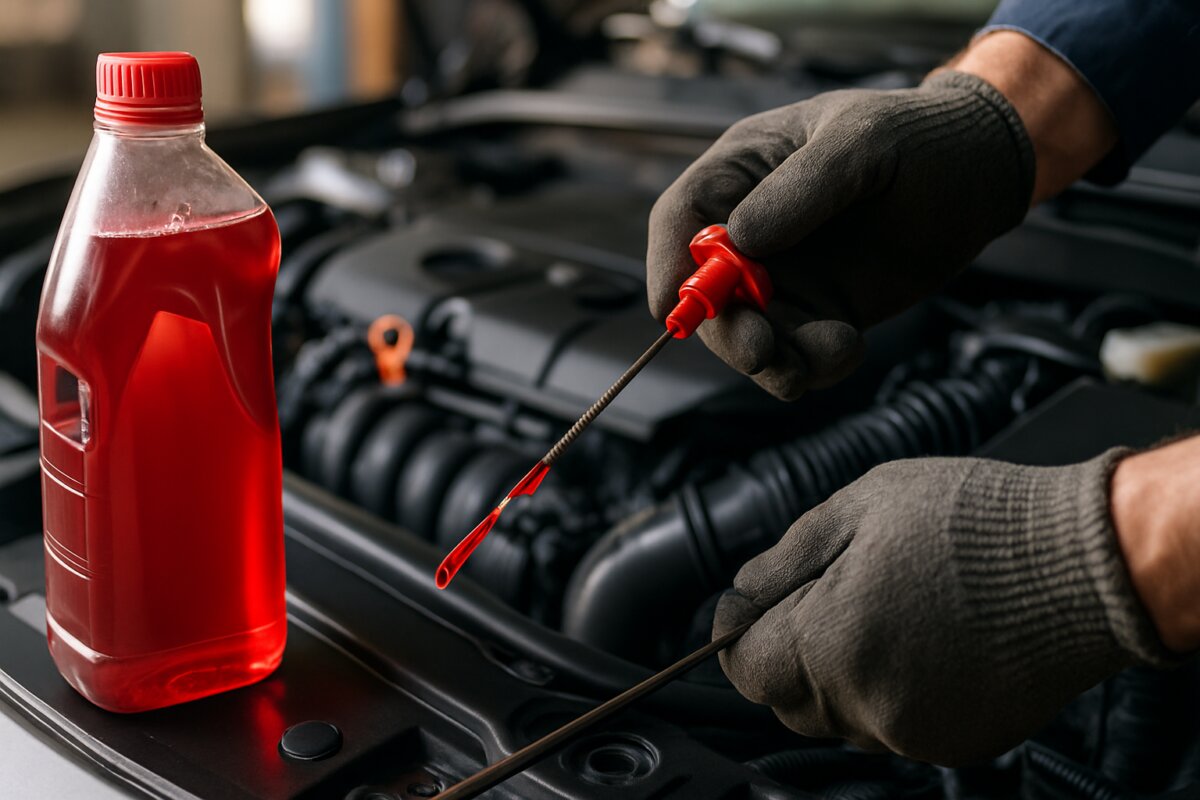
Traditional automatics have a dipstick, usually with a red or yellow handle near the back of the engine bay. Sealed transmissions require removing an undertray to access the check plug, often requiring the vehicle to be raised.
Step 3: Check fluid level and condition
With the engine idling, withdraw the dipstick, wipe clean, reinsert fully, then remove again. Fluid should register between MIN and MAX marks in the HOT range. Check the fluid’s colour and smell – it should be red or pink, not brown or burnt-smelling.
Step 4: Add fluid if required
If low, add the correct specification automatic transmission fluid through the dipstick tube using a long-neck funnel. Add small amounts (200ml at a time) and recheck, as overfilling causes foaming and erratic shifting.
For sealed transmissions, fluid level is correct when a small amount drips from the check hole with the engine running at operating temperature. This method requires precision and experience.
Changing manual gearbox oil
Complete fluid changes extend gearbox life significantly by removing metal particles and degraded additives. Manual boxes are simpler to service than automatics but still require care.
Step 1: Prepare the vehicle and workspace
Drive the car briefly to warm the oil, improving flow during draining. Raise the vehicle securely on axle stands and position your drain pan underneath the gearbox. Ensure adequate clearance for draining – manual boxes typically hold 1.5–3 litres.
Step 2: Remove the drain plug
Locate the drain plug on the bottom of the gearbox casing. Clean the surrounding area thoroughly. Using the correct size socket, carefully loosen the drain plug. The final removal should be done quickly by hand to avoid oil running down your arm. Allow fluid to drain completely for at least 15 minutes.
Step 3: Inspect and clean
Examine the drained fluid for metal particles, which indicate wear. Small amounts of fine metal dust are normal, but chunks or excessive debris suggest internal damage. Clean the drain plug and magnetic tip if fitted. Replace the copper washer with a new one.
Step 4: Reinstall drain plug
Thread the drain plug carefully by hand to avoid cross-threading. Tighten to the specified torque setting – over-tightening can strip the aluminium casing threads. Record the mileage and date of this service for future reference.
Step 5: Refill with new oil
Remove the fill plug if not already done. Using a fluid pump or funnel with extension, slowly add the manufacturer’s specified quantity of fresh gear oil. Fill until oil reaches the bottom edge of the fill hole. Replace the fill plug with a new washer and torque correctly.
Step 6: Test drive and recheck
Lower the vehicle and test drive for 5–10 miles, cycling through all gears. Recheck the level when warm – some air pockets may have cleared, slightly lowering the level. Top up if necessary.
AutoPartsPro’s transmission specialists recommend: “Always use manufacturer-specified GL-4 or GL-5 rated oils for manual gearboxes. Using the wrong grade, particularly in boxes with brass synchronisers, can cause premature wear and difficult gear selection.”
Changing automatic transmission fluid
Automatic transmission servicing is more involved than manual boxes due to filter replacement and fluid quantity. Some manufacturers specify lifetime fill, but fluid degradation still occurs.
Step 1: Prepare and access the transmission pan
Warm the transmission fully, then raise the vehicle on axle stands. Position a large drain pan underneath. Some automatics have drain plugs, whilst others require removing the entire sump pan, which is messier but allows filter access.
Step 2: Drain the old fluid
If equipped with a drain plug, remove it and allow fluid to drain completely. For pan removal, carefully loosen bolts in a spiral pattern, leaving two opposite corners slightly tight. Gently pry one corner down to allow fluid to drain into the pan, then remove remaining bolts. Expect 4–6 litres to drain initially, though total capacity is often 8–12 litres.
Step 3: Replace the filter and gasket
Remove the old transmission filter – it may be held by bolts or clips. Install the new filter, ensuring all seals are properly seated. Clean the pan thoroughly with solvent, removing all old gasket material and metal particles. Check for excessive debris, which indicates wear. Fit a new pan gasket or apply RTV sealant as specified.
Step 4: Reinstall the pan
Carefully position the pan and start all bolts by hand. Tighten in a crisscross pattern to the specified torque (typically 10–15 Nm). Over-tightening will distort the pan and cause leaks. Allow sealant to cure if used.
Step 5: Refill with ATF
Through the dipstick tube or fill point, add approximately 80% of the drained quantity initially. Start the engine and cycle through all gear positions, pausing 2–3 seconds in each. This distributes fluid through the valve body and torque converter. Check the level and add fluid gradually until correct.
Step 6: Perform a complete flush (optional)
A drain and fill only replaces 40–60% of total fluid. For a complete service, repeat the drain and fill process after driving 50 miles, or use a transmission flush machine. Multiple drain and fills are gentler than machine flushing for high-mileage boxes.
Common mistakes to avoid
Transmission work seems straightforward, but several errors can cause expensive damage. Understanding these pitfalls helps ensure successful servicing.
Using incorrect fluid specification
Automatic transmissions are particularly sensitive to fluid type. Using Dexron when the manufacturer specifies a proprietary fluid (such as Toyota WS or VW G052) will cause shifting problems and clutch pack damage. Always verify the exact specification before purchasing fluid.
Overfilling the gearbox
Excessive fluid causes foaming in automatics, leading to erratic shifts, overheating, and potential seal damage from increased pressure. In manual boxes, overfilling can cause oil to be forced past seals. Always check levels carefully and add fluid in small increments.
Checking automatic fluid whilst cold
Cold fluid gives inaccurate readings. Transmissions must reach operating temperature for proper level checking. Some dipsticks have both cold and hot ranges, but always verify when warm for accuracy.
Reusing old washers and seals
Drain plug washers crush during installation to form a seal. Reusing them almost guarantees leaks. Always fit new washers – they cost pennies compared to replacing lost fluid and cleaning oil off your driveway.
Stripping threads through over-tightening
Gearbox casings are typically aluminium, which strips easily. Use a torque wrench and follow manufacturer specifications. Cross-threading during installation is another common error – always start fasteners by hand first.
Performing a flush on high-mileage transmissions
If fluid has never been changed in an automatic with over 100,000 miles, a high-pressure flush can dislodge deposits that were actually helping worn clutches grip. For neglected boxes, a gentle drain and fill is safer, or consult a transmission specialist.
When should you replace gearbox oil?
Service intervals vary significantly between manufacturers and transmission types. Following the correct schedule prevents premature wear whilst avoiding unnecessary expense.
Manual gearbox intervals
Most manufacturers recommend changing manual gearbox oil every 30,000–60,000 miles. However, severe driving conditions – towing, track use, or dusty environments – warrant more frequent changes at 20,000–30,000 miles. Some performance boxes benefit from annual changes regardless of mileage.
Automatic transmission intervals
Traditional automatics typically need fluid changes every 40,000–60,000 miles, despite some manufacturers claiming lifetime fill. Modern sealed transmissions may genuinely last 100,000+ miles, but fluid degradation still occurs. AutoPartsPro technicians suggest servicing every 60,000 miles for maximum longevity.
Signs your gearbox needs attention
Don’t wait for scheduled intervals if you notice these symptoms:
- Difficult gear selection or grinding in manual boxes
- Delayed engagement or harsh shifts in automatics
- Whining or humming noises during driving
- Fluid leaks beneath the vehicle
- Burning smell from the transmission area
- Slipping between gears under acceleration
- Dark, burnt-smelling fluid on the dipstick
These indicators suggest fluid breakdown or internal wear. Prompt attention can prevent minor issues escalating into complete transmission failure requiring rebuild or replacement.
Related maintenance you can do at the same time
With the vehicle raised and tools already out, several related jobs become convenient. Combining tasks saves time and ensures comprehensive drivetrain care.
Inspect driveline components
Check CV joint gaiters for splits or grease leaks. Examine the propshaft centre bearing if fitted. Look for play in differential mounts. These components work directly with the gearbox and share similar service intervals.
Change the differential oil
Many rear-wheel-drive vehicles have a separate differential requiring its own oil change. The procedure mirrors manual gearbox servicing and uses similar tools.
Replace engine oil and filter
With the vehicle already raised, changing engine oil and the oil filter becomes more convenient. This comprehensive service approach ensures all lubricated components receive fresh fluid simultaneously.
Inspect clutch operation (manual)
While underneath, check the clutch cable or hydraulic lines for wear. Examine the slave cylinder for leaks. These components affect gear selection quality and share maintenance timing with gearbox servicing.
Service cooling systems
Many automatics have cooler lines running to the engine radiator. Inspect these for corrosion or leaks. If the radiator is old, consider replacement to prevent coolant contaminating transmission fluid – a catastrophic failure mode in older designs.
Frequently asked questions
Can I use engine oil in my manual gearbox?
Some modern manual gearboxes specify low-viscosity engine oils, but most require dedicated gear oil with EP (extreme pressure) additives. Using incorrect lubricant damages synchronisers and bearings. Always verify your vehicle’s specific requirement before filling.
Why is my automatic transmission fluid brown instead of red?
Brown or dark fluid indicates oxidation from heat and age. If accompanied by a burnt smell, clutch material is deteriorating. Change the fluid immediately and monitor for shifting problems. Fresh fluid can sometimes restore normal operation in mildly degraded transmissions.
How long does a gearbox oil change take?
A manual gearbox drain and fill takes 30–45 minutes for experienced DIY mechanics. Automatic transmission servicing with filter replacement requires 1.5–2 hours. First-time attempts typically take twice as long. Allow extra time for access difficulties on certain vehicle designs.
Can I drive with low gearbox oil?
Low fluid causes insufficient lubrication, leading to accelerated wear, overheating, and potential seizure. In automatics, low fluid prevents proper hydraulic pressure, causing slipping and burnt clutches. Stop driving immediately and top up before continuing. Identify and repair any leaks promptly.
Do sealed automatic transmissions really last a lifetime?
“Lifetime” typically means the expected vehicle lifespan of 150,000 miles under ideal conditions. Fluid still degrades from heat and friction. Many transmission specialists recommend servicing sealed units every 60,000–80,000 miles to maximise longevity, particularly if you plan to keep the vehicle beyond 100,000 miles.
Maintaining your gearbox with regular fluid checks and timely changes represents one of the most cost-effective preventative measures in vehicle ownership. Whether you drive a manual or automatic, using the correct specification fluid at proper intervals prevents expensive repairs and ensures smooth operation for years to come. The modest investment in quality transmission fluid and basic tools pays dividends through extended component life and reliable performance.

 Loading...