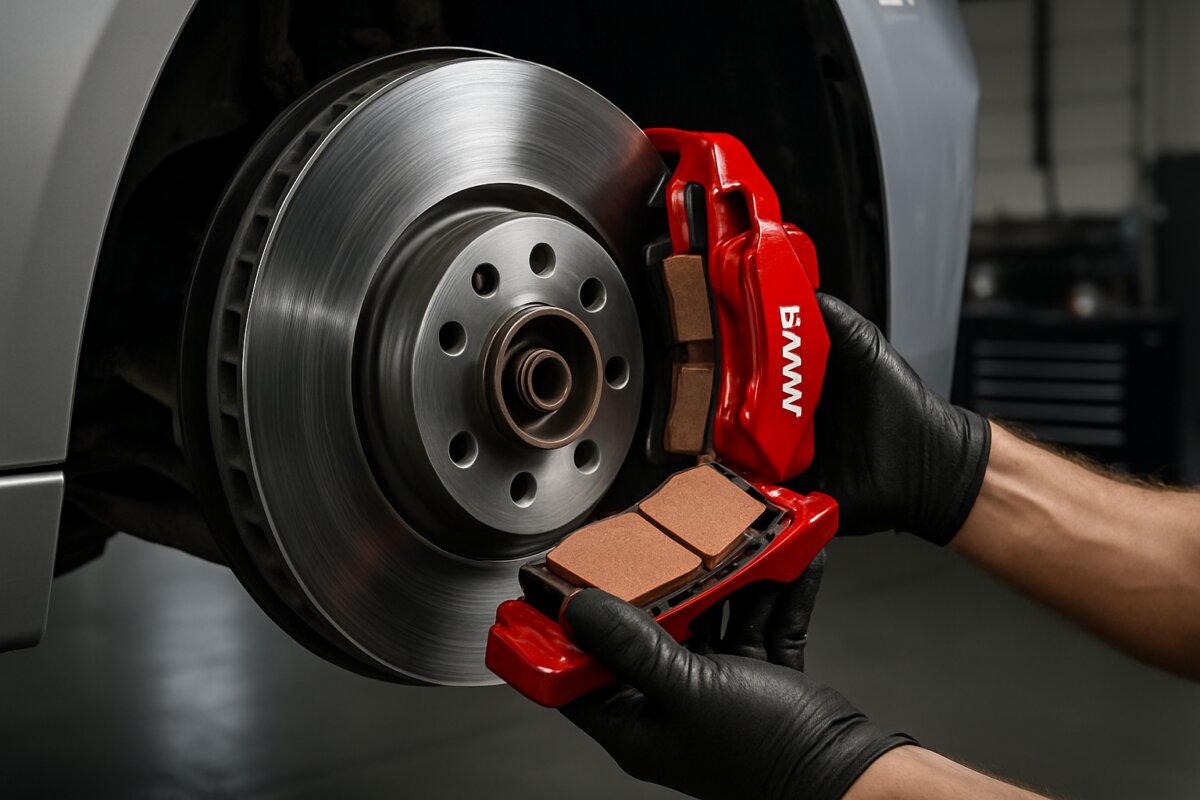
BMW brake pads and discs replacement in the UK typically costs between £150-£400 for front or rear axle work at independent garages, with dealerships charging £300-£600. The total price depends on your specific BMW model, whether you need pads only or both pads and discs, and whether you choose OEM, premium aftermarket, or budget parts. Labour rates vary from £50-£120 per hour across the UK, with the job taking roughly 1-2 hours per axle. Understanding these cost factors helps you make informed decisions and avoid overpaying for essential brake maintenance.
Why BMW braking components demand special attention
BMW vehicles feature sophisticated braking systems that require precise replacement parts. The German manufacturer designs each model with specific friction coefficients, heat dissipation requirements, and electronic integration in mind.
Our mechanics at Autopartspro regularly see owners attempting to fit generic components that compromise stopping performance. BMW’s advanced systems like Dynamic Stability Control and brake-by-wire technology rely on precisely matched friction materials to function safely.
The weight distribution and performance characteristics of BMW models differ substantially from mass-market vehicles. A 3 Series saloon experiences different thermal loads compared to an X5 SUV, demanding tailored brake specifications for each application.
Understanding replacement costs across the UK
Geographic location significantly impacts what you’ll pay for BMW brake work. London and Southeast England command premium rates, whilst Northern England, Scotland, and Wales offer more competitive pricing.
Here’s what different service providers charge:
- Independent specialists: £150-£300 for front brake pads replacement including labour
- Main dealerships: £300-£600 for the same front axle service with OEM parts
- Fast-fit chains: £180-£350 depending on parts quality and location
- Mobile mechanics: £120-£280 for pad replacement at your location
When both pads and brake rotors require replacement, expect costs to increase by 60-80%. The additional machining work and heavier components justify the price difference.
Parts quality: what actually matters
Three main categories exist when sourcing BMW brake components. Each serves different priorities regarding performance, longevity, and budget constraints.
OEM (Original Equipment Manufacturer) parts come directly from BMW’s suppliers. These components meet exact factory specifications and carry the BMW badge. They’re the safest choice for warranty preservation and guaranteed compatibility but command the highest prices.
Premium aftermarket brands like Brembo, ATE, Pagid, and Zimmermann manufacture components to match or exceed OEM standards. Our specialists recommend these brands for their proven reliability and better value proposition. They often use advanced materials that reduce brake dust and noise.
Budget alternatives appeal to price-conscious owners. However, Autopartspro mechanics advise caution here. Inferior friction materials wear quickly, generate excessive dust, and may trigger dashboard warning lights due to incorrect sensor compatibility.
Material composition differences
Modern BMW brake pads use several friction compound types. Semi-metallic pads offer excellent heat dissipation and longevity but create more noise and dust. Ceramic compounds run quieter with minimal dust generation, though they cost 20-30% more.
Low-metallic formulations strike a middle ground. They provide adequate performance for daily driving without premium pricing. Understanding your driving patterns helps determine which material suits your needs.
When to replace: recognising the warning signs
BMW vehicles incorporate electronic wear sensors that illuminate dashboard warnings when pad thickness reaches critical levels. Don’t ignore these alerts—continuing to drive risks scoring the discs and dramatically increasing repair costs.
Physical symptoms include:
- Squealing or grinding noises during braking application
- Vibration through the brake pedal or steering wheel
- Increased stopping distances or spongy pedal feel
- Vehicle pulling to one side during braking
- Visible scoring or deep grooves on disc surfaces
Our technicians recommend visual inspections every 10,000 miles. Pads typically last 25,000-40,000 miles depending on driving style, whilst discs endure 50,000-70,000 miles under normal conditions.
Front versus rear: different requirements
BMW’s front axle handles 60-70% of braking force, causing front components to wear faster. Most vehicles require front pad replacement twice as frequently as rear pads.
Rear brakes on many modern BMWs incorporate electronic parking brake mechanisms. These systems demand specific procedures during replacement, including computer diagnostics to retract servo motors. Attempting DIY work without proper equipment risks damaging expensive electronic components.
The cost breakdown differs between axles. Front brake work generally costs 10-15% more due to larger components and increased labour time. However, rear jobs involving electronic parking brakes may require similar investment due to technical complexity.
Disc replacement: when skimming isn’t enough
Brake discs don’t always require replacement with pads. If thickness measurements exceed minimum specifications and surfaces remain smooth, new pads alone suffice.
Replace discs when:
- Thickness falls below manufacturer minimum (typically stamped on the disc)
- Deep scoring or heat cracks appear across friction surfaces
- Warping causes vibration that machining cannot correct
- Corrosion pitting affects structural integrity
Drilled or grooved discs cost 30-50% more than standard solid rotors. Performance enthusiasts favour them for improved heat dissipation and wet-weather performance. However, they offer minimal benefit for typical road driving and may crack under extreme use.
DIY replacement: realistic expectations
Mechanically confident owners can replace BMW brake pads with basic tools. The job requires a jack, axle stands, socket set, and brake piston rewind tool.
However, Autopartspro specialists highlight several complications. Modern BMWs require electronic service mode activation before compressing pistons. Without diagnostic equipment to place the system in maintenance mode, you risk damaging ABS pumps and electronic parking brake motors.
Budget 2-3 hours for a first attempt per axle. Professional mechanics complete the work in 45-60 minutes through experience and proper equipment access.
Always check brake fluid condition when replacing pads or discs. Contaminated or low fluid compromises the entire system. Top up only with BMW-approved DOT 4 specification brake fluid to maintain proper viscosity and boiling point protection.
Choosing between new and reconditioned calipers
Seized or leaking brake calipers require attention beyond pad replacement. New calipers cost £80-£200 each depending on model and position.
Reconditioned units offer 40-50% savings. Reputable suppliers strip, clean, and rebuild calipers with new seals and pistons. They provide 12-24 month warranties comparable to new parts.
Our mechanics recommend new calipers for high-mileage vehicles or those showing extensive corrosion. The modest additional cost prevents repeat failures within months. For newer vehicles with isolated caliper issues, quality reconditioned units represent sensible economy.
Complete brake system service packages
Many suppliers bundle components into complete axle kits. These packages include pads, discs, wear sensors, and sometimes caliper hardware at discounted prices.
Here’s a comparison of typical package contents:
| Package Type | Components Included | Price Range |
|---|---|---|
| Basic Pad Set | 4 brake pads for one axle | £30-£80 |
| Standard Kit | Pads, discs, wear sensor | £120-£250 |
| Premium Kit | Pads, discs, sensors, caliper pins, anti-rattle clips | £200-£400 |
| Performance Kit | Uprated pads, grooved discs, braided lines, high-temp fluid | £350-£700 |
Complete kits ensure component compatibility and often cost 15-25% less than purchasing items separately. They’re particularly valuable when tackling both axles simultaneously.
Online versus traditional purchasing routes
Modern buyers face numerous purchasing channels. Each offers distinct advantages depending on urgency, technical knowledge, and budget flexibility.
Online retailers like Autopartspro provide extensive catalogues with precise fitment data. You’ll find competitive pricing, detailed specifications, and customer reviews. Parts arrive within 24-48 hours across most UK postcodes. The challenge lies in selecting correct parts without hands-on inspection.
Motor factors offer immediate collection and counter staff advice. They stock common patterns for popular models but may require ordering specialist components. Prices typically sit 10-20% above online equivalents, though you’re paying for convenience and local support.
Dealership parts departments guarantee authenticity and immediate warranty support. However, expect to pay 40-60% premiums over alternative sources. This route makes sense when preserving manufacturer warranty coverage or sourcing hard-to-find components.
Model-specific considerations across the BMW range
Different BMW series present unique brake system characteristics. Understanding your specific model helps set realistic expectations for costs and maintenance intervals.
The 1 Series and 2 Series use relatively compact braking systems. Parts cost less and wear rates remain modest under normal driving. Front pad sets start around £35-£60 for quality aftermarket options.
The popular 3 Series and 4 Series employ larger components. Expect to pay £50-£90 for front pads and £100-£180 for disc pairs. M Sport variants feature uprated systems with correspondingly higher parts costs.
The 5 Series, 6 Series, and 7 Series luxury models incorporate sophisticated multi-piston calipers on some variants. These systems deliver exceptional performance but demand premium pricing—£120-£200 for pad sets and £200-£350 for discs.
X-Series SUVs carry substantial weight requiring robust braking capacity. The X5 and X7 particularly need frequent attention due to their mass. Budget £150-£250 for front brake pads and £250-£400 for disc pairs on larger models.
M Performance models: specialist requirements
BMW M vehicles feature competition-derived braking systems. The M3, M4, and M5 models use massive discs with multi-piston calipers that generate extreme thermal loads.
Standard replacement parts don’t meet performance requirements. M-specific components cost 2-3 times more than equivalent non-M parts. However, fitting inferior alternatives compromises the precise balance engineers achieved.
Track driving demands carbon-ceramic discs on some M models. These exotic components last 100,000+ miles but cost £5,000-£8,000 for a complete set. Replacement pads still run £200-£400 due to specialised compounds.
Warranty implications and documentation
Maintaining comprehensive service records protects resale value and warranty coverage. BMW requires proof of proper maintenance using quality components meeting their specifications.
Keep all receipts showing parts used, including manufacturer and part numbers. Photograph old components before disposal to document wear conditions. This evidence proves due diligence if disputes arise.
Extended warranties often mandate dealership servicing or approved specialists. Check policy terms before choosing independent garages, even when they offer significant savings. Breaching warranty conditions can void coverage worth thousands of pounds.
Environmental and regulatory factors
UK regulations increasingly target brake dust pollution. Modern low-copper and copper-free pads reduce environmental contamination but may cost 10-15% more.
MOT testing includes detailed brake efficiency measurements. Worn components cause test failures requiring immediate rectification before legal road use. Anticipating wear and replacing proactively avoids inconvenient failures and retest fees.
Proper disposal of old brake components is legally mandated. Friction materials contain hazardous substances requiring specialist handling. Reputable garages include disposal in service pricing, whilst DIY enthusiasts must use designated recycling facilities.
Maintenance practices extending component life
Driving style profoundly affects brake longevity. Aggressive braking generates excessive heat that accelerates pad glazing and disc warping. Anticipating stops and using engine braking reduces wear significantly.
Regular cleaning prevents corrosion. Road salt and brake dust create acidic contamination that attacks caliper surfaces and disc edges. Washing wheel areas monthly during winter extends component life by years.
Annual brake caliper repair kit inspections identify seized slide pins before they cause uneven wear. Lubricating these components costs pennies but prevents premature pad replacement and caliper failure.
Identifying genuine versus counterfeit parts
The BMW parts market contains significant counterfeit product volumes. Fake components copy packaging and branding but use substandard materials that fail prematurely or dangerously.
Verify authenticity by checking:
- Part numbers matching BMW Electronic Parts Catalogue listings
- Quality packaging with correct language and safety certifications
- Realistic pricing—genuine BMW or premium brands won’t sell at budget prices
- Supplier reputation through verified customer reviews and trading history
- Physical inspection for poor casting quality, incorrect markings, or missing details
Purchasing from established retailers like Autopartspro eliminates counterfeit risks. We source directly from authorised distributors and guarantee component authenticity.
Complementary components requiring attention
Complete brake service extends beyond pads and discs. Several related components demand simultaneous inspection or replacement.
Wear sensors are single-use items costing £8-£15 each. They trigger dashboard warnings when pads reach minimum thickness. Always fit new sensors with pad replacement—reusing old units risks missing critical wear warnings.
Brake lines and hoses deteriorate over time. Rubber lines perish internally, creating blockages or leaks. Inspect carefully during pad changes and replace any showing surface cracking or swelling. Braided lines offer performance improvements and resist deterioration better than standard rubber.
The ABS sensor rings require inspection for damage or excessive rust buildup. Corroded rings trigger false ABS activation or system warnings. Cleaning during brake service prevents electronic faults.
Performance upgrades: worthwhile investments
Enthusiast owners often consider upgraded braking components. Several improvements deliver tangible benefits without extreme costs.
Uprated brake pads using racing-derived compounds offer improved initial bite and fade resistance. They cost 20-40% more than standard pads but transform pedal feel and stopping confidence. However, they may require warm-up and generate more dust.
Braided brake lines replace rubber hoses with stainless steel mesh construction. They eliminate line expansion under pressure, creating firmer pedal feel. A complete vehicle set costs £80-£150 and installation takes 2-3 hours.
Higher-spec brake fluid with elevated boiling points prevents vapour lock during spirited driving. DOT 5.1 synthetic fluid costs £10-£15 per litre but resists moisture absorption better than conventional DOT 4 products.
Seasonal considerations affecting brake performance
British weather patterns influence brake system behaviour throughout the year. Winter salt accelerates corrosion whilst summer heat affects fade resistance.
Cold weather causes brake fluid to thicken slightly, potentially affecting ABS modulation. Contaminated fluid with absorbed moisture may freeze in extreme conditions, though this rarely occurs in UK climates.
Summer track days generate sustained high temperatures that challenge standard brake systems. Consider uprated pads and high-temperature fluid if you attend driving events regularly. Standard components may fade dangerously under track conditions.
Insurance and breakdown cover implications
Vehicle insurance policies rarely cover routine brake maintenance. However, component failure causing an accident may trigger coverage disputes if maintenance records show neglect.
Breakdown assistance policies typically exclude brake failures as they’re considered preventable through proper maintenance. Complete brake failure leaving you stranded won’t receive roadside assistance—you’ll need recovery at your own expense.
Maintaining detailed service records demonstrates due diligence if accidents occur. This documentation can prove critical during insurance claims or legal proceedings.
Finding the right supplier for your needs
Selecting a reliable parts source requires research beyond price comparison. Consider several factors when evaluating suppliers.
Stock availability matters when your vehicle sits immobile awaiting parts. Established retailers maintain comprehensive inventories across popular BMW models. Verify stock status before purchasing to avoid delays.
Return policies protect you if parts don’t fit correctly. Quality suppliers accept returns of unused components within reasonable periods. Check terms before ordering—some sellers impose restocking fees or refuse returns on electrical items.
Technical support helps when identifying correct parts for your specific vehicle. Autopartspro provides detailed fitment guidance and specialist advice to ensure you receive compatible components first time.
| Supplier Type | Advantages | Disadvantages |
|---|---|---|
| Online Specialists | Competitive pricing, wide selection, convenient delivery | Cannot inspect before purchase, delivery delays possible |
| Local Motor Factors | Immediate collection, face-to-face advice, established relationships | Higher prices, limited stock of specialist items |
| BMW Dealerships | Guaranteed authenticity, warranty support, expert knowledge | Premium pricing, limited opening hours |
| Fast-Fit Chains | National coverage, package deals including fitting | Variable quality, sales pressure, limited parts choice |
Professional installation versus DIY approach
Deciding whether to tackle brake replacement yourself depends on mechanical competence, available tools, and time constraints.
Professional installation guarantees correct procedures and includes warranty coverage. Mechanics complete work efficiently and identify related issues during service. Labour costs represent 40-50% of total bills but deliver peace of mind.
DIY enthusiasts save substantially on labour charges. However, you’ll need proper equipment including quality jack stands—never work under a vehicle supported only by a jack. Electronic parking brake systems demand diagnostic tools costing hundreds of pounds that most home mechanics don’t own.
Our Autopartspro specialists recommend professional installation for vehicles with electronic parking brakes, ABS pumps requiring bleeding, or when you lack experience. The safety critical nature of brake systems leaves no room for errors.
Maximising value when purchasing brake components
Smart shopping strategies reduce costs without compromising safety. Several approaches deliver better value from your brake system investment.
Bulk buying both axles simultaneously often unlocks discounts of 10-15%. Even if rear brakes remain serviceable, purchasing complete vehicle sets during front replacement makes financial sense when savings offset storage until needed.
Package deals bundling pads, discs, and ancillary components beat individual item pricing by 20-30%. These kits ensure compatibility and simplify ordering whilst reducing overall expenditure.
Timing purchases around promotional periods yields significant savings. Black Friday, January sales, and manufacturer promotional events offer genuine discounts on premium brands. Subscribe to supplier newsletters to receive advance notice of special offers.
Quality mid-range brands often outperform budget alternatives whilst costing far less than OEM parts. Brands like ATE, Pagid, and TRW manufacture components for various vehicle manufacturers to exacting standards. They represent the sweet spot between performance, longevity, and affordability.
Understanding BMW brake system requirements, recognising quality components, and choosing appropriate suppliers ensures your vehicle maintains optimal stopping performance without overspending. Whether you select premium OEM parts, trusted aftermarket brands, or handle installation yourself, investing in proper brake maintenance protects both safety and long-term running costs. The specialists at Autopartspro stand ready to supply quality components and expert guidance for every BMW model on UK roads, helping you make informed decisions that keep your vehicle performing exactly as its engineers intended.
Frequently Asked Questions (FAQ)
How often should BMW brake pads be replaced?
BMW brake pads typically last 25,000-40,000 miles depending on driving style and conditions. Monitor dashboard warnings and inspect pads every 10,000 miles for wear indicators to prevent disc damage.
Can I replace just brake pads without changing discs?
Yes, if discs measure above minimum thickness specifications and show no scoring or warping. Always measure disc thickness and inspect surfaces before deciding whether replacement is necessary.
What’s the difference between OEM and aftermarket BMW brake parts?
OEM parts match original specifications exactly and maintain warranty compliance. Premium aftermarket brands like Brembo offer equivalent or superior performance at lower prices with proven reliability records.
Why do BMW brake discs cost more than other brands?
BMW discs use specific metallurgy, dimensions, and electronic sensor compatibility. The precision engineering required for proper ABS function and heat dissipation justifies higher costs compared to mass-market vehicles.
Should I replace brake components on both sides simultaneously?
Always replace brake pads and discs in axle pairs to maintain balanced braking performance. Mismatched friction materials cause uneven stopping forces and premature wear on newer components.

 Loading...