The Audi A3 features multiple fuse box locations including one beneath the dashboard on the driver’s side, another in the engine bay near the battery, and on some models, an additional box in the boot. Each fuse box contains numbered fuses protecting specific electrical circuits such as lighting, entertainment systems, power windows, and engine management components. Using your owner’s manual or the diagram printed on the fuse box cover ensures accurate identification and prevents electrical damage during replacement.
Quick answer summary
Finding blown fuses in your Audi A3 starts with knowing where to look. The primary fuse boxes sit in three locations: under the dashboard near the driver’s footwell, within the engine compartment close to the battery housing, and occasionally in the luggage area. Each location serves different electrical systems, from cabin lighting to powertrain sensors. The fuse box cover typically displays a clear diagram matching fuse positions to their protected circuits, making identification straightforward even for those new to automotive electrical work.
Tools and parts required
Before diving into fuse inspection or replacement, gather the proper equipment. Having everything at hand prevents delays and reduces the risk of losing tiny components.
Parts needed
- Replacement fuses (matching amperage rating)
- Spare fuse assortment kit (5A to 30A range)
- Fuse box cover gasket (if damaged)
Tools required
- Fuse puller tool (usually stored in fuse box)
- Digital multimeter
- Torch or inspection light
- Owner’s manual or circuit diagram
- Small flathead screwdriver
- Mobile phone camera (for documentation)
Always photograph the fuse arrangement before removing any components. This simple step saves considerable time during reassembly and helps identify which circuit you’re working on.
Ensure replacement fuses match the exact amperage rating printed on the original. Using higher-rated fuses creates fire risks, whilst lower ratings cause repeated failures. Quality fuse sets include colour-coded options matching OEM specifications.
Safety precautions
Electrical work demands respect, even something as simple as fuse replacement. Taking proper precautions protects both you and your vehicle’s delicate electronics.
Switch off the ignition completely and remove the key before touching any fuse boxes. Many circuits remain live even with the engine off, particularly those connected to security systems and clock memory. For added safety, disconnect the negative battery terminal when working extensively on electrical systems.
Never use metal objects like coins or wire to bypass a blown fuse. This dangerous practice bypasses circuit protection and can cause extensive wiring damage or vehicle fires. If a fuse blows repeatedly, an underlying electrical fault requires professional diagnosis rather than simply fitting progressively higher-rated fuses.
Work in good lighting conditions and keep the area dry. Moisture and electricity form a hazardous combination. If you’re uncertain about any procedure, consult a qualified auto electrician or refer to manufacturer-specific technical documentation.
Dashboard fuse box location and identification
The most accessible fuse box in your Audi A3 hides behind a panel on the driver’s side lower dashboard. This location houses fuses for interior functions including the cabin filter blower, instrument cluster, interior lighting, and infotainment systems.
To access this box, locate the small rectangular panel below the steering column. Some models feature a simple pull-off cover, whilst others require pressing release tabs. The panel usually displays a fuse symbol or contains the word ‘FUSES’ embossed into the plastic.
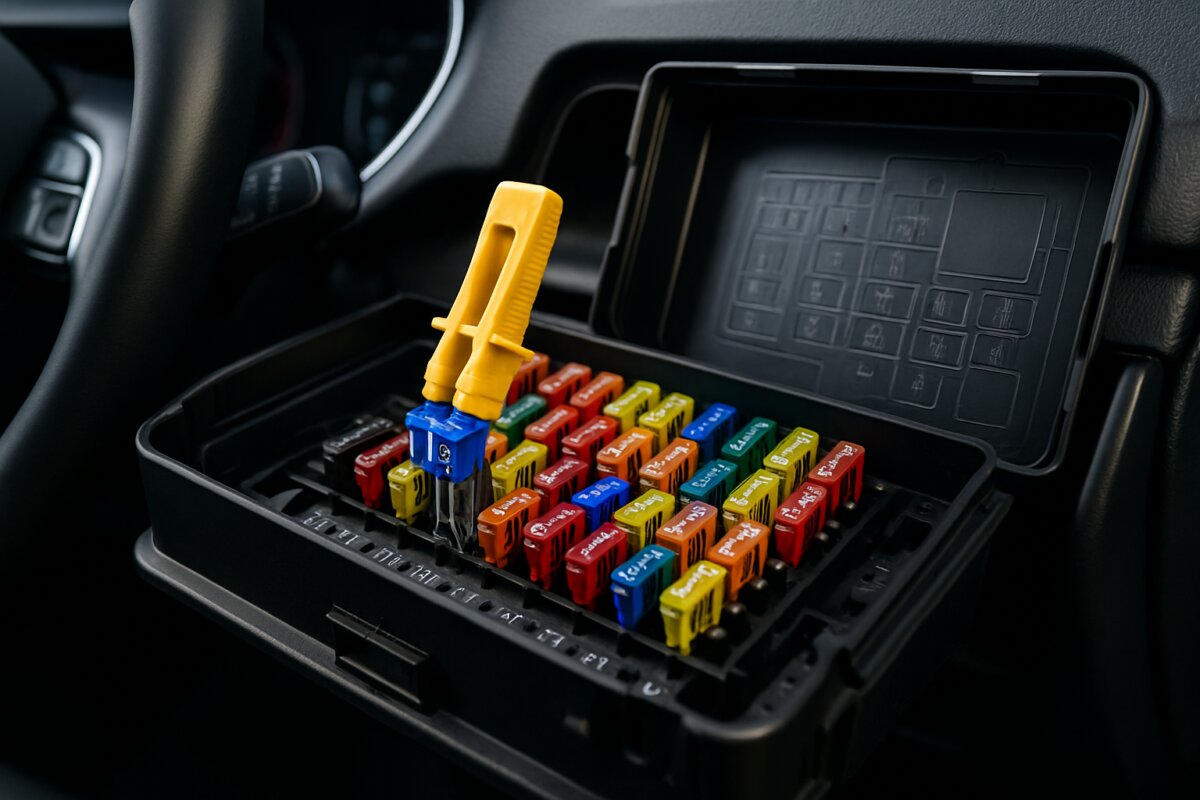
Once removed, you’ll see rows of coloured blade fuses arranged in a grid pattern. The inside of the cover contains a detailed diagram showing each fuse position number and its corresponding circuit. Common circuits in this location include:
- F1-F5: Interior lighting and central locking system
- F12-F15: Infotainment and navigation systems
- F20-F23: Climate control and blower motor
- F30-F33: Power windows and mirror controls
- F40-F44: Instrument cluster and diagnostic port
The fuse puller tool typically clips into a designated slot within this box. This plastic tool grips blade fuses securely without damaging their terminals. Pull fuses straight out with steady pressure rather than rocking them side to side.
Engine bay fuse box location
The engine compartment fuse box sits near the battery, usually on the driver’s side of the engine bay. This weatherproof housing protects high-current fuses and relays controlling engine management, charging system, and external lighting circuits.
Look for a black plastic box with securing clips on the sides. The cover typically requires squeezing these clips simultaneously whilst lifting upward. Some models use a quarter-turn fastener system instead. The underside of the cover displays another comprehensive diagram.
This location contains both standard blade fuses and larger cartridge-style maxi fuses. The higher amperage ratings here protect power-hungry components like the generator, fuel pump, and cooling fans. Typical circuits include:
- High-current fuses (40A-60A): Main power distribution
- Engine management fuses: Injectors and ignition system
- Charging system: Alternator and battery monitoring
- External lighting: Headlamp circuits and fog lamp feeds
- Auxiliary systems: Horn, washer pump, and radiator fans
According to AutoPartsPro’s technical specialists, engine bay fuse boxes suffer more corrosion than interior locations due to heat cycling and moisture exposure. Inspect terminals for green corrosion and clean with contact cleaner if present. Replace any fuses showing signs of overheating, indicated by discoloured plastic housing or melted terminals.
Boot area fuse box (where applicable)
Certain Audi A3 variants, particularly Sportback and convertible models, feature an additional fuse box in the luggage compartment. This supplementary location typically sits beneath the boot floor covering, often near the spare wheel well or emergency toolkit storage.
Access involves lifting the boot carpet and removing any storage panels. The fuse box here usually contains fewer circuits than the other locations, focusing on rear-specific systems such as tailgate electronics, rear window heating, and trailer wiring connections.
Check your specific model’s handbook, as not all A3 generations include this third fuse box location. When present, it simplifies maintenance of rear electrical systems without disturbing engine bay or dashboard components.
Reading fuse box diagrams correctly
Understanding fuse box diagrams prevents guesswork and speeds up troubleshooting. These diagrams use standardised symbols and numbering systems, but variations exist between model years and trim levels.
Each fuse position carries a unique identifier, typically combining a letter and number (F1, F2, etc.). The diagram lists this position alongside the protected circuit name and amperage rating. For example: “F23 – Heated Seats – 15A”.
Amperage ratings determine how much current flows before the fuse breaks the circuit. Common ratings in the A3 include:
| Amperage | Colour Code | Typical Applications |
|---|---|---|
| 5A | Tan | Interior lighting, courtesy lights |
| 10A | Red | Audio systems, diagnostic port |
| 15A | Blue | Power windows, heated seats |
| 20A | Yellow | Climate control, auxiliary sockets |
| 25A | Clear | Windscreen wipers, blower motor |
| 30A | Green | Sunroof, power seats |
Some diagrams use abbreviated circuit names. Common abbreviations include PWR (power), IGN (ignition), AUX (auxiliary), and HTR (heater). Cross-reference unclear labels with your owner’s manual for certainty.
Keep a printed copy of your specific model’s fuse diagram in the glovebox. Online resources become useless when your phone battery dies or you’re working in areas without signal coverage.
Step-by-step fuse inspection and replacement
Systematic inspection identifies electrical problems quickly. Follow this proven sequence when troubleshooting circuits or replacing blown fuses.
Step 1: Identify the affected circuit
Determine which electrical system has failed. If multiple systems stop working simultaneously, suspect a shared fuse or relay. Single-component failures usually indicate a dedicated fuse has blown.
Consult the fuse diagram to locate the relevant fuse position. Note that some circuits use multiple fuses in series, particularly those with high power demands or split left-right configurations like headlamp circuits.
Step 2: Access the correct fuse box
Open the appropriate fuse box following the access procedures outlined earlier. Ensure the vehicle sits in a stable position with the handbrake applied. Take your photograph of the current fuse arrangement before disturbing anything.
If working in the engine bay, ensure the engine has cooled sufficiently. Some components near the fuse box retain considerable heat after running.
Step 3: Remove and inspect the fuse
Use the fuse puller tool to extract the suspect fuse. Grip the fuse body centrally and pull straight upward with steady force. Blade fuses release with a slight click as their terminals clear their sockets.
Examine the fuse under good lighting. A blown fuse shows a broken metal strip visible through the transparent plastic body. Some blown fuses display obvious burn marks or blackened housings. Others appear intact to casual observation but show a hairline break under closer inspection.
Use a multimeter set to continuity mode for definitive testing. Touch the probes to each metal terminal. A good fuse produces an audible beep or displays near-zero resistance. An open circuit indicates the fuse has failed.
Step 4: Install the replacement fuse
Select a replacement fuse matching the exact amperage rating. Never substitute different ratings, even temporarily. The colour-coding system helps prevent mistakes, but always verify the number printed on the fuse body.
Insert the new fuse straight into its socket, ensuring proper alignment. The terminals should slide smoothly without excessive force. Press firmly until the fuse seats completely, sitting flush with surrounding fuses.
Step 5: Test the circuit
Replace the fuse box cover and restore any panels removed during access. Reconnect the battery if previously disconnected. Switch on the ignition and test the previously faulty circuit.
If the system now functions correctly, the job is complete. However, if the new fuse blows immediately or the problem persists, an underlying electrical fault requires further investigation. Repeated fuse failures indicate short circuits, component failures, or wiring damage needing professional diagnosis.
Common fuse-related problems and solutions
Understanding typical failure patterns helps diagnose problems faster and prevents repeat issues. AutoPartsPro’s workshop technicians report these as the most frequent fuse-related concerns.
Repeatedly blown fuses
When fuses fail repeatedly in the same circuit, a short circuit exists somewhere downstream. Common causes include damaged wiring insulation, failed components drawing excessive current, or water ingress into electrical connectors.
Never fit progressively higher-rated fuses attempting to solve this problem. The fuse protects expensive components and prevents wiring fires. Instead, disconnect components one by one until the fault disappears, isolating the problematic unit.
Intermittent electrical problems
Systems that work sometimes but fail randomly often suffer from poor fuse contact rather than actual fuse failure. Corrosion on fuse terminals or within the socket creates high resistance, causing voltage drops and erratic operation.
Remove suspect fuses and clean their terminals with contact cleaner. Inspect socket terminals for corrosion or damage. Bent socket terminals may need careful straightening with small pliers. In severe cases, the entire fuse box might require replacement.
Confusion over fuse locations
Different model years and specification levels sometimes use different fuse positions for identical circuits. Always verify against your specific vehicle’s documentation rather than assuming positions match other A3 models.
VIN-specific wiring diagrams provide absolute certainty. These detailed schematics show exact fuse positions for your particular build specification, eliminating guesswork.
Lost or damaged fuse pullers
Fuse puller tools frequently disappear or break. In emergencies, needle-nose pliers can remove blade fuses, but exercise extreme caution. Gripping the fuse body rather than its terminals prevents damage. Never use metal tools whilst the circuit remains powered.
Common mistakes to avoid
Even experienced DIY mechanics occasionally make errors that complicate simple fuse replacement jobs. Avoiding these common pitfalls saves time and prevents damage.
Fitting incorrect amperage fuses represents the most dangerous mistake. A 30A fuse in a 15A position allows twice the design current to flow before protection activates. This overloads wiring designed for lower current, creating fire risks and damaging sensitive electronic control units.
Working on electrical systems with the ignition switched on causes problems. Many modern systems perform calibration routines during power-up. Interrupting these processes by removing fuses mid-sequence can corrupt control units memory and trigger fault codes.
Ignoring the root cause of blown fuses leads to frustration. A fuse rarely fails without reason. Age and vibration occasionally cause metal fatigue, but most failures indicate genuine electrical faults. Replacing the fuse without investigating why it failed almost guarantees repeat problems.
Forcing fuses into wrong positions damages the fuse box. Each fuse type has specific terminal spacing. Mini blade fuses won’t fit standard blade sockets properly, and vice versa. Attempting to force mismatched components bends terminals and creates poor connections.
Neglecting to photograph fuse arrangements before starting work causes confusion during reassembly. Multiple open slots in a fuse box look identical, making it difficult to remember which position each fuse came from. A quick photo eliminates this uncertainty.
When should you seek professional help
Whilst fuse replacement suits DIY completion, certain situations demand professional expertise. Recognising these scenarios prevents escalating simple problems into expensive repairs.
Persistent electrical faults that defy logical diagnosis require specialist equipment. Modern vehicles employ complex multiplexed wiring where multiple systems share common data buses. Faults in these networks produce confusing symptoms that standard multimeters cannot isolate. Professional diagnostic scanners access control unit data revealing underlying causes.
Burning smells from fuse boxes or wiring indicate serious problems requiring immediate professional attention. Overheated electrical components can ignite interior materials. If you detect acrid smoke or melting plastic odours, stop the vehicle safely and arrange recovery rather than continuing to drive.
Water damage within fuse boxes creates widespread corrosion affecting multiple circuits. Whilst cleaning individual terminals works for minor corrosion, extensive water ingress requires complete fuse box replacement. Professionals can assess whether cleaning suffices or replacement becomes necessary.
Systems involving airbags, ABS, or other safety-critical circuits warrant professional diagnosis when fuse problems appear. These systems incorporate specific testing procedures and fault-clearing protocols. Incorrect troubleshooting can disable safety features without triggering obvious warning lights.
Related maintenance you can do at the same time
Whilst accessing fuse boxes for inspection or replacement, several related maintenance tasks become convenient to complete simultaneously. This efficient approach saves time on future projects.
Inspect all fuses in the box rather than just the problematic one. Look for discolouration indicating overheating, even if the fuse hasn’t blown yet. Preventive replacement of borderline fuses prevents inconvenient roadside failures.
Check light bulbs function throughout the vehicle. Failed bulbs increase load on remaining units in the circuit, potentially causing premature fuse failure. Testing all external lights whilst working on electrical systems makes sense, particularly before MOT testing periods.
Clean battery terminals if accessing the engine bay fuse box. Corroded battery connections create voltage fluctuations that stress electrical systems. A wire brush and protective terminal spray take minutes to apply but significantly improve electrical system reliability.
Test the operation of windscreen wipers at all speed settings. Wiper systems draw substantial current, particularly in cold weather when mechanism grease stiffens. Sluggish operation indicates the motor approaches failure, giving you time to arrange replacement before complete failure.
Verify all interior electrical accessories function correctly. Power windows, seat adjusters, mirror controls, and climate system settings rarely get tested comprehensively. Methodically checking each function whilst thinking about electrical systems identifies minor faults before they become major problems.
Replace any missing or damaged fuse box covers. These covers protect against accidental shorts from dropped tools or other metallic objects. They also prevent dust and moisture entering the box, reducing corrosion risks. Replacement covers cost little compared to the protection they provide.
Frequently asked questions
How can I tell if a fuse is blown without removing it?
Visual inspection through the transparent fuse body shows the internal metal strip. A broken or discoloured strip indicates failure, but subtle breaks require removal and multimeter testing for certainty. Some blown fuses appear perfect to the naked eye yet show complete circuit breaks under magnification.
Can I use a higher amperage fuse temporarily?
Never fit higher-rated fuses under any circumstances. Fuses protect wiring and components from overcurrent damage. Exceeding the designed amperage removes this protection, creating fire hazards and damaging expensive electrical components. Always match the specified rating exactly without exception.
Why does my fuse keep blowing repeatedly?
Repeated failures indicate an underlying electrical fault such as damaged wiring insulation, failed components, or short circuits. Water ingress into connectors also causes persistent problems. Systematic fault-finding by disconnecting circuit components identifies the faulty element requiring repair or replacement.
Do all Audi A3 models have the same fuse layout?
Fuse positions vary between model years, engine variants, and specification levels. Always consult your specific vehicle’s handbook rather than assuming identical layouts. Different optional equipment packages also affect fuse assignments, particularly for systems like heated seats or advanced audio.
Can a blown fuse drain my battery overnight?
Blown fuses create open circuits that prevent current flow, so cannot directly drain batteries. However, the fault causing fuse failure might create parasitic current drain through alternative paths. If experiencing battery drain alongside blown fuses, professional electrical diagnosis becomes essential.
Understanding your Audi A3’s fuse box locations and diagram interpretation transforms electrical troubleshooting from mysterious to manageable. The three-box system provides logical organisation protecting every circuit from interior convenience features to safety-critical engine management. Keeping spare fuses in correct ratings, maintaining clean connections, and respecting amperage specifications ensures your electrical systems deliver reliable performance. When problems extend beyond simple fuse replacement, recognising the limits of DIY diagnosis and seeking professional help protects both your vehicle and personal safety. With proper tools, clear diagrams, and systematic approach, maintaining your A3’s electrical systems becomes a straightforward aspect of ownership rather than an intimidating challenge.

 Loading...