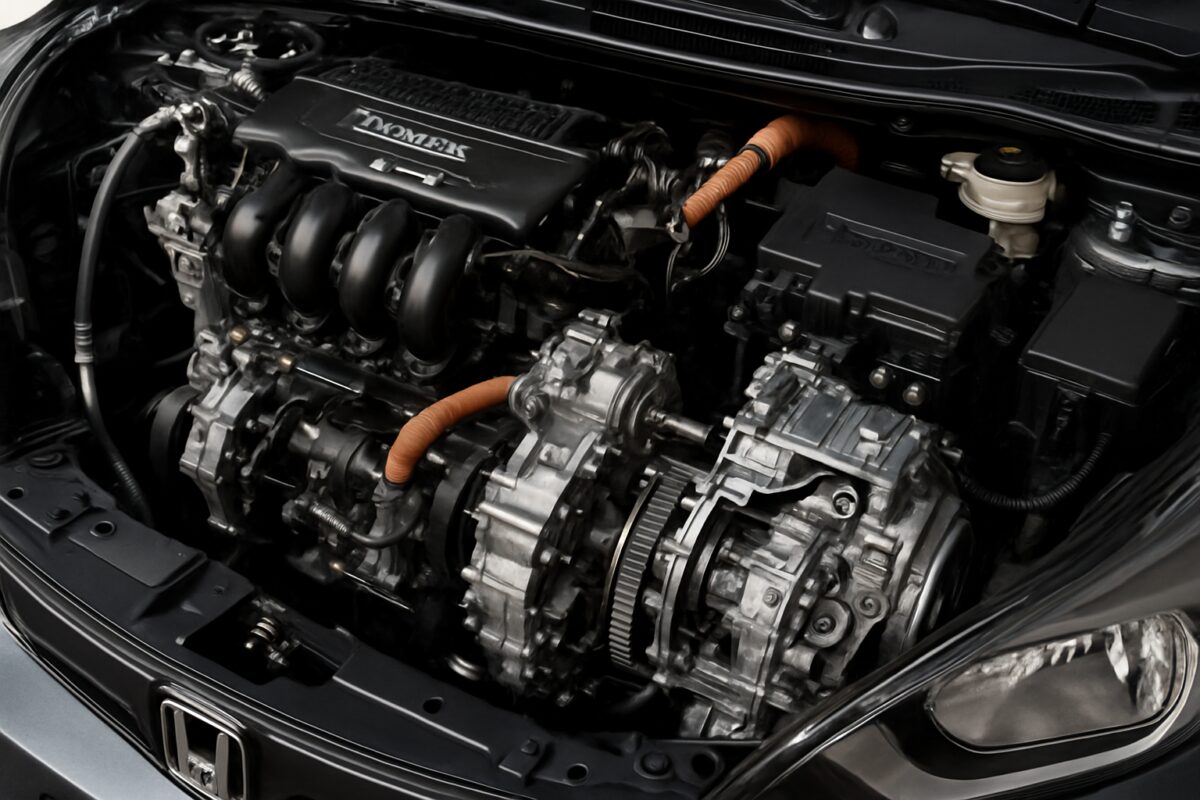
The Honda Jazz stands as one of Britain’s most popular superminis, offering exceptional practicality and reliability in the competitive small car segment. The engine choice is crucial for this versatile hatchback, as it directly impacts fuel economy, performance, and running costs. Honda has equipped the Jazz with a range of efficient powerplants, from naturally aspirated petrol units to hybrid systems, delivering between 90-130 horsepower and impressive fuel efficiency.
Comparison table of all engines
| Engine | Power output | Torque | Fuel consumption | Reliability |
|---|---|---|---|---|
| 1.3 i-VTEC | 100 hp | 123 Nm | 47.9 mpg | Excellent |
| 1.4 i-VTEC | 100 hp | 127 Nm | 45.6 mpg | Very Good |
| 1.5 i-VTEC Hybrid | 130 hp | 253 Nm | 62.8 mpg | Excellent |
| 1.2 i-VTEC | 90 hp | 110 Nm | 50.4 mpg | Outstanding |
1.3 i-VTEC engine overview
The 1.3-litre i-VTEC represents Honda’s entry-level petrol engine for the Jazz, featuring a naturally aspirated inline-four configuration. This 1,339cc unit utilises Honda’s Variable Valve Timing and Lift Electronic Control (VTEC) technology to optimise performance across the rev range. The engine operates on unleaded petrol with multi-point fuel injection, providing smooth power delivery and decent fuel economy.
Pros
- Proven reliability with minimal maintenance issues
- Good fuel economy for a naturally aspirated engine
- Smooth power delivery throughout the rev range
- Low running costs and affordable oil filters
- Responsive throttle response in urban driving
Cons
- Limited torque at low engine speeds
- Requires frequent gear changes for optimal performance
- Road noise becomes noticeable under hard acceleration
- Less refined than newer hybrid alternatives
1.4 i-VTEC engine overview
The 1.4-litre i-VTEC powerplant offers marginally more displacement at 1,399cc, maintaining the naturally aspirated inline-four layout. This engine benefits from Honda’s advanced VTEC system and features multi-point fuel injection for improved combustion efficiency. The unit delivers similar power output to the 1.3-litre but provides slightly more torque for enhanced drivability.
Pros
- Slightly better torque delivery than the 1.3-litre variant
- Excellent long-term reliability record
- Good balance between performance and economy
- Well-suited for motorway cruising
- Easy maintenance with readily available spark plugs
Cons
- Marginal improvement over the 1.3-litre engine
- Higher fuel consumption compared to smaller engines
- Still lacks low-end torque for effortless acceleration
- More expensive to insure than entry-level variants
1.5 i-VTEC hybrid engine overview
Honda’s most advanced Jazz powerplant combines a 1.5-litre i-VTEC petrol engine with an electric motor, creating a sophisticated hybrid system. The naturally aspirated Atkinson-cycle engine works in conjunction with Honda’s intelligent Multi-Mode Drive (i-MMD) hybrid technology. This configuration delivers impressive fuel economy whilst providing electric-only driving capability at low speeds.
Pros
- Outstanding fuel economy exceeding 60 mpg
- Electric-only driving mode for urban environments
- Instant torque delivery from the electric motor
- Reduced emissions and road tax benefits
- Quieter operation compared to conventional engines
Cons
- Higher initial purchase price
- Complex system requires specialist knowledge for repairs
- Limited electric-only range
- Potential battery replacement costs after extended use
1.2 i-VTEC engine overview
The compact 1.2-litre i-VTEC serves as Honda’s most economical petrol option, featuring a naturally aspirated inline-four design with 1,199cc displacement. This engine prioritises fuel efficiency over outright performance, utilising lean-burn technology and VTEC valve control. The unit employs multi-point fuel injection and operates on standard unleaded petrol.
Pros
- Exceptional fuel economy for city driving
- Lower insurance costs due to modest power output
- Minimal road tax and emissions penalties
- Simple, reliable engineering with fewer components
- Affordable servicing with basic air filters
Cons
- Underpowered for motorway driving
- Struggles with four passengers or heavy loads
- Limited overtaking ability
- Engine noise becomes intrusive under load
Maintenance cost
| Engine | Recommended interval | Estimated cost | Cost per 10,000 miles |
|---|---|---|---|
| 1.3 i-VTEC | 12,500 miles | £180 | £144 |
| 1.4 i-VTEC | 12,500 miles | £190 | £152 |
| 1.5 Hybrid | 12,500 miles | £250 | £200 |
| 1.2 i-VTEC | 12,500 miles | £165 | £132 |
Engine sound and character
Honda’s i-VTEC engines produce a distinctive mechanical symphony that enthusiasts appreciate. The naturally aspirated units deliver a characteristic high-pitched note when VTEC engagement occurs around 3,000 rpm. The 1.2 and 1.3-litre engines provide adequate refinement for daily driving, though they become vocal under acceleration.
The 1.4-litre variant offers marginally better sound insulation and smoother operation throughout the rev range. However, the hybrid system represents the pinnacle of refinement, operating almost silently during electric-only phases and providing seamless transitions between power sources.
> Tip: Regular engine oil changes every 6 months help maintain the characteristic VTEC operation and prevent premature wear in high-revving Honda engines.
Our mechanics at AutoPartsPro observe that Honda Jazz engines maintain their characteristic sound quality throughout their lifespan when properly maintained. The VTEC system creates an engaging driving experience, particularly in the smaller displacement engines that require higher revs for optimal performance.
Who each engine is best for
| Engine | Best for |
|---|---|
| 1.2 i-VTEC | Daily commuters prioritising economy |
| 1.3 i-VTEC | Balanced performance and economy seekers |
| 1.4 i-VTEC | Long-distance drivers requiring refinement |
| 1.5 Hybrid | Eco-conscious drivers and urban commuters |
> Tip: Consider your typical driving patterns when selecting an engine. City drivers benefit most from the hybrid system, whilst rural drivers might prefer the simplicity of naturally aspirated engines.
Frequently asked questions
Which Honda Jazz engine is most reliable?
The 1.2 i-VTEC demonstrates exceptional reliability with minimal reported issues. Its simple design and conservative tuning contribute to outstanding longevity and low maintenance requirements.
How often should I service my Honda Jazz engine?
Honda recommends 12,500-mile intervals for all Jazz engines. However, severe driving conditions may require more frequent servicing every 6-8 months for optimal performance.
Can the hybrid engine run on electricity alone?
Yes, the 1.5 hybrid system provides electric-only driving at low speeds and during light acceleration. Range varies between 1-2 miles depending on conditions.
What fuel should I use in my Honda Jazz?
All Honda Jazz engines operate efficiently on standard 95-octane unleaded petrol. Premium fuels offer no significant benefits for these naturally aspirated engines.
Are Honda Jazz engines expensive to repair?
Generally, Honda Jazz engines feature affordable repair costs due to widespread parts availability. Hybrid variants may incur higher specialist labour charges for complex components.

 Loading...