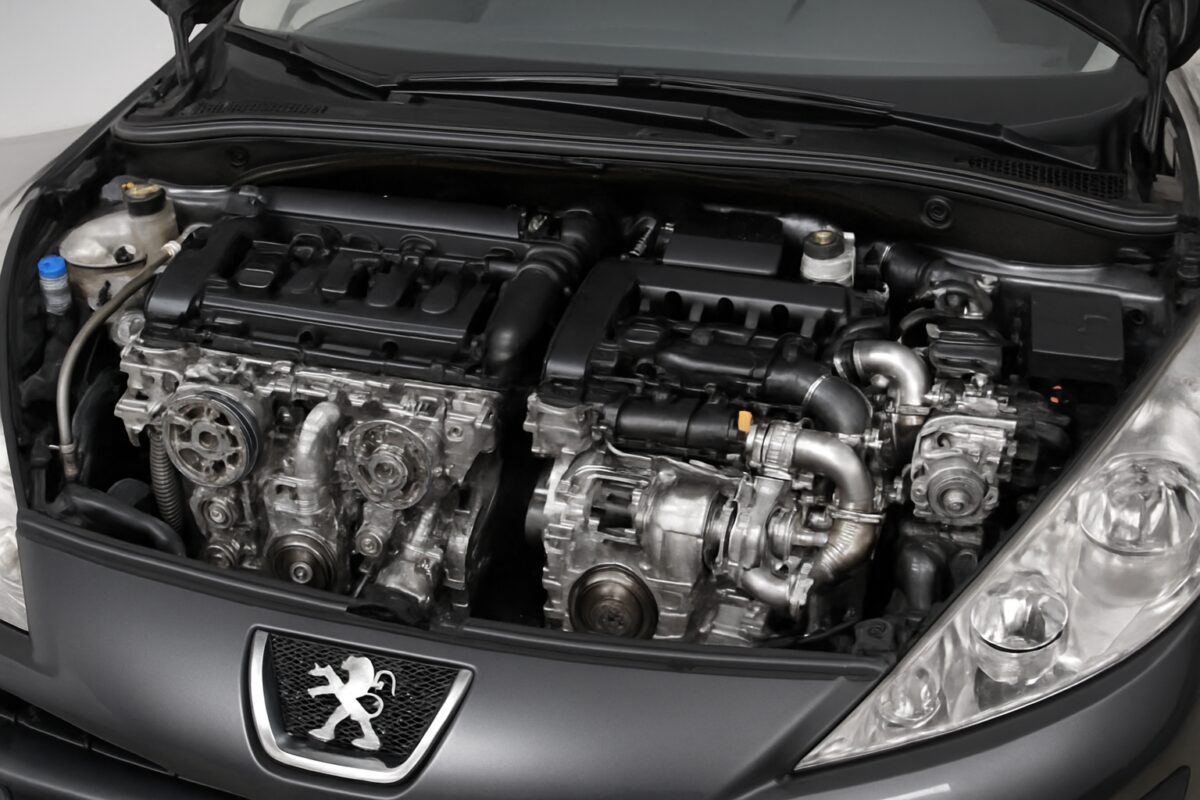
The Peugeot 207, a popular supermini that graced British roads from 2006 to 2014, offered a diverse range of powerplants catering to different driving needs and budgets. Understanding the engine options available is crucial for potential buyers, current owners, and mechanics working on these vehicles. From economical small-displacement units to more powerful turbocharged variants, the 207’s engine lineup included petrol and diesel options producing between 68bhp and 175bhp.
Comparison table of all engines
| Engine | Power output | Torque | Fuel consumption | Reliability |
|---|---|---|---|---|
| 1.4 VTi | 95bhp | 136Nm | 45mpg | Good |
| 1.6 VTi | 120bhp | 160Nm | 42mpg | Good |
| 1.6 THP | 175bhp | 240Nm | 38mpg | Fair |
| 1.4 HDi | 68bhp | 160Nm | 65mpg | Excellent |
| 1.6 HDi | 92-110bhp | 230-270Nm | 58mpg | Very Good |
Engine overview – 1.4 VTi petrol
The 1.4-litre VTi represents the entry-level petrol option in the 207 range. This naturally aspirated inline-four cylinder unit displaces 1360cc and features multi-point fuel injection. The engine utilises a lightweight aluminium construction and produces adequate power for urban driving whilst maintaining reasonable fuel economy.
Pros
- Reliable and proven technology
- Low maintenance costs
- Smooth operation
- Good fuel economy for a petrol unit
- Parts readily available
Cons
- Limited power for motorway driving
- Can feel sluggish when fully loaded
- Higher emissions compared to diesel alternatives
Engine overview – 1.6 VTi petrol
The 1.6-litre VTi serves as the mainstream petrol option, offering a good balance between performance and economy. This naturally aspirated four-cylinder engine features 1587cc displacement and employs variable valve timing to optimise power delivery across the rev range. The unit benefits from Peugeot’s refined engineering and delivers smooth power characteristics.
Pros
- Well-balanced performance and economy
- Proven reliability record
- Smooth power delivery
- Adequate torque for everyday driving
- Reasonable running costs
Cons
- Not particularly exciting to drive
- Higher fuel consumption than smaller units
- Limited tuning potential
Engine overview – 1.6 THP turbo petrol
The flagship 1.6-litre THP (Turbo High Pressure) engine represents the performance pinnacle of the 207 range, particularly in GTI models. This turbocharged inline-four produces impressive power figures through forced induction and direct injection technology. The unit features an advanced turbocharging system and intercooler to maximise performance whilst maintaining reasonable fuel efficiency.
Pros
- Excellent performance characteristics
- Strong torque delivery from low rpm
- Responsive throttle response
- Relatively fuel-efficient for the power output
- Exciting driving experience
Cons
- Higher maintenance costs
- More complex engine systems
- Potential turbocharger issues with age
- Requires premium fuel for optimal performance
- Higher insurance costs
Engine overview – 1.4 HDi diesel
The 1.4-litre HDi diesel engine prioritises fuel economy above all else, making it ideal for high-mileage drivers. This common-rail diesel unit features a displacement of 1398cc and utilises advanced injection technology to achieve impressive fuel consumption figures. The engine incorporates a diesel particulate filter and meets Euro 4 emissions standards.
Pros
- Outstanding fuel economy
- Low CO2 emissions
- Good low-end torque
- Reliable long-term operation
- Low road tax costs
Cons
- Limited power output
- Noisy operation compared to petrol units
- Not suitable for short journeys
- DPF regeneration issues if misused
Engine overview – 1.6 HDi diesel
The 1.6-litre HDi diesel strikes an excellent balance between performance and economy, making it the most popular choice amongst 207 buyers. Available in various power outputs, this common-rail diesel engine features 1560cc displacement and sophisticated fuel injection systems. The unit incorporates variable geometry turbocharging in higher-output versions.
Pros
- Excellent fuel economy
- Strong torque output
- Refined operation for a diesel
- Proven reliability
- Good resale value
Cons
- DPF issues with short journeys
- Higher servicing costs than petrol
- Potential injector problems
- Cold start noise
Maintenance cost
| Engine | Recommended Interval | Estimated Cost | Cost per 10000 miles |
|---|---|---|---|
| 1.4 VTi | 12,500 miles | £180-£220 | £144-£176 |
| 1.6 VTi | 12,500 miles | £190-£240 | £152-£192 |
| 1.6 THP | 10,000 miles | £280-£350 | £280-£350 |
| 1.4 HDi | 20,000 miles | £220-£280 | £110-£140 |
| 1.6 HDi | 20,000 miles | £240-£320 | £120-£160 |
Regular maintenance proves crucial for all 207 engines, particularly regarding oil filters and air filters. AutoPartsPro’s mechanics recommend adhering strictly to service intervals to prevent costly repairs.
Professional tip: Always use manufacturer-approved engine oil specifications, particularly for the THP turbo engine which requires high-quality synthetic lubricants to prevent turbocharger damage.
Engine sound and character
Each 207 engine delivers a distinct auditory and driving experience. The naturally aspirated petrol units provide smooth, linear power delivery with minimal noise intrusion into the cabin. The 1.4 VTi operates quietly at cruising speeds but becomes vocal under acceleration.
The 1.6 THP produces an engaging soundtrack with subtle turbo whistle and sporty exhaust note, particularly in GTI applications. Diesel engines exhibit typical compression ignition characteristics, with the 1.6 HDi being notably refined for its class. Cold starts remain audible on diesel variants, though warming reduces noise levels significantly.
Professional mechanics at AutoPartsPro note that unusual engine noises often indicate worn engine mounts or timing chain issues, particularly on higher-mileage THP units.
Remember: Any sudden changes in engine noise warrant immediate professional inspection, as early detection prevents expensive component failures.
Who each engine is best for
| Engine | Best suited for |
|---|---|
| 1.4 VTi | Budget-conscious buyers, urban commuters, low-mileage drivers |
| 1.6 VTi | Mixed driving conditions, family use, balanced requirements |
| 1.6 THP | Performance enthusiasts, spirited driving, GTI buyers |
| 1.4 HDi | High-mileage drivers, maximum economy seekers |
| 1.6 HDi | Long-distance commuters, best all-round compromise |
The engine choice significantly impacts ownership experience, with diesel variants requiring different fuel filters and maintenance approaches compared to petrol alternatives.
Frequently asked questions
Which Peugeot 207 engine is most reliable?
The 1.4 HDi diesel demonstrates exceptional reliability with proper maintenance, whilst the 1.6 VTi petrol offers excellent dependability for mixed-use applications.
Does the 207 THP engine have timing chain problems?
Higher-mileage THP engines can experience timing chain stretch, requiring professional assessment and potential replacement around 80,000-100,000 miles depending on maintenance history.
What fuel should I use in the 207 GTI?
The THP engine performs optimally on premium unleaded (98 RON) fuel, though it will run on standard unleaded with slightly reduced performance.
How often should I replace the diesel particulate filter?
DPF units typically last 80,000-120,000 miles with proper regeneration cycles, though city driving can reduce lifespan significantly requiring earlier particulate filter replacement.
Which 207 engine offers the best fuel economy?
The 1.4 HDi delivers outstanding fuel consumption figures of up to 65mpg, making it ideal for cost-conscious drivers prioritising efficiency.

 Loading...