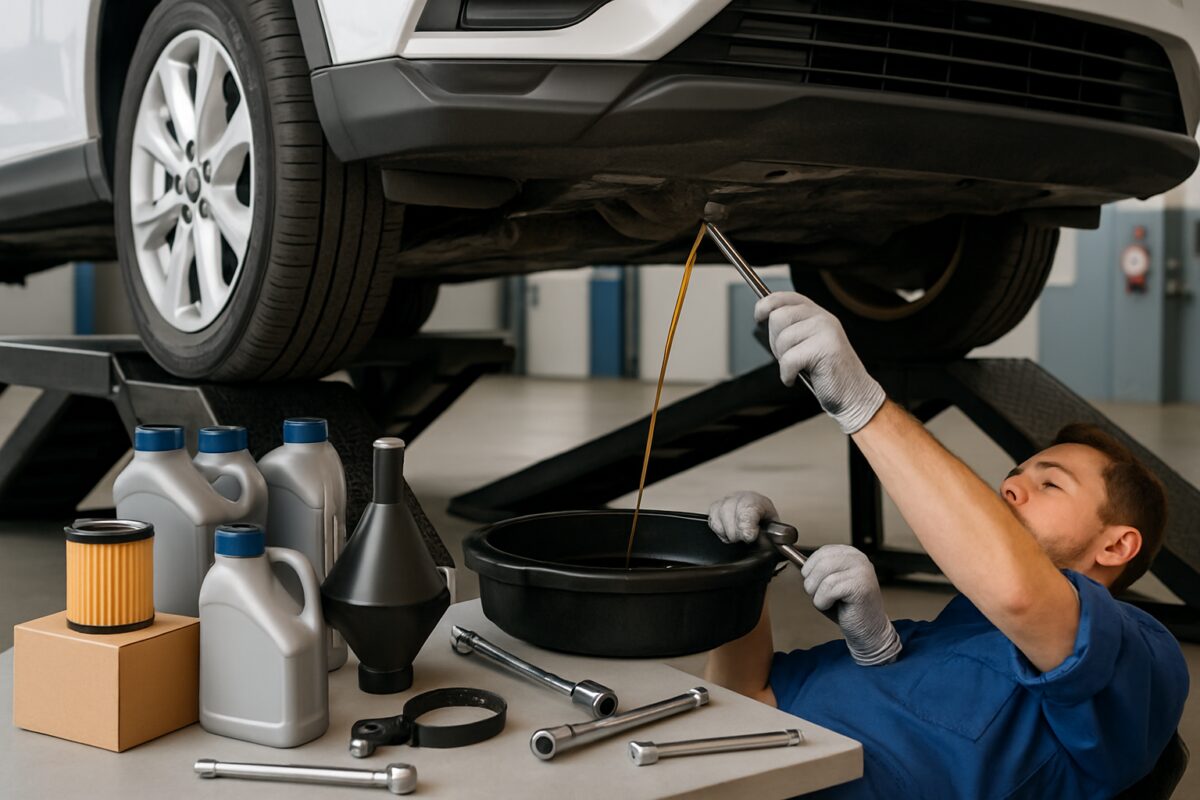
An oil and filter change requires basic tools, a vehicle-specific oil filter, appropriate grade engine oil, and safety equipment. The process involves draining old oil, replacing the filter, adding fresh oil, and checking for leaks. Regular changes typically cost £30-60 and take 30-45 minutes to complete properly.
Tools & parts required
Before starting your oil and filter change, gather all necessary equipment to ensure a smooth process. Having everything ready prevents delays and reduces the chance of making mistakes during the service.
Parts needed:
- Oil filter (vehicle specific)
- Engine oil (correct grade and quantity)
- New drain plug washer or gasket
- Filter housing O-rings (if applicable)
Always verify the oil filter part number matches your engine code and chassis number to prevent fitment issues and potential damage.
Tools required:
- Socket set with ratchet
- Oil drain pan (minimum 6-litre capacity)
- Oil filter wrench
- Funnel for oil filling
- Jack and axle stands
- Disposable gloves
- Clean rags or paper towels
Professional mechanics at AutoPartsPro recommend using a proper oil drain pan rather than makeshift containers. This prevents spillage and makes disposal easier at recycling centres.
Safety precautions
Safety must come first when working with hot oil and underneath vehicles. These precautions protect you from burns, toxic fumes, and serious injury.
Work on level ground in a well-ventilated area away from ignition sources. Never work under a vehicle supported only by a jack – always use proper axle stands. Disconnect the battery negative terminal if working near electrical components.
Allow the engine to cool for 10-15 minutes after running to reduce burn risk from hot oil and components. Wear safety glasses and nitrile gloves throughout the process. Keep a fire extinguisher nearby when working with flammable liquids.
Step-by-step instructions
Following the correct sequence ensures proper oil drainage, filter replacement, and system refilling. Each step builds on the previous one for optimal results.
Step 1: Prepare the vehicle
Run the engine for 2-3 minutes to warm the oil slightly – this improves flow during draining. Park on level ground and engage the handbrake. Raise the front of the vehicle using a jack and secure with axle stands.
Locate the oil drain plug underneath the engine and position your drain pan slightly off-centre in the direction the oil will arc. Remove the engine bay oil filler cap to help air circulation during draining.
Step 2: Drain the old oil
Using the appropriate socket, carefully loosen the drain plug. The final few turns should be done by hand to prevent the plug dropping into the drain pan. Allow 15-20 minutes for complete drainage.
While the oil drains, inspect the drain plug and its sealing washer. Replace the washer if it shows signs of deformation or damage. Clean the drain plug threads with a wire brush if necessary.
Step 3: Replace the oil filter
Locate the oil filter – this may be on top of the engine or underneath, depending on your vehicle. Use an oil filter wrench to remove the old filter, turning anticlockwise. Have your drain pan ready as the filter contains oil.
Before installing the new filter, apply a thin film of fresh oil to the rubber seal. Hand-tighten the new filter until the seal contacts the mounting surface, then turn an additional 3/4 turn. Never use the filter wrench for installation.
Our experienced technicians stress that over-tightening the oil filter can damage the seal and cause leaks. Hand-tight plus 3/4 turn provides adequate sealing force.
Step 4: Refill with fresh oil
Reinstall the drain plug with a new washer, tightening to the manufacturer’s specification (typically 25-30 Nm). Lower the vehicle from the axle stands and remove the jack.
Using a funnel, add the specified quantity of fresh oil through the filler cap. Start with 500ml less than the total capacity, then check the dipstick level. Add oil gradually until the level reaches the maximum mark.
Step 5: Final checks and testing
Start the engine and allow it to idle for 2-3 minutes. The oil pressure warning light should extinguish within 10 seconds. Switch off and wait 5 minutes for the oil to settle before checking the level again.
Inspect underneath the vehicle for any leaks around the drain plug and filter. Top up the oil level if necessary, ensuring it remains between the minimum and maximum marks on the dipstick.
Common mistakes to avoid
Learning from common errors saves time, money, and prevents engine damage. These mistakes occur frequently during DIY oil changes and are easily preventable.
Never overtighten the drain plug as this can strip the threads in the oil pan, requiring expensive repairs. Using the wrong oil grade can affect engine protection and fuel economy. Always check your vehicle handbook for the correct viscosity specification.
Failing to replace the drain plug washer often leads to persistent leaks. Double-check the oil filter orientation – some filters have specific installation directions marked on the canister.
Don’t forget to reset the service indicator if your vehicle has one. This prevents confusion about service intervals and maintains accurate maintenance records.
When should you change oil and filter?
Modern engines typically require oil changes every 10,000-15,000 miles or 12 months, whichever comes first. However, severe driving conditions may necessitate more frequent changes.
Stop-start city driving, frequent short journeys, dusty conditions, and towing all accelerate oil degradation. In these circumstances, consider reducing service intervals by 25-30%.
Warning signs that indicate immediate oil change requirements include dark, thick oil on the dipstick, metallic particles in the oil, or engine noise during startup. The oil pressure switch may also trigger warning lights if oil condition deteriorates significantly.
Related maintenance tasks
Combining oil changes with other routine maintenance maximises efficiency and ensures comprehensive vehicle care. Several components benefit from simultaneous attention.
Replace the air filter if it appears dirty or has reached its service interval. A clean air filter improves engine performance and fuel efficiency.
Check spark plugs condition and gap settings while the engine bay is accessible. Inspect hoses for cracks or deterioration, particularly around the radiator and expansion tank areas.
Top up other fluid levels including brake fluid, power steering fluid, and windscreen washer reservoir. This comprehensive approach maintains optimal vehicle reliability.
Frequently asked questions
How much does an oil and filter change cost?
Professional services typically cost £40-80 depending on oil type and location. DIY changes cost £25-45 for parts only.
Can I change oil without replacing the filter?
While possible, this practice isn’t recommended as dirty filters reduce oil flow and contaminate fresh oil quickly.
What happens if I use wrong oil grade?
Incorrect viscosity can cause poor lubrication, increased wear, reduced fuel economy, and potential engine damage over time.
How do I dispose of old oil and filter?
Take used oil and filters to local recycling centres or motor factors. Never pour oil down drains or onto ground.
Should I warm the engine before draining oil?
Slightly warm oil flows better than cold, but avoid working with very hot oil to prevent burns and injuries.
Regular oil and filter changes represent the most important maintenance task for engine longevity. Using quality parts and following proper procedures ensures optimal lubrication and protection. When selecting replacement components, choose reputable suppliers who stock genuine or OEM-equivalent parts for reliable performance and peace of mind.

 Loading...