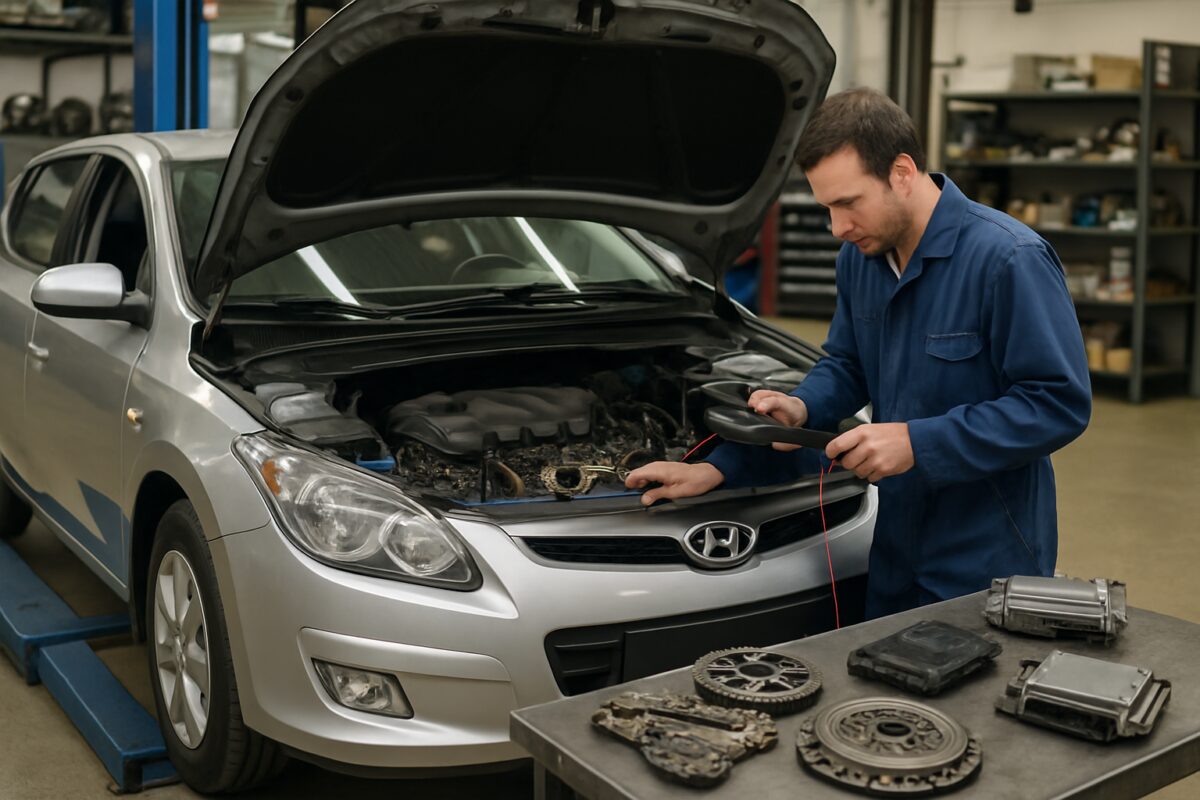
The Hyundai i30 has established itself as a dependable family hatchback across multiple generations, but like any vehicle, it faces specific recurring issues that owners should be aware of. Understanding these common problems with the Hyundai i30 can help you make informed maintenance decisions and avoid costly repairs down the line.
Engine-related problems
The most significant issues with the Hyundai i30 centre around engine performance and reliability. Early models particularly suffer from timing chain problems, which can cause catastrophic engine damage if left unaddressed. The 1.6-litre GDI engine is notorious for timing chain stretch, creating rattling noises during startup and potentially leading to complete engine failure.
Carbon build-up represents another persistent problem, especially in direct-injection engines. This accumulation occurs on intake valves and combustion chambers, reducing performance and causing rough idling. The issue becomes more pronounced in vehicles primarily used for short journeys, where engines don’t reach optimal operating temperatures regularly.
Oil consumption issues plague several i30 variants, with some engines consuming excessive amounts of oil between service intervals. This problem typically manifests after 60,000 miles and can indicate worn piston rings or valve stem seals requiring expensive repairs.
Transmission and clutch complications
Manual transmission models frequently experience clutch problems, particularly the dual-mass flywheel failure. This component is prone to premature wear, causing vibrations, difficulty in gear changes, and eventual clutch slippage. The clutch kit replacement costs can be substantial due to the flywheel’s complexity.
Automatic transmission variants face their own set of challenges. The seven-speed DCT (dual-clutch transmission) exhibits jerky behaviour, especially during low-speed manoeuvring. Software updates from Hyundai have addressed some issues, but hardware problems persist in older models.
Gearbox oil degradation occurs faster than expected in many i30 models. Contaminated or low oil levels lead to poor gear selection, grinding noises, and eventual transmission damage. Regular oil changes using manufacturer-approved specifications become crucial for longevity.
Electrical system faults
Modern i30 models incorporate sophisticated electronics that occasionally malfunction. The most common electrical issues include ECU (Engine Control Unit) failures, which trigger multiple warning lights and poor engine performance. These problems often require complete ECU replacement or reprogramming.
Window mechanism failures occur frequently, particularly in the rear doors. The electric window motors burn out prematurely, leaving windows stuck in open or closed positions. Power steering pump failures also plague certain model years, causing heavy steering and potential safety concerns.
Battery drainage problems affect many i30 owners, with vehicles failing to start after short periods of inactivity. This issue often stems from faulty control modules that fail to enter sleep mode properly, continuously drawing power even when the vehicle is switched off.
Suspension and steering issues
Front suspension components wear prematurely in many i30 models. Shock absorbers and strut mounts deteriorate faster than expected, causing poor ride quality and handling characteristics. The MacPherson strut design, while cost-effective, proves less durable than alternatives.
Steering rack problems manifest as excessive play in the steering wheel and uneven tyre wear patterns. Power steering fluid leaks from worn seals compound these issues, requiring expensive rack replacement or refurbishment. The tie rod ends also wear quickly, contributing to steering imprecision.
Anti-roll bar links fail regularly, producing knocking noises over bumps and reducing stability during cornering. These components are relatively inexpensive to replace but require professional fitting to ensure proper alignment and safety.
Warning signs your car has a problem
Recognising early warning signs can prevent minor issues from becoming major failures. Pay attention to these key indicators that suggest your Hyundai i30 requires immediate attention.
- Unusual engine noises, particularly rattling during startup or acceleration
- Rough idling, stalling, or hesitation during acceleration
- Difficulty engaging gears or grinding noises from the transmission
- Warning lights on the dashboard, especially engine management or transmission warnings
- Heavy steering, vibrations through the steering wheel, or pulling to one side
How to fix the problems
| Problem | Solution | Approximate Cost |
|---|---|---|
| Timing chain stretch | Complete timing chain replacement | £800-£1,500 |
| Carbon build-up | Professional cleaning or walnut blasting | £300-£600 |
| Clutch failure | Complete clutch and flywheel replacement | £1,200-£2,000 |
| ECU problems | Reprogramming or replacement | £500-£1,200 |
| Suspension wear | Replace worn components | £200-£800 |
Professional Tip: According to our AutoPartsPro specialists, regular oil changes every 6,000 miles rather than the manufacturer’s recommended 10,000 miles can significantly reduce engine problems and extend component life in Hyundai i30 models.
| Maintenance Item | Standard Interval | Recommended Interval |
|---|---|---|
| Engine oil change | 10,000 miles | 6,000 miles |
| Air filter replacement | 20,000 miles | 15,000 miles |
| Brake fluid change | 2 years | 18 months |
| Timing belt inspection | 60,000 miles | 50,000 miles |
When to see a mechanic
Certain symptoms require immediate professional attention to prevent serious damage or safety hazards. Contact a qualified technician immediately if you experience complete loss of power steering, sudden engine stalling, or transmission slipping. These issues can escalate quickly and potentially cause accidents.
Schedule routine inspections every six months, even if no obvious problems exist. Preventive maintenance proves far more cost-effective than emergency repairs. Professional diagnostics can identify developing issues before they become expensive failures.
Don’t ignore warning lights or unusual noises. Modern vehicles incorporate sophisticated monitoring systems that detect problems early. Delaying professional diagnosis often results in additional component damage and higher repair costs.
Expert Advice: Our AutoPartsPro mechanics recommend using OEM parts for critical components like timing chains and clutches. While aftermarket alternatives may seem cheaper initially, OEM parts offer superior reliability and often come with better warranties.
Frequently asked questions (FAQ)
What are the most common problems with Hyundai i30?
Timing chain issues, clutch failures, and ECU problems represent the most frequent complaints from i30 owners across all generations.
How reliable is the Hyundai i30 engine?
The 1.4-litre and 1.6-litre engines show good reliability with proper maintenance, though direct-injection variants require more frequent carbon cleaning.
Why does my i30 clutch fail prematurely?
Dual-mass flywheels and heavy city driving contribute to accelerated clutch wear in many i30 models, particularly manual transmissions.
Are Hyundai i30 electrical problems expensive to fix?
ECU replacements and complex electrical diagnostics can cost £500-£1,200, making them among the more expensive repairs for this model.
How often should I service my Hyundai i30?
Every 6,000 miles or six months for optimal reliability, rather than following the standard 10,000-mile manufacturer recommendation for extended engine life.
Final recommendation
The Hyundai i30 remains a practical family car despite its known issues. Most problems stem from inadequate maintenance rather than fundamental design flaws. Regular servicing using quality components from trusted suppliers can significantly extend vehicle life and reduce ownership costs.
Consider purchasing an extended warranty for high-mileage examples, particularly those approaching 60,000 miles when major components typically begin failing. Budget approximately £1,000-£2,000 annually for maintenance and repairs on older models to avoid unexpected expenses.
The i30’s strengths in practicality, fuel economy, and warranty coverage often outweigh its weaknesses when properly maintained. Choose reputable service providers familiar with Hyundai systems and always use manufacturer-approved fluids and components. With diligent care, the i30 can provide reliable service for many years, making it worthwhile for families seeking affordable, practical transportation.

 Loading...