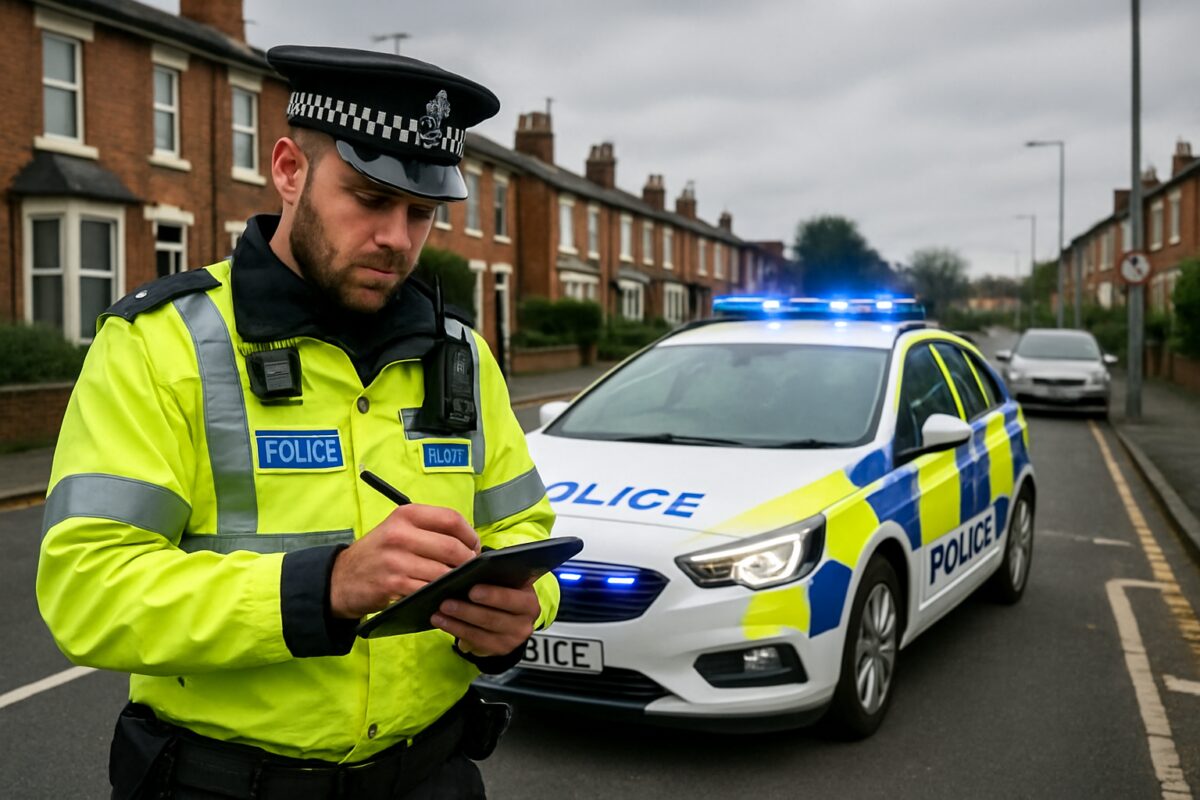
To report dangerous driving in the UK, contact the police immediately on 999 if the incident poses immediate danger, or call 101 for non-urgent cases. You can also report online through your local police force’s website. Essential information includes the vehicle registration, location, time, and description of the dangerous behaviour. Many forces accept dashcam footage as evidence.
Dangerous driving incidents are a serious concern on UK roads, affecting thousands of motorists daily. Whether you witness aggressive overtaking, excessive speeding, or reckless behaviour, knowing how to report these incidents properly can help make our roads safer for everyone.
When to report dangerous driving immediately
Some situations require immediate police response. Call 999 without delay if you witness:
- Drink or drug driving behaviour
- Extreme speeding or racing
- Aggressive road rage incidents
- Driving that poses immediate risk to life
- Vehicles being driven erratically or dangerously
If you’re driving when you witness dangerous behaviour, pull over safely before making the call. Your safety and that of other road users must come first.
Information you’ll need to collect
Effective reporting requires accurate details. Gather this information when safe to do so:
Vehicle details
- Full registration number
- Make, model, and colour
- Any distinguishing features or damage
- Number of occupants if visible
Incident information
- Exact location (road name, junction, landmarks)
- Date and time
- Weather and traffic conditions
- Direction of travel
- Description of dangerous behaviour
Evidence collection
- Dashcam footage if available
- Mobile phone video (when safe)
- Witness contact details
- Photos of damage if applicable
How to report through different channels
Emergency services (999)
Use this for immediate dangers where police intervention is urgently needed. The operator will ask for your location, details of the incident, and vehicle information. Stay on the line until advised otherwise.
Non-emergency police (101)
Suitable for incidents that have already occurred but still require police attention. This service operates 24/7 and connects you to your local force. Expect to provide the same detailed information as with emergency calls.
Online reporting
Most UK police forces offer online reporting systems for traffic incidents. These platforms allow you to upload evidence, including dashcam footage and photographs. Popular systems include:
- Operation Snap (Wales and some English forces)
- My Community Voice (Greater Manchester)
- Traffic enforcement reporting portals
Online reporting often provides a reference number for tracking your report’s progress.
Third-party reporting platforms
Some organisations facilitate dangerous driving reports:
- Nextbase dashcam portal
- Road safety partnerships
- Local authority reporting systems
“Modern dashcams with GPS timestamps provide invaluable evidence for dangerous driving reports. The footage quality and location data significantly strengthen any case,” notes our automotive electronics specialist.
What happens after you report
Understanding the process helps set realistic expectations:
Initial assessment
Police review your report and evidence to determine appropriate action. Factors include severity, evidence quality, and available resources.
Investigation process
Depending on the incident, police may:
- Issue warning letters to registered keepers
- Arrange driver education courses
- Pursue prosecution for serious offences
- Take no further action if evidence is insufficient
Feedback and updates
Many forces provide update systems where you can track your report’s status. However, detailed outcomes may not always be shared due to data protection considerations.
Safety precautions when witnessing dangerous driving
Your safety must remain the priority when dealing with dangerous drivers:
- Never confront aggressive drivers directly
- Maintain safe following distances
- Avoid making sudden movements or gestures
- Pull over safely before using your phone
- Don’t chase or follow dangerous drivers
If you feel threatened, drive to a safe public place like a police station or busy car park before stopping.
Technology that can help
Modern technology significantly improves reporting effectiveness:
Dashcams
Front and rear cameras provide objective evidence of incidents. Features to look for include:
- HD recording quality
- GPS location tracking
- Automatic incident detection
- Night vision capabilities
Quality additional lighting can also improve visibility for both safety and evidence gathering.
Smartphone apps
Several apps help with incident reporting:
- What3Words for precise location sharing
- Voice recording for hands-free note-taking
- Police force-specific reporting apps
Legal considerations and your rights
Understanding your legal position helps ensure proper reporting:
Witness obligations
While there’s no legal requirement to report dangerous driving, doing so helps maintain road safety. You may be called as a witness if the case proceeds to court.
Evidence admissibility
For evidence to be useful in proceedings:
- Footage must be clear and unedited
- Time and date stamps should be accurate
- Equipment must be legally mounted
- Recording shouldn’t obstruct your view
Data protection
When sharing footage or information, ensure you comply with GDPR requirements. Only share what’s necessary for the report and with appropriate authorities.
“Clear, timestamped evidence from properly calibrated recording equipment gives police the best chance of taking appropriate action against dangerous drivers,” explains our road safety technical advisor.
Common mistakes to avoid
These errors can weaken your report or put you at risk:
- Using your phone while driving to record incidents
- Confronting aggressive drivers
- Providing incomplete vehicle registration details
- Waiting too long before reporting serious incidents
- Assuming minor incidents aren’t worth reporting
Even seemingly minor infractions can indicate pattern behaviour that authorities need to address.
Supporting road safety beyond reporting
While reporting dangerous driving is crucial, consider these additional steps:
Vehicle maintenance
Ensure your vehicle doesn’t contribute to dangerous situations:
- Check brake pads regularly for optimal stopping power
- Maintain proper tyre pressure and tread depth
- Keep light bulbs functioning for visibility
- Service windscreen wipers for clear vision
Defensive driving practices
Model good behaviour and reduce incident likelihood:
- Maintain appropriate following distances
- Use indicators clearly and in good time
- Check mirrors and sensors regularly
- Stay alert and avoid distractions
Regional variations in reporting
Different UK regions may have specific procedures:
England and Wales
Most forces participate in Operation Snap or similar schemes. Online reporting is widely available with video upload capabilities.
Scotland
Police Scotland operates its own reporting systems with specific procedures for different types of traffic offences.
Northern Ireland
The Police Service of Northern Ireland has dedicated traffic reporting channels with regional variations in processing.
Frequently asked questions
Can I report dangerous driving anonymously?
Yes, most forces accept anonymous reports, though providing contact details strengthens the case and allows follow-up questions if needed.
What if I don’t have the full registration number?
Partial registration details combined with vehicle description, location, and time can still be useful for police investigations and pattern identification.
How long after an incident can I still report it?
Report incidents as soon as possible, ideally within 24 hours. Some forces accept reports up to 7 days later for certain offences.
Will I have to go to court as a witness?
Court attendance is possible but not guaranteed. Many cases are resolved through alternative measures like driver education or warning letters.
Can dashcam footage alone secure a conviction?
High-quality footage significantly strengthens cases, but prosecution success depends on various factors including evidence clarity and circumstances.
Effective dangerous driving reporting requires prompt action, accurate information, and appropriate evidence. By understanding the proper channels and procedures, you contribute to safer roads for all users. Modern technology like dashcams and online reporting systems make the process more accessible than ever, while proper battery maintenance ensures your recording equipment remains reliable when you need it most.

 Loading...