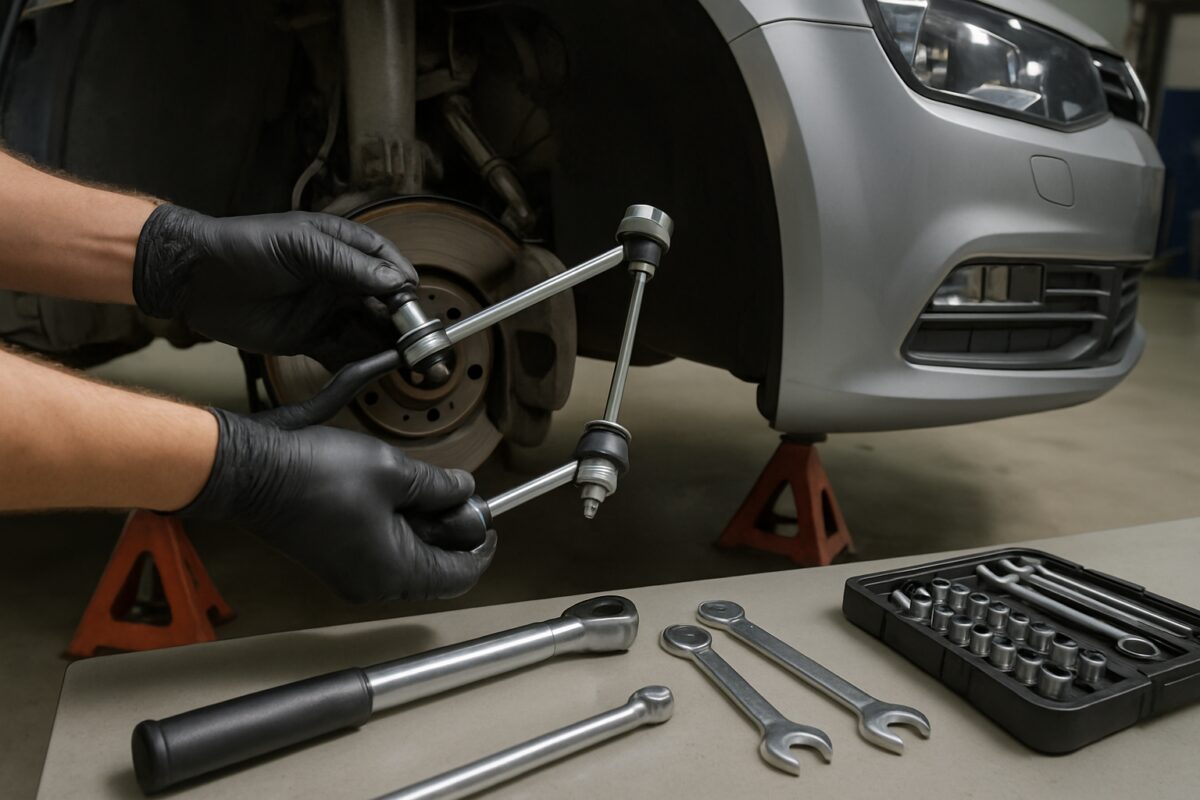
To fit stabilisers properly, you’ll need the correct sway bar links for your vehicle, basic hand tools, and safety equipment. The process involves lifting the vehicle, removing old stabiliser links, installing new components with proper torque settings, and checking for secure fitment. This relatively straightforward job typically takes 45 minutes and costs approximately £30 in parts.
Tools and parts required
Parts needed:
- Stabiliser links (vehicle specific)
- Replacement bushings and washers
- New nuts and bolts if corroded
- Thread lock compound
Tools required:
- Jack and axle stands
- Socket set (typically 13mm-17mm)
- Combination spanners
- Torque wrench
- Wire brush for cleaning
- Safety gloves
Safety precautions
Always work on level ground and engage the handbrake before lifting. Never work under a vehicle supported only by a jack. Use proper axle stands and ensure the vehicle is stable. Wear safety glasses when cleaning corroded components.
Professional tip: Check both sides even if only one link appears faulty. Stabiliser links often fail in pairs due to similar wear patterns.
Step-by-step instructions
Step 1: Prepare the vehicle
Park on level ground and engage the handbrake. Loosen the wheel nuts slightly before lifting. Use a jack to raise the front of the vehicle and secure with axle stands. Remove the front wheels to access the stabiliser links.
Step 2: Locate and assess the stabiliser links
Find the stabiliser links connecting the sway bar to the suspension strut or control arm. Check for worn bushings, bent links, or seized bolts. Take photos for reference during reassembly.
Step 3: Remove the old stabiliser links
Use appropriate spanners to hold the bolt heads while loosening the nuts. If bolts are seized, apply penetrating oil and allow time to work. Clean the mounting points with a wire brush to remove corrosion and debris.
Step 4: Install new stabiliser links
Position new links with bushings in the correct order. Ensure washers are properly seated and apply thread lock compound to the bolts. Hand-tighten initially, then use a torque wrench to achieve the manufacturer’s specified torque setting, typically 40-50 Nm.
Step 5: Final checks and testing
Refit wheels and lower the vehicle. Check all connections are secure and properly torqued. Test drive at low speed, listening for any unusual noises or handling changes.
Common mistakes to avoid
Many DIY mechanics make critical errors when fitting stabilisers. Installing bushings in the wrong order is surprisingly common and leads to premature failure. Always follow the manufacturer’s bushing sequence.
Over-tightening bolts can crush rubber bushings, whilst under-tightening allows movement and wear. Use a proper torque wrench rather than guessing. Never reuse old nuts and bolts if they show signs of corrosion or damage.
Failing to clean mounting surfaces properly can prevent proper seating and lead to rattling. Take time to remove all old rubber and corrosion before fitting new components.
Expert insight: Our mechanics recommend replacing stabiliser links every 60,000-80,000 miles as preventative maintenance, even if no obvious symptoms are present.
When should you replace stabiliser links?
Replace stabiliser links when you notice clunking noises over bumps, excessive body roll during cornering, or visible wear to bushings. Cracked rubber bushings or bent link arms are clear indicators requiring immediate replacement.
Regular inspection every 12 months helps identify wear before it affects handling. Look for perished rubber, play in joints, and corrosion around mounting points.
Related maintenance you can do at the same time
While working on suspension components, consider inspecting related parts. Check shock absorbers for leaks and suspension springs for damage.
Examine ball joints and suspension arm bushings for wear. These components work together, so addressing multiple items during one service session saves time and labour costs.
Consider replacing the entire sway bar bushings set if the main bar bushings show signs of deterioration.
Frequently asked questions
How long do stabiliser links typically last?
Stabiliser links generally last 60,000-100,000 miles depending on driving conditions and road quality. Harsh conditions may reduce lifespan significantly.
Can I drive with a broken stabiliser link?
Whilst not immediately dangerous, broken links reduce stability and should be replaced promptly to maintain safe handling characteristics.
Do I need to replace both sides together?
It’s recommended to replace both sides simultaneously to ensure balanced handling and prevent uneven wear patterns developing.
What causes premature stabiliser link failure?
Poor road surfaces, aggressive driving, and lack of maintenance accelerate wear. Corrosion from road salt also contributes to premature failure.
Should I use genuine or aftermarket stabiliser links?
Quality aftermarket links often match OEM performance at lower cost. Choose reputable brands with proper rubber compounds and steel construction.
Fitting stabilisers correctly requires attention to detail and proper torque specifications. Using quality replacement parts and following correct procedures ensures optimal vehicle handling and component longevity. Take your time with this important safety-related repair to achieve professional results.

 Loading...