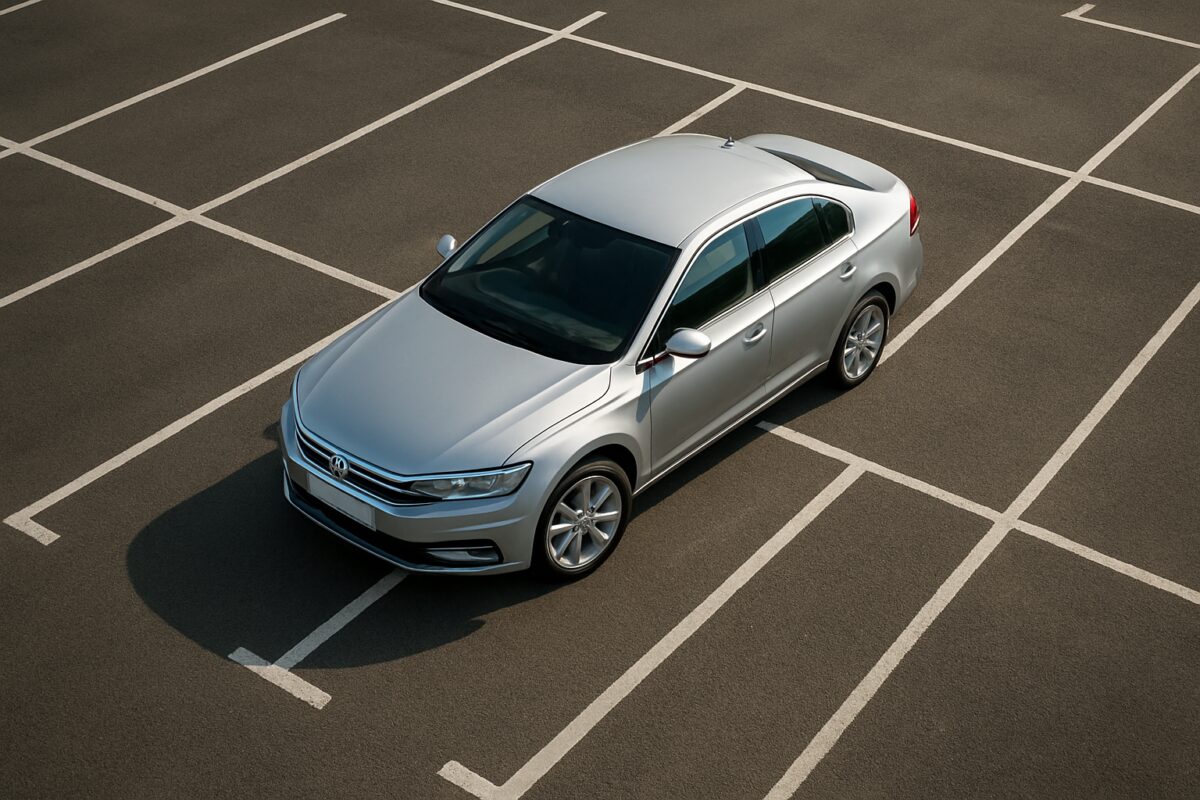
Forward bay parking involves driving straight into a parking space, positioning your vehicle between the marked lines with the front facing outward. This technique requires careful observation of reference points, proper use of mirrors, and gradual steering adjustments to achieve perfect alignment within the bay.
Tools and parts required
For successful forward bay parking, you’ll need properly functioning equipment on your vehicle:
Vehicle systems needed:
- Correctly adjusted outside mirrors
- Functional parking sensors (if equipped)
- Clear visibility through all windows
- Responsive steering system
Optional equipment:
- Reversing camera (for reference when leaving)
- Dashboard parking guidelines
- Side mirror indicators
Safety precautions
Before attempting forward bay parking, ensure your vehicle’s safety systems are functioning correctly. Check that your brake pads provide adequate stopping power and your steering responds smoothly. Always maintain awareness of pedestrians and other vehicles in the car park area.
Step-by-step instructions
Step 1: Approach the parking area
Drive slowly through the car park, keeping your speed below 5 mph. Look for a suitable bay that provides adequate space on both sides. Position your vehicle perpendicular to the parking bay, approximately 1.5 metres away from the bay entrance.
Ensure your vehicle is straight and parallel to the parking bay lines. This initial positioning is crucial for successful forward bay parking. Check your mirrors for any approaching traffic or pedestrians.
Step 2: Identify reference points
Before turning into the bay, identify key reference points. The most reliable reference is when the parking bay line appears to pass through the centre of your passenger door handle when viewed from the driver’s seat.
Some drivers prefer using the wing mirror as a reference point. When the bay line aligns with the base of your passenger side mirror, you’re typically in the correct position to begin turning.
Step 3: Begin the turn
Once you’ve identified your reference point, turn the steering wheel fully to the right (or left, depending on which way you’re turning). Move slowly forward, allowing the vehicle to follow the turning circle naturally.
Keep checking your mirrors to ensure you’re not getting too close to either side of the bay. If your vehicle has parking sensors, listen for any proximity warnings.
Step 4: Straighten the vehicle
As your vehicle enters the bay, begin straightening the steering wheel. The front of your car should be pointing directly into the parking space. Continue moving forward slowly, making minor steering adjustments as needed.
Watch for the painted lines on either side through your side mirrors. Your vehicle should be equidistant from both lines. If you notice you’re drifting towards one side, make gentle corrections with the steering wheel.
Step 5: Position and stop
Continue moving forward until your vehicle is properly positioned within the bay. Stop when your front bumper is close to, but not touching, any kerb, wall, or the front boundary of the parking space.
Leave approximately 30-60 centimetres between your front bumper and any obstacle. This provides adequate clearance whilst maximising the use of the parking space. Engage the handbrake and turn off the engine.
Common mistakes to avoid
Many drivers make predictable errors when forward bay parking. The most frequent mistake is approaching the bay at too sharp an angle, which causes the rear of the vehicle to swing out and potentially strike adjacent cars.
Another common error is turning too early or too late. Turning before reaching your reference point often results in clipping the bay entrance with your rear wheel. Turning too late typically means you’ll end up at an angle within the bay.
Rushing the manoeuvre frequently leads to poor positioning. Take your time, especially in busy car parks where other drivers may be waiting. It’s better to reverse out and try again than to leave your vehicle poorly parked.
Professional tip: Always check your mirrors continuously throughout the manoeuvre. Your peripheral vision might miss obstacles or other vehicles approaching from behind.
When should you use forward bay parking?
Forward bay parking is ideal when you need quick exit from a car park or when visibility when leaving is limited. This method is particularly useful in busy shopping centres, airports, or any location where you might be carrying heavy items to your vehicle.
Consider using forward bay parking when:
- You’re planning a quick departure
- The car park has heavy traffic
- Weather conditions reduce visibility
- You’re driving an unfamiliar vehicle
- The parking bay is on a slope
Avoid forward bay parking in tight spaces where reversing out would be difficult, or when the bay is positioned near a busy junction where forward visibility is crucial for safe departure.
Related maintenance you can do at the same time
While practising your parking skills, it’s an excellent opportunity to check several vehicle systems. Ensure your outside mirrors are properly adjusted and clean for optimal visibility.
Check that your tail lights are functioning correctly, as these are essential for other drivers to see your vehicle in car parks. Verify that your handbrake engages properly and releases smoothly.
Consider checking your tyre pressures regularly, as properly inflated tyres improve steering response and make parking manoeuvres more predictable. Low tyre pressure can make your steering feel vague and less responsive during tight turns.
Expert insight: According to AutoPartsPro mechanics, many parking-related incidents occur due to poor visibility caused by dirty or misaligned mirrors. Regular mirror maintenance significantly improves parking confidence and safety.
Frequently asked questions
How much space do I need for forward bay parking?
You need approximately 1.5 vehicle lengths of approach space and a bay width of at least 2.4 metres for comfortable forward bay parking in most standard cars.
Should I use full lock when turning into the bay?
Yes, full steering lock helps achieve the tightest turning circle, allowing you to enter the bay at the correct angle without requiring excessive approach space.
What if I end up at an angle in the bay?
Reverse out completely and restart the manoeuvre. Attempting to correct a poorly positioned vehicle within the bay often makes the situation worse and may damage adjacent vehicles.
How do I know when to start turning the wheel?
Turn when the parking bay line aligns with your passenger door handle or the base of your passenger mirror, depending on your vehicle and seating position.
Is forward bay parking easier than reverse bay parking?
Forward bay parking is generally considered easier for initial positioning but can be more challenging when departing, especially in busy car parks with limited visibility.
Mastering forward bay parking requires practice and patience, but the technique becomes second nature with experience. The key is maintaining proper reference points, controlling your speed, and making smooth steering inputs. Remember that different vehicles have varying turning circles and reference points, so adjust your technique accordingly when driving unfamiliar cars. With the right approach and properly maintained vehicle systems, forward bay parking becomes an effortless part of your driving repertoire.

 Loading...