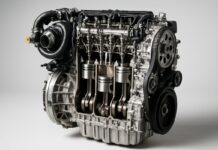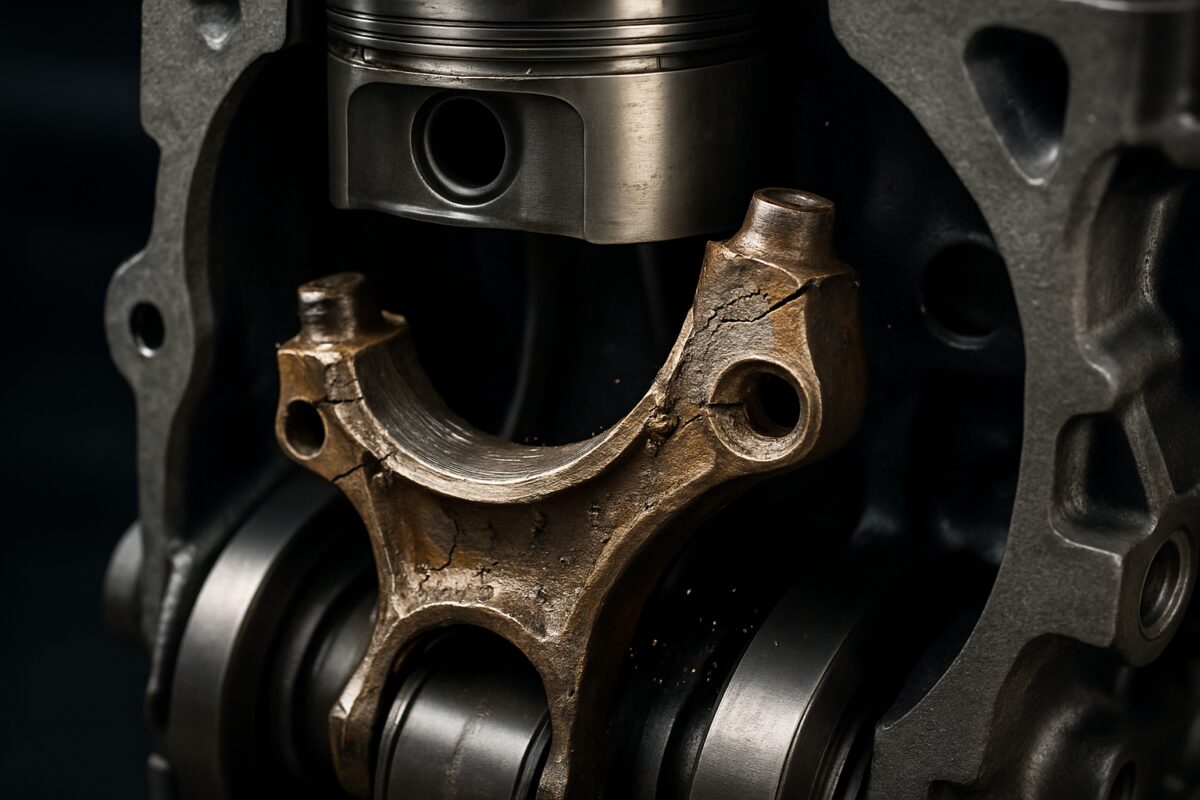
The engine connecting rod serves as a crucial link between the piston and crankshaft, transferring the combustive force from your engine’s cylinders. This vital component endures tremendous stress during operation, making it prone to specific failure modes that can devastate your engine. Understanding connecting rod problems helps prevent catastrophic engine damage and costly repairs.
Bearing failure and rod knock
Rod bearing failure represents the most common connecting rod problem, creating the dreaded “rod knock” sound. This occurs when the thin bearing shells between the connecting rod and crankshaft wear down or lose lubrication.
The primary causes include contaminated engine oil, insufficient oil pressure, or extended oil change intervals. When bearings fail, metal-to-metal contact occurs, generating excessive heat and noise. The characteristic knocking sound intensifies under acceleration and load conditions.
Poor oil maintenance practices accelerate bearing wear. Dirty oil contains abrasive particles that grind away the bearing surface. Low oil levels reduce lubrication effectiveness, whilst old oil loses its protective properties. High-performance engines face additional stress from increased compression ratios and higher operating temperatures.
Tip: Regular oil changes using manufacturer-specified grades prevent 90% of rod bearing failures, according to our AutoPartsPro mechanics.
Advanced bearing failure can lead to complete rod separation from the crankshaft, causing catastrophic engine damage. The repair costs often exceed the vehicle’s value, making prevention through proper maintenance essential.
Connecting rod bending and deformation
Connecting rods can bend or deform under extreme stress conditions, particularly in high-performance or modified engines. This problem typically results from hydrolock, where liquid enters the combustion chamber and prevents normal piston travel.
Water ingestion through flooded roads or faulty head gaskets commonly causes hydrolock. The incompressible liquid forces the connecting rod to bend as the piston attempts its compression stroke. Engine over-revving can also stress rods beyond their elastic limit.
Bent connecting rods create several symptoms. Engine vibration increases due to unbalanced rotating assembly. Compression ratios change in affected cylinders, reducing power output. The engine may exhibit rough idle characteristics and poor acceleration response.
Manufacturing defects occasionally cause premature rod failure. Poor metallurgy, inadequate heat treatment, or improper forging can create weak points. Aftermarket performance rods require careful selection to match engine specifications and intended use.
Tip: Never attempt to start an engine that has experienced potential hydrolock – have it professionally inspected to prevent rod damage.
Connecting rod bolt failure
The bolts securing the connecting rod cap represent critical fasteners that maintain proper bearing clearances. These high-strength bolts endure constant tension and cyclic loading throughout engine operation.
Bolt failure typically occurs from overtightening during assembly, using incorrect torque specifications, or bolt fatigue from excessive mileage. Reusing stretch bolts beyond their service limit can cause sudden failure. Contamination or corrosion can also weaken bolt integrity.
When rod bolts fail, the consequences are immediate and severe. The rod cap separates, allowing the connecting rod to move freely within the engine. This creates catastrophic damage to the engine block, cylinder walls, and other internal components.
Professional rebuilds require new rod bolts and precise torque procedures. Many modern engines use stretch bolts that permanently deform during installation. These single-use fasteners must be replaced during any major engine work involving connecting rod removal.
Warning signs your car has a problem
Several symptoms indicate potential connecting rod problems before complete failure occurs:
- Metallic knocking sounds from the engine bay, especially under acceleration
- Unusual engine vibrations at idle or during operation
- Reduced engine power and poor acceleration response
- Excessive oil consumption or metallic particles in engine oil
- Engine misfiring in specific cylinders
These warning signs often develop gradually, providing opportunities for early intervention. Immediate professional diagnosis can prevent catastrophic engine failure and reduce repair costs significantly.
How to fix the problems
| Problem Type | Repair Method | Cost Range | Time Required |
|---|---|---|---|
| Rod Bearing Failure | Complete engine rebuild or replacement | £2,000-£5,000 | 3-5 days |
| Bent Connecting Rod | Rod replacement and engine inspection | £1,500-£3,500 | 2-4 days |
| Rod Bolt Failure | New bolts and professional assembly | £800-£2,000 | 1-2 days |
Connecting rod repairs require complete engine disassembly and professional expertise. The repair process involves removing the oil sump, inspecting all internal components, and measuring clearances precisely.
Prevention strategies include:
- Regular oil changes using quality lubricants
- Avoiding engine over-revving and aggressive driving
- Maintaining proper cooling system operation
When to see a mechanic
Immediate professional attention becomes necessary when engine knocking sounds develop. Any metallic noises from the engine bay require urgent diagnosis to prevent complete engine failure.
Schedule regular maintenance inspections every 6,000 miles or as recommended by your manufacturer. Professional mechanics can detect early warning signs through oil analysis, compression testing, and visual inspection during routine services.
Never ignore unusual engine sounds or vibrations. Early intervention costs significantly less than complete engine replacement. Qualified technicians possess specialised tools and knowledge to diagnose connecting rod problems accurately.
| Symptom Severity | Action Required | Urgency Level |
|---|---|---|
| Light knocking at idle | Schedule inspection within week | Medium |
| Heavy knocking under load | Stop driving immediately | Critical |
| Metallic grinding sounds | Emergency shutdown required | Severe |
Frequently asked questions
What causes connecting rod failure in modern engines?
Poor oil maintenance, engine over-revving, and manufacturing defects represent the primary causes of rod failure in contemporary vehicles.
Can you drive with a damaged connecting rod?
Never drive with suspected rod damage. Continued operation risks catastrophic engine destruction and potential safety hazards from sudden power loss.
How much does connecting rod repair typically cost?
Rod repairs range from £800 for bolt replacement to £5,000 for complete engine rebuilds, depending on damage extent.
What’s the difference between rod knock and other engine noises?
Rod knock produces metallic knocking that intensifies under load, whilst other noises may remain constant or vary differently.
How often should connecting rods be inspected?
Professional inspection during major services every 60,000 miles ensures early detection of potential problems before failure occurs.
Final recommendation
Connecting rod problems demand immediate attention and professional expertise. Our AutoPartsPro specialists recommend preventive maintenance as your best defence against catastrophic engine failure. Regular oil changes, quality lubricants, and avoiding aggressive driving habits significantly extend connecting rod lifespan.
When symptoms develop, seek professional diagnosis immediately. Early intervention saves thousands in repair costs compared to complete engine replacement. Quality replacement parts and proper installation techniques ensure reliable long-term performance. Don’t gamble with connecting rod problems – your engine’s survival depends on prompt, professional attention.

 Loading...