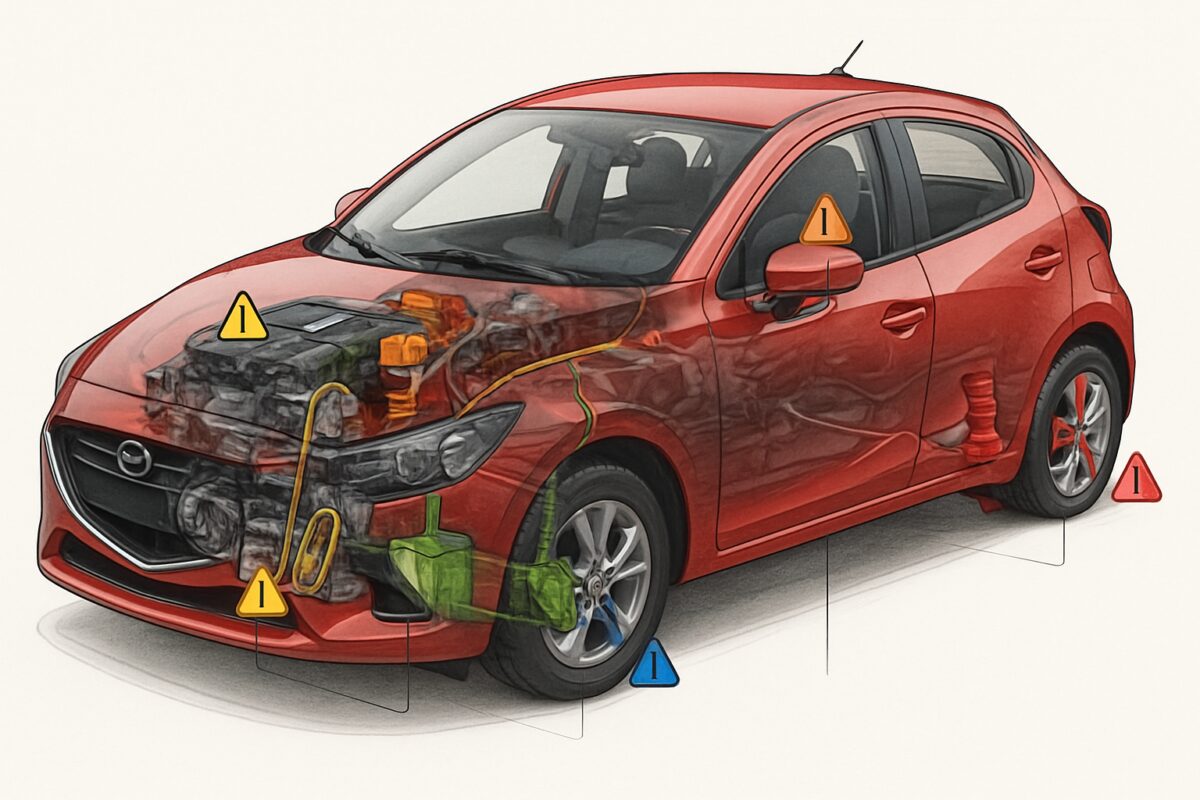
The Mazda 2 has earned recognition as a reliable compact car, but like all vehicles, it faces specific recurring issues that owners should understand. This comprehensive guide examines the most common problems affecting the Mazda 2, helping UK drivers identify symptoms early and make informed decisions about repairs and maintenance.
Electrical system failures
Mazda 2 models frequently experience electrical gremlins that can range from minor inconveniences to serious safety concerns. The most common electrical issues affect the vehicle’s battery charging system and various electronic control units.
Faulty alternators plague many Mazda 2s, particularly those manufactured between 2007 and 2014. Symptoms include dimming headlights, flickering dashboard lights, and strange noises from the engine bay. The alternator regulator often fails prematurely, causing overcharging or undercharging of the battery system.
Our mechanics at AutoPartsPro recommend checking your alternator output regularly, as early detection can prevent costly battery replacements and potential roadside breakdowns.
Central locking problems also affect numerous Mazda 2 owners. Door lock actuators fail frequently, leaving drivers unable to lock or unlock specific doors. This issue typically starts with intermittent operation before complete failure occurs.
Engine and transmission problems
The Mazda 2’s petrol engines, whilst generally reliable, suffer from specific issues that warrant attention. Carbon build-up in the intake system causes rough idling and reduced performance in higher-mileage vehicles.
Timing chain stretch represents a significant concern for the 1.3-litre and 1.5-litre engines. This problem typically manifests as a rattling noise during cold starts, particularly noticeable in the first few seconds after ignition. Left unaddressed, timing chain issues can result in catastrophic engine damage.
Manual gearbox problems affect several Mazda 2 generations, with worn clutch components causing difficulty engaging gears. The clutch release bearing commonly fails around 60,000 miles, producing a grinding noise when the clutch pedal is depressed.
Automatic transmission variants experience their own set of issues, including delayed engagement and harsh shifting. The transmission control module occasionally requires reprogramming or replacement to restore proper operation.
Suspension and steering issues
Mazda 2 suspension components wear prematurely due to the car’s relatively soft setup designed for comfort. Front shock absorbers typically require replacement between 50,000 and 70,000 miles, showing signs of oil leakage and reduced damping effectiveness.
Anti-roll bar links fail frequently, causing knocking noises over bumps and reduced stability during cornering. These components are relatively inexpensive but require professional installation for proper alignment.
Power steering problems manifest as heavy steering at low speeds or complete loss of assistance. The power steering pump often develops leaks, requiring seal replacement or complete unit renewal. Electric power steering systems in newer models experience sensor failures that trigger warning lights and affect steering response.
According to our technical specialists, regular suspension inspections can identify worn components before they compromise safety or trigger MOT failures.
Braking system defects
Brake system problems plague many Mazda 2 models, particularly regarding the rear drum brake setup found on base specifications. Drum brake adjusters seize regularly, causing uneven brake application and increased stopping distances.
Front brake pads wear unevenly due to sticking caliper pistons, a problem exacerbated by infrequent brake fluid changes. The brake fluid itself requires replacement every two years, yet many owners neglect this crucial maintenance task.
ABS sensor failures occur frequently, particularly on vehicles exposed to harsh winter conditions. Salt corrosion affects the sensor rings and wiring, triggering dashboard warning lights and disabling the anti-lock system. The ABS sensors require careful cleaning or replacement to restore full functionality.
Cooling system malfunctions
Overheating issues affect many Mazda 2s due to cooling system component failures. The radiator develops leaks at the plastic end tanks, a common problem in vehicles over eight years old. These leaks start small but progressively worsen, eventually causing significant coolant loss.
Water pump bearing failures cause squealing noises and coolant leaks from the timing chain cover area. This problem requires immediate attention, as continued driving can result in catastrophic engine damage from overheating.
Thermostat sticking represents another frequent issue, causing either overcooling (stuck open) or overheating (stuck closed). A faulty thermostat affects cabin heating performance and engine efficiency, requiring replacement with a quality OEM component.
Warning signs your car has a problem
Recognising early warning signs can save substantial repair costs and prevent dangerous situations. Pay attention to unusual noises, particularly grinding, squealing, or knocking sounds that weren’t present previously.
Dashboard warning lights require immediate investigation, regardless of how minor they might seem. Modern vehicles rely heavily on electronic systems, and ignored warnings often escalate into expensive repairs.
Changes in vehicle behaviour, such as pulling to one side during braking or difficulty starting, indicate developing problems that need professional diagnosis.
- Unusual engine noises during cold starts
- Flickering dashboard lights or electrical malfunctions
- Heavy steering or unusual vibrations through the steering wheel
- Grinding or squealing from the brake system
- Coolant loss or overheating symptoms
How to fix the problems
Many Mazda 2 issues require professional diagnosis and repair, but understanding the solutions helps owners make informed decisions about parts and labour costs.
| Problem | Solution | Approximate Cost | Difficulty |
|---|---|---|---|
| Alternator failure | Replace alternator and regulator | £250-£400 | Moderate |
| Timing chain stretch | Replace timing chain and tensioner | £800-£1200 | High |
| Shock absorber wear | Replace front shock absorbers | £200-£350 | Moderate |
| Brake pad wear | Replace pads and check discs | £120-£250 | Easy |
| Coolant leak | Replace radiator or hoses | £150-£300 | Moderate |
Preventive maintenance significantly reduces the likelihood of major problems. Regular coolant system servicing prevents overheating issues, whilst timely brake fluid changes extend brake component life.
| Component | Service Interval | Typical Lifespan | Warning Signs |
|---|---|---|---|
| Engine oil | Every 10,000 miles | N/A | Dark colour, metal particles |
| Brake fluid | Every 2 years | N/A | Spongy pedal, discoloured fluid |
| Timing chain | Inspect at 80,000 miles | 100,000-120,000 miles | Rattling on cold start |
| Clutch assembly | As required | 60,000-80,000 miles | Slipping, difficult engagement |
| Suspension components | Annual inspection | 50,000-70,000 miles | Knocking noises, poor handling |
When to see a mechanic
Certain symptoms require immediate professional attention to prevent safety hazards or expensive damage. Complete loss of braking effectiveness, overheating, or electrical system failures should never be ignored.
Timing chain problems need urgent diagnosis, as continued driving can cause valve damage requiring complete engine rebuilding. Any unusual noises from the engine bay warrant investigation by qualified technicians.
Regular maintenance schedules help identify problems before they become serious. Annual inspections catch developing issues whilst repairs remain affordable and manageable.
- Annual safety inspections for MOT compliance
- Immediate attention for warning lights or unusual noises
- Professional diagnosis for intermittent electrical problems
- Timely clutch replacement before complete failure occurs
- Cooling system pressure testing if overheating symptoms appear
Frequently asked questions (FAQ)
What are the most common Mazda 2 engine problems?
Timing chain stretch, carbon build-up in intake systems, and premature alternator failures represent the most frequent engine-related issues affecting Mazda 2 models.
How long do Mazda 2 clutches typically last?
Manual transmission clutches generally last 60,000 to 80,000 miles, depending on driving style and maintenance. City driving typically reduces clutch life significantly.
Are Mazda 2 electrical problems expensive to fix?
Electrical repairs vary widely in cost. Simple issues like faulty bulbs cost under £20, whilst major problems like ECU failures can exceed £800.
When should I replace my Mazda 2’s timing chain?
Timing chains typically require replacement between 100,000 and 120,000 miles. Earlier replacement may be necessary if rattling noises develop during cold starts.
How can I prevent cooling system problems in my Mazda 2?
Regular coolant changes every four years, prompt leak repairs, and thermostat replacement at recommended intervals prevent most cooling system failures effectively.
Final recommendation
Despite its common problems, the Mazda 2 remains a practical and economical choice for UK drivers when properly maintained. Understanding these issues helps owners make informed decisions about repairs and prevents minor problems from becoming major expenses.
Regular maintenance represents the most effective strategy for minimising problems and extending vehicle life. Professional diagnosis at the first sign of trouble saves money compared to reactive repairs after components fail completely.
Quality replacement parts from reputable suppliers ensure reliable repairs and long-term satisfaction. Investing in proper maintenance and timely repairs keeps your Mazda 2 running smoothly for many years, making it excellent value for money in the competitive compact car segment.

 Loading...