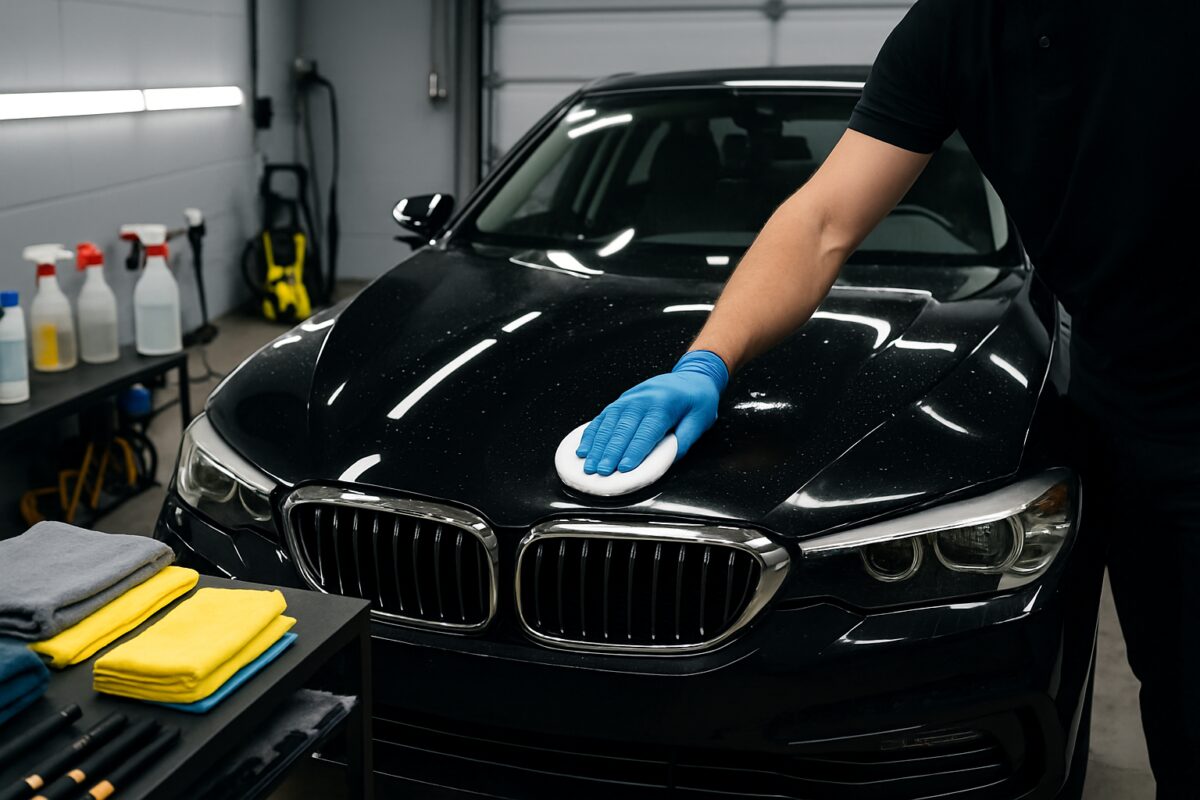
Car valeting is the process of thoroughly cleaning and restoring a vehicle’s appearance inside and out. Unlike a basic car wash, proper valeting involves detailed cleaning, polishing, and protecting every surface to achieve showroom condition. This comprehensive approach typically takes 2-4 hours and requires specific products and techniques to deliver professional results.
Tools and parts required
Success in car valeting depends entirely on having the right equipment and products. Professional results require quality tools that won’t damage your vehicle’s surfaces.
Parts needed:
- Car shampoo (pH-neutral formula)
- Wheel cleaner (acid-free for alloys)
- Car wax or ceramic coating
- Interior cleaner (fabric and leather specific)
- Glass cleaner (ammonia-free)
- Tyre shine product
- Detailing spray
Tools required:
- Pressure washer or hosepipe
- Two buckets (wash and rinse method)
- Microfibre washing mitts
- Microfibre drying towels
- Soft-bristled brushes
- Vacuum cleaner with attachments
- Applicator pads
- Detailing brushes
Safety precautions
Always work in shade to prevent products drying too quickly on hot surfaces. Wear gloves when handling cleaning chemicals and ensure adequate ventilation when working with solvents. Test all products on inconspicuous areas first.
Never valet in direct sunlight as this causes streaking and premature drying. Check that all electrical components are properly sealed before using water near the engine bay.
Step-by-step instructions
Step 1: Pre-wash preparation
Begin by removing all personal items from the interior. Take out floor mats and seat covers for separate cleaning. Close all windows and sunroof completely.
Rinse the exterior thoroughly with cold water to remove loose dirt and debris. This prevents scratching during the washing process. Pay special attention to wheel arches and lower panels where road grime accumulates.
Step 2: Wheel and tyre cleaning
Start with the dirtiest part – the wheels. Apply wheel cleaner according to manufacturer instructions and allow proper dwell time. Use soft-bristled brushes to agitate stubborn brake dust.
Rinse thoroughly before the product dries. Clean tyres with dedicated tyre cleaner to remove browning and prepare the surface for dressing. This step prevents contaminating your wash water later.
Step 3: Exterior washing
Fill two buckets – one with shampoo solution, one with clean rinse water. Work from top to bottom using the two-bucket method to avoid recontaminating clean wash water.
Wash one panel at a time, rinsing your mitt frequently. Use straight-line motions rather than circles to minimise swirl marks. Rinse each section immediately after washing to prevent soap residue.
Step 4: Drying and polishing
Dry the vehicle using clean microfibre towels, working systematically to avoid water spots. Once completely dry, apply car wax or sealant using applicator pads in thin, even coats.
Allow the product to cure according to instructions before buffing off with clean microfibre cloths. This protection stage is crucial for maintaining the finish between valets.
Step 5: Interior detailing
Vacuum all surfaces thoroughly, including under seats and in crevices. Use appropriate brushes for textured surfaces and different attachments for various areas.
Clean all interior surfaces with suitable products – leather cleaner for leather, fabric cleaner for cloth. Finish with glass cleaner on all interior glass surfaces, including mirrors and instrument clusters.
Common mistakes to avoid
Many enthusiasts make critical errors that can damage their vehicle’s finish. Using household detergents instead of proper car shampoo strips protective waxes and can cause fading.
Working in direct sunlight creates water spots and streaking that’s difficult to remove. Always choose overcast conditions or shaded areas for best results.
Circular washing motions create unsightly swirl marks. Instead, use straight-line movements following the vehicle’s body lines. Replace dirty water frequently to avoid scratching.
Neglecting to clean your tools properly between uses transfers contamination. Rinse mitts and towels thoroughly, and consider having separate tools for wheels and bodywork.
Professional tip: Our specialists at AutoPartsPro recommend testing any new cleaning product on a hidden area first. Door jambs or the inside of the boot lid are ideal locations for compatibility checks.
When should you valet your car?
Regular valeting maintains your vehicle’s condition and protects your investment. Most cars benefit from thorough valeting every 4-6 weeks, depending on usage and environmental conditions.
Vehicles exposed to harsh conditions like coastal salt air or heavy industrial pollution may require more frequent attention. City driving with frequent short trips also increases contamination buildup.
Seasonal changes present specific challenges. Winter road salt demands immediate attention, whilst summer heat can bake contaminants onto paintwork if left untreated.
Professional valeting becomes essential before selling, as presentation significantly affects resale value. Well-maintained vehicles command premium prices and sell faster than neglected examples.
Related maintenance you can do at the same time
Valeting presents an excellent opportunity to inspect your vehicle thoroughly. Check light bulbs for proper operation whilst cleaning lenses.
Examine windscreen wipers for wear and replace if streaking occurs. Clean wiper arms and check washer jet alignment for optimal visibility.
Inspect air filter condition whilst accessing the engine bay. A clean filter improves performance and fuel economy, making this timing ideal for replacement.
Check tyre pressures and tread depth whilst the wheels are exposed. Proper inflation reduces wear and improves handling, whilst adequate tread ensures safety.
Expert insight: According to our technical team, combining valeting with routine inspections catches minor issues before they become expensive repairs. This proactive approach saves money long-term.
Frequently asked questions
How often should I valet my car?
Most vehicles benefit from professional-level valeting every 4-6 weeks, with light maintenance washes in between as needed for optimal protection.
Can I valet my car in winter?
Yes, but choose milder days above 5°C and work quickly. Focus on removing road salt which causes corrosion if left untreated.
What’s the difference between valeting and detailing?
Valeting focuses on cleaning and basic protection, whilst detailing includes paint correction, swirl removal, and advanced protective coatings for show-quality results.
Should I valet before or after mechanical work?
Always valet after mechanical work to avoid contaminating clean surfaces. However, checking brake pads or oil filter condition during valeting helps plan future maintenance.
Can valeting damage my car’s paintwork?
Proper techniques and quality products protect paintwork, but incorrect methods or contaminated tools can cause scratching and swirl marks requiring professional correction.
Professional car valeting transforms your vehicle’s appearance whilst protecting its long-term condition. Quality products, proper techniques, and regular maintenance schedules preserve both aesthetic appeal and resale value. Investing in the right tools and taking time to learn correct methods delivers results that rival professional services, whilst the satisfaction of maintaining your own vehicle adds personal pride to practical benefits.

 Loading...