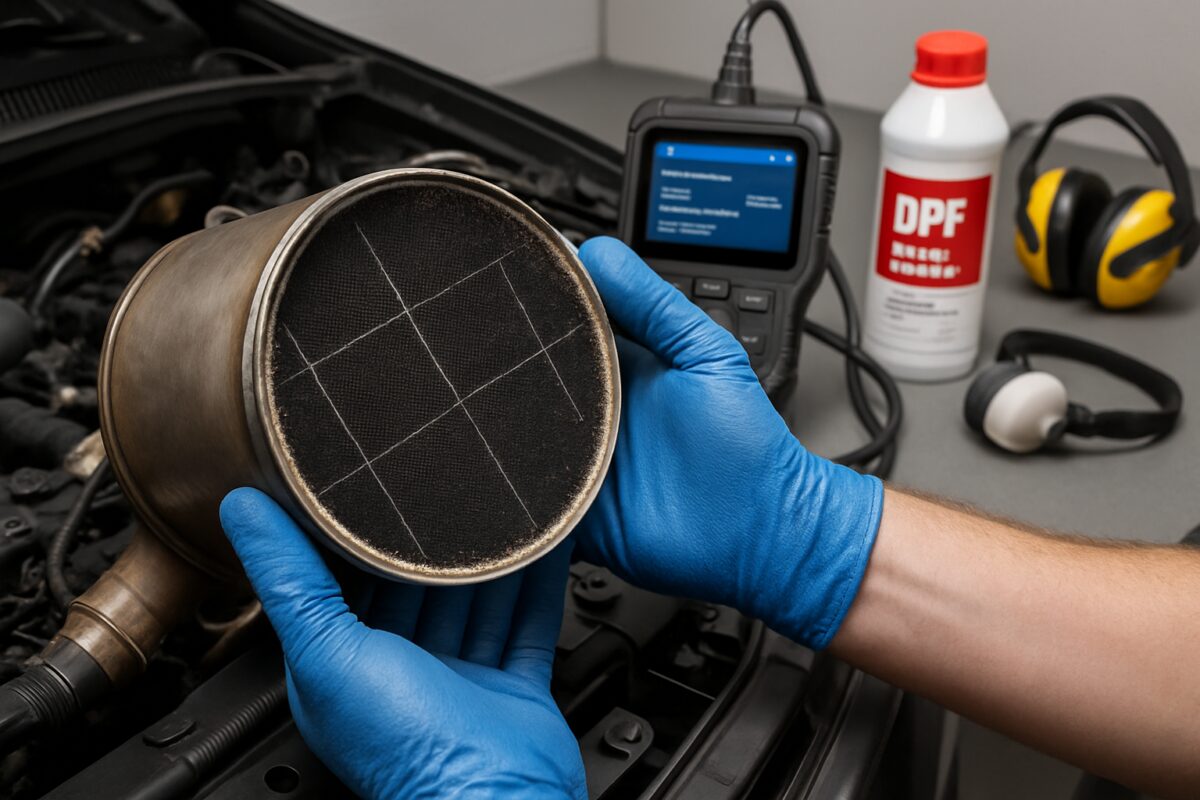
To clear a blocked DPF filter, you can perform a manual regeneration using an OBD2 scanner, drive at motorway speeds for 20-30 minutes, or use professional DPF cleaning fluid. Most blockages clear through forced regeneration, though severely clogged filters may require professional cleaning or replacement.
Modern diesel vehicles rely on Diesel Particulate Filters to reduce harmful emissions. These sophisticated components capture soot particles during combustion, periodically burning them off through regeneration cycles. When regeneration fails to occur naturally, the filter becomes blocked, triggering warning lights and reducing engine performance.
Tools and parts required
Successful DPF cleaning requires specific equipment and safety gear to ensure effective results.
Parts needed:
- Professional DPF cleaning fluid
- New engine oil (if performing oil change)
- Oil filter (replacement recommended)
- Replacement DPF sensor (if faulty)
Tools required:
- OBD2 diagnostic scanner
- Safety gloves and eye protection
- Funnel for fluid application
- Jack and axle stands (if accessing from underneath)
- Socket set for sensor removal
Safety precautions
DPF cleaning involves working with chemicals and hot exhaust components. Always wear protective equipment and ensure the engine has cooled completely before beginning work. Work in a well-ventilated area when using cleaning fluids, and never smoke or use open flames nearby. Keep a fire extinguisher accessible during the procedure.
Step-by-step instructions
Step 1: Diagnose the problem
Connect your OBD2 scanner to read diagnostic trouble codes. Common DPF-related codes include P2002, P2003, and P242F. These codes indicate soot accumulation levels and regeneration failure. Document all codes before beginning the clearing process, as this information helps determine the best approach.
Check the DPF pressure differential sensor readings. Normal operation shows minimal pressure difference between inlet and outlet. High differential pressure confirms significant blockage requiring immediate attention.
Step 2: Attempt forced regeneration
Use your diagnostic scanner to initiate a forced regeneration cycle. This process raises exhaust temperatures to burn accumulated soot. The procedure typically takes 20-30 minutes and requires the engine to reach operating temperature.
Monitor exhaust temperature during regeneration. Temperatures should reach 400-600°C for effective soot burning. If temperatures remain low or regeneration fails to complete, manual intervention becomes necessary.
Step 3: Perform motorway driving
Drive at steady motorway speeds (50-70 mph) for 20-30 minutes. Maintain consistent engine load without excessive acceleration or deceleration. This natural regeneration method allows exhaust temperatures to rise sufficiently for soot burning.
Keep engine revs between 2000-3000 RPM during the drive. Higher revs generate increased exhaust heat, promoting effective regeneration. Avoid stop-start driving, which prevents temperatures from reaching optimal levels.
Step 4: Apply DPF cleaning fluid
For stubborn blockages, use professional DPF cleaning fluid. Add the specified amount to your fuel tank according to manufacturer instructions. Most products require a full tank of fuel for proper dilution ratios.
Drive normally for the next 50-100 miles, allowing the cleaning agent to work through the system. The chemical breaks down carbon deposits and facilitates easier regeneration during subsequent cycles.
Step 5: Verify successful clearing
After treatment, use your scanner to check for remaining fault codes. Successful clearing shows reduced soot load percentages and normal pressure readings. Clear any remaining codes and perform a test drive to confirm proper operation.
Monitor the DPF warning light on subsequent journeys. The light should remain off during normal driving conditions. If warnings persist, professional diagnosis may reveal hardware problems requiring component replacement.
Common mistakes to avoid
Many drivers attempt clearing procedures without proper diagnosis, leading to ineffective results. Always scan for codes before beginning treatment to understand the underlying cause.
Avoid using cheap or incompatible cleaning products. Poor-quality fluids can damage sensitive components or prove completely ineffective. Stick to reputable brands specifically designed for your vehicle type.
Never ignore continued warning lights after attempted clearing. Persistent symptoms often indicate hardware failure requiring professional attention. Continuing to drive with a severely blocked DPF can cause expensive engine damage.
Don’t attempt regeneration on extremely blocked filters. Filters with excessive soot loads may crack during high-temperature cycles. Professional assessment prevents costly component failure.
Professional tip: Our mechanics at AutoPartsPro recommend checking DPF sensors annually. Faulty sensors prevent proper regeneration, causing premature filter blocking that could have been easily prevented.
When should you replace your DPF filter?
DPF filters typically last 80,000-120,000 miles under normal driving conditions. City driving with frequent short journeys significantly reduces lifespan due to incomplete regeneration cycles.
Replace the filter when regeneration cycles fail consistently, even after proper cleaning procedures. Physical damage, such as cracks or melted sections, requires immediate replacement for continued emissions compliance.
Warning signs include persistent DPF lights, reduced power output, increased fuel consumption, and unusual exhaust smoke. These symptoms often indicate filter deterioration beyond economical repair.
Consider replacement if cleaning costs approach 60-70% of new filter prices. Professional cleaning services can restore function, but severely contaminated filters may require multiple treatments for temporary results.
Related maintenance you can do at the same time
DPF maintenance provides an excellent opportunity to address related components. Replace the air filter to ensure optimal combustion efficiency and reduce future soot production.
Change engine oil and filters during DPF service. Contaminated oil contributes to increased particulate production, accelerating filter blocking. Use low-ash oil specifications recommended by your manufacturer.
Inspect exhaust system components for damage or corrosion. Leaking joints affect backpressure readings, potentially triggering false DPF warnings. Address any issues during the service for optimal system performance.
Check turbocharger operation and boost levels. Failing turbochargers produce excessive soot, overwhelming DPF capacity despite proper maintenance.
Professional tip: Our technicians always recommend updating engine software during DPF service. Manufacturer updates often improve regeneration strategies, reducing future blocking incidents and extending filter life.
Frequently asked questions
How often should I clean my DPF filter?
Most DPF filters require cleaning every 60,000-80,000 miles depending on driving conditions. City drivers may need more frequent service due to incomplete natural regeneration cycles.
Can I remove the DPF filter permanently?
Removing DPF filters is illegal in the UK and will cause MOT failure. The modification also increases harmful emissions and may void vehicle insurance coverage.
Why does my DPF keep blocking repeatedly?
Repeated blocking often indicates faulty sensors, poor fuel quality, or underlying engine problems. Professional diagnosis can identify root causes beyond simple filter contamination.
Is it safe to drive with a blocked DPF?
Short-term driving is possible but not recommended. Extended operation can damage the filter permanently and reduce engine performance significantly, leading to expensive repairs.
How much does professional DPF cleaning cost?
Professional cleaning typically costs £150-300 depending on vehicle type and contamination level. Replacement costs range from £800-2000 for most vehicles.
Understanding DPF maintenance helps preserve your vehicle’s emissions system whilst avoiding costly repairs. Regular motorway driving, quality fuel, and timely servicing prevent most blocking issues. When problems do arise, proper diagnosis and treatment restore optimal performance efficiently. Using genuine particulate filters and professional-grade cleaning products ensures reliable, long-lasting results for your diesel vehicle.

 Loading...