Brake disc overheating is a serious safety issue that affects thousands of UK motorists each year. When your brake rotors exceed safe operating temperatures, it compromises stopping power and can lead to complete brake failure. Understanding the warning signs and causes helps prevent dangerous situations on Britain’s roads.
Excessive braking causing heat buildup
Heavy or repeated braking generates enormous amounts of heat through friction between brake pads and discs. This commonly occurs during spirited driving on winding country roads or when descending steep hills with a loaded vehicle.
Mountain driving presents particular challenges for brake systems. Continuous use of brakes down long descents can push brake temperatures beyond 400°C, well above normal operating ranges. Commercial vehicles and caravans face even greater risks due to increased weight requiring more braking force.
Stop-start traffic in busy city centres also contributes to heat buildup. Frequent applications of brakes in traffic jams prevent proper cooling between stops. The brake system cannot dissipate heat effectively when constantly engaged, leading to gradual temperature increases throughout the journey.
Professional tip: Use engine braking when descending hills by dropping to a lower gear. This reduces reliance on your brake system and prevents excessive heat buildup.
Worn or damaged brake components
Deteriorated brake components significantly increase the risk of overheating. Worn brake pads with insufficient friction material require more pressure to achieve the same stopping power, generating additional heat in the process.
Warped brake discs create uneven contact with brake pads, causing hotspots and localised overheating. These irregularities develop from previous overheating incidents or heavy use, creating a cycle where damaged components cause further damage.
Seized brake calipers represent another common cause of overheating. When brake calipers fail to release properly, they maintain constant contact with the disc, creating continuous friction and heat generation even when not braking.
Contaminated brake fluid also plays a role in overheating issues. Old or moisture-contaminated brake fluid has a lower boiling point, leading to brake fade and reduced effectiveness at high temperatures.
Inadequate brake cooling system
Modern vehicles rely on airflow to cool brake systems during operation. Blocked air vents or damaged cooling ducts prevent proper heat dissipation, causing temperatures to rise rapidly during normal use.
Aftermarket wheel designs sometimes restrict airflow to brake components. Solid alloy wheels without adequate ventilation slots can trap hot air around brake assemblies, preventing natural cooling that occurs during driving.
Driving style also affects brake cooling efficiency. Consistent high-speed motorway driving provides excellent airflow for cooling, whilst urban driving at lower speeds offers limited cooling capacity.
Performance vehicles often incorporate additional cooling features such as brake ducts or vented discs. Standard road cars may lack these enhancements, making them more susceptible to overheating under demanding conditions.
Warning signs your car has a problem
Several symptoms indicate brake overheating before complete failure occurs. Recognising these early warning signs prevents dangerous situations and expensive repairs.
A burning smell resembling hot metal or friction material often accompanies overheated brakes. This distinctive odour becomes noticeable inside the cabin and intensifies when the vehicle stops.
Brake fade represents the most serious symptom of overheating. The brake pedal feels soft or spongy, requiring increased pressure to achieve normal stopping power. In severe cases, the pedal may travel to the floor without providing adequate braking.
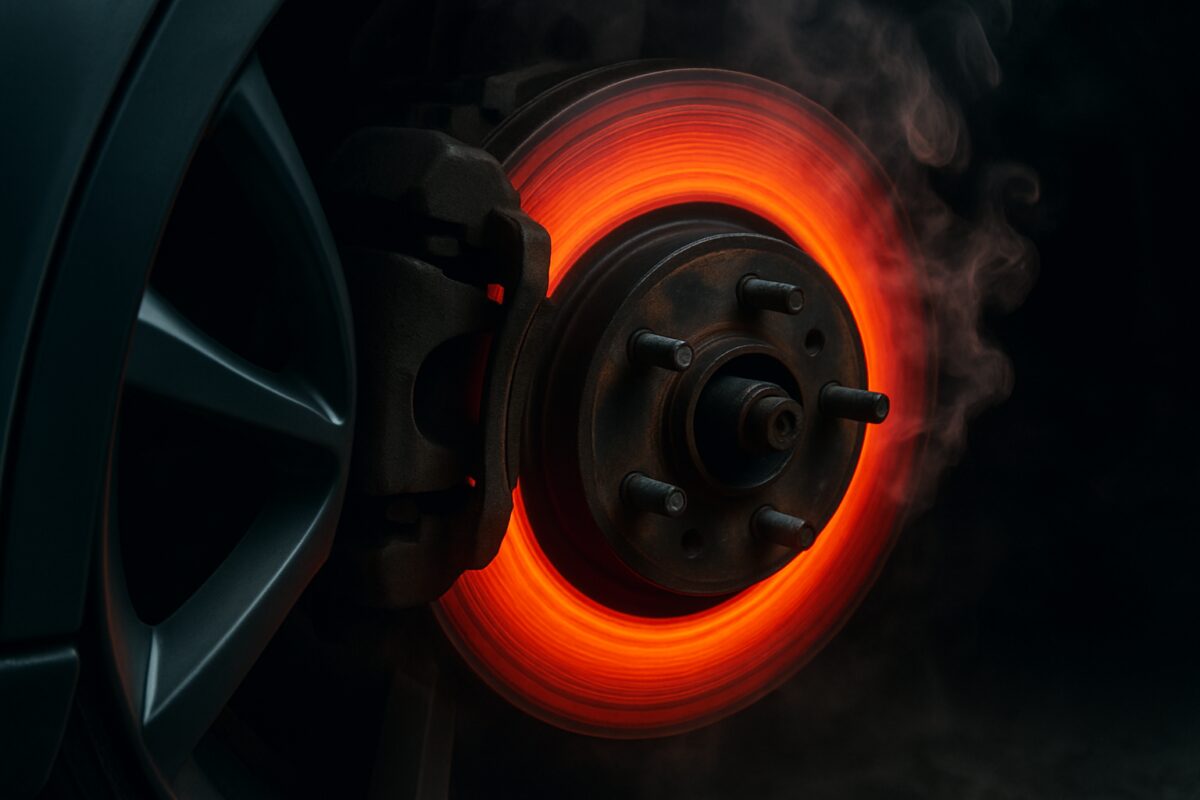
Visual signs include smoke or steam rising from the wheels, particularly after heavy braking. Discoloured brake discs showing blue or purple tinting indicate previous overheating episodes.
Unusual noises such as grinding, squealing, or clicking sounds during braking suggest component damage from excessive heat. These sounds often worsen as temperatures increase.
How to fix the problems
| Problem | Solution | Cost Range |
|---|---|---|
| Worn brake pads | Replace pads and check discs | £80-£200 |
| Warped brake discs | Machine or replace discs | £150-£400 |
| Seized caliper | Service or replace caliper | £100-£300 |
| Contaminated brake fluid | Complete brake fluid change | £50-£100 |
| Blocked cooling ducts | Clean air passages | £20-£50 |
Professional tip: Always replace brake components in axle pairs to maintain balanced braking performance and prevent uneven heat distribution.
When to see a mechanic
Immediate professional attention is required when brake fade occurs or stopping distances increase noticeably. These symptoms indicate potential brake failure and pose serious safety risks.
Any visible damage to brake components, including cracked discs or severely worn pads, requires prompt inspection. Continuing to drive with damaged brakes can lead to complete system failure.
If unusual noises or burning smells persist after allowing brakes to cool, seek professional diagnosis. These symptoms often indicate internal damage that requires specialist repair.
Our mechanics at Autopartspro recommend annual brake inspections for high-mileage drivers or those frequently encountering demanding driving conditions. Early detection prevents minor issues developing into expensive major repairs.
Emergency situations require immediate attention regardless of time or location. If brake pedal travel increases suddenly or stopping power diminishes significantly, stop driving and arrange professional assistance immediately.
What causes brake discs to overheat?
Heavy braking generates excessive friction heat, whilst worn components and inadequate cooling systems contribute to temperature buildup beyond safe operating limits.
How do I know if my brakes are overheating?
Burning smells, brake fade, reduced stopping power, and visible smoke from wheels indicate overheating. Blue discoloration on discs shows previous overheating episodes.
Can I drive with overheated brakes?
Never continue driving with overheated brakes. Allow cooling time and seek immediate professional inspection to prevent complete brake system failure and accidents.
How long do overheated brakes take to cool?
Severely overheated brakes typically require 30-60 minutes to cool sufficiently. Allow longer cooling periods after extensive overheating before resuming normal driving.
Will overheated brakes damage my car permanently?
Overheating can warp discs, damage pads, and contaminate brake fluid permanently. Prompt professional inspection determines whether components require replacement or reconditioning.
Final recommendation
Brake overheating represents a serious safety concern that demands immediate attention from UK drivers. Regular maintenance prevents most overheating issues, whilst proper driving techniques reduce stress on brake systems during demanding conditions.
Our automotive specialists at Autopartspro recommend replacing brake components before they reach critical wear limits. Quality replacement parts and professional installation ensure reliable performance under all driving conditions.
Remember that prevention costs significantly less than emergency repairs or accident consequences. Invest in regular brake maintenance and quality components to maintain safe stopping power throughout your vehicle’s service life. When in doubt, always consult qualified professionals for peace of mind on Britain’s roads.

 Loading...