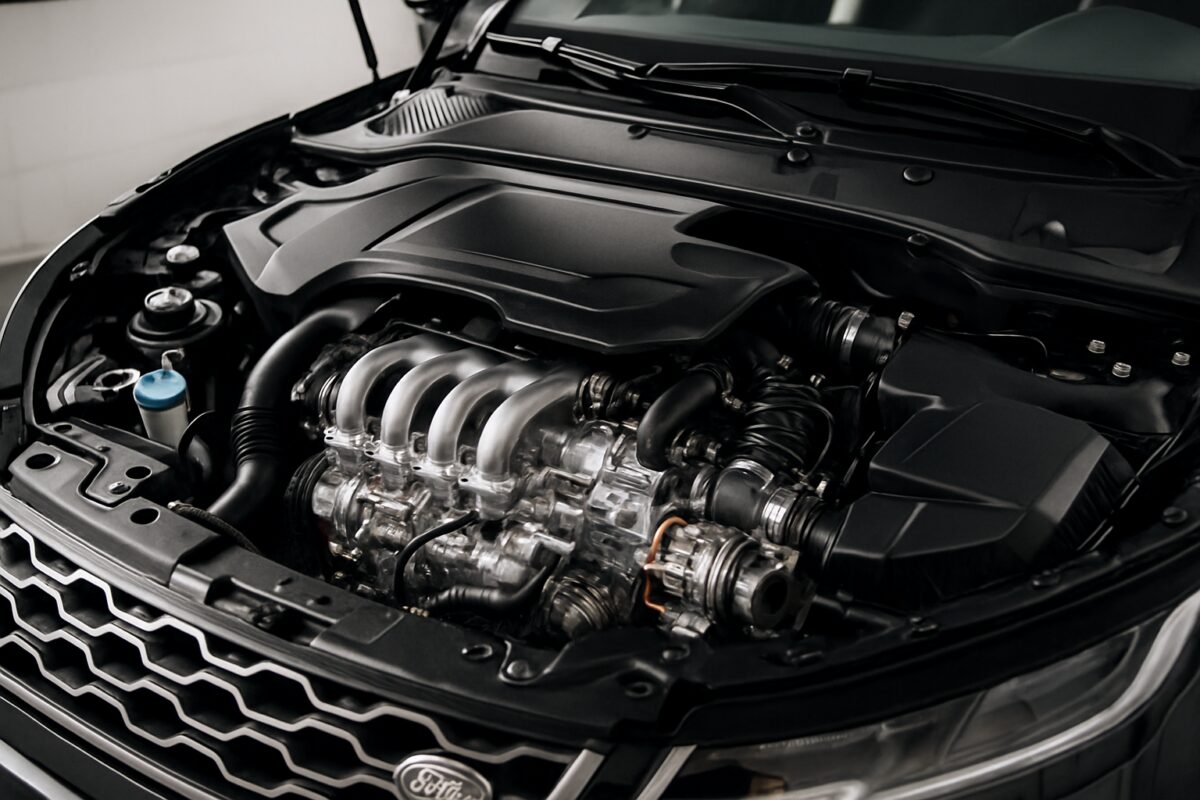
The Land Rover Range Rover Evoque stands as a premium compact SUV that bridges luxury and practicality in the competitive crossover segment. The engine choice dramatically influences the Evoque’s character, affecting everything from fuel economy to off-road capability. Available powertrains span from efficient diesel units to mild hybrid petrol options, with outputs ranging from 150 to 300 horsepower and torque figures reaching up to 550 Nm across the lineup.
Comparison table of all engines
| Engine | Power output | Torque | Fuel consumption | Reliability |
|---|---|---|---|---|
| 2.0 D150 | 150 PS | 380 Nm | 5.4-6.1 L/100km | Good |
| 2.0 D180 | 180 PS | 430 Nm | 5.6-6.3 L/100km | Good |
| 2.0 D200 | 204 PS | 430 Nm | 5.8-6.4 L/100km | Very Good |
| 2.0 P250 | 249 PS | 365 Nm | 7.8-8.5 L/100km | Good |
| 2.0 P300 | 300 PS | 400 Nm | 8.2-9.1 L/100km | Good |
Engine #1 overview
The 2.0 D150 represents the entry-level diesel option in the Evoque range. This 2.0-litre inline-four turbocharged diesel engine features a single turbocharger configuration and delivers moderate performance figures. The unit employs common rail direct injection technology and meets Euro 6 emissions standards through advanced after-treatment systems including particulate filter and selective catalytic reduction.
Pros
- Excellent fuel economy for daily driving
- Lower purchase price compared to higher variants
- Adequate torque for urban environments
- Proven reliability record
Cons
- Limited power for motorway overtaking
- Slower acceleration compared to petrol alternatives
- Diesel particulate filter requires regular regeneration cycles
Engine #2 overview
The 2.0 D180 diesel engine provides a balanced compromise between efficiency and performance. This turbocharged four-cylinder unit delivers enhanced output whilst maintaining reasonable fuel consumption figures. The engine features advanced fuel injection systems and variable geometry turbocharging to optimise power delivery across the rev range.
Pros
- Strong mid-range torque delivery
- Good fuel economy for its power output
- Responsive throttle characteristics
- Suitable for towing applications
Cons
- Higher maintenance costs than the D150
- Potential turbocharger wear in high-mileage applications
- Requires premium diesel fuel for optimal performance
Engine #3 overview
The 2.0 D200 represents the most refined diesel option in the Evoque lineup. This advanced turbocharged unit incorporates mild hybrid technology with a 48-volt electrical system. The configuration includes an integrated starter-generator that provides additional torque assistance and enables smooth stop-start functionality whilst improving overall efficiency.
Pros
- Excellent refinement and reduced vibration
- Mild hybrid assistance improves fuel efficiency
- Strong performance across all driving conditions
- Advanced emissions control systems
Cons
- Complex electrical systems increase potential repair costs
- Higher initial purchase price
- Requires specialised diagnostic equipment for servicing
Engine #4 overview
The 2.0 P250 petrol engine brings spirited performance to the Evoque range. This turbocharged four-cylinder unit features direct injection and variable valve timing technology. The engine incorporates mild hybrid assistance through a belt-integrated starter generator, providing seamless power delivery and improved fuel economy compared to conventional petrol engines.
Pros
- Smooth and quiet operation
- Responsive acceleration and good power delivery
- Lower maintenance complexity compared to diesel
- No particulate filter regeneration issues
Cons
- Higher fuel consumption than diesel alternatives
- Premium unleaded fuel requirement increases running costs
- Carbon build-up potential on direct injection systems
Engine #5 overview
The flagship 2.0 P300 petrol engine delivers the highest performance in the standard Evoque range. This sophisticated turbocharged unit combines high-pressure direct injection with mild hybrid technology. The 48-volt electrical system supports an integrated starter-generator that provides additional torque and enables advanced stop-start functionality.
Pros
- Exceptional acceleration and power delivery
- Refined operation with minimal noise and vibration
- Advanced hybrid technology improves efficiency
- Excellent for performance-oriented driving
Cons
- Highest fuel consumption in the range
- Premium fuel requirement increases operating costs
- Complex hybrid systems require specialist knowledge for repairs
- Higher insurance premiums due to increased performance
Maintenance cost
| Engine | Recommended Interval | Estimated Cost | Cost per 10000 miles |
|---|---|---|---|
| 2.0 D150 | 15,000 miles | £320-£450 | £213-£300 |
| 2.0 D180 | 15,000 miles | £350-£480 | £233-£320 |
| 2.0 D200 | 15,000 miles | £380-£520 | £253-£347 |
| 2.0 P250 | 12,000 miles | £290-£420 | £242-£350 |
| 2.0 P300 | 12,000 miles | £320-£460 | £267-£383 |
Regular maintenance requirements vary significantly between engine types. Diesel engines typically require longer service intervals but more expensive oil filters and specific lubricants. The mild hybrid systems add complexity to routine servicing, requiring technicians familiar with high-voltage systems.
Our mechanics at AutoPartsPro recommend checking the air filter every 6,000 miles in dusty conditions, as clogged filters significantly reduce engine efficiency and increase fuel consumption across all Evoque variants.
Engine sound and character
The diesel engines produce a characteristic low-frequency rumble at idle, becoming more refined under acceleration. Sound insulation effectively minimises cabin intrusion, though the D150 exhibits slightly more audible diesel clatter than its higher-output siblings. The D200’s mild hybrid system contributes to exceptionally quiet operation during electric-only phases.
Petrol engines deliver a more traditional automotive soundtrack with a refined note under acceleration. The P250 provides a balanced acoustic character suitable for luxury applications, whilst the P300 produces a more assertive exhaust note that complements its enhanced performance credentials. Both petrol variants benefit from active noise cancellation systems.
According to our technical specialists, the mild hybrid engines provide the quietest cabin environment due to their ability to operate in electric mode during low-speed manoeuvres, particularly beneficial in car parks and urban traffic.
Who each engine is best for
| Engine | Best for | Driving style | Annual mileage |
|---|---|---|---|
| 2.0 D150 | Budget-conscious owners | Mainly urban with some motorway | 12,000-20,000 miles |
| 2.0 D180 | Long-distance drivers | Mixed driving with regular motorway use | 15,000-25,000 miles |
| 2.0 D200 | Efficiency enthusiasts | Varied driving with eco-consciousness | 12,000-22,000 miles |
| 2.0 P250 | Daily commuters | Balanced urban and suburban driving | 8,000-15,000 miles |
| 2.0 P300 | Performance enthusiasts | Spirited driving with occasional track days | 6,000-12,000 miles |
The choice between diesel and petrol largely depends on annual mileage and driving patterns. Diesel engines prove most economical for high-mileage users, particularly those covering 15,000+ miles annually. The best motor oil choice varies significantly between engine types, with diesels requiring specific low-SAPS formulations.
Frequently Asked Questions (FAQ)
Which Evoque engine offers the best fuel economy?
The D150 diesel engine provides the most economical fuel consumption, achieving up to 5.4L/100km in optimal conditions with careful driving techniques.
Do mild hybrid Evoque engines require special maintenance procedures?
Yes, mild hybrid systems require technicians trained in high-voltage safety protocols and specific diagnostic equipment for comprehensive servicing and repairs.
What’s the recommended service interval for Evoque diesel engines?
Diesel engines typically require servicing every 15,000 miles or 12 months, whichever occurs first, depending on driving conditions and usage patterns.
Can I use standard engine oil in the P300 petrol engine?
No, the P300 requires specific low-viscosity oils meeting Land Rover’s STJLR.03.5005 specification for optimal performance and warranty compliance.
How reliable are the turbochargers in Evoque engines?
Evoque turbochargers generally demonstrate good reliability when maintained properly, typically lasting 100,000-150,000 miles with regular engine oil changes and quality filtration.
For those interested in comprehensive car maintenance, understanding your Evoque’s specific engine requirements ensures optimal performance and longevity. The oil filter replacement process varies between engine variants, making proper identification crucial for successful DIY maintenance.

 Loading...