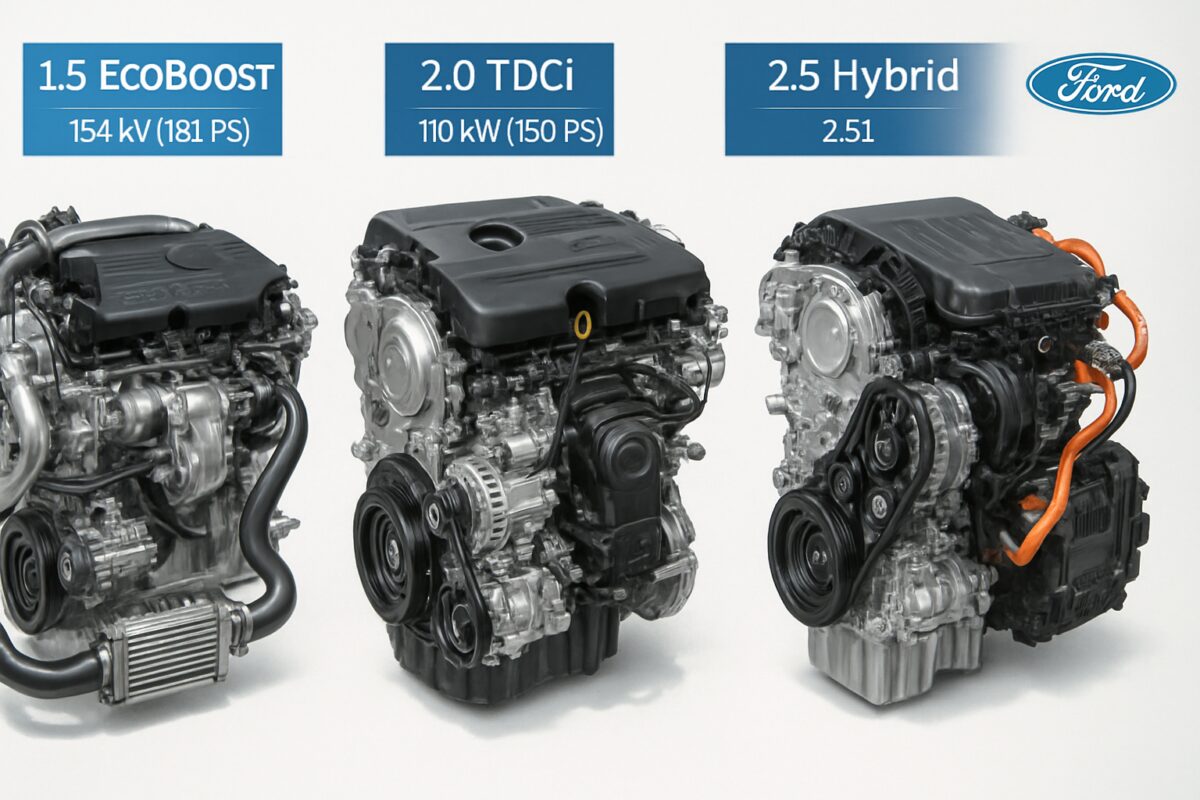
The Ford Mondeo has established itself as a cornerstone of the executive saloon market, delivering a perfect blend of comfort, performance, and reliability for British motorists. The engine lineup plays a crucial role in the Mondeo’s success, offering diverse powertrains to suit various driving preferences and requirements. From efficient turbocharged petrol units producing 160-240 horsepower to robust diesel engines delivering exceptional torque figures of 340-400 Nm, the Mondeo’s engineering excellence shines through each powertrain option.
Comparison table of all engines
| Engine | Power output | Torque | Fuel consumption | Reliability |
|---|---|---|---|---|
| 1.0 EcoBoost | 125 hp | 170 Nm | 47.9 mpg | Good |
| 1.5 EcoBoost | 160-165 hp | 240 Nm | 42.8 mpg | Very Good |
| 2.0 EcoBoost | 240 hp | 345 Nm | 35.3 mpg | Good |
| 1.5 TDCi | 120 hp | 270 Nm | 67.3 mpg | Excellent |
| 2.0 TDCi | 150-210 hp | 340-400 Nm | 56.5-62.8 mpg | Very Good |
| 2.5 Hybrid | 191 hp | 173 Nm | 58.9 mpg | Good |
1.0 EcoBoost overview
The 1.0-litre EcoBoost represents Ford’s commitment to downsizing without sacrificing performance. This three-cylinder turbocharged petrol engine utilises advanced direct injection technology and variable valve timing to maximise efficiency. The compact powerplant features an aluminium construction with an integrated exhaust manifold, reducing weight and improving thermal management. Regular maintenance of the turbocharger components ensures optimal performance throughout the engine’s lifespan.
Pros
- Exceptional fuel economy for city driving
- Low CO2 emissions reducing road tax
- Smooth power delivery despite compact displacement
- Affordable maintenance costs
- Quick warm-up times in cold weather
Cons
- Limited torque output for motorway overtaking
- Characteristic three-cylinder vibration at idle
- Requires premium unleaded fuel for optimal performance
- Belt-driven timing system needs regular inspection
1.5 EcoBoost overview
Ford’s 1.5-litre EcoBoost delivers the perfect balance between performance and efficiency for most Mondeo buyers. This four-cylinder turbocharged unit features advanced cylinder deactivation technology, shutting down two cylinders during light-load conditions. The engine incorporates twin independent variable camshaft timing and a sophisticated cooling system with split cooling circuits. Professional servicing of the engine oil system maintains peak performance levels.
Pros
- Strong mid-range torque for everyday driving
- Cylinder deactivation technology improves fuel economy
- Refined operation with minimal turbo lag
- Proven reliability record across Ford’s global lineup
- Good performance-to-economy ratio
Cons
- Timing belt replacement intervals can be expensive
- Carbon build-up issues on direct injection systems
- Turbocharger wear under aggressive driving conditions
- Requires high-quality synthetic oil for longevity
2.0 EcoBoost overview
The flagship 2.0-litre EcoBoost engine delivers sports car levels of performance in the executive saloon package. This twin-scroll turbocharged powerplant features forged internals and an advanced cooling system capable of handling sustained high-performance driving. The engine utilises port and direct fuel injection systems working in harmony, whilst the sophisticated engine management system optimises performance across all operating conditions.
Pros
- Exceptional power output rivalling naturally aspirated V6 engines
- Impressive torque delivery from low RPM
- Advanced cooling system prevents overheating
- Robust construction handles performance modifications
- Excellent throttle response and acceleration
Cons
- Higher fuel consumption under spirited driving
- Premium components increase maintenance costs
- Complex turbocharging system requires specialist knowledge
- Higher insurance premiums due to performance classification
1.5 TDCi overview
Ford’s 1.5-litre TDCi diesel engine represents the entry point into the Mondeo’s diesel range, offering outstanding fuel economy without compromising drivability. This four-cylinder common rail diesel features a variable geometry turbocharger and advanced exhaust gas recirculation system. The engine incorporates selective catalytic reduction technology to meet stringent emissions standards whilst maintaining the torquey characteristics diesel drivers expect.
Pros
- Outstanding fuel economy for long-distance driving
- Low CO2 emissions benefit company car drivers
- Strong torque output suits motorway cruising
- Proven diesel reliability with proper maintenance
- Excellent resale value retention
Cons
- DPF regeneration issues with short journeys
- AdBlue system requires regular top-ups
- Diesel particulate filter replacement costs
- Higher purchase price compared to petrol variants
2.0 TDCi overview
The 2.0-litre TDCi range spans from efficient 150hp variants to powerful 210hp versions, catering to diverse performance requirements. These common rail diesel engines feature advanced piezo injectors and twin-stage turbocharging in higher output variants. The sophisticated engine management system optimises combustion efficiency whilst the robust construction ensures longevity under heavy-duty usage. Regular replacement of the fuel filter maintains optimal injection system performance.
Pros
- Exceptional torque output across the rev range
- Outstanding fuel economy for executive car class
- Multiple power outputs suit different requirements
- Proven durability in commercial applications
- Strong resale values in used car market
Cons
- Complex emissions systems increase maintenance costs
- Dual-mass flywheel replacement can be expensive
- Injector problems can affect multiple cylinders
- Requires high-quality diesel fuel for optimal performance
2.5 Hybrid overview
Ford’s hybrid powertrain combines a naturally aspirated 2.5-litre Atkinson cycle petrol engine with an electric motor and CVT transmission. The system utilises regenerative braking to charge the hybrid battery whilst the sophisticated energy management system optimises the balance between petrol and electric power. The battery system incorporates advanced thermal management to maintain performance across varying weather conditions.
Pros
- Exceptional fuel economy in urban driving conditions
- Smooth and refined operation with electric assist
- Lower emissions benefit environmental concerns
- Regenerative braking reduces brake wear
- Silent running during electric-only operation
Cons
- CVT transmission feels less engaging than conventional gearbox
- Reduced boot space due to hybrid battery placement
- Higher purchase price than conventional engines
- Battery replacement costs after warranty period
Maintenance cost
| Engine | Recommended Interval | Estimated Cost | Cost per 10,000 miles |
|---|---|---|---|
| 1.0 EcoBoost | 12,500 miles | £180-250 | £144-200 |
| 1.5 EcoBoost | 12,500 miles | £200-280 | £160-224 |
| 2.0 EcoBoost | 10,000 miles | £280-380 | £280-380 |
| 1.5 TDCi | 12,500 miles | £220-300 | £176-240 |
| 2.0 TDCi | 12,500 miles | £250-350 | £200-280 |
| 2.5 Hybrid | 10,000 miles | £200-280 | £200-280 |
According to AutoPartsPro’s experienced mechanics, the key to maintaining Ford Mondeo engines lies in adhering to service intervals whilst using quality components. Our specialists recommend genuine or OEM-equivalent parts to ensure optimal performance and longevity across all powertrain variants.
Engine sound and character
Each Mondeo engine delivers a distinct acoustic signature that reflects its engineering philosophy. The 1.0 EcoBoost produces a characteristically smooth three-cylinder burble, particularly noticeable during cold starts. The 1.5 EcoBoost offers a more conventional four-cylinder note with subtle turbo whistle under acceleration.
Performance-focused drivers appreciate the 2.0 EcoBoost’s aggressive exhaust note, enhanced by the twin-scroll turbocharger’s distinctive spool-up sound. The diesel engines provide the traditional TDCi clatter at idle, transitioning to a smooth cruise note under load. The hybrid system operates almost silently during electric-only phases, creating an eerily quiet driving experience in urban environments.
> Professional Tip: Regular inspection of the exhaust manifold gaskets helps prevent unwanted noise and maintains optimal engine performance across all variants.
Who each engine is best for
| Engine | Daily commuters | Performance enthusiasts | Long-distance drivers | Budget-conscious owners |
|---|---|---|---|---|
| 1.0 EcoBoost | Excellent | Poor | Fair | Excellent |
| 1.5 EcoBoost | Very Good | Good | Good | Good |
| 2.0 EcoBoost | Good | Excellent | Fair | Poor |
| 1.5 TDCi | Good | Poor | Excellent | Very Good |
| 2.0 TDCi | Very Good | Good | Excellent | Good |
| 2.5 Hybrid | Excellent | Fair | Good | Fair |
Understanding your driving patterns helps determine the optimal engine choice for your Mondeo. City dwellers benefit most from the hybrid’s electric assistance, whilst motorway commuters appreciate diesel torque and economy. Performance enthusiasts should prioritise the 2.0 EcoBoost despite higher running costs.
> Expert Advice: Consider your annual mileage carefully when choosing between petrol and diesel variants. Our technicians recommend diesel engines only for drivers covering more than 15,000 miles annually to justify the additional complexity and maintenance requirements.
Frequently Asked Questions (FAQ)
Which Ford Mondeo engine is most reliable?
The 1.5 TDCi diesel engine demonstrates exceptional reliability with proper maintenance. Its simple construction and proven technology result in fewer breakdowns compared to complex hybrid systems.
How often should I replace the timing belt on Mondeo EcoBoost engines?
Ford recommends timing belt replacement every 150,000 miles or 10 years. However, our mechanics suggest inspection every 100,000 miles for early wear detection and prevention.
Can I use regular unleaded fuel in EcoBoost engines?
Whilst EcoBoost engines accept regular unleaded fuel, premium fuel optimises performance and prevents knock. Our specialists recommend premium unleaded for turbocharged variants to maintain engine longevity.
What causes DPF problems in Mondeo diesel engines?
Short journeys prevent proper DPF regeneration cycles. Diesel engines require regular motorway driving to burn accumulated soot particles and maintain the particulate filter effectively.
How much does hybrid battery replacement cost for Mondeo Hybrid?
Hybrid battery replacement typically costs £2,000-3,500 including labour. However, most batteries last 8-10 years with proper maintenance and thermal management system care.

 Loading...