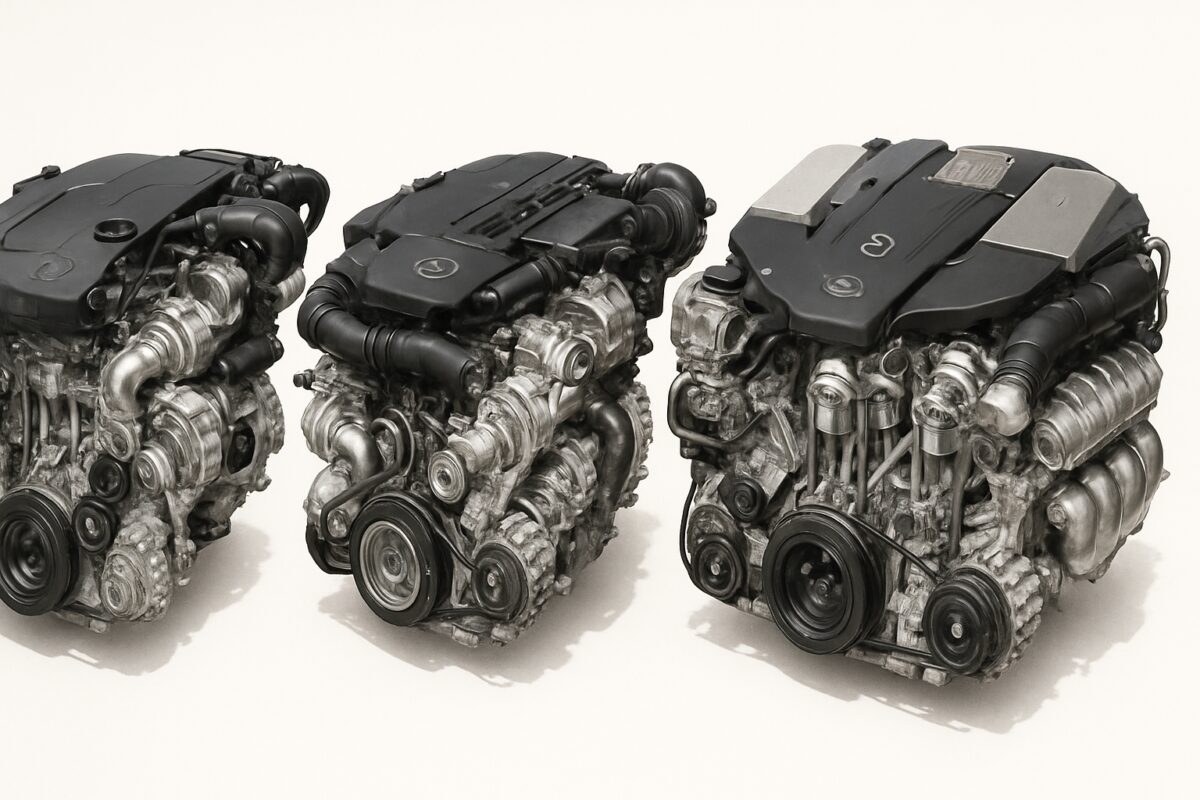
The Mercedes-Benz W204 generation, spanning from 2007 to 2015, represents one of the most successful C-Class iterations in Mercedes history. This executive saloon competed directly with the BMW 3 Series and Audi A4, establishing itself as a benchmark for luxury and engineering excellence. The heart of any W204 lies in its powerplant, which determines not only performance characteristics but also running costs and long-term reliability. Mercedes equipped the W204 with an impressive range of engines, from economical four-cylinder diesels producing 120hp to potent V8 AMG units delivering over 450hp and 620Nm of torque.
Comparison table of all engines
| Engine | Power Output | Torque | Fuel Consumption | Reliability |
|---|---|---|---|---|
| C200 CDI (OM646) | 122hp | 270Nm | 4.9L/100km | Good |
| C220 CDI (OM646) | 170hp | 400Nm | 5.2L/100km | Very Good |
| C250 CDI (OM642) | 204hp | 500Nm | 5.7L/100km | Good |
| C180 CGI (M271) | 156hp | 230Nm | 6.8L/100km | Average |
| C200 CGI (M271) | 184hp | 270Nm | 7.0L/100km | Average |
| C250 (M271) | 204hp | 310Nm | 7.4L/100km | Average |
| C350 (M272) | 272hp | 350Nm | 8.9L/100km | Good |
| C63 AMG (M156) | 457hp | 600Nm | 12.2L/100km | Good |
C200 CDI and C220 CDI diesel engines overview
The OM646 diesel engine family powers the entry-level diesel variants of the W204. This 2.1-litre inline-four common rail diesel features aluminium construction with cast iron cylinder liners. The engine utilises advanced piezo injectors and a variable geometry turbocharger to optimise performance across the rev range. Both variants run on standard diesel fuel with a sophisticated high-pressure fuel injection system operating at up to 1,600 bar.
Pros
- Excellent fuel economy with real-world consumption often below 5.5L/100km
- Strong low-end torque delivery ideal for overtaking and motorway driving
- Proven reliability with many examples exceeding 200,000 miles
- Lower road tax and company car benefit-in-kind rates
- Good resale value retention in the used car market
Cons
- Can feel underpowered compared to petrol alternatives, especially the C200 CDI
- Diesel particulate filter issues on cars used predominantly for short journeys
- Higher noise levels at idle compared to petrol engines
- Injector problems can be expensive to rectify
- Potential EGR valve carbon buildup requiring periodic cleaning
C250 CDI diesel engine overview
The OM642 3.0-litre V6 diesel represents the flagship diesel option for the W204. This sophisticated powerplant features aluminium construction, common rail injection technology, and a variable geometry turbocharger. The engine delivers impressive performance with 204hp and 500Nm of torque, making it competitive with many petrol V6 engines while maintaining superior fuel efficiency.
Pros
- Exceptional torque delivery provides effortless acceleration and overtaking ability
- Refined operation with minimal diesel clatter at idle
- Capable of achieving 40mpg+ in mixed driving conditions
- Strong performance credentials with 0-60mph in under 8 seconds
- Well-suited to high-mileage driving with excellent motorway refinement
Cons
- Higher purchase price compared to four-cylinder diesel alternatives
- More complex engine architecture increases potential maintenance costs
- Particulate filter regeneration issues if not driven regularly on longer journeys
- Higher insurance premiums due to increased performance
- Potential issues with turbocharger wear in high-mileage examples
Petrol engine range overview
Mercedes offered several petrol engines in the W204, ranging from the M271 1.8-litre turbocharged four-cylinder to the mighty M156 6.2-litre V8 AMG unit. The M271 engine family powers the C180 CGI, C200 CGI, and C250 models, utilising direct injection and turbocharging technology. The M272 3.5-litre V6 naturally aspirated engine serves the C350, while the hand-built M156 V8 exclusively powers the C63 AMG variants.
Pros
- Smoother and quieter operation compared to diesel alternatives
- More responsive throttle characteristics and linear power delivery
- Lower particulate emissions and no DPF-related complications
- Generally lower maintenance costs for routine servicing
- Better cold-weather starting characteristics
Cons
- Significantly higher fuel consumption, particularly in urban driving
- M271 engines prone to timing chain and balance shaft issues
- Higher road tax rates due to increased CO2 emissions
- Potential carbon buildup on inlet valves in direct injection engines
- More expensive fuel costs over the vehicle’s lifetime
Maintenance cost
| Engine | Recommended Interval | Estimated Cost | Cost per 10,000 miles |
|---|---|---|---|
| C200/C220 CDI | 15,500 miles | £280-350 | £180-225 |
| C250 CDI | 15,500 miles | £320-400 | £205-260 |
| C180/C200 CGI | 15,500 miles | £250-320 | £160-205 |
| C350 | 15,500 miles | £300-380 | £195-245 |
| C63 AMG | 10,000 miles | £450-600 | £450-600 |
Engine sound and character
Each W204 engine delivers a distinct personality that significantly influences the driving experience. The diesel engines, particularly the OM646 units, exhibit characteristic diesel clatter at idle but become remarkably refined at cruising speeds. The V6 OM642 diesel provides a more sophisticated soundtrack with deeper tones and less intrusive noise levels.
Petrol engines offer a completely different character. The M271 turbocharged four-cylinder produces a pleasant, muted growl under acceleration, though some examples suffer from timing chain rattle on cold starts. The naturally aspirated M272 V6 delivers a smooth, refined note throughout the rev range, embodying Mercedes’ traditional approach to engine refinement.
Our AutoPartsPro mechanics recommend paying particular attention to engine mount condition during inspections, as worn mounts can significantly increase cabin noise and vibration levels across all W204 engine variants.
The M156 AMG engine stands in a league of its own, producing an intoxicating naturally aspirated V8 roar that intensifies with engine speed. This hand-built powerplant delivers an authentic muscle car soundtrack that modern turbocharged engines struggle to replicate.
Who each engine is best for
| Engine | Best For |
|---|---|
| C200 CDI | Budget-conscious owners, high-mileage drivers, company car users |
| C220 CDI | Long-distance drivers, motorway commuters, efficiency-focused buyers |
| C250 CDI | Performance-oriented diesel buyers, executive car users, towing applications |
| C180/C200 CGI | Urban drivers, petrol preference buyers, lower annual mileage users |
| C350 | Performance enthusiasts, smooth power delivery preference, premium buyers |
| C63 AMG | Driving enthusiasts, track day users, collectors, performance-focused owners |
Based on our extensive experience servicing W204 models, AutoPartsPro specialists consistently recommend the C220 CDI as the optimal balance between performance, economy, and long-term reliability for most UK drivers.
Frequently asked questions (FAQ)
Which W204 engine offers the best fuel economy?
The C200 CDI consistently delivers the best fuel economy, achieving up to 50mpg in mixed driving conditions and over 55mpg on motorway journeys.
Are W204 petrol engines reliable long-term?
M272 V6 engines prove generally reliable, but M271 four-cylinder units can suffer timing chain issues around 100,000 miles, requiring expensive repairs.
What’s the most powerful W204 engine available?
The C63 AMG’s M156 6.2-litre V8 produces 457hp and 600Nm, making it the most powerful factory W204 engine option available.
Do W204 diesel engines require AdBlue?
No W204 diesel engines require AdBlue injection. This emission control technology was introduced in later Mercedes generations after 2015.
Which W204 engine provides the best balance of performance and running costs?
The C220 CDI offers exceptional torque delivery with reasonable running costs, making it ideal for most drivers seeking balanced performance and efficiency.
When selecting a W204 engine, consider your driving patterns, performance requirements, and budget constraints. Diesel variants excel in high-mileage scenarios and motorway driving, while petrol engines suit urban environments and lower annual mileages. Regular maintenance with quality oil filters and proper oil change procedures ensures optimal longevity regardless of engine choice. Understanding each powerplant’s characteristics helps make an informed decision that aligns with your specific motoring needs and ensures years of reliable Mercedes-Benz ownership.

 Loading...