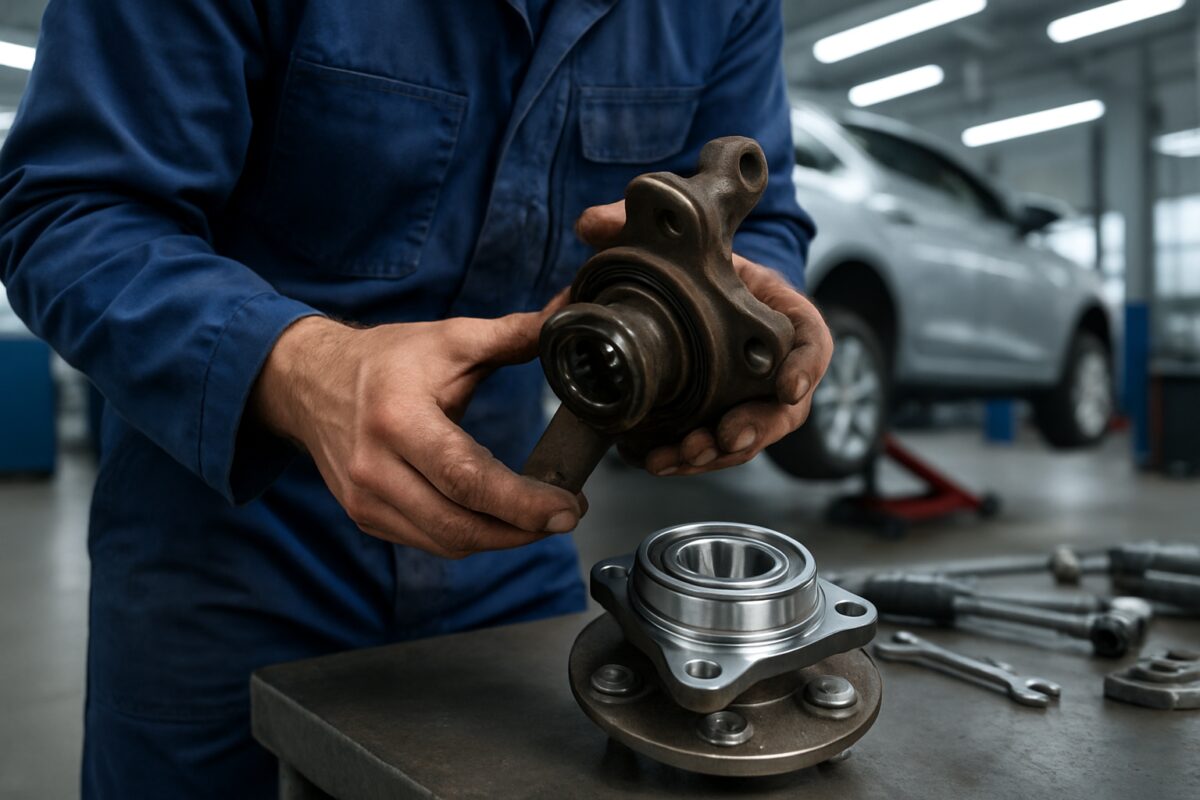
Wheel bearing replacement becomes necessary when you hear grinding noises, feel vibrations through the steering wheel, or notice uneven tyre wear patterns. A faulty wheel bearing typically costs between £150-£400 to replace, depending on your vehicle model and whether you choose OEM or aftermarket parts. Early detection and replacement prevent dangerous wheel detachment and expensive secondary damage to your suspension components.
Understanding when your wheel bearings need attention can save you hundreds of pounds in repair costs. These critical components support your vehicle’s weight whilst allowing smooth wheel rotation at all speeds.
What are wheel bearings and how do they work
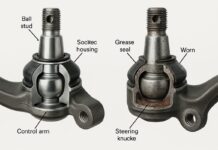
Wheel bearings are precision-engineered components that enable your wheels to rotate smoothly around the axle. Each bearing consists of steel balls or rollers contained within inner and outer races, sealed with grease for lubrication.
These assemblies mount directly to the steering knuckle and support the entire weight of your vehicle. Modern cars typically use sealed hub bearing units that combine the bearing with the wheel hub assembly.
The bearing’s primary function involves reducing friction between moving parts whilst maintaining precise wheel alignment. Without properly functioning bearings, your wheels would seize completely or wobble dangerously at speed.
Types of wheel bearing assemblies
Different vehicle configurations use various bearing designs:
- Sealed hub assemblies: Modern design combining bearing and hub in one unit
- Tapered roller bearings: Traditional design allowing adjustment and repacking with grease
- Ball bearings: Compact design using steel balls for reduced friction
- Magnetic encoded bearings: Include sensors for ABS and stability control systems
Signs your wheel bearings need replacement
According to our specialists at Autopartspro, wheel bearing failure rarely happens suddenly. Instead, symptoms develop gradually over thousands of miles, giving you ample warning before complete failure occurs.
Audible warning signs
The most common symptom involves a distinctive grinding or humming noise that increases with vehicle speed. This sound typically becomes more pronounced when turning in one direction, indicating which side requires attention.
You might also notice:
- Clicking sounds when turning corners
- Growling noises that worsen with acceleration
- Rumbling sounds from the wheel area
- Squealing noises during braking
Physical symptoms you can feel
Worn bearings affect your vehicle’s handling characteristics. You’ll notice vibrations through the steering wheel, particularly at motorway speeds. The car might pull to one side during straight-line driving.
Additionally, excessive wheel play becomes apparent when jacking up the vehicle. Grab the tyre at 12 and 6 o’clock positions and rock it vigorously – any movement indicates bearing wear.
Visual inspection indicators
Look for these visible signs around your wheels:
- Uneven tyre wear patterns, particularly on one edge
- Grease leakage around the wheel hub area
- Rust or corrosion on visible bearing components
- Excessive brake dust accumulation on one wheel
- Cracked or damaged dust covers
“Never ignore wheel bearing symptoms. What starts as a minor humming noise can quickly escalate to complete wheel separation at motorway speeds,” advises our lead mechanic with 25 years’ experience in automotive repair.
Wheel bearing replacement costs in 2026
Replacement costs vary significantly based on several factors. Labour typically accounts for 60-70% of the total expense, whilst parts represent the remainder.
Cost breakdown by vehicle type
| Vehicle Category | Parts Cost | Labour Cost | Total Range |
|---|---|---|---|
| Small hatchback | £40-£80 | £100-£150 | £140-£230 |
| Family saloon | £60-£120 | £120-£180 | £180-£300 |
| Premium/luxury | £150-£300 | £150-£250 | £300-£550 |
| Commercial van | £80-£160 | £130-£200 | £210-£360 |
Factors affecting replacement costs
Several variables influence the final price:
- Vehicle complexity: All-wheel-drive systems require more labour time
- Part availability: Rare or discontinued models cost more
- Location: London garages typically charge 20-30% more than rural areas
- Additional work: Corroded components may need replacement
- Brake system inspection: Often requires brake rotor removal
When to replace wheel bearings
Timing becomes crucial for wheel bearing replacement. Unlike brake pads or filters, bearings don’t have specific service intervals. Instead, replacement depends on mileage, driving conditions, and symptom severity.
Most wheel bearings last between 80,000-120,000 miles under normal conditions. However, aggressive driving, poor road surfaces, or contamination can reduce this significantly.
Emergency replacement scenarios
Immediate replacement becomes necessary when:
- Loud grinding noises occur constantly
- Steering becomes difficult or unpredictable
- Wheel wobbles visibly when stationary
- ABS warning lights illuminate due to sensor damage
| Symptom Severity | Action Required | Time Frame | Risk Level |
|---|---|---|---|
| Slight humming at speed | Monitor condition | 1-2 months | Low |
| Noticeable grinding | Schedule repair | 1-2 weeks | Medium |
| Constant loud noise | Immediate attention | 1-3 days | High |
| Wheel play/wobbling | Stop driving | Immediately | Critical |
Professional replacement vs DIY approach
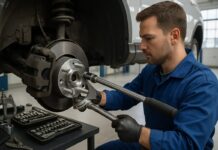
Wheel bearing replacement requires specialised tools and expertise. Our technicians recommend professional installation for several reasons.
Why professional replacement makes sense
Bearing replacement involves pressed-fit components requiring hydraulic presses. Incorrect installation can damage expensive parts or create safety hazards. Many vehicles integrate ABS sensors into bearing assemblies, requiring proper calibration.
Professional garages provide warranties on both parts and labour. They also inspect related components like CV joints and suspension elements during replacement.
Tools required for DIY replacement
If you’re mechanically inclined, these tools become essential:
- Hydraulic bearing press or suitable pullers
- Torque wrench capable of 200+ Nm
- Impact gun for wheel nuts
- Bearing installation tools specific to your vehicle
- Hub puller for stubborn assemblies
However, remember that incorrect installation voids warranties and creates liability issues if components fail subsequently.
Choosing the right replacement bearings
Quality differences between bearing manufacturers significantly impact longevity and performance. Our parts specialists recommend prioritising reputable brands over cheap alternatives.
OEM vs aftermarket considerations
Original equipment manufacturers design bearings specifically for your vehicle’s weight and performance characteristics. Aftermarket alternatives may use different materials or tolerances that affect longevity.
Premium aftermarket brands often match or exceed OEM specifications whilst offering better value. Avoid ultra-cheap options from unknown manufacturers, as these frequently fail prematurely.
Essential specifications to check
Verify these details before purchasing replacement bearings:
- Part number compatibility: Exact match with original equipment
- Seal design: Single or double-sealed depending on application
- Sensor integration: ABS compatibility where applicable
- Load rating: Appropriate for vehicle weight and usage
Additionally, ensure your chosen supplier provides proper documentation and warranties. Quality bearings typically carry 2-3 year guarantees against manufacturing defects.
Preventive maintenance for wheel bearings
Whilst wheel bearings operate in sealed units requiring no regular service, certain practices extend their operational life significantly.
Regular inspections during tyre rotations help identify early warning signs. Check for play, listen for unusual noises, and examine the condition of protective dust covers.
Driving habits that preserve bearings
Avoiding aggressive cornering reduces lateral loads on bearing assemblies. Similarly, maintaining proper tyre pressures prevents uneven loading that accelerates wear patterns.
When possible, avoid deep puddles or driving through flood water. Contamination from water and debris penetrates bearing seals, causing premature failure.
Related components to inspect during replacement
Wheel bearing replacement provides an excellent opportunity to examine related components. Our mechanics always inspect suspension arms and steering components for wear.
The CV joint gaiter requires particular attention, as a split boot allows contamination that damages both joints and bearings. Similarly, worn shock absorbers create additional loads that reduce bearing life.
Understanding wheel bearing maintenance and replacement timing helps maintain vehicle safety whilst controlling repair costs. Early intervention prevents expensive secondary damage and ensures reliable transportation for years to come. Quality replacement parts combined with professional installation provide the best value for money in the long term.
Frequently Asked Questions (FAQ)
How long do wheel bearings last on average?
Most wheel bearings last 80,000-120,000 miles under normal driving conditions, though aggressive driving or poor road surfaces can reduce this lifespan significantly.
Can I drive with a noisy wheel bearing?
Whilst possible for short distances, continuing to drive risks complete bearing failure, potential wheel detachment, and expensive damage to suspension components.
Do wheel bearings need replacing in pairs?
Unlike brake components, wheel bearings don’t require pair replacement. Replace only the failed bearing unless both sides show similar wear symptoms.
What causes premature wheel bearing failure?
Common causes include water contamination, impact damage from potholes, incorrect installation, poor quality parts, and excessive loads from worn suspension components.
How can I tell which wheel bearing is failing?
Listen for noise changes when turning – the sound typically becomes louder when turning away from the failing bearing side.

 Loading...