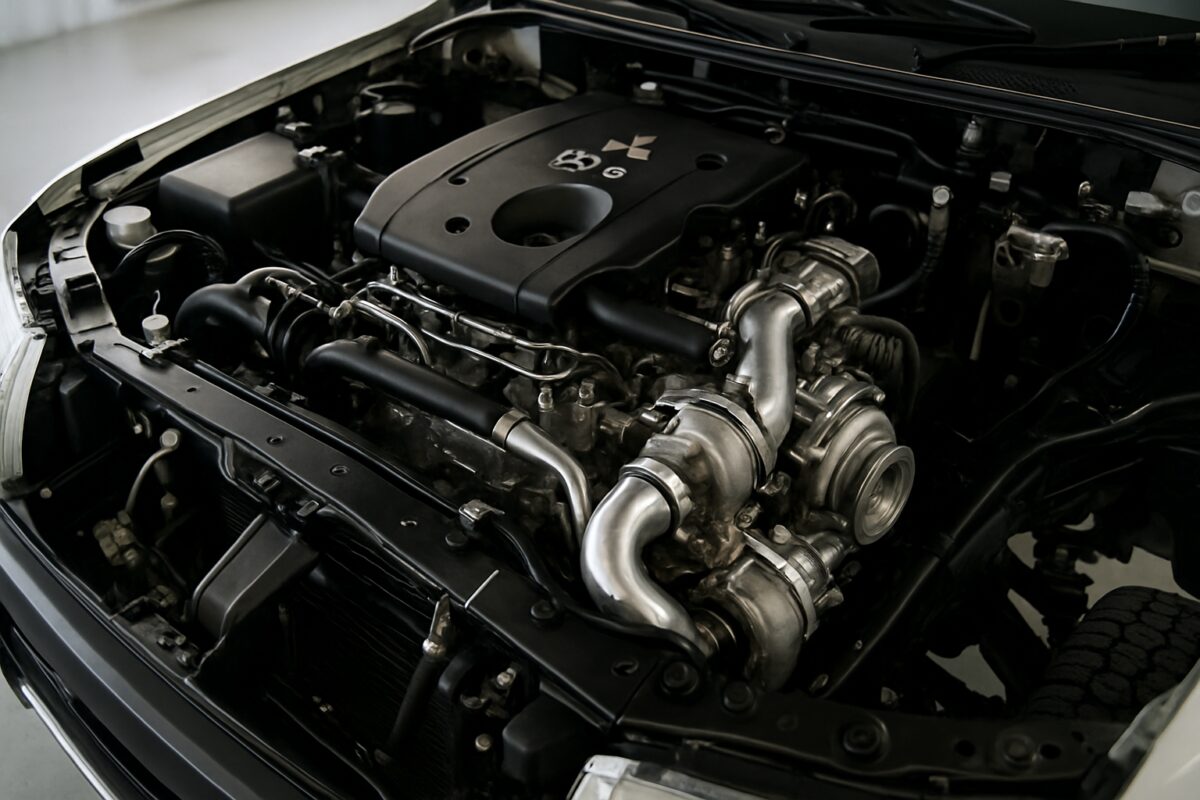
The Mitsubishi Pajero stands as a legendary off-road warrior in the SUV segment, combining robust build quality with exceptional terrain-conquering capabilities. The engine lineup plays a crucial role in defining this vehicle’s character, offering drivers a choice between reliable petrol and efficient diesel powertrains. From the naturally aspirated 3.0-litre V6 petrol producing 178hp to the turbocharged 3.2-litre DI-D diesel delivering 165hp, each unit brings distinct advantages for different driving requirements.
Comparison table of all engines
| Engine | Power output | Torque | Fuel consumption | Reliability |
|---|---|---|---|---|
| 3.0L V6 Petrol | 178 hp | 267 Nm | 12.5 L/100km | Good |
| 3.8L V6 Petrol | 248 hp | 329 Nm | 13.8 L/100km | Excellent |
| 3.2L DI-D Diesel | 165 hp | 441 Nm | 8.9 L/100km | Very Good |
| 2.5L DI-D Diesel | 136 hp | 314 Nm | 8.2 L/100km | Good |
3.0-litre V6 petrol engine overview
The 3.0-litre naturally aspirated V6 petrol engine represents the entry point into Pajero’s powertrain range. This SOHC 24-valve unit employs multi-point fuel injection and runs on regular unleaded petrol. With aluminium construction and electronic throttle control, it delivers smooth power delivery across the rev range.
Pros
- Smooth and refined operation
- Lower initial purchase cost
- Simple maintenance requirements
- Proven reliability record
- Good parts availability
Cons
- Higher fuel consumption than diesel variants
- Limited torque for heavy towing
- Performance feels adequate rather than exciting
- Road tax costs more than diesel equivalents
According to Autopartspro’s senior mechanics, the 3.0L V6 benefits from regular oil filter changes every 7,500 miles to maintain optimal performance.
3.8-litre V6 petrol engine overview
The flagship 3.8-litre SOHC V6 petrol engine delivers significantly more power whilst maintaining the smooth characteristics of its smaller sibling. This naturally aspirated unit features MIVEC (Mitsubishi Innovative Valve timing Electronic Control) technology and runs on regular unleaded fuel with multi-point injection.
Pros
- Strong performance throughout the rev range
- Excellent towing capacity
- Smooth and quiet operation
- MIVEC technology improves efficiency
- Reliable long-term durability
Cons
- Highest fuel consumption in the range
- Premium pricing for maintenance
- Higher road tax bracket
- Some spark plug accessibility issues
3.2-litre DI-D diesel engine overview
The 3.2-litre common-rail direct injection diesel represents the pinnacle of Pajero’s efficiency and torque delivery. This turbocharged intercooled unit features a cast iron block with aluminium head construction. The advanced fuel injection system operates at high pressure for optimal combustion efficiency.
Pros
- Exceptional torque output for towing
- Superior fuel economy
- Strong low-end power delivery
- Lower CO2 emissions
- Excellent for long-distance touring
Cons
- Higher initial purchase price
- More complex maintenance requirements
- Potential DPF issues in urban driving
- Noisier than petrol equivalents
- AdBlue system adds running costs
2.5-litre DI-D diesel engine overview
The compact 2.5-litre turbo diesel serves as the economy-focused option in the Pajero lineup. This four-cylinder common-rail unit delivers adequate performance whilst prioritising fuel efficiency. The intercooled turbocharger helps maintain power output despite the smaller displacement.
Pros
- Best fuel economy in the range
- Lower purchase and insurance costs
- Adequate torque for moderate towing
- Simpler maintenance than larger diesels
- Good urban driving characteristics
Cons
- Limited power for demanding off-road use
- Four-cylinder vibration at idle
- Struggles with heavy loads
- Less refined than V6 options
Autopartspro’s diesel specialists recommend using quality fuel filters to prevent contamination issues in the high-pressure injection system.
Maintenance cost
| Engine | Recommended Interval | Estimated Cost | Cost per 10,000 miles |
|---|---|---|---|
| 3.0L V6 Petrol | 7,500 miles | £180 | £240 |
| 3.8L V6 Petrol | 7,500 miles | £220 | £293 |
| 3.2L DI-D Diesel | 10,000 miles | £280 | £280 |
| 2.5L DI-D Diesel | 10,000 miles | £240 | £240 |
Engine sound and character
Each Pajero engine delivers a distinct auditory experience that reflects its engineering philosophy. The 3.0-litre V6 produces a gentle, subdued rumble that becomes more pronounced under acceleration. Its naturally aspirated nature provides linear power delivery without turbo lag.
The 3.8-litre V6 offers the most satisfying soundtrack, with a deeper, more resonant tone that hints at its substantial displacement. The MIVEC system creates subtle changes in character as valve timing adjusts throughout the rev range.
Diesel variants present a more utilitarian character. The 3.2-litre DI-D produces a distinctive clatter at idle that smooths out under load, whilst the turbocharger adds a subtle whistle during acceleration. The 2.5-litre diesel exhibits typical four-cylinder diesel characteristics with noticeable vibration at low speeds.
For those considering engine cleaning to maintain optimal performance, each powerplant responds well to regular maintenance.
Who each engine is best for
| Engine | Daily commuters | Performance enthusiasts | Long-distance drivers | Budget-conscious owners |
|---|---|---|---|---|
| 3.0L V6 Petrol | Good | Fair | Fair | Excellent |
| 3.8L V6 Petrol | Good | Excellent | Good | Fair |
| 3.2L DI-D Diesel | Excellent | Good | Excellent | Good |
| 2.5L DI-D Diesel | Excellent | Fair | Good | Excellent |
Frequently asked questions (FAQ)
Which Pajero engine offers the best fuel economy?
The 2.5-litre DI-D diesel provides the most economical operation, achieving approximately 8.2 litres per 100 kilometres in mixed driving conditions.
Is the 3.8-litre V6 worth the extra cost over the 3.0-litre?
The 3.8L offers significantly more power and torque, making it worthwhile for towing or performance-focused driving despite higher running costs.
Do Pajero diesel engines require AdBlue?
Later 3.2-litre DI-D engines feature AdBlue systems for emissions control, requiring periodic refills every 15,000-20,000 kilometres depending on driving conditions.
What is the towing capacity difference between engines?
The 3.8L V6 and 3.2L diesel both offer 3,500kg braked towing capacity, whilst smaller engines are limited to 3,000kg.
How reliable are Pajero engines long-term?
With proper maintenance including regular water pump servicing, Pajero engines commonly exceed 200,000 miles without major issues.

 Loading...