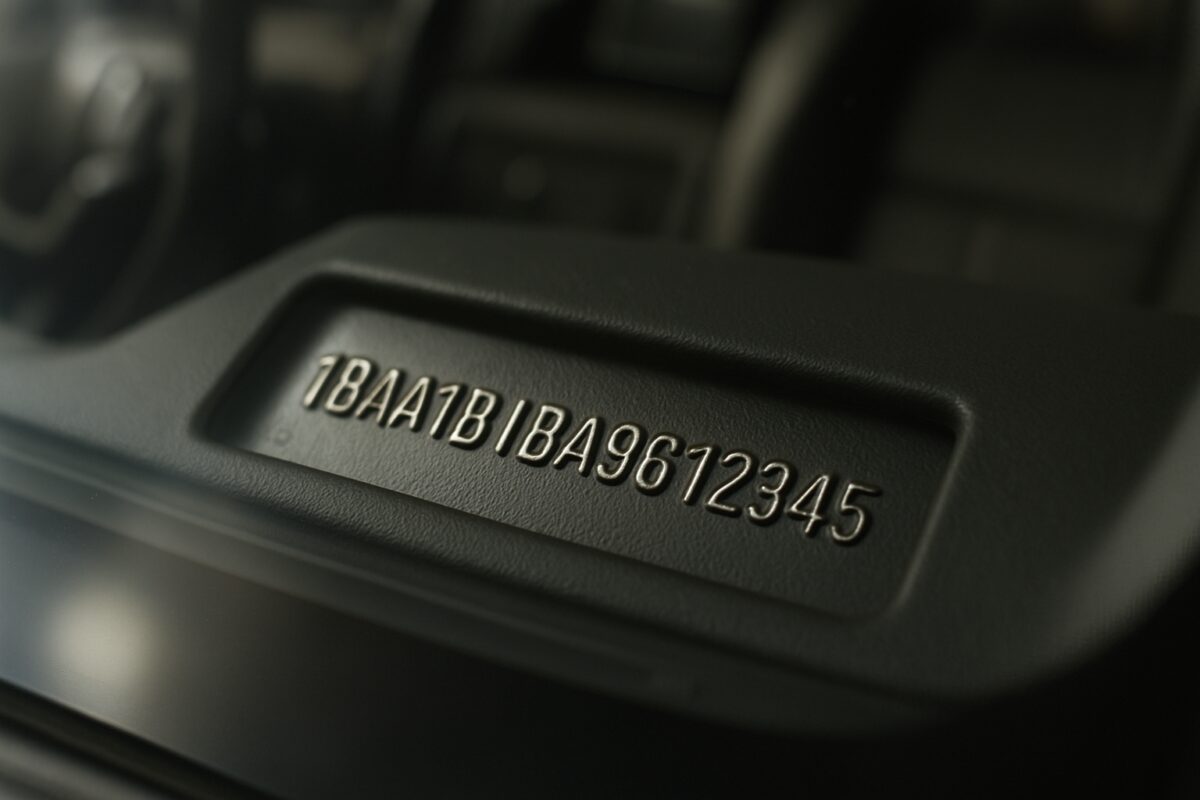
Your car’s paint code by VIN can be found through the Vehicle Identification Number database, typically located on manufacturer websites or decoded through specialist tools. This 17-character VIN contains encoded information about your vehicle’s specifications, including the original factory paint colour code, which is essential for exact colour matching when purchasing bumper replacements or touch-up paint.
Understanding VIN paint codes
The VIN system doesn’t directly display paint codes in plain text. Instead, manufacturers embed this information within the VIN’s structure using specific character positions that correspond to various vehicle options, including exterior colour.
Each manufacturer uses different methods to encode paint information. Ford, for instance, typically places colour data in positions 11-17, whilst BMW integrates paint codes differently within their VIN structure.
Paint codes themselves are usually 2-4 character combinations of letters and numbers. Examples include “UN” for Midnight Black on some Audi models, or “A96A” for Glacier White on certain Mercedes vehicles.
Alternative paint code locations
If VIN decoding proves challenging, several physical locations on your vehicle contain paint code information:
The driver’s door jamb often displays a manufacturer label containing paint code details. This rectangular sticker typically shows various codes, with paint information clearly marked as “Paint”, “Colour”, or “EXT”.
Under the bonnet, manufacturers frequently place identification plates near the strut towers or along the firewall. These metal plates contain comprehensive vehicle data, including paint specifications.
Boot lid areas, particularly around the spare tyre well or rear panel, sometimes house additional identification labels containing colour codes.
Manufacturer-specific VIN decoding methods
Different manufacturers employ unique VIN encoding systems for paint information:
Ford: Uses online VIN lookup tools through their parts catalogue system. Enter your VIN on Ford’s official parts website to access complete colour specifications.
Volkswagen/Audi: Paint codes appear on door jamb labels as “LY” followed by two characters. VIN position 12 sometimes indicates colour family.
BMW: Requires specialist decoding software or dealer consultation. Paint codes typically appear as three-digit numbers like “668” for Jet Black.
Mercedes-Benz: Uses four-character paint codes beginning with numbers. VIN decoding through official channels provides most accurate results.
Professional mechanics recommend using multiple verification methods when identifying paint codes, as VIN decoding alone may not provide complete accuracy for colour matching.
Online VIN decoding tools
Several reliable online platforms offer VIN decoding services:
Manufacturer websites typically provide the most accurate decoding services. Ford, GM, Chrysler, and most European manufacturers offer free VIN lookup tools through their parts departments.
Third-party automotive databases like Carfax or AutoCheck include paint information in their comprehensive vehicle reports, though these services usually require payment.
Professional paint suppliers often maintain VIN decoding databases specifically for colour matching purposes. These tools focus exclusively on paint specifications and provide detailed mixing formulas.
When using online tools, ensure you’re entering the complete 17-character VIN accurately. Even single character errors can produce incorrect results.
Professional verification methods
Paint shops and body repair specialists use advanced methods for colour verification:
Spectrophotometers analyse existing paint samples to determine exact colour formulations. This technology provides highly accurate colour matching regardless of fading or weathering.
Paint mixing systems access comprehensive databases linking VIN numbers to specific paint formulas. These professional-grade tools offer greater accuracy than consumer-level decoding services.
Some facilities maintain physical paint sample libraries organised by VIN ranges, allowing direct visual comparison for colour verification.
Our automotive specialists at AutopartsPro recommend professional colour matching for critical repairs, as home-decoded paint codes may not account for factory variations or regional specifications.
Common paint code format examples
Understanding paint code formats helps identify correct information:
Single letter codes: Often used by older vehicles, such as “B” for black or “W” for white.
Two-character combinations: Modern standard format like “UN” (Brilliant Black) or “LY” (Ibis White).
Four-character codes: Premium manufacturers often use extended codes like “A96A” or “C40E” for specific metallic or pearlescent finishes.
Alphanumeric sequences: Some manufacturers combine letters and numbers in specific patterns, such as “2ZG” or “8E5”.
Special finishes like pearl, metallic, or matte typically include additional descriptors or variant codes to distinguish them from standard solid colours.
VIN decoding limitations
Several factors can complicate paint code identification through VIN numbers:
Aftermarket paint jobs completely invalidate VIN-based colour information. If your vehicle has been repainted, VIN decoding won’t reflect the current colour.
Factory paint variations sometimes occur within the same colour code due to different paint suppliers or production batches. This means identical VINs might have slightly different paint formulations.
Regional market differences can affect paint specifications. European and North American versions of the same model sometimes use different paint systems for identical colour names.
Age-related fading alters paint appearance over time. Original paint codes may not match current surface colour due to UV exposure and weathering.
Tools and equipment needed
Successfully decoding paint information requires minimal equipment:
Basic requirements:
- Reliable internet connection for online decoding
- Notepad for recording codes and information
- Mobile phone camera for documentation
- Torch for examining dark areas
Professional tools:
- VIN barcode scanners for accurate data entry
- Paint thickness gauges for authenticity verification
- Colour matching cards for visual confirmation
- Digital cameras with macro lenses for detailed documentation
Most paint identification tasks require only basic tools and careful attention to detail.
Step-by-step VIN paint code identification
Step 1: Locate your VIN number
Find the 17-character VIN on your dashboard (visible through windscreen), driver’s door jamb, or vehicle registration documents. Ensure you record all characters accurately, distinguishing between similar-looking letters and numbers.
Step 2: Access manufacturer decoding tools
Visit your vehicle manufacturer’s official website and locate their VIN decoding or parts lookup section. Many manufacturers require creating a free account before accessing detailed vehicle information.
Step 3: Enter VIN information
Input your complete VIN into the manufacturer’s system. Double-check each character before submitting, as incorrect entries produce invalid results.
Step 4: Review decoded information
Examine the generated report for paint code information. This data might appear under “Exterior Colour”, “Paint Code”, or “Finish” sections depending on the manufacturer’s system.
Step 5: Verify paint code accuracy
Cross-reference the decoded paint code with physical labels on your vehicle. Check door jambs, under-bonnet areas, and service documentation for confirmation.
Step 6: Document findings
Record the paint code information along with its source for future reference. Include photographs of physical labels and screenshots of online decoding results.
Alternative identification methods
When VIN decoding fails to provide paint information, several backup methods exist:
Paint sample analysis involves removing small paint chips for laboratory examination. Professional paint shops can determine exact colour formulations from these samples, providing mixing instructions for perfect matches.
Manufacturer dealer consultations offer authoritative paint information. Service departments access comprehensive databases unavailable to general consumers, ensuring accurate colour identification.
Original purchase documentation sometimes includes paint code specifications. Check sales contracts, window stickers, or delivery paperwork for colour details.
Previous service records might contain paint information from warranty repairs or touch-up work performed by authorised dealers.
Working with paint suppliers
Professional paint suppliers offer specialised VIN decoding services:
Trade paint shops maintain extensive databases linking VIN numbers to specific colour formulations. These businesses specialise in colour matching and typically provide more detailed information than general automotive websites.
Many suppliers offer colour matching services using digital photography. Send clear images of your vehicle’s paint, and specialists can identify approximate colour codes for further refinement.
Some paint manufacturers provide mobile colour matching services, bringing equipment directly to your vehicle for on-site analysis and code identification.
Common mistakes to avoid
Several errors commonly occur during paint code identification:
Confusing similar characters represents the most frequent mistake. VIN characters like “0” and “O”, or “1” and “I” appear nearly identical but produce completely different decoding results.
Assuming all manufacturer websites provide paint decoding capabilities can lead to frustration. Some brands outsource this information to parts suppliers or dealer networks.
Relying exclusively on colour names without confirming actual paint codes creates matching problems. Colour names like “Black” or “Red” encompass dozens of different paint formulations across model years.
Ignoring model year variations affects accuracy. Paint suppliers sometimes change formulations whilst maintaining the same colour name, making year-specific identification crucial.
Verification and quality control
Ensuring paint code accuracy requires systematic verification:
Multiple source confirmation strengthens confidence in decoded information. Compare VIN results with physical vehicle labels, dealer information, and professional paint supplier databases.
Visual colour comparison helps identify obvious mismatches. If decoded paint codes suggest colours dramatically different from your vehicle’s appearance, investigate further before proceeding.
Small test applications allow colour verification before committing to large paint purchases. Apply small amounts of mixed paint to inconspicuous areas for comparison.
Professional consultation provides final verification for critical applications. For extensive bodywork or valuable vehicles, invest in professional colour analysis to ensure perfect matches.
Frequently asked questions
Can I find my car’s paint code without the VIN number?
Yes, paint codes appear on manufacturer labels inside door jambs, under the bonnet, or in service documentation. These physical locations often provide more accessible paint information than VIN decoding.
Why doesn’t my VIN decoder show paint information?
Some manufacturers don’t include paint codes in publicly accessible VIN databases. Try alternative sources like dealer parts departments or professional paint suppliers for complete information.
Do paint codes change between model years?
Yes, manufacturers frequently modify paint formulations whilst maintaining colour names. Always specify your exact model year when researching paint codes for accurate matching.
Are aftermarket paints accurate to VIN specifications?
Quality aftermarket paint suppliers use the same colour formulations as original manufacturers. However, verify compatibility and quality standards before purchasing for critical applications like complete resprays.
What if my car has been repainted previously?
Previous repainting invalidates VIN-based paint information. Use professional colour matching services or paint sample analysis to determine the current colour specifications accurately.
Understanding paint code identification through VIN numbers provides valuable assistance for vehicle maintenance and restoration projects. Combining multiple verification methods ensures accurate colour matching whilst accessing manufacturer databases through your VIN offers the most reliable starting point. For complete peace of mind, consider consulting professional paint specialists who can verify your findings and provide guaranteed colour matches using advanced analysis equipment and comprehensive database access.

 Loading...