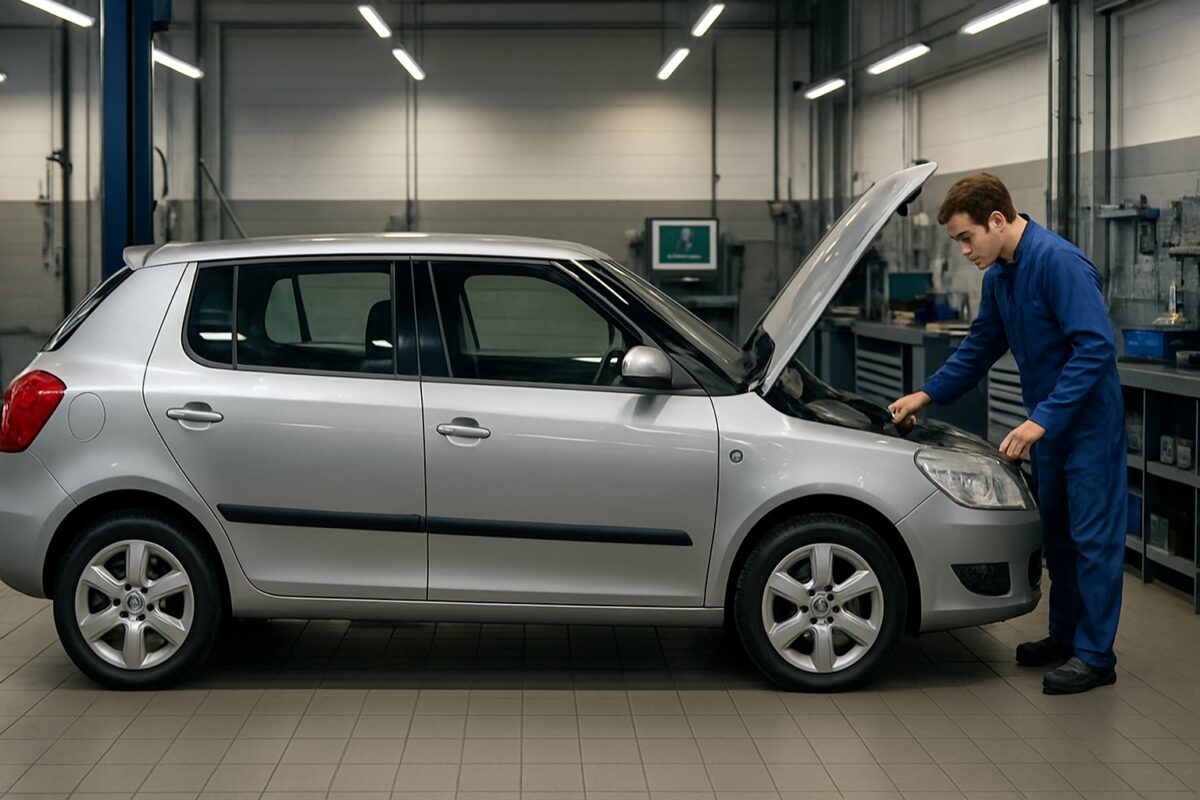
The Skoda Fabia has earned a reputation as a practical, affordable supermini that offers excellent value for money. However, like any vehicle, certain model years have experienced recurring issues that owners should be aware of. Understanding these common problems can help you make informed decisions about purchasing, maintaining, or repairing your Fabia.
Gearbox malfunctions
One of the most significant issues affecting Skoda Fabia models, particularly those manufactured between 2007 and 2014, involves the automated manual transmission system. The DSG (Direct Shift Gearbox) has been prone to various failures that can leave drivers stranded.
The dual-clutch mechanism within the DSG system often experiences premature wear, especially in vehicles with higher mileage. Owners frequently report harsh gear changes, unexpected loss of power, and complete transmission failure. The clutch actuator assembly is particularly vulnerable, with many units requiring replacement before 80,000 miles.
Manual gearboxes in early Fabia models also suffer from synchroniser wear, making gear selection difficult or impossible. The fifth gear is most commonly affected, with drivers experiencing grinding noises and resistance when shifting. Clutch kit replacements are often necessary alongside gearbox repairs, adding to the overall cost.
AutopartsPro mechanics recommend checking transmission fluid levels every 20,000 miles and avoiding aggressive driving to extend DSG lifespan.
Engine timing chain problems
The 1.2 TSI engine, widely used across Fabia model years from 2010 onwards, has developed a notorious reputation for timing chain stretch and failure. This issue typically manifests between 40,000 and 100,000 miles, though some cases occur earlier.
Timing chain tensioner failure is the root cause of most problems. When the tensioner loses pressure, the chain becomes loose, creating a distinctive rattling noise from the engine bay. If left untreated, the stretched chain can jump teeth on the camshaft sprockets, potentially causing catastrophic valve damage.
The timing chain guide rails also deteriorate prematurely, with plastic fragments sometimes found in the oil during routine changes. Complete timing chain kit replacement, including tensioners, guides, and the chain itself, typically costs between £800-£1,500 depending on the extent of damage. Early intervention is crucial, as delayed repairs can result in complete engine rebuild requirements.
Electrical system failures
Modern Fabia models incorporate numerous electronic systems that have proven unreliable over time. The central control unit, responsible for coordinating various vehicle functions, frequently develops software glitches that affect multiple systems simultaneously.
Dashboard warning lights illuminate randomly, even when no actual faults exist. The engine management light is particularly problematic, often triggered by faulty oxygen sensors or mass airflow sensor malfunctions. These false alarms can mask genuine issues and lead to unnecessary diagnostic costs.
The electric power steering system has also shown vulnerability, with complete failure occurring without warning. Drivers report sudden loss of power assistance, making the vehicle difficult to control, especially during parking manoeuvres. The steering control module frequently requires reprogramming or replacement, with costs ranging from £300-£800.
Regular software updates at authorised service centres can prevent many electrical gremlins from developing into serious problems.
Suspension component wear
Fabia suspension systems show accelerated wear patterns, particularly affecting the front suspension components. The shock absorber mounting points are inadequately reinforced, leading to premature failure of both shock absorbers and mounting hardware.
Anti-roll bar links deteriorate rapidly, creating knocking noises over bumps and reducing vehicle stability during cornering. The rubber bushes within the suspension arms perish prematurely, causing alignment issues and uneven tyre wear. Regular inspection of suspension arms and associated components is essential for maintaining safety standards.
Rear suspension problems are less common but still occur, particularly with the shock absorber boot deterioration that allows dirt and moisture to contaminate the damper mechanism. This contamination accelerates internal wear and reduces suspension effectiveness.
Warning signs your car has a problem
Recognising early warning signs can prevent minor issues from becoming major repairs:
- Unusual engine noises, particularly rattling during startup or idle
- Hesitation or jerking during gear changes in DSG-equipped vehicles
- Dashboard warning lights that persist or illuminate intermittently
- Steering wheel vibration or loss of power assistance
- Knocking sounds from suspension during cornering or over bumps
How to fix the problems
| Problem | Solution | Approximate Cost | Difficulty Level |
|---|---|---|---|
| DSG transmission failure | Complete clutch pack replacement | £1,200-£2,500 | Professional only |
| Timing chain stretch | Full timing chain kit replacement | £800-£1,500 | Professional only |
| Electrical control unit fault | Software update or unit replacement | £200-£800 | Professional only |
| Suspension component wear | Individual component replacement | £100-£400 per component | Moderate DIY skill |
| Power steering failure | Control module replacement | £300-£800 | Professional only |
Many suspension repairs can be completed by competent DIY mechanics, but engine and transmission work requires specialist knowledge and equipment. Always use genuine or OEM-equivalent parts to ensure reliability and warranty coverage.
| Maintenance Item | Recommended Interval | Importance |
|---|---|---|
| Engine oil changes | Every 10,000 miles or 12 months | Critical |
| DSG transmission service | Every 40,000 miles | Essential |
| Timing chain inspection | Every 60,000 miles | Important |
| Software updates | Annually or as required | Recommended |
When to see a mechanic
Certain symptoms require immediate professional attention to prevent catastrophic damage. Any rattling noise from the engine bay, particularly during startup, indicates potential timing chain problems that can destroy the engine if ignored.
DSG transmission issues manifest as harsh gear changes, loss of power, or complete inability to engage drive. These symptoms require immediate diagnosis, as continued driving can cause irreparable damage to the transmission internals.
Dashboard warning lights should never be ignored, even if the vehicle appears to run normally. Modern engine management systems detect problems before they become apparent to drivers, and early intervention can save thousands in repair costs.
Suspension problems affecting steering response or vehicle stability require urgent attention for safety reasons. If you notice unusual handling characteristics or hear knocking noises, have the suspension system inspected immediately.
Frequently asked questions
What is the most common problem with Skoda Fabia?
DSG transmission failures are the most frequently reported issue, particularly affecting 2007-2014 models with dual-clutch automated systems.
How much does it cost to replace a Fabia timing chain?
Complete timing chain replacement typically costs between £800-£1,500, depending on the extent of damage and labour rates.
Are Skoda Fabia cars reliable?
Generally reliable, but certain model years experience specific issues with transmissions, timing chains, and electrical systems that require attention.
How long do Fabia engines last?
With proper maintenance, Fabia engines can exceed 150,000 miles, though timing chain issues may require attention around 80,000 miles.
Is the DSG gearbox worth repairing?
DSG repairs are worthwhile if caught early, but complete failure often makes replacement more economical than reconstruction.
Final recommendation
The Skoda Fabia remains a practical choice for budget-conscious buyers, but potential owners should be aware of the specific issues affecting different model years. Buying a used car requires careful inspection, particularly focusing on transmission operation, engine timing chain condition, and electrical system functionality.
Regular maintenance using quality components from OEM suppliers can prevent many common problems from developing. Our AutopartsPro specialists recommend establishing a relationship with a trusted mechanic who understands Skoda systems and can provide early warning of developing issues. With proper care and attention, a Fabia can provide years of reliable, economical transport despite these known weaknesses.

 Loading...