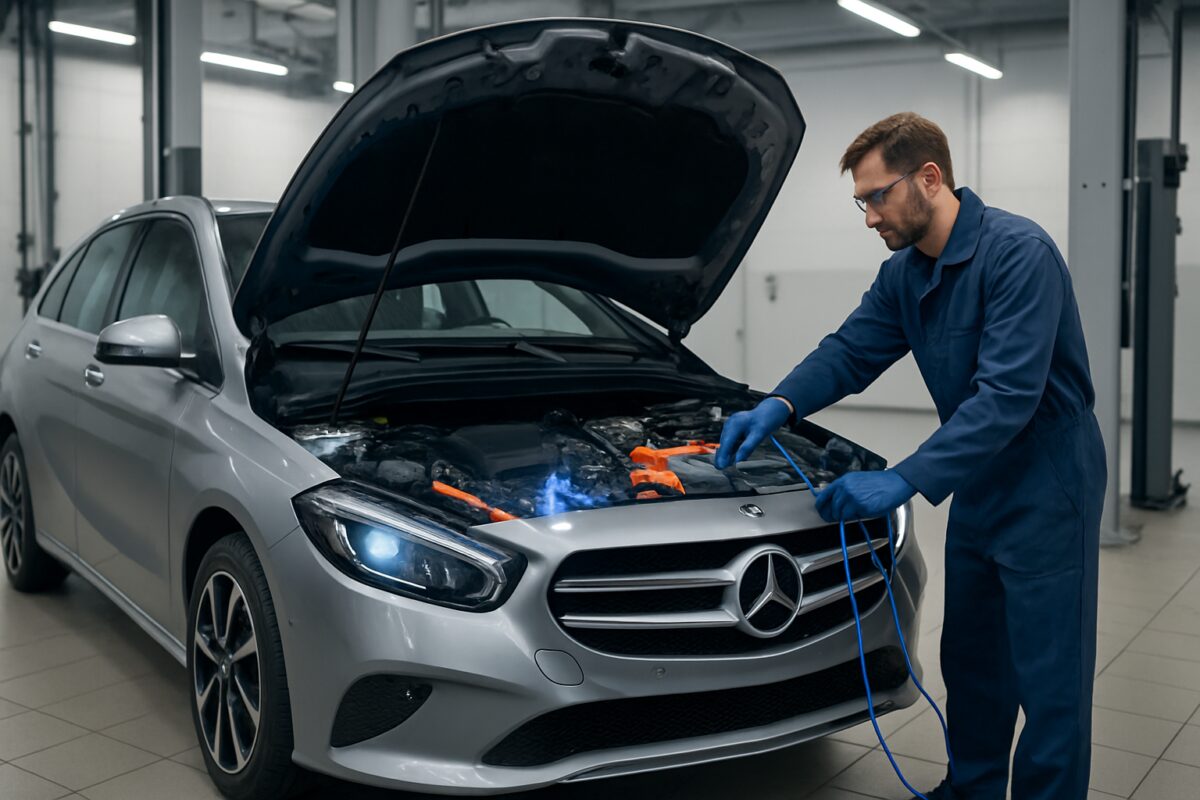
The Mercedes B250e represents an innovative leap into hybrid technology, combining traditional petrol power with electric efficiency. However, like any pioneering vehicle, it comes with specific challenges that owners should understand. Our technical specialists at Autopartspro have identified the most common issues affecting this hybrid model, providing you with comprehensive guidance for maintenance and repairs.
High voltage battery degradation
The lithium-ion battery system in the B250e represents one of the most significant long-term concerns. These high-voltage units typically show capacity reduction after 100,000 miles or eight years of service.
Battery degradation manifests through reduced electric-only range, frequent charging cycles, and warning messages on the dashboard. Temperature extremes accelerate this process, particularly in the UK’s variable climate conditions.
Replacement costs range from £8,000 to £12,000, making this a substantial financial consideration. Our mechanics recommend regular battery health checks and avoiding deep discharge cycles to extend service life.
Always park in shaded areas during summer months to prevent excessive battery heating, which accelerates capacity loss.
Electric motor bearing failures
The electric drive unit contains precision bearings that endure constant high-speed rotation. These components typically fail between 80,000 and 120,000 miles, producing characteristic whining noises during acceleration.
Bearing deterioration creates vibrations throughout the drivetrain, affecting ride quality and potentially damaging adjacent components. Early detection prevents more extensive damage to the motor assembly.
Professional diagnosis requires specialised equipment to isolate bearing noise from other drivetrain sounds. Replacement involves complete motor removal, making this a complex and expensive repair typically costing £3,500 to £5,000.
Charging system malfunctions
The onboard charging unit experiences frequent failures, particularly affecting the AC to DC conversion process. These control units are sensitive to voltage fluctuations and moisture ingress.
Charging problems present as slow charging speeds, failure to accept charge, or error codes displayed on the infotainment system. Some vehicles may refuse to charge altogether, leaving owners stranded with depleted batteries.
Diagnostic procedures require Mercedes-specific software to access hybrid system fault codes. Replacement charger units cost approximately £2,200, excluding labour charges. Regular inspection of charging connections prevents corrosion-related failures.
Hybrid system software glitches
The complex interaction between petrol engine and electric motor relies on sophisticated software algorithms. These systems occasionally develop bugs that affect power delivery and energy management.
Software issues create unpredictable behaviour including sudden power loss, delayed throttle response, and incorrect fuel economy readings. Some vehicles enter “limp mode” without apparent mechanical faults.
Mercedes periodically releases software updates addressing known issues. However, some problems require hardware replacement of the hybrid control module, costing £1,800 to £2,500. Our specialists recommend keeping software current to prevent known issues.
Schedule regular diagnostic scans every 12 months to identify software conflicts before they cause system failures.
Cooling system complications
The B250e employs dual cooling circuits serving both the conventional engine and electric components. This complexity increases potential failure points, particularly affecting the engine radiator and electric motor cooling loops.
Coolant leaks commonly develop at connection points between circuits, causing overheating warnings and reduced performance. The electric motor cooling system requires specific coolant formulations that cannot be substituted with conventional antifreeze.
Cooling system repairs demand careful attention to circuit separation and proper fluid specifications. Mixing coolant types damages seals and pumps throughout the system. Professional service ensures correct fluid types and prevents cross-contamination between circuits.
Warning signs your car has a problem
Recognising early symptoms prevents costly repairs and ensures continued reliability. Monitor these indicators carefully:
- Dashboard warning lights related to hybrid systems
- Reduced electric driving range
- Unusual noises during electric motor operation
- Charging difficulties or extended charging times
- Unexpected switching between power modes
How to fix the problems
| Problem Type | DIY Possible | Professional Required | Estimated Cost |
|---|---|---|---|
| Battery degradation | No | Yes | £8,000-£12,000 |
| Motor bearing failure | No | Yes | £3,500-£5,000 |
| Charging system | Basic checks only | Yes | £2,200-£3,000 |
| Software issues | No | Yes | £150-£2,500 |
| Cooling problems | Visual inspection | Yes | £300-£1,500 |
Most B250e repairs require specialised knowledge and equipment. However, regular maintenance helps prevent major failures:
| Maintenance Item | Frequency | Importance |
|---|---|---|
| Battery health check | Every 12 months | Critical |
| Software updates | As available | High |
| Cooling system inspection | Every 6 months | High |
| Charging port cleaning | Monthly | Medium |
When to see a mechanic
Hybrid vehicle repairs demand specialised expertise that general mechanics may lack. Seek professional assistance immediately when experiencing any hybrid-related warning lights or unusual behaviour.
Mercedes-certified technicians possess the necessary diagnostic equipment and training for B250e repairs. Independent specialists familiar with hybrid technology offer cost-effective alternatives for routine maintenance.
Emergency situations requiring immediate professional attention include complete charging failure, high-voltage system warnings, or sudden power loss. Never attempt repairs on high-voltage components without proper training and safety equipment.
Regular servicing every 12 months maintains warranty coverage and prevents small issues developing into major problems. Our car maintenance guide provides additional preventive care strategies.
Frequently Asked Questions (FAQ)
How long does the B250e battery last?
Typically 8-10 years or 100,000 miles before significant capacity reduction occurs, depending on usage patterns and charging habits.
Can I drive with a faulty charging system?
Yes, but only using petrol engine power. Electric assistance will be unavailable, reducing fuel economy and performance significantly.
Are B250e repairs more expensive than conventional cars?
Yes, hybrid components cost more to replace and require specialised technicians, increasing both parts and labour expenses considerably.
What causes premature battery degradation?
Frequent rapid charging, extreme temperatures, deep discharge cycles, and prolonged storage without charging accelerate battery capacity loss.
Should I buy an extended warranty for B250e?
Consider extended coverage for hybrid components, as replacement costs exceed £8,000 for major failures after standard warranty expires.
Final Recommendation
The Mercedes B250e offers impressive hybrid technology but requires careful consideration of potential issues. Battery degradation represents the most significant long-term expense, whilst software and charging problems affect day-to-day reliability.
Our technical team recommends thorough pre-purchase inspections focusing on battery health and charging system functionality. Budget for higher maintenance costs and ensure access to qualified hybrid specialists in your area.
Despite these challenges, proper maintenance and early problem detection ensure reliable service from this innovative hybrid vehicle. Regular diagnostic checks and prompt attention to warning signs prevent minor issues becoming major expenses. For replacement parts and professional advice, our OEM car parts specialists provide comprehensive support for B250e maintenance requirements.

 Loading...