The Iveco Daily stands as one of Europe’s most trusted commercial vehicles, serving businesses across the UK with reliable transport solutions. This medium-duty van competes in a demanding market segment where engine reliability, fuel efficiency, and maintenance costs directly impact profitability. The powertrain selection significantly influences operational expenses, making engine choice crucial for fleet managers and individual operators. Available engines deliver between 116 and 205 horsepower with torque ranging from 320 to 500 Nm, featuring modern diesel technology and Euro 6 compliance.
Comparison table of all engines
| Engine | Power output | Torque | Fuel consumption | Reliability |
|---|---|---|---|---|
| 2.3 F1A | 116 HP | 320 Nm | 8.2 L/100km | Good |
| 2.3 F1A | 136 HP | 350 Nm | 8.5 L/100km | Good |
| 2.3 F1A | 156 HP | 380 Nm | 8.8 L/100km | Very Good |
| 3.0 F1C | 170 HP | 400 Nm | 9.2 L/100km | Excellent |
| 3.0 F1C | 205 HP | 500 Nm | 9.5 L/100km | Excellent |
2.3 F1A engine overview
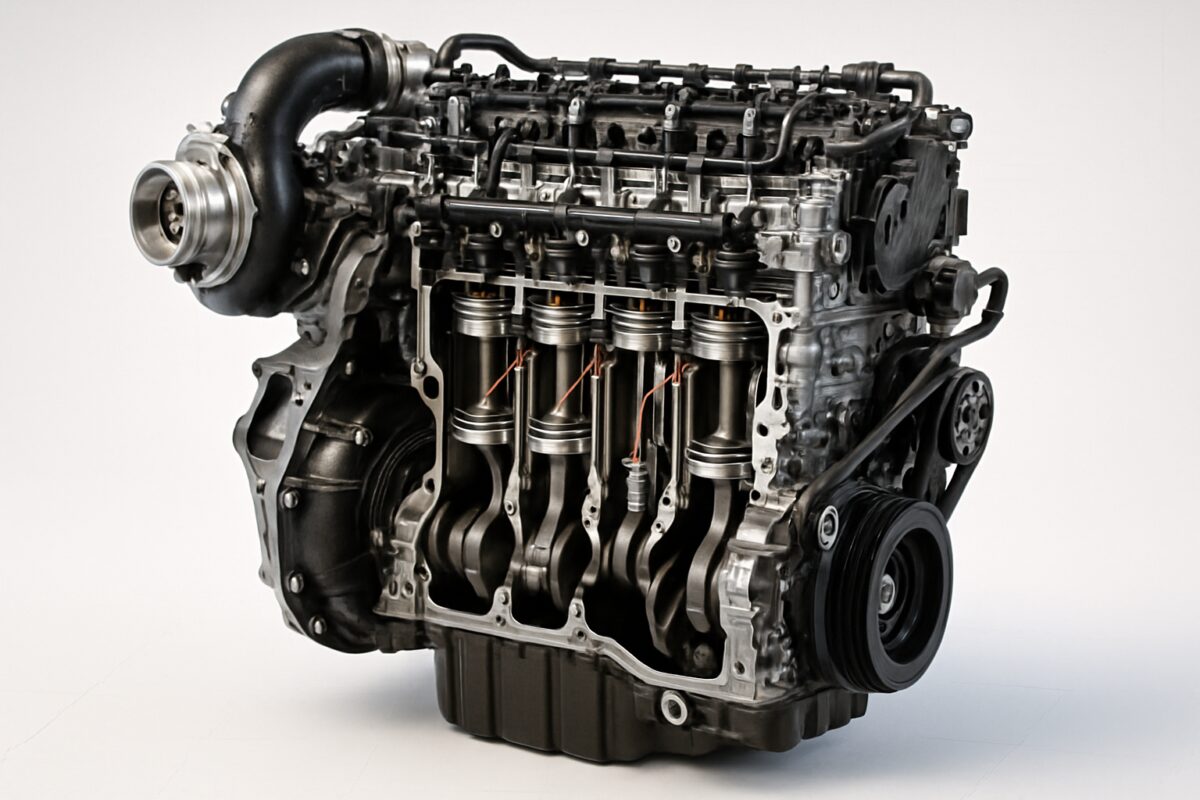
The F1A represents Iveco’s modern four-cylinder diesel engine family, featuring a 2,287cc displacement with inline configuration. This turbocharged unit employs common rail direct injection technology, delivering refined performance across three power variants. The engine utilises variable geometry turbocharging and intercooling to optimise power delivery whilst maintaining Euro 6 emissions compliance.
Built with robust construction, the F1A incorporates advanced materials including cast iron block construction and aluminium cylinder head design. The fuel filter system features multi-stage filtration to protect the high-pressure injection components from contamination.
Pros
- Competitive fuel economy across all power variants
- Smooth power delivery with minimal vibration
- Lower initial purchase cost compared to 3.0-litre options
- Adequate torque for urban and suburban operations
- Simplified maintenance procedures
Cons
- Limited torque for heavy payload applications
- Struggles with steep gradients when fully loaded
- Higher engine speeds required for motorway cruising
- Less refined at idle compared to larger displacement engines
3.0 F1C engine overview
The F1C engine delivers superior performance through its 2,998cc four-cylinder configuration, representing Iveco’s premium diesel offering for the Daily range. This turbocharged powerplant features sophisticated common rail injection with pressures exceeding 2,000 bar, ensuring optimal combustion efficiency and reduced emissions.
Engineering excellence defines the F1C’s construction, incorporating advanced technologies including dual-stage turbocharging in higher output variants. The engine benefits from enhanced cooling systems and robust internal components designed for commercial vehicle applications. Regular oil filter changes remain essential for maintaining peak performance.
Pros
- Exceptional torque output ideal for heavy-duty applications
- Superior motorway refinement and cruising ability
- Excellent pulling power on gradients
- Lower engine speeds for given performance levels
- Enhanced durability for high-mileage operations
Cons
- Higher fuel consumption than 2.3-litre alternatives
- Increased initial purchase cost
- More complex maintenance requirements
- Higher service costs due to larger oil capacity
Maintenance cost
| Engine | Recommended Interval | Estimated Cost | Cost per 10000 miles |
|---|---|---|---|
| 2.3 F1A (116HP) | 20,000 miles | £280 | £140 |
| 2.3 F1A (136HP) | 20,000 miles | £320 | £160 |
| 2.3 F1A (156HP) | 20,000 miles | £350 | £175 |
| 3.0 F1C (170HP) | 20,000 miles | £420 | £210 |
| 3.0 F1C (205HP) | 20,000 miles | £480 | £240 |
Our Autopartspro mechanics recommend checking the air filter every 10,000 miles in dusty conditions, as premature clogging can significantly impact fuel economy and performance.
Engine sound and character
The F1A engines deliver a characteristic diesel note that remains refined during normal operations. At idle, these units exhibit minimal vibration transmission through the chassis, though some diesel clatter remains audible externally. Under acceleration, the turbocharger’s whistle becomes prominent, particularly in the higher-output variants.
F1C engines demonstrate superior acoustic refinement, with noticeably reduced vibration levels throughout the rev range. The larger displacement creates a deeper, more authoritative exhaust note whilst maintaining excellent noise insulation within the cabin. Engine cleaning procedures can help maintain optimal performance and reduce operational noise.
According to our experienced technicians, the 3.0 F1C engine provides the smoothest power delivery, making it ideal for applications where driver comfort and reduced fatigue are priorities.
Who each engine is best for
| Engine | Best for | Application |
|---|---|---|
| 2.3 F1A (116HP) | Urban delivery drivers | Light loads, frequent stops |
| 2.3 F1A (136HP) | Mixed-use operators | Suburban routes with moderate payloads |
| 2.3 F1A (156HP) | Regional distributors | Medium payloads with occasional motorway use |
| 3.0 F1C (170HP) | Long-distance operators | Heavy payloads with motorway cruising |
| 3.0 F1C (205HP) | Maximum payload users | Construction, trade applications |
Frequently asked questions (FAQ)
Which Iveco Daily engine offers the best fuel economy?
The 2.3 F1A 116HP variant delivers optimal fuel efficiency at approximately 8.2 L/100km, making it ideal for cost-conscious operations with lighter payloads.
How often should I service my Iveco Daily engine?
Iveco recommends 20,000-mile service intervals for all Daily engines, though severe duty cycles may require more frequent engine oil changes.
Can the 2.3-litre engine handle maximum payload capacity?
Whilst capable, the 2.3 F1A engines struggle with maximum payloads on gradients. The 3.0 F1C provides superior performance for heavy-duty applications.
What’s the difference between F1A power variants?
All F1A engines share identical displacement but differ in turbocharger mapping and fuel injection parameters, creating distinct power and torque characteristics.
Are Iveco Daily engines reliable for high-mileage use?
Both F1A and F1C engines demonstrate excellent durability when properly maintained, with many examples exceeding 300,000 miles in commercial service.
Understanding your Iveco Daily’s engine characteristics helps optimise operational efficiency and reduce long-term costs. Whether choosing the economical F1A or powerful F1C, regular maintenance using quality components from brake components to general maintenance items ensures reliable service. Consider your specific requirements including payload, route characteristics, and budget constraints when selecting the optimal powertrain for your commercial operations.

 Loading...