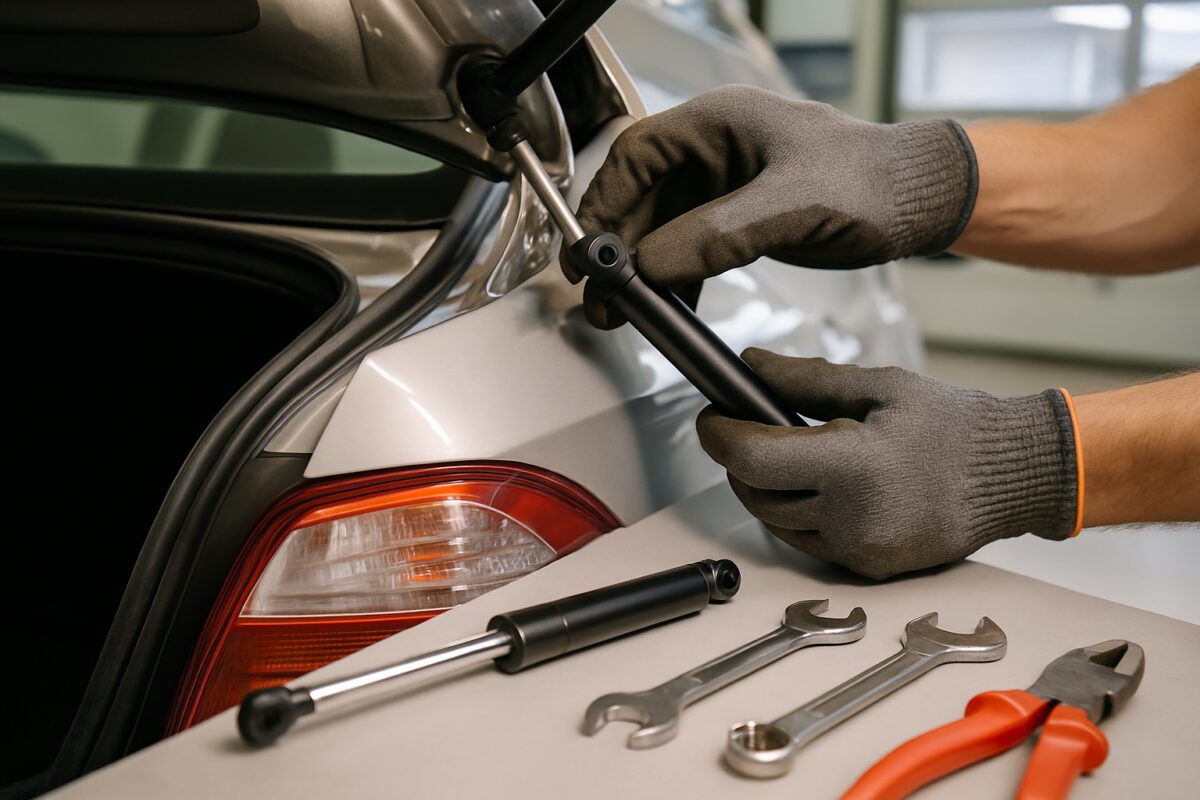
To replace car boot gas struts, you’ll need vehicle-specific replacement struts, basic hand tools, and safety equipment. The process involves safely supporting the boot lid, removing the old struts by disconnecting the ball joints, installing new struts, and testing the operation for proper alignment and smooth function.
Tools & parts required
Before starting this replacement job, gather all necessary components and equipment. Having everything ready saves time and prevents potential safety issues during the work.
Parts needed
- Replacement tailgate struts (vehicle specific)
- New mounting hardware (if required)
- Replacement ball joints (when applicable)
Tools required
- Socket set or spanners
- Flat-head screwdriver
- Pliers or circlip pliers
- Boot lid support rod or helper
- Safety glasses
- Work gloves
Always ensure the replacement struts match your vehicle’s exact specifications, including mounting points and gas pressure ratings. Check your vehicle handbook or parts supplier for the correct part numbers.
Safety precautions
Working with gas struts requires careful attention to safety procedures. The pressurised gas and spring mechanism can cause injury if handled improperly.
Work in a well-ventilated area away from heat sources or naked flames. Wear safety glasses and gloves throughout the procedure. Never attempt to dismantle or repair damaged gas struts – always replace them completely. Ensure the boot lid is properly supported before removing any struts to prevent it falling unexpectedly.
Step-by-step instructions
Step 1: Prepare the vehicle and support the boot lid
Park on level ground and engage the handbrake. Open the boot lid fully and prop it open using a suitable support rod or ask someone to hold it steady. This prevents the lid from falling when you disconnect the struts.
Locate both gas struts and inspect the mounting points. Most struts connect via ball joints at the boot lid and body mounting points.
Step 2: Remove the old struts
Starting with the upper mounting point, carefully disconnect the ball joint. Some have spring clips that need pushing in with a small screwdriver, whilst others use circlips that require pliers to remove.
Support the strut as you disconnect it to prevent it dropping. Move to the lower mounting point and repeat the disconnection process. The old strut should now be completely free.
Step 3: Install the new struts
Take your new replacement strut and connect the lower mounting point first. Ensure the ball joint clicks securely into place and any clips or circlips are properly seated.
Extend the strut slightly and connect the upper mounting point. Check both connections are secure and the strut moves freely without binding.
Repeat this process for the second strut, ensuring both are correctly orientated and positioned.
Step 4: Test the installation
Remove your temporary boot lid support and slowly lower the lid. The new struts should support the weight smoothly without jerking or sticking.
Open and close the boot several times to verify proper operation. The lid should lift easily and hold its position at various angles.
Common mistakes to avoid
Installing struts with incorrect orientation is a frequent error. Most gas struts have a specific mounting direction – the piston rod usually connects to the moving part (boot lid) whilst the cylinder body attaches to the vehicle body.
Never force connections if they don’t fit easily. This often indicates wrong parts or incorrect positioning. Always support the boot lid adequately – a falling lid can cause serious injury or damage.
Avoid mixing old and new struts. Replace both struts simultaneously to ensure balanced operation and prevent uneven wear on bonnet struts or other components.
According to Autopartspro’s experienced mechanics, mismatched gas pressures between old and new struts can cause the boot lid to pull to one side, creating binding and premature wear on hinges and mounting points.
When should you replace gas struts?
Replace gas struts when the boot lid won’t stay open on its own or requires significant effort to lift. Visible oil leaks around the piston seal indicate internal failure and immediate replacement needs.
Typical replacement intervals range from 5-8 years or 50,000-80,000 miles, depending on usage frequency and environmental conditions. Vehicles used in coastal areas or extreme climates may require more frequent replacement due to corrosion and seal degradation.
If your boot lid slams shut unexpectedly or won’t open fully, consider replacing the struts promptly for safety and convenience.
Related maintenance you can do at the same time
While accessing the boot area, inspect the boot lock mechanism and lubricate moving parts. Check the condition of boot seals and weather strips for tears or deterioration.
Examine the light bulbs in the boot area and replace any that are dim or failed. Consider upgrading to LED alternatives for better illumination and longer life.
This is also an ideal time to check tail lights and number plate illumination since the boot is open and easily accessible.
Why won’t my gas struts hold the boot open?
Internal seals have failed, allowing pressurised gas to escape. This is normal wear and requires complete strut replacement rather than repair.
Can I replace just one gas strut?
It’s not recommended. Mismatched gas pressures cause uneven lifting forces, potentially damaging hinges and creating safety hazards during operation.
How do I know which replacement struts to buy?
Check your vehicle registration documents or measure the extended and compressed lengths. Many suppliers offer lookup tools using registration numbers.
Are gas struts dangerous to work with?
When handled properly, they’re safe. Never attempt to dismantle them or expose to heat sources. Always support the boot lid adequately.
How long should new gas struts last?
Quality struts typically last 5-8 years with normal use. Harsh environments or frequent heavy loading may reduce this lifespan significantly.
Replacing gas struts is a straightforward maintenance task that significantly improves boot accessibility and safety. Using correctly specified parts and following proper installation procedures ensures reliable operation for years to come. For optimal results, source your replacement shock absorber components from reputable suppliers who guarantee compatibility and quality standards.

 Loading...