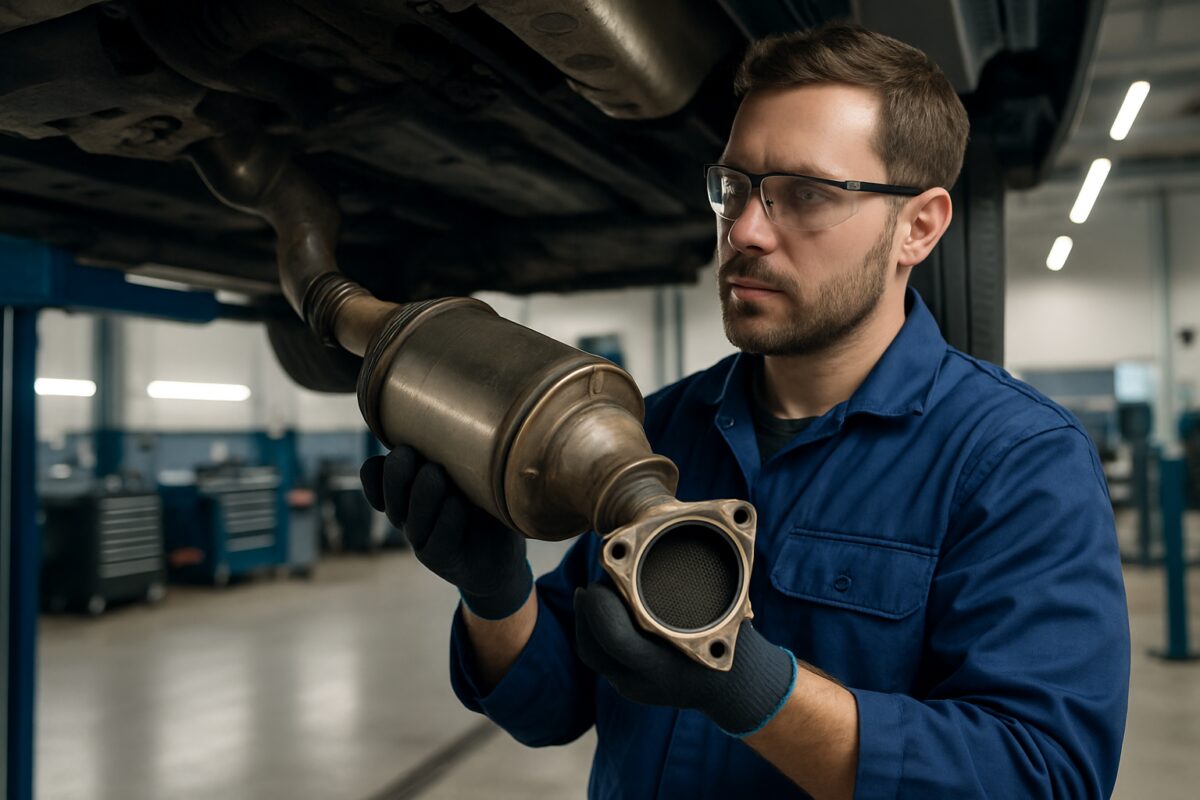
A catalytic converter replacement typically costs between £250-£1,200 in the UK, including parts and labour. The part alone ranges from £150-£800, whilst professional fitting adds £100-£400. The final price depends on your vehicle make, converter type, and whether you choose OEM parts or aftermarket alternatives.
Understanding these costs becomes vital when your exhaust system fails MOT or triggers warning lights. Many motorists face this unexpected expense without proper preparation, leading to rushed decisions and overpaying.
What factors influence catalytic converter replacement costs
Several key elements determine the final price you’ll pay for this crucial emission control component. Vehicle specifications play the primary role, as luxury cars and performance vehicles require more expensive units.
Engine size directly affects pricing structure. Smaller 1.0-1.6 litre engines typically need converters costing £150-£400, whilst larger V6 and V8 units can require parts worth £500-£800. Diesel vehicles often cost more due to additional particulate filters integrated into the system.
According to our AutoPartsPro mechanics, German vehicles like BMW and Audi frequently command premium prices due to stricter emission standards and complex designs. Meanwhile, Japanese manufacturers offer more affordable replacement options without compromising quality.
Part type and quality differences
Three main categories exist in the replacement market:
- OEM (Original Equipment Manufacturer) – Direct factory replacements costing £300-£800
- Universal aftermarket units – Budget options ranging £150-£350
- Vehicle-specific aftermarket – Mid-range alternatives priced £200-£500
Furthermore, the precious metals content significantly impacts pricing. Catalytic converters contain platinum, palladium, and rhodium, with market fluctuations affecting replacement costs throughout the year.
Labour costs and installation complexity
Professional installation typically requires 2-4 hours, depending on accessibility and vehicle design. Most garages charge between £50-£100 per hour, resulting in labour costs of £100-£400.
Some vehicles present particular challenges during replacement. Our specialists report that certain models require exhaust system dismantling or engine bay component removal, increasing labour time substantially.
| Vehicle Type | Labour Time | Typical Cost |
|---|---|---|
| Standard hatchback | 1.5-2.5 hours | £75-£250 |
| Estate/SUV | 2-3.5 hours | £100-£350 |
| Performance/luxury | 3-5 hours | £150-£500 |
Additionally, some installations require new gaskets, clamps, and mounting hardware. These ancillary parts typically add £20-£50 to the total bill but ensure proper sealing and longevity.
Regional price variations across the UK
Location significantly affects labour rates and part availability. London and South East garages often charge 20-30% more than Northern England or Welsh workshops.
Major cities benefit from competitive pricing due to numerous suppliers, whilst rural areas may face limited options and higher delivery costs. Our data shows average regional differences:
- London/South East: £350-£1,200 total cost
- Midlands: £300-£1,000 total cost
- North England: £250-£900 total cost
- Scotland/Wales: £280-£950 total cost
- Northern Ireland: £320-£1,100 total cost
Moreover, urban areas provide better access to specialist exhaust centres offering competitive rates compared to general mechanics who may lack specific expertise.
Signs your catalytic converter needs replacement
Recognition of failure symptoms helps avoid roadside breakdowns and potential engine damage. The most common indicators include reduced acceleration, poor fuel economy, and unusual exhaust smoke.
Check engine lights frequently illuminate when catalytic converters malfunction. Modern vehicles monitor exhaust gas composition continuously, triggering warnings when emission levels exceed acceptable limits.
Rattling noises during acceleration often indicate internal honeycomb structure breakdown. This ceramic material can fragment and block exhaust flow, causing severe performance issues and potential engine damage.
“Never ignore a rattling exhaust system – internal converter damage can send ceramic fragments into your engine, causing thousands of pounds in additional repairs.” – AutoPartsPro Senior Technician
Performance and emission test failures
MOT failures represent the most definitive indication of converter problems. Emission testing reveals excessive pollutant levels that functioning converters should eliminate.
Failed units typically produce carbon monoxide readings above 0.5% and hydrocarbon levels exceeding 200ppm. These measurements indicate incomplete combustion processing within the converter matrix.
Additionally, visual inspection may reveal external damage, rust, or impact marks suggesting theft attempts. Converter theft has increased significantly, making security measures increasingly important.
Cost breakdown by vehicle category
Different vehicle segments require varying investment levels for proper replacement. Understanding these categories helps budget appropriately for this significant maintenance expense.
| Vehicle Category | Part Cost Range | Labour Range | Total Cost |
|---|---|---|---|
| City cars (Corsa, Fiesta) | £150-£300 | £80-£200 | £230-£500 |
| Family cars (Focus, Golf) | £200-£450 | £100-£250 | £300-£700 |
| Executive (BMW 3, Audi A4) | £350-£650 | £150-£350 | £500-£1,000 |
| Luxury/Performance | £500-£800 | £200-£400 | £700-£1,200 |
Premium vehicles often incorporate multiple converters or advanced designs requiring specialist knowledge and tools. These factors contribute to higher overall replacement costs but ensure optimal performance and emission compliance.
Diesel vs petrol converter differences
Diesel engines require different catalyst formulations and often integrate diesel particulate filters (DPF). This combination increases complexity and replacement costs by £100-£300 compared to equivalent petrol units.
Modern diesel systems may include selective catalytic reduction (SCR) technology using AdBlue injection. These sophisticated arrangements demand specialist replacement procedures and calibration following installation.
Petrol engines typically use simpler three-way catalytic converters focusing on carbon monoxide, hydrocarbon, and nitrogen oxide reduction. This straightforward design generally offers lower replacement costs and easier installation procedures.
Money-saving strategies and alternatives
Several approaches can reduce overall replacement expenses without compromising quality or legal compliance. Timing, part selection, and installation methods all influence final costs.
Shopping around proves essential, as prices vary significantly between suppliers and installers. Independent exhaust specialists often provide better value than main dealerships whilst maintaining quality standards.
Consider these cost-reduction strategies:
- Compare quotes from multiple garages and specialists
- Source parts independently and arrange labour-only installation
- Choose vehicle-specific aftermarket units over universal options
- Time replacement during off-peak periods for better labour rates
- Combine with other exhaust system maintenance to reduce labour overlap
However, avoid extremely cheap alternatives that may fail emissions testing or require premature replacement. Quality aftermarket units from reputable manufacturers offer excellent longevity whilst providing substantial savings over OEM parts.
DIY replacement considerations
Experienced mechanics might consider self-installation to eliminate labour costs entirely. This approach requires proper tools, safety equipment, and technical knowledge of exhaust systems.
Essential requirements include vehicle lifting equipment, cutting tools for stubborn fixings, and proper torque specifications for mounting hardware. Additionally, post-installation emission testing ensures legal compliance.
Our technical team strongly advises against DIY attempts on modern vehicles with integrated sensors and complex mounting arrangements. Incorrect installation can trigger persistent warning lights and potential MOT failures.
When to replace vs repair options
Determining whether repair or replacement offers better value depends on converter condition, vehicle age, and failure extent. Minor blockages might respond to cleaning treatments, whilst physical damage necessitates complete replacement.
Professional cleaning services cost £80-£150 and can restore efficiency in converters suffering from carbon buildup or contamination. This approach works best on relatively new units with intact internal structures.
Replacement becomes inevitable when internal honeycomb structures fail or external housing suffers impact damage. These situations present no viable repair options and require immediate action to maintain legal road compliance.
Age and mileage considerations
Vehicles approaching 10 years or 100,000 miles often experience converter degradation through normal wear. High-mileage units may benefit from replacement even before complete failure to avoid inconvenient breakdowns.
Newer vehicles under warranty should always receive OEM replacements to maintain coverage validity. Aftermarket alternatives might void remaining warranty protection despite offering equivalent performance.
Classic or rare vehicles present unique challenges requiring specialist suppliers and potentially custom fabrication. These situations demand expert consultation to ensure proper fit and emission compliance.
Legal requirements and MOT implications
UK law mandates functioning emission control equipment on all vehicles manufactured after specific dates. Removing or tampering with catalytic converters constitutes a criminal offence carrying substantial fines.
MOT testing includes comprehensive emission analysis that failed converters cannot pass. Testing stations must refuse certificates for vehicles exceeding legal pollution limits, preventing legal road use.
Replacement converters must meet British or European standards for your specific vehicle. Universal units require careful selection to ensure proper emission performance and legal compliance.
Remember that catalytic converter replacement represents a significant but necessary investment in vehicle maintenance. Quality parts from reputable suppliers like AutoPartsPro ensure long-term reliability, emission compliance, and value for money. Whether choosing OEM or aftermarket alternatives, prioritise proper installation and post-replacement testing to guarantee optimal performance and avoid costly repeat procedures.
Frequently Asked Questions (FAQ)
How long does a catalytic converter typically last?
Most catalytic converters last 80,000-120,000 miles under normal driving conditions, though city driving and short journeys can reduce lifespan significantly.
Can I drive with a failed catalytic converter?
Driving is possible short-term, but illegal for MOT and may cause engine damage. Seek immediate replacement to avoid penalties.
Will aftermarket converters pass MOT testing?
Quality aftermarket units meeting BS or EU standards will pass MOT emission tests when properly installed and calibrated correctly.
How can I prevent catalytic converter theft?
Park in secure areas, use anti-theft devices, and consider security marking systems to deter thieves targeting valuable converter metals.
Do hybrid vehicles need converter replacement?
Yes, hybrid vehicles use catalytic converters but may experience longer lifespans due to reduced engine running time and lower operating temperatures.

 Loading...