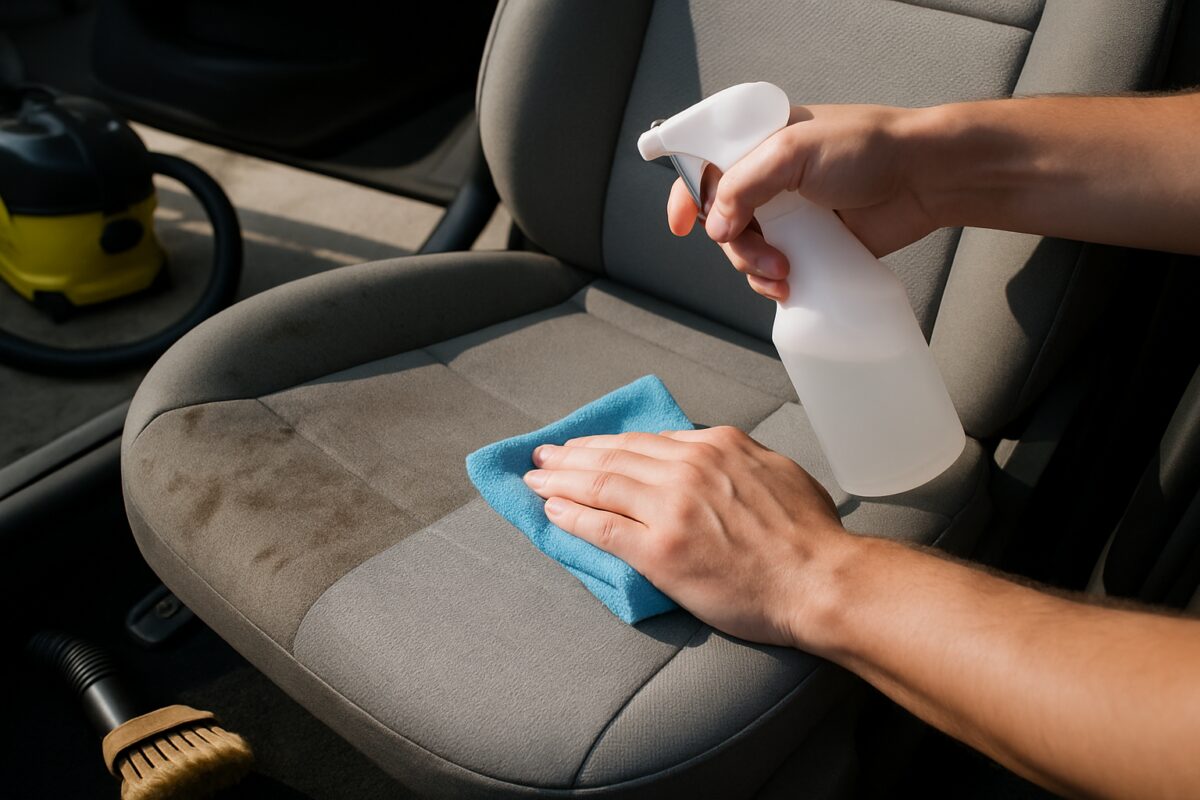
To clean fabric car seats effectively, you’ll need a fabric-specific cleaner, microfibre cloths, a soft-bristled brush, and a wet/dry vacuum. The process involves vacuuming debris, pre-treating stains, applying the cleaning solution, scrubbing gently, and extracting moisture to restore your seats to showroom condition.
Tools & parts required
Having the right equipment makes all the difference when cleaning fabric car seats. Using proper tools prevents damage whilst ensuring thorough cleaning results.
Parts needed:
- Fabric upholstery cleaner (pH-balanced formula)
- Stain pre-treatment solution
- Fabric protector spray
- Microfibre cloths (clean, lint-free)
- Distilled water
Tools required:
- Wet/dry vacuum cleaner
- Soft-bristled detailing brush
- Steam cleaner (optional)
- Spray bottles
- Plastic scraper for debris
- Clean towels
Always test any cleaning product on an inconspicuous area first to check for colour fastness and fabric compatibility.
Safety precautions
Proper safety measures protect both you and your vehicle during the cleaning process. Working in a well-ventilated area prevents inhalation of cleaning fumes.
- Ensure adequate ventilation by opening all doors and windows
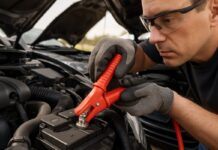
- Disconnect the battery to prevent electrical issues
- Wear protective gloves and eye protection
- Keep cleaning products away from electronic components
- Avoid over-wetting electrical seat controls and airbag sensors
Step-by-step instructions
Following a systematic approach ensures thorough cleaning without damaging your fabric seats. Each step builds upon the previous one for optimal results.
Step 1: Remove loose items and debris
Clear the seats of personal belongings, floor mats, and seat covers. Use the plastic scraper to remove stuck-on debris like chewing gum or dried mud. Check seat crevices for coins, pens, and other small objects.
Step 2: Vacuum thoroughly
Use the wet/dry vacuum with appropriate attachments to remove all loose dirt, crumbs, and pet hair. Pay special attention to seat creases, piping, and areas where the seat meets the backrest. Use the crevice tool for tight spaces.
Step 3: Pre-treat stains
Apply stain pre-treatment solution to visible spots and heavily soiled areas. Allow the product to dwell for the manufacturer’s recommended time, typically 5-10 minutes. This breaks down stubborn stains before the main cleaning process.
Step 4: Apply fabric cleaner
Spray the upholstery cleaner evenly across the seat surface, working in small sections. Avoid over-saturating the fabric, which can cause water damage to foam padding underneath. Use overlapping spray patterns for even coverage.
Step 5: Agitate with soft brush
Using the soft-bristled brush, work the cleaning solution into the fabric using gentle circular motions. This helps lift embedded dirt and grime whilst maintaining the fabric’s texture. Avoid aggressive scrubbing that could damage fibres.
Step 6: Extract moisture and dirt
Use the wet/dry vacuum to extract the cleaning solution and loosened dirt. Work systematically to ensure complete moisture removal. Multiple passes may be necessary for heavily soiled areas.
Step 7: Rinse and final extraction
Lightly mist treated areas with distilled water to remove cleaning residue. Extract this rinse water immediately with the vacuum. Cleaning residue left behind can attract dirt more quickly.
Step 8: Apply fabric protector
Once seats are completely dry, apply fabric protector spray according to manufacturer instructions. This creates a protective barrier against future spills and stains whilst maintaining fabric breathability.
Common mistakes to avoid
Avoiding these frequent errors saves time and prevents potential damage to your vehicle’s interior. Learning from others’ mistakes helps achieve professional results.
- Over-wetting fabric, which can cause mould and mildew growth
- Using household cleaners not designed for automotive fabrics
- Scrubbing too aggressively, damaging fabric fibres
- Skipping the drying process, leading to water spots and odours
- Not testing cleaning products first, risking discolouration
- Forgetting to clean air filter systems that can reintroduce odours
Professional detailers at AutoPartsPro recommend working in temperatures between 15-25°C for optimal cleaning solution performance and drying times.
When should you deep clean fabric seats?
Regular maintenance keeps fabric seats looking their best whilst extending their lifespan. Timing deep cleaning sessions properly prevents permanent staining and odour problems.
Deep clean fabric seats every 3-6 months depending on usage. High-traffic vehicles with children or pets may require monthly attention. Immediate cleaning is essential after spills to prevent permanent staining.
Signs your seats need professional attention include:
- Persistent odours after regular cleaning
- Visible ground-in dirt and stains
- Fabric feels stiff or rough
- Colour appears faded or uneven
Related maintenance you can do at the same time
Maximise your cleaning session efficiency by tackling related interior maintenance tasks. This approach saves time whilst ensuring comprehensive vehicle care.
Consider replacing your cabin filter during seat cleaning sessions. A fresh filter improves air quality and prevents musty odours from recirculating.
Other complementary tasks include:
- Cleaning and conditioning leather trim pieces
- Vacuuming and shampooing floor carpets
- Wiping down plastic and vinyl surfaces
- Cleaning windscreen wipers for better visibility
- Checking light bulbs for proper interior illumination
Frequently asked questions
Can I use washing-up liquid to clean fabric car seats?
Avoid household detergents as they leave residue that attracts dirt. Use pH-balanced automotive upholstery cleaners designed specifically for car interiors.
How long do fabric car seats take to dry?
Properly cleaned seats typically dry within 2-4 hours in good ventilation. Use fans or open windows to accelerate the process.
Will cleaning remove cigarette smoke odours?
Deep cleaning removes surface odours, but smoke residue in foam may require professional ozone treatment or seat replacement for complete elimination.
Can steam cleaning damage fabric car seats?
Steam cleaning is safe when done correctly. Maintain proper distance and temperature to avoid shrinking or discolouring delicate fabrics.
Should I clean seats with the windows up or down?
Always clean with windows down and doors open for maximum ventilation. This prevents moisture buildup and chemical fume concentration inside the vehicle.
Professional fabric seat cleaning transforms your vehicle’s interior whilst protecting your investment. Using proper techniques and quality cleaning products from AutoPartsPro ensures lasting results that maintain both appearance and value. Remember that patience during the drying process prevents water damage and ensures the best possible outcome for your freshly cleaned cabin environment.

 Loading...