To clean car mats effectively, remove them from your vehicle and shake out loose debris. For fabric mats, use a vacuum cleaner followed by carpet cleaner or washing machine cycle. Rubber mats require pressure washing or scrubbing with soapy water. Allow complete drying before reinstalling to prevent mould and odours.
Tools and parts required
Having the right equipment makes cleaning car mats straightforward and thorough. Different mat materials require specific cleaning approaches for optimal results.
Parts needed
- All-purpose cleaner or carpet shampoo
- Rubber gloves
- Microfibre cloths
- Carpet cleaning solution (for fabric mats)
- Disinfectant spray
Tools required
- Vacuum cleaner with attachments
- Pressure washer or garden hose
- Stiff-bristled brush
- Bucket for mixing cleaning solution
- Scrubbing brush or old toothbrush
Always check your mat manufacturer’s care instructions before cleaning, as some materials may have specific requirements or limitations.
Safety precautions
Proper safety measures protect both you and your vehicle during the cleaning process. Work in a well-ventilated area when using cleaning chemicals.
Wear rubber gloves to protect your hands from harsh chemicals and debris. Ensure adequate ventilation when using aerosol cleaners or strong cleaning solutions. Keep pets and children away from the cleaning area until products have dried completely.
Remove mats completely from the vehicle to prevent water damage to electrical components or upholstery. Check weather conditions before starting – avoid cleaning on windy days when debris might blow back onto wet mats.
Step-by-step instructions
Follow these detailed steps for professional-quality results that extend your mats’ lifespan and maintain vehicle hygiene.
Step 1: Remove and inspect the mats
Take all mats out of your vehicle, including rear passenger and boot mats. Shake each mat vigorously to remove loose dirt, leaves, and debris. Inspect for stubborn stains, excessive wear, or damage that might require special attention.
Check the vehicle floor underneath for accumulated debris. This is an excellent opportunity to clean areas that mats normally cover, preventing odours and corrosion.
Step 2: Pre-treat stains and heavy soiling
Apply stain remover or all-purpose cleaner directly to problem areas. For grease stains, sprinkle baking soda and let it absorb oils for 15 minutes before brushing away. Salt stains from winter roads require special attention – use a mixture of white vinegar and water.
Allow pre-treatment products to work for the recommended time. This typically ranges from 5-10 minutes depending on soil level and product instructions.
Step 3: Vacuum thoroughly
Use your vacuum cleaner with appropriate attachments to remove all loose debris. Pay special attention to textured areas where dirt accumulates. For rubber mats, use a brush attachment to avoid scratching the surface.
Vacuum both sides of fabric mats if possible. The backing often collects fine particles that can create odours if left untreated.
Step 4: Deep clean based on mat type
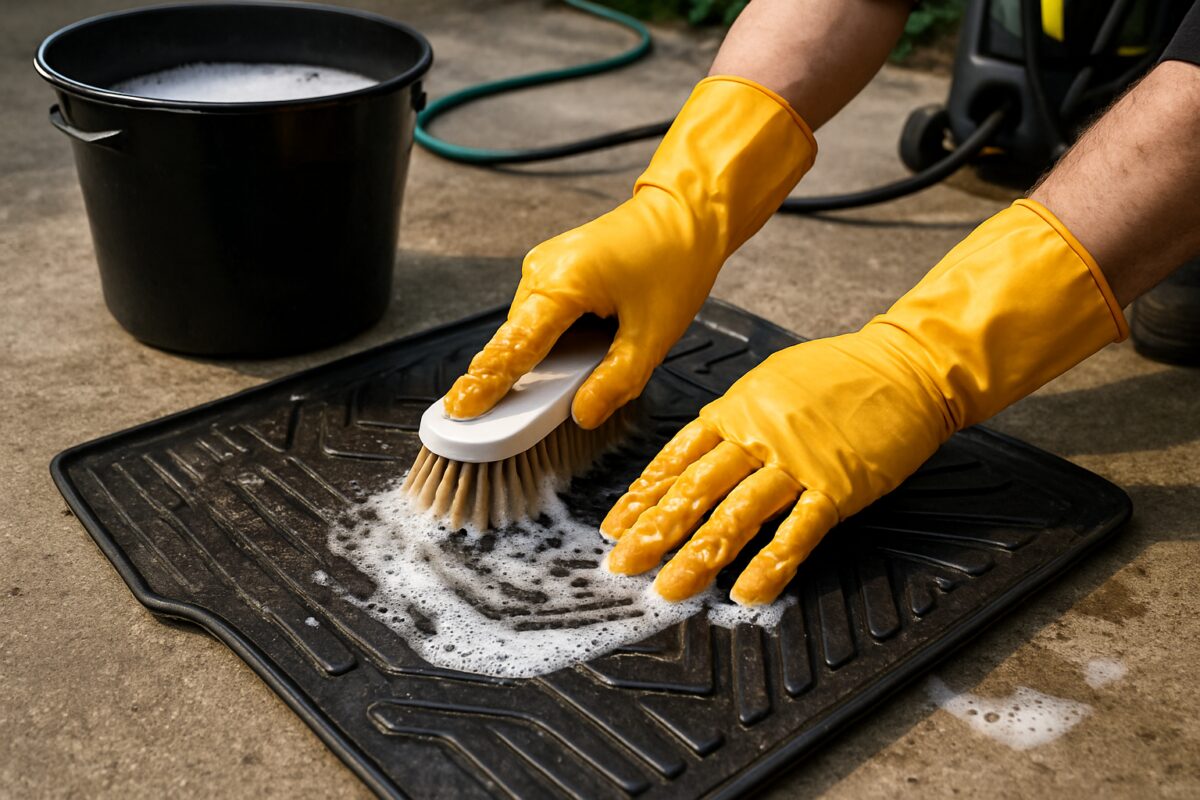
For rubber mats: Use a pressure washer on low setting or garden hose with spray attachment. Apply all-purpose cleaner and scrub with a stiff brush, working in circular motions. Rinse thoroughly with clean water.
For fabric mats: Machine wash if size permits, using cold water and gentle cycle. For larger mats, use carpet cleaning solution applied with a brush. Work the cleaner into fibres systematically, then extract with clean water.
For leather mats: Use specialised leather cleaner applied with microfibre cloth. Avoid soaking and excessive moisture which can damage the material.
Step 5: Rinse and dry completely
Rinse all cleaning products thoroughly with clean water. Inadequate rinsing leaves residues that attract dirt and may cause discolouration. Squeeze excess water from fabric mats without wringing, which can damage fibres.
Hang mats to air dry completely before reinstalling. This typically takes 4-6 hours depending on weather conditions. Ensure both sides are completely dry to prevent mould growth.
Common mistakes to avoid
Several common errors can damage your mats or reduce cleaning effectiveness. Understanding these pitfalls helps achieve professional results every time.
Never use bleach on coloured mats, as this causes permanent discolouration and weakens fibres. Avoid hot water on rubber mats, which can cause warping or shrinkage. Don’t reinstall damp mats, as trapped moisture creates ideal conditions for mould and bacteria growth.
Excessive scrubbing damages mat fibres and backing materials. Use appropriate pressure for the material type. Mixing different cleaning products can create dangerous chemical reactions or reduce effectiveness.
Using the wrong brush type scratches surfaces or fails to clean effectively. Wire brushes damage rubber, while soft brushes won’t remove embedded dirt from textured surfaces.
When should you replace car mats
Regular cleaning extends mat life, but eventual replacement becomes necessary for safety and hygiene reasons. Professional mechanics at AutoPartsPro recommend monitoring several key indicators.
Replace mats when cleaning no longer removes embedded odours, typically after 2-3 years of regular use. Excessive wear that creates holes or thin spots compromises protection and safety. Warped or curled edges interfere with pedal operation and create tripping hazards.
Permanent staining that resists all cleaning attempts indicates material breakdown. Similarly, mats that won’t dry properly after cleaning may have compromised backing materials that retain moisture.
Consider upgrading to higher-quality materials if current mats require frequent replacement. Investment in durable dashboard accessories and floor protection pays dividends in reduced maintenance time and improved vehicle appearance.
Related maintenance you can do at the same time
Mat cleaning provides an excellent opportunity for comprehensive interior maintenance. This approach maximises efficiency and ensures consistent cleanliness throughout your vehicle.
Clean interior surfaces while mats dry. Vacuum seats, door panels, and crevices that accumulate debris. Replace or clean your cabin filter to improve air quality and reduce allergens entering through the ventilation system.
Check and clean windscreen wipers for optimal visibility during wet weather. Inspect rubber door seals for damage or debris that might compromise weatherproofing.
Consider applying protectant products to dashboard and plastic trim pieces. This prevents cracking and fading while creating a barrier against future soiling.
Schedule mat cleaning with seasonal maintenance routines. Spring cleaning addresses winter salt and grime, while autumn preparation removes summer debris and prepares for harsh weather ahead.
Frequently asked questions
Can you put rubber car mats in the washing machine?
Most rubber mats are too large for domestic washing machines and the agitation can damage both the mat and machine. Hand washing or pressure washing provides better results for rubber materials.
How often should you clean car mats?
Clean mats every 2-4 weeks depending on usage and conditions. Heavy use, muddy conditions, or pet transport may require weekly cleaning to maintain hygiene and appearance.
What removes salt stains from car mats?
Mix equal parts white vinegar and warm water to neutralise salt deposits. Apply the solution, let it work for 10 minutes, then scrub gently and rinse thoroughly with clean water.
Can fabric car mats go in the dryer?
Avoid machine drying fabric mats as heat can shrink fibres and damage backing materials. Air drying prevents damage while ensuring complete moisture removal from all layers.
How do you remove pet hair from car mats?
Use a rubber glove or damp cloth to gather pet hair before vacuuming. The static charge helps collect stubborn hairs that vacuum alone might miss from textured surfaces.
Proper mat maintenance protects your vehicle’s interior whilst creating a healthier environment for passengers. Regular cleaning using appropriate techniques and quality air filtration components ensures your vehicle remains fresh and presentable for years to come.

 Loading...