Cleaning your car interior properly requires the right products, tools, and systematic approach. Remove all items, vacuum thoroughly, treat specific materials appropriately, and finish with protective products. Use microfibre cloths, appropriate cleaners, and work from top to bottom for professional results.
Tools & parts required
Getting your car interior spotless starts with having the proper equipment. Professional results depend on using the right tools and products for each surface type.
Cleaning products needed:
- All-purpose interior cleaner
- Leather cleaner and conditioner
- Fabric upholstery cleaner
- Glass cleaner
- Dashboard protectant
- Carpet and upholstery shampoo
Tools required:
- Vacuum cleaner with attachments
- Microfibre cloths (multiple)
- Soft-bristled brushes
- Cotton swabs
- Spray bottles
- Rubber gloves
Always test cleaning products on an inconspicuous area first to prevent damage to delicate interior surfaces.
Safety precautions
Before starting any interior cleaning project, ensure proper ventilation by opening all doors and windows. This prevents inhaling chemical fumes and allows surfaces to dry properly.
Wear protective gloves when handling cleaning chemicals. Keep products away from electronic components and ensure the battery is disconnected if cleaning near electrical connections.
Never saturate electronic components or sensors with liquid cleaners. Work in shade when possible to prevent cleaning products from drying too quickly on surfaces.
Step-by-step instructions
Follow this systematic approach for thorough interior cleaning that delivers professional results every time.
Step 1: Remove all items and floor mats
Clear out everything from your car interior, including personal items, rubbish, and removable accessories. Take out floor mats and shake them thoroughly outside the vehicle.
Check seat pockets, door panels, and storage compartments. Remove child seats if necessary. This step ensures you can access every surface properly.
Step 2: Vacuum thoroughly
Start vacuuming from the top and work downwards. Use appropriate attachments for different surfaces – crevice tools for tight spaces, brush attachments for dashboard areas.
Pay special attention to seat creases, door jambs, and areas around pedals. Vacuum floor mats separately and allow them to dry completely before cleaning.
Step 3: Clean hard surfaces
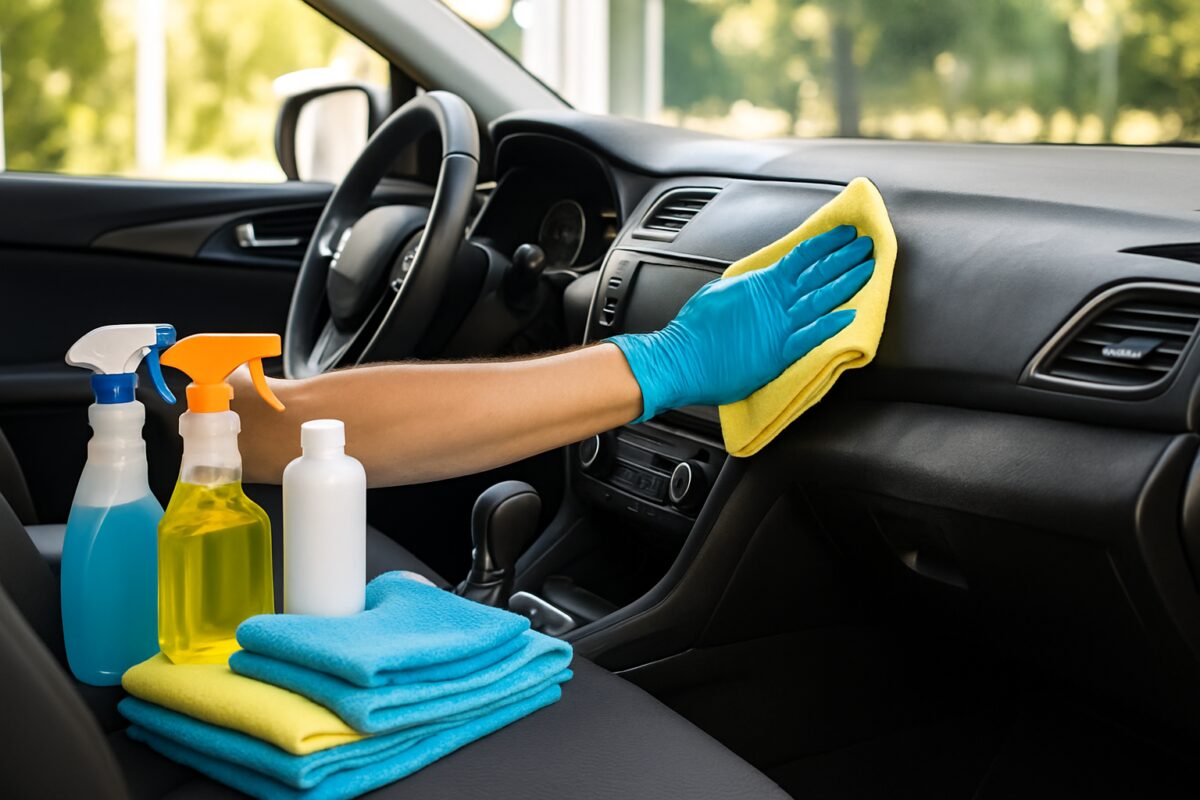
Spray all-purpose cleaner on hard plastic surfaces, including the dashboard, door panels, and centre console. Avoid oversaturating electronic components and switches.
Wipe with clean microfibre cloths, using cotton swabs for detailed areas around vents and window switches. Work systematically to avoid missing any areas.
Step 4: Treat leather surfaces
Apply leather cleaner to a microfibre cloth rather than directly onto the surface. Clean leather seats, steering wheel, and gear knob with gentle circular motions.
Follow with leather conditioner to prevent cracking and maintain suppleness. Allow proper drying time between cleaning and conditioning steps.
Step 5: Clean fabric upholstery
For fabric seats and carpets, apply upholstery cleaner according to manufacturer instructions. Use a soft brush to work the product into fibres gently.
Blot with clean cloths rather than rubbing to avoid spreading stains. For stubborn marks, repeat the process and ensure adequate ventilation for drying.
Step 6: Clean windows and mirrors
Use glass cleaner on interior windows and mirrors, including the rear-view mirror. Clean in circular motions followed by straight lines for streak-free results.
Pay attention to wing mirror glass and ensure no cleaner drips onto electronic components or upholstery.
Common mistakes to avoid
Using household cleaners can damage automotive interior materials. Car interiors require specific pH-balanced products designed for automotive use.
Oversaturating surfaces leads to longer drying times and potential water damage to electronics. Apply products sparingly and build up coverage gradually.
Cleaning in direct sunlight causes products to dry too quickly, leaving residue and streaks. Work in shade or during cooler parts of the day for best results.
Using dirty cloths spreads dirt rather than removing it. Keep multiple clean microfibre cloths available and switch them regularly during the cleaning process.
When should you clean your car interior?
Regular interior cleaning every 4-6 weeks maintains your vehicle’s appearance and value. However, certain situations require immediate attention to prevent permanent damage.
Clean spills immediately to prevent staining and odours. Pet hair and food debris attract insects and create unpleasant smells if left unchecked.
Seasonal deep cleaning is essential, particularly after winter when road salt and moisture can damage interior surfaces. Spring cleaning helps remove accumulated grime and prepares your car for warmer weather.
Before selling or trading your vehicle, thorough interior cleaning can significantly increase its value and appeal to potential buyers.
Related maintenance you can do at the same time
Whilst cleaning your interior, consider replacing your cabin filter to improve air quality and reduce dust accumulation inside the vehicle.
Check and clean air conditioning pipes and vents to ensure optimal performance and prevent musty odours from developing.
Inspect windscreen wipers and replace if necessary. Clean wiper blades improve visibility and prevent streaking on interior windows.
Consider treating door seals and rubber components with appropriate protectants to maintain flexibility and prevent cracking.
Our mechanics at AutoPartsPro recommend cleaning your car interior monthly during peak usage periods to maintain optimal hygiene and component longevity.
Frequently asked questions
How often should I clean my car interior?
Clean your car interior every 4-6 weeks for regular use, or more frequently if you transport pets, children, or eat in the vehicle regularly.
Can I use household cleaners on car interiors?
Avoid household cleaners as they may damage automotive materials. Use products specifically designed for car interiors to prevent discolouration or surface damage.
What’s the best way to remove pet hair from car seats?
Use a rubber glove or pumice stone in circular motions to gather pet hair, then vacuum thoroughly. Fabric softener spray can help loosen stubborn hair.
How do I prevent interior surfaces from fading?
Use UV-protectant products on dashboard and plastic surfaces. Park in shade when possible and consider additional lighting modifications that reduce sun exposure.
Should I clean leather and fabric seats differently?
Yes, leather requires specific pH-balanced cleaners and conditioners, whilst fabric seats need upholstery-specific products. Never use leather cleaner on fabric surfaces.
Maintaining a clean car interior enhances your driving experience and preserves your vehicle’s value over time. Regular cleaning prevents permanent staining and reduces wear on interior components. With the right products and systematic approach, you can achieve professional-quality results that keep your car looking and feeling fresh for years to come.

 Loading...