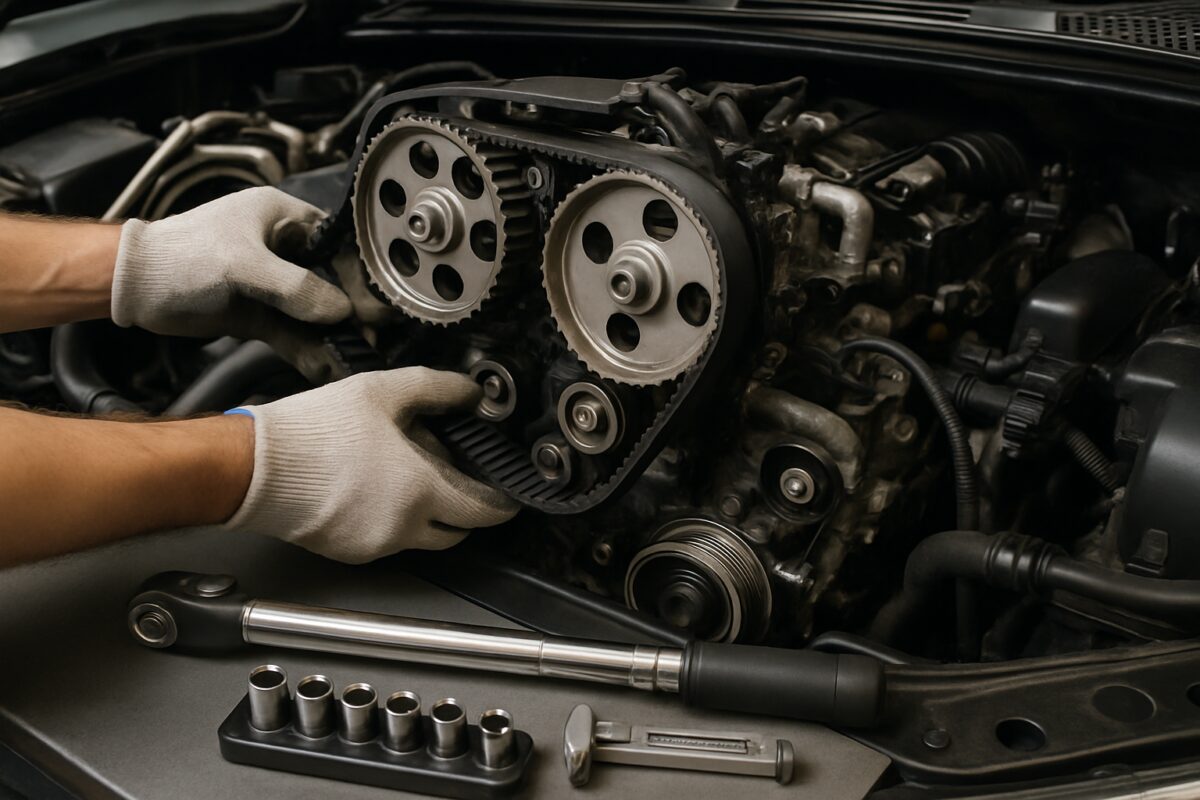
Replacing a timing belt requires careful timing and precision to prevent serious engine damage. The process involves removing the engine covers, aligning timing marks, installing the new belt with proper tension, and verifying correct timing before reassembly. Timing chain vehicles follow similar principles but with different components.
Tools and parts required
Success depends on having the right equipment and components for your specific vehicle. Professional-grade tools ensure accurate timing and prevent costly mistakes.
Parts needed:
- Timing belt (vehicle-specific)
- Timing belt tensioner
- Idler pulleys (if worn)
- Water pump (recommended replacement)
- Engine coolant
- Gaskets and seals
Tools required:
- Socket set with extensions
- Timing light or alignment tools
- Belt tension gauge
- Engine support bracket
- Torque wrench
- Pulley removal tools
- Service manual for timing marks
Safety precautions
Never attempt timing belt replacement on a running engine. Ensure the engine is cold before starting work. Disconnect the battery negative terminal to prevent accidental starter engagement. Work on level ground with proper jack stands supporting the vehicle securely.
Step-by-step instructions
Step 1: Remove engine covers and accessories
Remove the engine cover, air filter housing, and any accessories blocking access to the timing cover. Disconnect the cooling fan and radiator hoses if necessary. Support the engine with an engine support bracket to prevent movement during belt replacement.
Drain the cooling system if water pump replacement is planned. Remove the drive belts and any pulleys blocking access to the timing cover. Document wire positions with photographs before disconnecting electrical connections.
Step 2: Locate and mark timing positions
Remove the timing cover carefully to avoid damaging gasket surfaces. Locate the timing marks on the crankshaft pulley and camshaft gears according to your service manual specifications. Mark these positions with paint or chalk before proceeding.
Turn the engine to Top Dead Centre (TDC) on cylinder one compression stroke. The timing marks should align precisely with reference points shown in the service manual. Never turn the engine backwards during this process.
Pro Tip: Our mechanics at AutoPartsPro always photograph timing mark positions before removal. This provides a visual reference that prevents costly timing errors during reassembly.
Step 3: Remove the old timing belt
Release tension from the timing belt tensioner according to manufacturer specifications. Some tensioners require special tools for proper release. Remove the old belt carefully, noting its routing path around pulleys and guides.
Inspect the tensioner and idler pulleys for wear, roughness, or noise. Replace any questionable components now to prevent premature belt failure. Check the water pump for leakage signs that indicate replacement necessity.
Step 4: Install the new timing belt
Verify that all timing marks remain in correct positions before belt installation. Install the new timing belt following the exact routing path of the original. Ensure the belt teeth engage properly with all pulley teeth without forcing or stretching.
Apply initial tension according to manufacturer specifications using a belt tension gauge. The belt should have minimal slack but not be overtightened, which can cause premature bearing failure.
Pro Tip: AutoPartsPro’s experienced technicians recommend double-checking timing mark alignment after initial belt installation but before applying final tension. This prevents expensive engine damage from incorrect timing.
Step 5: Set final tension and verify timing
Apply final belt tension according to manufacturer torque specifications using a calibrated torque wrench. Turn the engine through two complete revolutions manually to settle the belt and verify timing mark alignment.
Recheck all timing marks after rotation. If marks don’t align perfectly, remove the belt and start again. Install timing covers with new gaskets and reconnect all previously disconnected components.
Common mistakes to avoid
Installing the belt with incorrect timing marks is the most serious error that can cause catastrophic valve damage. Always verify timing marks multiple times throughout the process. Rushing this critical step leads to expensive engine rebuilds.
Reusing old tensioners and idler pulleys often causes premature belt failure. These components wear at similar rates to the belt and should be replaced together. Incorrect belt tension causes either premature wear from overtightening or jumping teeth from insufficient tension.
Failing to turn the engine manually before starting can reveal timing errors safely. Never use the starter motor for initial verification. Always check timing marks after the engine has been rotated through several complete cycles.
When should you replace it?
Most manufacturers recommend timing belt replacement every 60,000 to 100,000 miles, depending on the engine design. Interference engines require more frequent attention because valve contact with pistons causes extensive damage if the belt fails.
Replace timing belts immediately if you notice fraying, cracking, or missing teeth. Oil contamination from crankshaft seals or valve cover leaks significantly reduces belt life. Unusual noise from the timing area often indicates bearing wear in tensioners or idler pulleys.
High-mileage vehicles benefit from proactive replacement even if the current belt appears serviceable. The cost of preventive replacement is minimal compared to engine rebuild expenses from belt failure.
Related maintenance you can do at the same time
Timing belt replacement provides excellent access for related maintenance tasks that share similar labour requirements. Water pump replacement is highly recommended because pump failure often contaminates new timing belts with coolant.
Replace the thermostat and radiator hoses while the cooling system is drained. Inspect and replace worn drive belts, tensioners, and pulleys. Check spark plugs and ignition components that are easily accessible with covers removed.
Service the engine oil and filter since metal particles from worn timing components can contaminate the lubrication system. This comprehensive approach maximizes labour efficiency and ensures reliable long-term operation.
Frequently asked questions
How long does timing belt replacement take?
Professional replacement typically takes 2-4 hours depending on engine configuration and accessibility. Complex engines with multiple timing chains may require 6-8 hours for complete service.
Can I drive with a worn timing belt?
Never drive with a visibly worn timing belt showing cracks, fraying, or missing teeth. Belt failure can cause immediate catastrophic engine damage in interference engines.
What happens if the timing belt breaks while driving?
Interference engines suffer severe valve and piston damage requiring expensive rebuilds. Non-interference engines typically stop running without internal damage but require towing and belt replacement.
How much does timing belt replacement cost?
Replacement costs range from £300-£800 depending on vehicle complexity and additional components replaced. Luxury vehicles and performance engines typically require higher investment for proper service.
Should I replace the water pump with the timing belt?
Yes, water pump replacement during timing belt service is highly recommended. Both components share similar service intervals and replacement labour requirements, making combined replacement cost-effective.
Proper timing belt replacement requires patience, precision, and quality components to ensure reliable engine operation. Following manufacturer specifications and using vehicle-specific parts prevents costly mistakes and ensures optimal performance. Professional guidance and proper tools make this complex procedure manageable for experienced DIY mechanics committed to maintaining their vehicles properly.

 Loading...