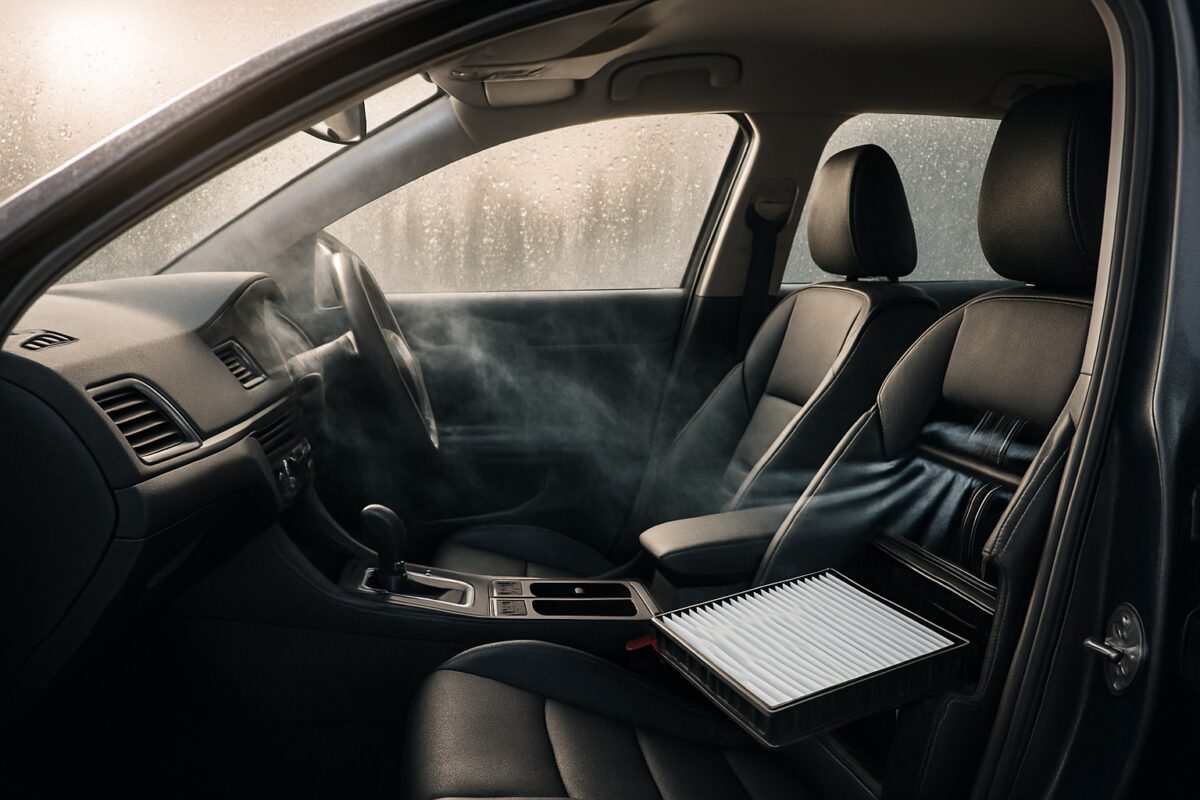
To stop condensation in your car, you need to control moisture levels and improve ventilation. Remove wet items, use moisture absorbers, clean windows regularly, and ensure your ventilation system works properly. Check door seals, replace a clogged cabin filter, and run air conditioning periodically to maintain optimal humidity levels inside your vehicle.
Tools and parts required
Before tackling condensation issues, gather the necessary equipment to diagnose and resolve moisture problems effectively.
Parts needed
- Replacement cabin filter (vehicle specific)
- Door seal rubber
- Window seals
- Moisture absorber sachets
- Demisting spray
Tools required
- Screwdriver set
- Microfibre cloths
- Vacuum cleaner
- Torch or inspection light
- Cleaning solution
Professional tip from AutoPartsPro mechanics: Always check your vehicle’s handbook for specific cabin filter location and replacement intervals, as these vary significantly between manufacturers and models.
Safety precautions
Working on vehicle interior systems requires basic safety measures to prevent damage and ensure personal safety.
Work in a well-ventilated area when using cleaning chemicals. Disconnect the battery negative terminal when working on electrical components. Wear protective gloves when handling cleaning solutions or sharp metal edges around door seals.
Keep windows slightly open during cleaning to prevent chemical fumes building up inside the cabin. Avoid smoking or using naked flames near cleaning solvents.
Step-by-step instructions
Follow these systematic steps to eliminate condensation problems and prevent future moisture build-up in your vehicle.
Step 1: Identify moisture sources
Check for obvious water leaks around door seals, window frames, and sunroof areas. Look for damp carpets or upholstery that indicate water ingress. Examine the boot area for standing water or wet spare wheel wells.
Remove all wet items including umbrellas, coats, and floor mats. Check cup holders and door pockets for spilled liquids that contribute to interior humidity.
Step 2: Replace cabin filter
Locate your vehicle’s cabin filter housing, typically behind the glove box or under the dashboard. Remove the old filter and inspect for excessive dirt, leaves, or damage that restricts airflow.
Install the new cabin filter ensuring correct orientation according to airflow arrows. A blocked filter reduces ventilation efficiency and traps moisture inside the cabin.
Step 3: Check air conditioning system
Run the air conditioning system regularly, even during winter months, to remove moisture from the cabin air. The compressor system dehumidifies air naturally as part of its cooling process.
Check that the system switches between fresh air and recirculation modes properly. Stuck recirculation can trap humid air inside the vehicle.
Step 4: Inspect and replace seals
Examine door seals for cracks, tears, or compressed sections that allow water entry. Check window seals and sunroof drainage channels for blockages or damage.
Replace damaged seals promptly to prevent water ingress. Clean existing seals with appropriate rubber care products to maintain flexibility and sealing properties.
Step 5: Improve ventilation habits
Use fresh air mode instead of recirculation when possible to exchange cabin air with drier outside air. Crack windows slightly when parked safely to allow air circulation.
Set heating controls to direct warm air across windscreen and side windows. This helps evaporate condensation and prevents further moisture build-up.
Common mistakes to avoid
Several common errors can worsen condensation problems or create new moisture issues in your vehicle.
Leaving wet items in the car – Remove damp clothing, umbrellas, and towels immediately after use. These continue releasing moisture into the cabin air for hours.
Never running air conditioning – Many drivers avoid using AC in winter, but it’s essential for dehumidifying cabin air. Run it briefly each week to prevent system seizure and maintain moisture control.
Ignoring blocked drainage – Sunroof and air conditioning drain holes can block with leaves or debris. Regular cleaning prevents water accumulating in hidden areas.
Using wrong cleaning products – Household cleaners can damage rubber seals and plastic trim. Use automotive-specific products to avoid material degradation.
AutoPartsPro specialist advice: Replace cabin filters every 12,000 miles or annually, whichever comes first. A quality filter improves air quality and reduces moisture retention significantly.
When should you address condensation
Condensation becomes problematic when it occurs regularly or persists after initial warming. Address moisture issues immediately if you notice:
Heavy fogging that takes more than five minutes to clear after starting the engine indicates excessive cabin humidity. Persistent musty odours suggest mould growth in damp areas.
Water droplets forming on interior surfaces during mild weather point to poor ventilation or seal failure. Damp carpets or upholstery require immediate attention to prevent permanent damage.
If condensation appears between double-glazed windows, the sealed unit has failed and needs replacement. This typically affects rear heated windows in estate vehicles.
Related maintenance you can do at the same time
While addressing condensation issues, consider these complementary maintenance tasks that improve overall cabin comfort and air quality.
Replace the air filter alongside the cabin filter for optimal engine breathing and reduced moisture from combustion gases. Check radiator hoses for leaks that can introduce steam into the cabin via the heating system.
Service the radiator thermostat to ensure proper engine temperature regulation. A faulty thermostat can cause excessive moisture in the cooling system.
Clean or replace windscreen wipers and check the windscreen washer reservoir for proper operation. Clear vision reduces reliance on cabin heating for demisting.
Frequently asked questions
Why does my car steam up more in winter?
Cold outside temperatures create greater temperature differences with warm cabin air, causing water vapour to condense on cooler glass surfaces more readily than in warmer weather.
Can I use household dehumidifiers in my car?
Avoid electric dehumidifiers in vehicles due to power consumption and safety risks. Use automotive moisture absorber sachets designed specifically for vehicle use instead.
How often should I run air conditioning to prevent condensation?
Run air conditioning for 10-15 minutes weekly, even during winter months, to maintain system operation and remove excess moisture from cabin air effectively.
Is condensation worse with leather or fabric seats?
Fabric seats absorb and release moisture more than leather, potentially contributing to higher cabin humidity levels, especially when wet from rain or snow.
Does parking in a garage reduce condensation problems?
Covered parking helps by reducing temperature fluctuations and protecting from rain, but ensure adequate ventilation to prevent trapped moisture in enclosed spaces.
Managing vehicle condensation requires understanding moisture sources and implementing proper ventilation strategies. Regular maintenance of filtration systems, combined with good driving habits and prompt attention to seal damage, keeps your cabin comfortable and fog-free. Quality replacement parts and systematic maintenance approaches ensure long-term moisture control in all weather conditions.

 Loading...