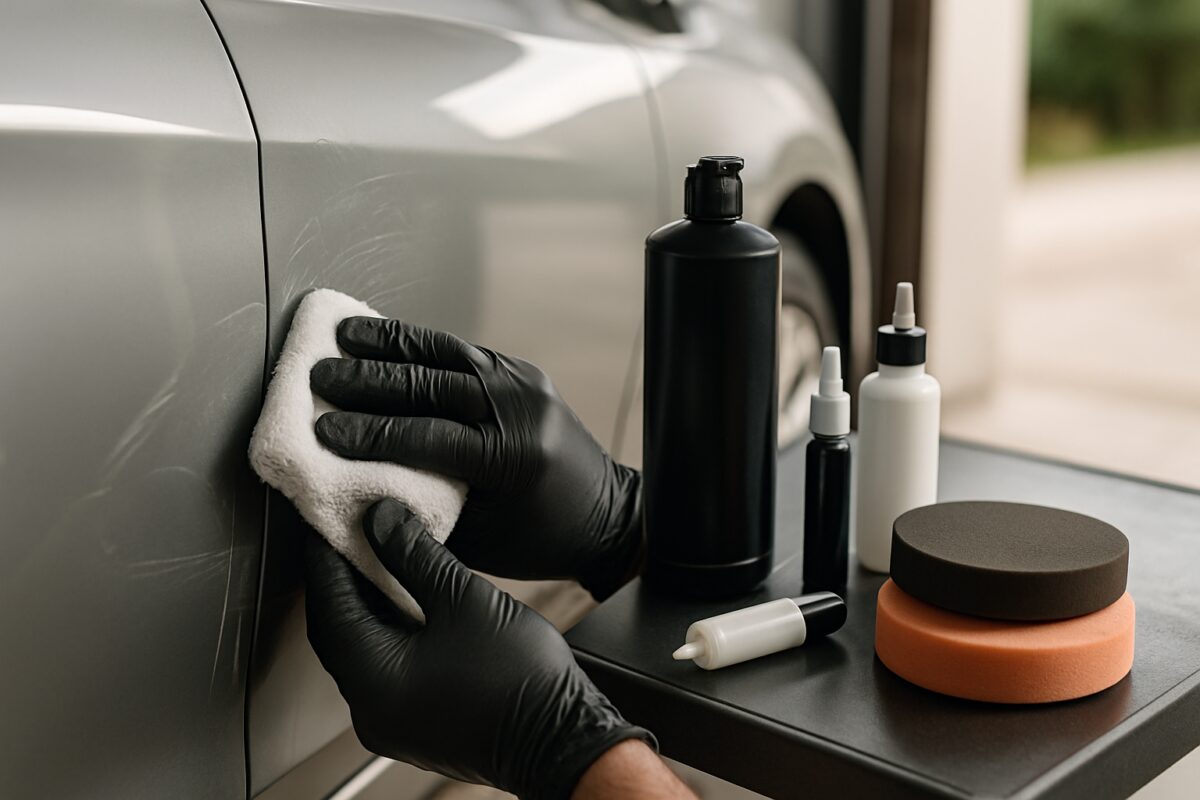
Getting rid of scratches on your car requires different approaches depending on scratch depth. Light surface scratches can be polished out using scratch remover and microfibre cloths, whilst deeper scratches need touch-up paint or professional repair. Most shallow scratches respond well to polishing compound, followed by car wax for protection.
Tools and parts required
Before tackling car scratches, gather the proper materials to ensure effective results without causing additional damage.
Parts needed
- Scratch remover compound
- Touch-up paint (colour-matched to your vehicle)
- Clear coat spray
- Primer (for deep scratches)
- Car wax or sealant
- Masking tape
- Fine-grit sandpaper (2000-3000 grit)
Tools required
- Microfibre cloths
- Polishing pads
- Applicator pads
- Small brush or touch-up pen
- Bucket for washing
- Car shampoo
- Spray bottle
Professional tip: Always match touch-up paint exactly to your vehicle’s colour code, found on the VIN plate or door jamb.
Safety precautions
Work in shaded areas to prevent products drying too quickly. Ensure proper ventilation when using chemical products.
Wear protective gloves to prevent skin irritation from compounds and chemicals. Keep materials away from additional lighting fixtures and electrical components.
Test any product on an inconspicuous area first. Work on a clean, cool surface for best results.
Step-by-step instructions
Step 1: Clean the scratched area
Thoroughly wash the scratched section with car shampoo and clean water. Remove all dirt, debris, and wax buildup that could interfere with repair products.
Dry completely with a clean microfibre cloth. Inspect the scratch depth by running your fingernail across it – if it catches, you’ll need touch-up paint.
Step 2: Assess scratch depth
Surface scratches only affect the clear coat and appear white or light-coloured. Deep scratches penetrate through the paint to the primer or metal beneath.
Medium scratches go through the colour coat but not the primer. Each type requires different treatment approaches for effective repair.
Step 3: Apply scratch remover for light scratches
Apply a small amount of scratch remover to a microfibre cloth. Work in circular motions, applying moderate pressure over the scratch.
Continue polishing until the scratch begins to fade. Wipe clean with a fresh cloth and inspect progress. Repeat if necessary.
Step 4: Sand deep scratches (if required)
For deeper scratches, lightly sand with 2000-grit sandpaper and water. Sand in one direction only, following the scratch line.
This smooths rough edges and prepares the surface for primer and paint. Clean thoroughly after sanding.
Step 5: Apply primer and paint
Mask around the scratch area with tape. Apply thin coats of primer if bare metal is visible, allowing each coat to dry completely.
Once primer is dry, apply colour-matched paint in thin layers. Build up coverage gradually rather than applying thick coats.
Step 6: Apply clear coat and polish
After the paint fully cures, apply clear coat spray in light, even layers. Allow proper drying time between coats.
Once everything has cured, polish the repaired area to blend with surrounding paintwork. Finish with quality car wax for protection.
Expert insight: According to AutoPartsPro’s paint specialists, patience during the drying process prevents 90% of touch-up failures – rushing leads to poor adhesion and visible repairs.
Common mistakes to avoid
Applying too much compound or paint creates obvious repair marks that stand out from the original finish. Work with thin layers for professional-looking results.
Skipping the cleaning step traps dirt beneath repair products, causing rough texture and poor adhesion. Always start with a perfectly clean surface.
Using incorrect paint colour creates mismatched patches that look worse than the original scratch. Verify colour codes before purchasing materials.
Working in direct sunlight causes products to dry too quickly, preventing proper levelling and blending. Choose shaded areas for all repair work.
When should you repair scratches?
Address scratches promptly to prevent rust formation, especially on exposed metal. Fresh scratches are easier to repair than weathered damage.
Consider professional repair for scratches longer than 6 inches or those affecting multiple panels. Deep gouges that penetrate to the metal require immediate attention.
Minor surface scratches can wait for convenient repair time, but don’t leave them indefinitely as they collect dirt and become more noticeable.
If you notice scratches around door handles or the bumper area, these high-contact zones benefit from quick repair to maintain appearance.
Related maintenance you can do at the same time
While repairing scratches, inspect and clean the headlamp lenses for clarity and proper illumination.
Check outside mirror housings for damage that might need touch-up paint. Replace any cracked wing mirror glass for safety.
Clean and polish all painted surfaces for consistent appearance. Inspect tail lights and fog lamp housings for similar damage.
Consider replacing worn windscreen wipers and checking the windscreen washer reservoir fluid level.
Frequently asked questions
Can toothpaste really remove car scratches?
Toothpaste contains mild abrasives that might diminish very light surface scratches temporarily, but proper scratch remover provides better, lasting results without risking paint damage.
How long does touch-up paint take to cure completely?
Touch-up paint typically takes 24-48 hours to fully cure, depending on temperature and humidity. Avoid washing or waxing during this period.
Should I use a polishing machine for scratch removal?
Hand polishing offers better control for beginners. Machine polishing requires experience to avoid creating swirl marks or burning through paint layers.
Will insurance cover scratch repairs?
Insurance coverage depends on your policy and scratch cause. Minor parking scratches typically aren’t worth claiming due to excess payments and premium increases.
Can I repair scratches on plastic trim pieces?
Plastic trim requires specific plastic repair products or heat treatment. Paint and clear coat don’t adhere well to most automotive plastics without proper preparation.
Professional scratch repair becomes cost-effective for extensive damage, but most car owners can successfully handle minor scratches with proper products and patience. Taking time to match materials correctly and follow proper application techniques ensures repairs blend seamlessly with existing paintwork, maintaining your vehicle’s appearance and value.

 Loading...