Changing engine oil involves draining old oil, replacing the oil filter, and refilling with fresh oil. You’ll need the correct oil grade, a new oil filter, basic tools, and a drain pan. The process takes 30-45 minutes and requires lifting the vehicle or using ramps for underneath access.
Tools & parts required
Having the right equipment makes oil changes straightforward and mess-free. Quality tools ensure proper installation and prevent costly mistakes.
Parts needed:
- Engine oil (vehicle specific grade and quantity)
- Oil filter (matching your engine)
- New drain plug washer
- Oil filter gasket (if separate)
Tools required:
- Socket set or box spanners
- Oil filter wrench
- Drain pan (minimum 6-litre capacity)
- Funnel
- Jack and axle stands
- Disposable gloves
- Clean rags
Always check your owner’s manual for the exact oil specification and capacity. Using incorrect oil grades can damage modern engines with tight tolerances.
Safety precautions
Oil changes involve hot fluids and working beneath vehicles, making safety paramount. These precautions prevent burns and accidents.
Work on level ground with the engine warm but not hot. Allow 10-15 minutes cooling after driving. Wear safety glasses and gloves throughout. Ensure your battery is disconnected if working near electrical components. Never work under a vehicle supported only by a jack.
Keep a fire extinguisher nearby and work in well-ventilated areas. Hot oil can cause severe burns, so handle with extreme care.
Step-by-step instructions
Step 1: Prepare the vehicle
Park on level ground and engage the handbrake. Run the engine for 5 minutes to warm the oil – this helps it drain completely. Turn off the engine and wait 10 minutes for cooling. Raise the front of the vehicle using jack and stands, ensuring secure support.
Locate the oil drain plug underneath. It’s typically on the lowest point of the oil sump. Position your drain pan slightly off-centre towards the front, as oil will arc outward initially.
Step 2: Drain the old oil
Using the correct socket size, slowly loosen the drain plug. Once finger-loose, spin it out quickly with your fingers. Let the oil drain for 15-20 minutes until it reduces to occasional drops.
Clean the drain plug and inspect the washer. Replace if damaged or distorted. This prevents future leaks and ensures proper sealing.
Step 3: Replace the oil filter
Locate the oil filter – usually cylindrical and mounted on the engine block. Position your drain pan beneath it. Using an oil filter wrench, turn anti-clockwise to remove. Expect some oil spillage.
Clean the filter mounting surface thoroughly. Apply a thin film of new oil to the new filter’s rubber gasket. Install hand-tight plus three-quarters turn only. Over-tightening damages the gasket.
Step 4: Reinstall drain plug
Thread the drain plug back by hand first to avoid cross-threading. Tighten to the manufacturer’s specified torque – typically 25-30 Nm. Don’t overtighten as this strips the sump threads.
Wipe away any spilled oil from the sump area. Lower the vehicle carefully and remove the drain pan.
Step 5: Add new oil
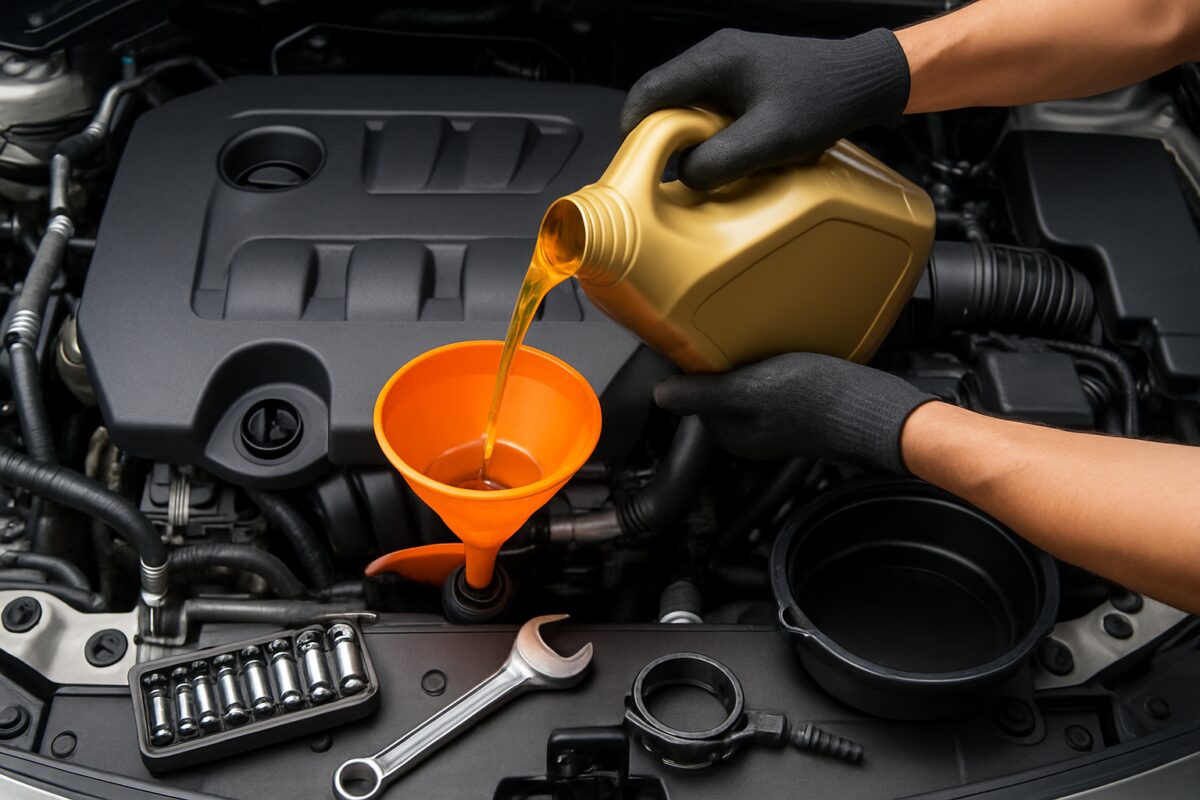
Remove the oil filler cap on top of the engine. Insert your funnel and pour in approximately 75% of the specified capacity initially. Replace the cap and start the engine.
Let it run for 2-3 minutes, then turn off and wait 5 minutes for oil settlement. Check the dipstick and add oil gradually until it reaches the maximum mark. Never overfill.
Common mistakes to avoid
Several errors can turn a simple oil change into expensive repairs. Understanding these pitfalls saves money and prevents damage.
Over-tightening the drain plug strips the sump threads, requiring costly repairs. Always use the specified torque setting. Double-tightening the oil filter causes gasket failure and leaks.
Using incorrect oil grades affects engine protection and fuel economy. Modern engines require specific viscosity ratings. Overfilling causes seal damage and increased pressure. Always check the dipstick multiple times during filling.
Forgetting to replace the drain plug washer leads to persistent leaks. These copper or aluminium washers compress during installation and don’t seal properly when reused.
When should you replace it?
Oil change intervals depend on driving conditions, oil type, and manufacturer recommendations. Following proper schedules prevents engine damage and maintains warranty coverage.
Most modern cars need oil changes every 7,500-10,000 miles with synthetic oil, or 5,000-7,500 miles with conventional oil. Severe driving conditions require more frequent changes – city driving, short trips, dusty conditions, or extreme temperatures.
Check oil colour and consistency monthly. Dark, gritty oil needs changing regardless of mileage. Low oil levels between changes indicate leaks or burning, requiring investigation.
High-mileage vehicles may need more frequent changes as seals deteriorate and tolerances increase. Monitor consumption carefully on older engines.
Related maintenance you can do at the same time
Oil changes provide excellent opportunities for additional maintenance. Combining jobs saves time and identifies potential problems early.
Replace the air filter if dirty – it’s easily accessible and affects fuel economy. Check brake fluid levels and colour while the bonnet is open.
Inspect radiator hoses for wear and check coolant levels. Look for oil leaks around the rocker gasket and sump areas.
Check tyre pressures and examine brake pads through wheel spokes. These simple checks prevent more serious problems developing.
Our mechanics at AutoPartsPro recommend keeping a maintenance log with oil change dates and mileage. This helps identify consumption patterns and ensures you never miss an interval.
Frequently asked questions
How often should I change my engine oil?
Follow your manufacturer’s service schedule, typically every 7,500-10,000 miles for synthetic oil or 5,000-7,500 miles for conventional oil in normal conditions.
Can I use any brand of oil filter?
Use filters meeting your vehicle’s specifications. Quality brands offer better filtration and durability than cheap alternatives, protecting your engine investment.
What happens if I overfill the engine oil?
Overfilling increases pressure, damages seals, and can cause foaming. This reduces lubrication effectiveness and potentially damages the engine.
Should I change oil when the engine is hot or cold?
Warm oil drains more completely but avoid scalding temperatures. Let the engine cool for 10-15 minutes after running for optimal draining.
How do I dispose of used oil and filters properly?
Take used oil and filters to recycling centres, quick-lube shops, or auto parts stores. Never pour oil down drains or onto the ground.
Regular oil changes represent the most important maintenance task for engine longevity. Using quality engine oil and genuine filters ensures optimal protection. Following manufacturer specifications and maintaining proper intervals keeps your engine running smoothly for years to come.

 Loading...