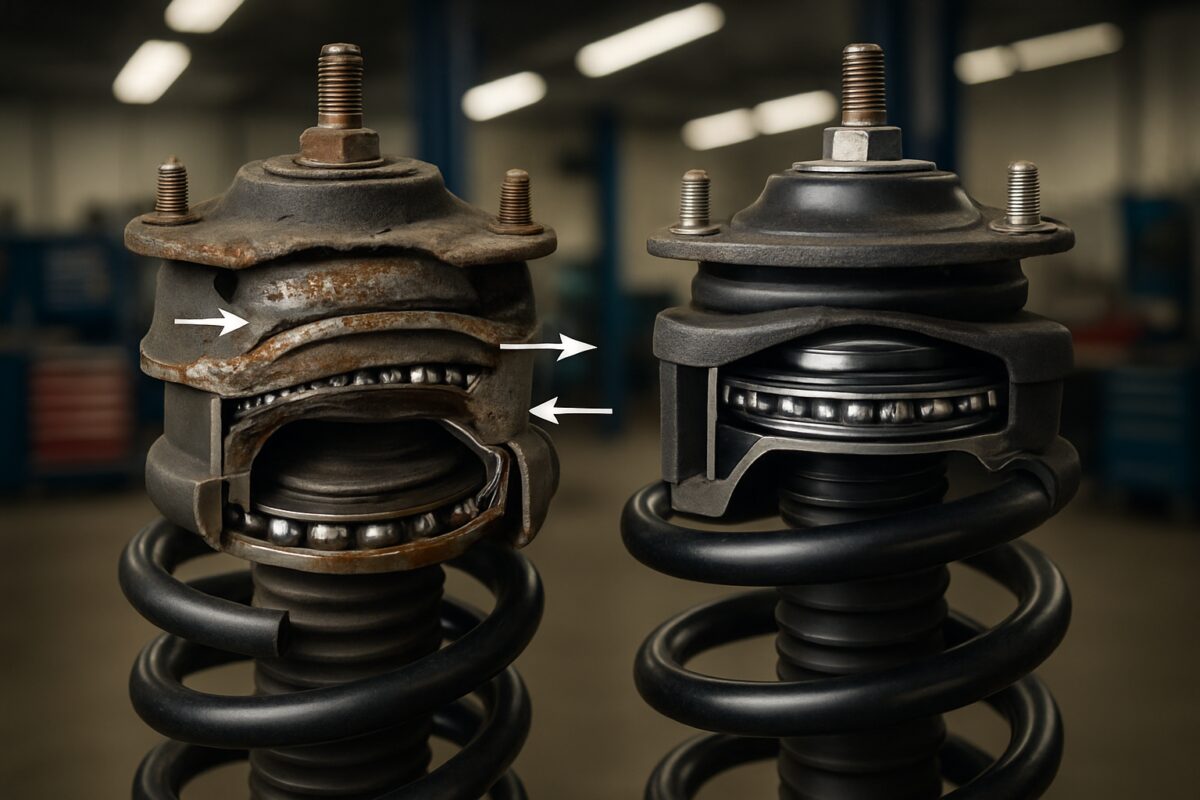
Strut bearing problems can turn your smooth drive into a nightmare of noise and poor handling. These crucial suspension components sit atop the strut assembly, allowing smooth turning and absorbing road impacts. When strut bearings fail, they create distinctive symptoms that worsen over time and can compromise vehicle safety and comfort.
Grinding noises during turning
The most common symptom of failing strut bearings is a grinding or scraping noise when turning the steering wheel. This sound occurs because worn bearing components create metal-on-metal contact inside the strut mount assembly.
The noise typically starts quietly during slow-speed manoeuvres like parking or roundabouts. As the bearing deteriorates further, the grinding becomes more pronounced and occurs at higher speeds. You’ll particularly notice this when making sharp turns or navigating car parks.
This grinding differs from other suspension noises because it happens specifically during steering input. Unlike worn brake pads that grind during stopping, strut bearing noise correlates directly with wheel turning angle.
Many drivers initially mistake this for power steering problems or worn CV joints. However, strut bearing noise typically comes from the top of the wheel well, near the strut tower, rather than from lower suspension components.
Steering wheel vibration and stiffness
Worn strut bearings create noticeable steering wheel vibration, particularly when turning or driving over bumps. The damaged bearing cannot properly isolate road impacts, transmitting unwanted feedback through the steering column to your hands.
This vibration differs from wheel balance issues because it occurs mainly during cornering and rough road surfaces. The steering may also feel notchy or sticky when turning, requiring more effort than normal to complete turns.
In severe cases, the steering wheel may not return to centre properly after completing a turn. This happens because the damaged bearing creates friction that interferes with the strut’s natural ability to follow steering inputs smoothly.
The vibration often accompanies other suspension problems, so mechanics typically check tie rod ends and ball joints simultaneously when diagnosing strut bearing issues.
Uneven tyre wear patterns
Failed strut bearings affect wheel alignment, causing distinctive tyre wear patterns that indicate suspension problems. When bearings cannot properly support the strut assembly, the wheel camber and toe settings shift from manufacturer specifications.
Look for excessive wear on the inside or outside edges of front tyres, particularly on the shoulder areas. This differs from normal wear patterns and develops relatively quickly once the bearing begins failing significantly.
The uneven wear typically affects only one front tyre initially, corresponding to the side with the failing bearing. However, if left untreated, the altered suspension geometry can cause compensatory wear on other tyres.
Regular tyre rotation cannot correct this wear pattern because the underlying suspension problem continues. Only replacing the faulty strut bearing and performing a wheel alignment will prevent further tyre damage.
Warning signs your car has a problem
Several warning signs indicate developing strut bearing problems before complete failure occurs:
- Clicking or creaking sounds when turning the steering wheel while stationary
- Increased road noise transmitted through the chassis, especially over bumps
- Steering wheel vibration that worsens with vehicle speed
Additional symptoms include poor shock absorption, where bumps feel harsher than usual, and steering response delays during quick directional changes.
- Visible corrosion or damage to the strut mount assembly
- Fluid leaks from the strut area, indicating seal damage
- Vehicle pulling to one side during straight-line driving
These early warnings allow preventive replacement before safety becomes compromised. Ignoring these symptoms can lead to more expensive repairs involving shock absorbers or suspension damage.
How to fix the problems
Strut bearing replacement requires specific tools and mechanical knowledge, making it suitable for experienced DIY mechanics or professional technicians.
| Repair Option | Cost Range | Time Required | Difficulty Level |
|---|---|---|---|
| DIY Replacement | £30-80 | 2-4 hours | Advanced |
| Professional Service | £150-300 | 1-2 hours | N/A |
| Complete Strut Assembly | £200-500 | 1-3 hours | Moderate |
The replacement process involves removing the strut assembly from the vehicle and disassembling the spring and mount components using a spring compressor tool.
| Tool Required | Purpose | Safety Importance |
|---|---|---|
| Spring Compressor | Safe spring removal | Critical – prevents injury |
| Socket Set | Fastener removal | High – ensures proper torque |
| Torque Wrench | Correct reassembly | High – prevents failure |
Professional tip: Always replace strut bearings in pairs, even if only one side shows symptoms. This ensures balanced handling and prevents premature failure of the remaining bearing due to increased stress.
Quality replacement parts are essential for longevity. Choose OEM or equivalent bearings with proper lubrication and sealing. Cheap alternatives often fail prematurely, requiring repeated repairs within months.
When to see a mechanic
Seek professional help immediately if you experience sudden steering changes, loud grinding noises, or visible damage to suspension components. These symptoms indicate advanced wear that could affect vehicle control.
Professional diagnosis becomes essential when multiple suspension components show wear simultaneously. Experienced technicians can identify which parts need replacement and whether alignment correction is necessary.
Many garages offer suspension packages that include strut bearing replacement alongside other related components like suspension springs or top mounts, providing better value than individual repairs.
AutoPartsPro specialist insight: Our technicians recommend annual suspension inspections for vehicles over five years old, as strut bearings typically begin showing wear around 60,000-80,000 miles depending on driving conditions.
- Vehicles experiencing harsh driving conditions need more frequent checks
- City driving with frequent turning accelerates bearing wear
- Potholes and rough roads cause premature bearing failure
Frequently asked questions (FAQ)
How long do strut bearings typically last before needing replacement?
Most strut bearings last between 60,000-100,000 miles, depending on driving conditions, vehicle weight, and maintenance quality. Regular inspection helps identify wear early.
Can I drive safely with a worn strut bearing until payday?
Driving with severely worn bearings risks steering control loss and accelerated tyre wear. Limit driving to essential trips and avoid high speeds until replacement.
Do strut bearings need replacement when installing new shock absorbers?
Yes, replacing bearings during shock installation prevents future labour costs and ensures optimal suspension performance. Old bearings compromise new shock effectiveness significantly.
What causes premature strut bearing failure in newer vehicles?
Harsh driving conditions, frequent sharp turns, heavy loads, and poor road surfaces accelerate bearing wear. Manufacturing defects occasionally cause early failure too.
How much does wheel alignment cost after strut bearing replacement?
Professional wheel alignment typically costs £40-80 following strut work. This essential service prevents tyre wear and ensures proper handling characteristics after repairs.
Final recommendation
Strut bearing problems require prompt attention to maintain vehicle safety and prevent costly secondary damage. Early replacement saves money compared to extensive suspension repairs later.
Choose quality replacement parts from reputable suppliers like AutoPartsPro to ensure longevity and performance. Professional installation guarantees proper torque specifications and alignment, protecting your investment in new components.
Regular suspension maintenance, including periodic inspections and prompt repairs, keeps your vehicle handling predictably and safely. Don’t ignore grinding noises or steering changes – these warnings prevent more serious problems developing.
At AutoPartsPro, our extensive catalogue includes premium suspension components for all makes and models, ensuring you get the right parts for reliable repairs that last.

 Loading...