Car headliner repair and replacement involves removing the damaged interior roof fabric, cleaning the backing board, applying new adhesive, and installing fresh headliner material. The process typically takes 3-5 hours and requires basic tools, headliner fabric, spray adhesive, and trim removal tools. Proper preparation and working in a dust-free environment ensures professional results.
Tools & parts required
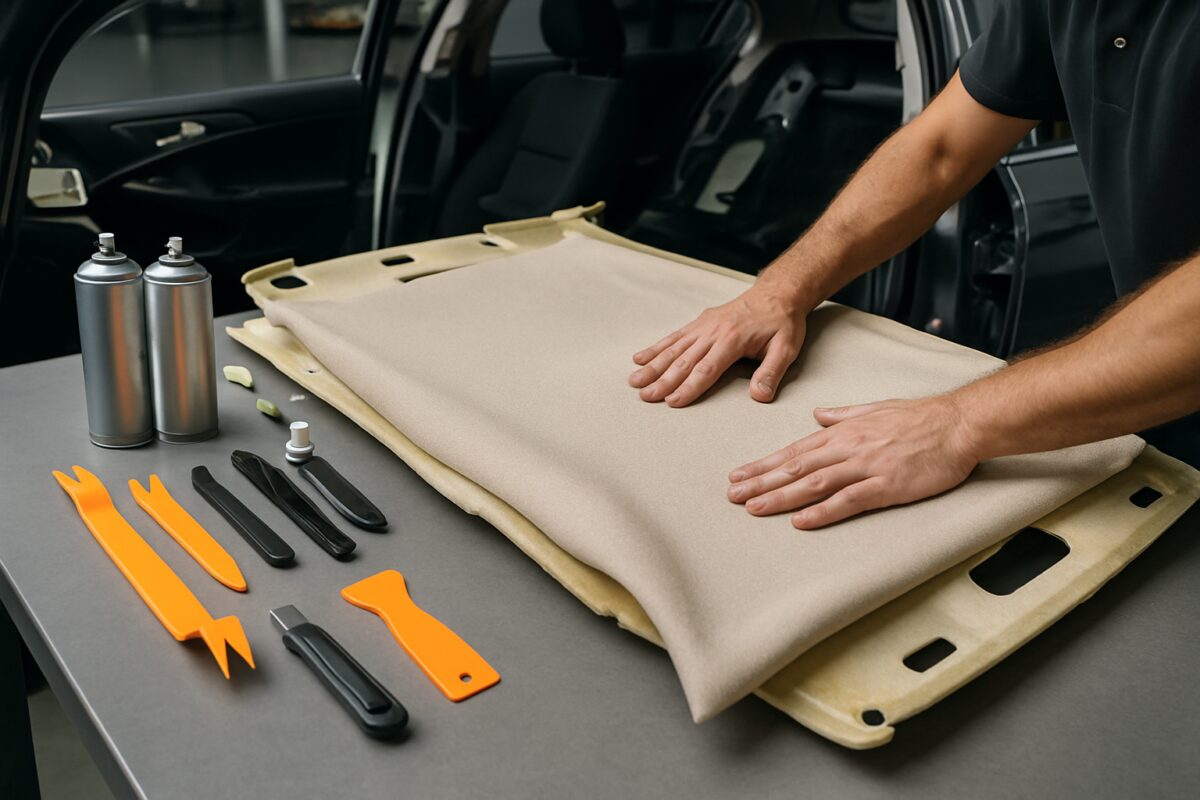
Getting the right equipment before starting makes the difference between a professional finish and a frustrating experience. Our mechanics at AutoPartsPro recommend gathering everything beforehand to avoid interruptions during the adhesive curing process.
Parts needed:
- Headliner fabric (vehicle-specific size and colour)
- Spray adhesive (high-temperature automotive grade)
- Foam backing material (if original is damaged)
- Trim clips and fasteners
- Cleaning solvent
Tools required:
- Trim removal tools
- Phillips and flathead screwdrivers
- Sharp utility knife
- Plastic scrapers
- Clean rags and microfibre cloths
- Vacuum cleaner
- Measuring tape
Always measure your headliner backing board before ordering fabric. Most vehicles need 10-15cm extra material on all sides for proper stretching and trimming.
Safety precautions
Working with adhesives and removing interior panels requires proper safety measures. Ensure adequate ventilation when using spray adhesives, as fumes can be harmful in enclosed spaces.
Wear safety glasses when removing clips and trim pieces, as plastic fragments can fly unexpectedly. Keep a battery disconnection tool handy if you need to remove any electrical components. Work in temperatures between 18-25°C for optimal adhesive performance.
Step-by-step instructions
Step 1: Remove interior trim and accessories
Start by carefully removing all trim pieces that hold the headliner in place. This includes sun visors, grab handles, dome lights, and any additional lighting fixtures. Take photos before removal to remember the original positioning.
Remove the A-pillar trim, B-pillar covers, and rear trim panels. These pieces often have hidden clips that require gentle pressure and trim removal tools to avoid breakage.
Step 2: Lower the headliner assembly
With all trim removed, the headliner backing board should drop down. Support it carefully as it’s quite large and can be awkward to handle alone. Remove it through the largest door opening, usually a rear door or tailgate.
If your vehicle has a aerial connection through the roof, disconnect this carefully before fully removing the headliner.
Step 3: Remove old headliner fabric
Peel away the old fabric from the backing board. Most material will come off easily, but stubborn sections may need gentle scraping. Remove all foam residue and adhesive using a plastic scraper and cleaning solvent.
Vacuum the backing board thoroughly to remove all debris. Check for cracks or damage that might need repair before applying new material.
Step 4: Apply new headliner fabric
Lay the new fabric face-down on a clean surface. Centre the backing board on top, leaving equal overhang on all sides. Work from the centre outwards, applying spray adhesive to small sections at a time.
Smooth the fabric carefully to avoid wrinkles or air bubbles. The adhesive sets quickly, so work methodically but efficiently.
Step 5: Trim and finish edges
Once the main surface is complete, trim excess fabric with a sharp utility knife, leaving about 2cm to wrap around edges. Cut precise holes for light fixtures, handles, and other mounting points.
Test-fit the headliner before final installation to ensure all cutouts align properly with interior fixtures.
Step 6: Reinstall the headliner
Carefully manoeuvre the completed headliner back into the vehicle. Support it properly to avoid creasing or damage. Work with a helper for larger vehicles to prevent stress on the new fabric.
Reinstall all trim pieces, lights, and accessories in reverse order of removal, ensuring secure connections for any light bulbs or electrical components.
Professional tip: Let the adhesive cure for 24 hours before driving to prevent sagging or shifting of the new material.
Common mistakes to avoid
Many DIY enthusiasts rush the preparation stage, leading to poor adhesion and premature failure. Thoroughly cleaning the backing board is crucial for long-lasting results.
Using incorrect adhesive types causes problems later. Household spray adhesives won’t withstand temperature changes and humidity levels inside vehicles. Always use automotive-grade products designed for interior applications.
Stretching fabric too tightly creates stress points that eventually tear. Allow slight looseness that will settle naturally over time. Cutting holes too large for fixtures looks unprofessional and weakens the installation.
Not supporting the headliner properly during installation can cause permanent creases or damage to your careful work.
When should you replace it?
Headliner replacement becomes necessary when sagging covers more than 30% of the roof area. Early signs include small bubbles or loose corners that gradually expand over time.
Age-related deterioration typically occurs after 10-15 years, depending on climate conditions and vehicle storage. Hot climates accelerate foam backing breakdown, whilst cold areas can make fabric brittle.
Water damage from sunroof leaks or windscreen washer system problems requires immediate attention to prevent mould growth and structural damage to the backing board.
If multiple areas are failing simultaneously, full replacement proves more cost-effective than attempting partial repairs.
Related maintenance you can do at the same time
With interior trim panels removed, this presents an ideal opportunity for additional maintenance tasks. Check and replace your cabin filter whilst accessing interior components.
Inspect dome lights and replace any failing bulbs or clean oxidised contacts. Test all interior electrical functions including reading lights and courtesy lamps.
Clean or replace sun visor mirrors if they’re showing signs of silvering deterioration. Check grab handle mounting points for loose screws or worn bushings.
This is also perfect timing to address any issues with central locking systems or interior door mechanisms that might be difficult to access otherwise.
Frequently asked questions
How long does headliner replacement take?
A complete headliner replacement typically takes 4-6 hours for experienced DIY mechanics, including preparation and curing time.
Can I repair small sagging areas instead of replacing everything?
Small areas under 15cm can sometimes be re-adhered, but full replacement provides longer-lasting and more professional results.
What type of fabric should I choose?
Match original specifications for best results. Automotive-grade knit fabrics with foam backing provide optimal durability and appearance.
Will this affect my car’s resale value?
Professional headliner replacement maintains or increases resale value, whilst sagging headliners significantly reduce buyer appeal and negotiating position.
Can I do this repair outdoors?
Indoor work provides better results due to dust control and temperature stability. Garages or covered workshops are ideal locations.
Successfully completing headliner replacement requires patience and attention to detail, but the results transform your vehicle’s interior appearance. Using quality materials and following proper procedures ensures your new headliner will provide years of reliable service whilst maintaining that fresh, professional look that enhances your driving experience.

 Loading...